Rincón Colorado Paleontological Zone Fossil Hunting Guide
Rincón Colorado in the municipality of General Cepeda, Coahuila, Mexico, is the first paleontological zone in Mexico open to the public. The site exposes the Late Cretaceous Cerro del Pueblo Formation and includes the type locality of the hadrosaur Velafrons coahuilensis. Free entry, viewing-only.
By Edward Chen · Published 4 June 2026
Introduction
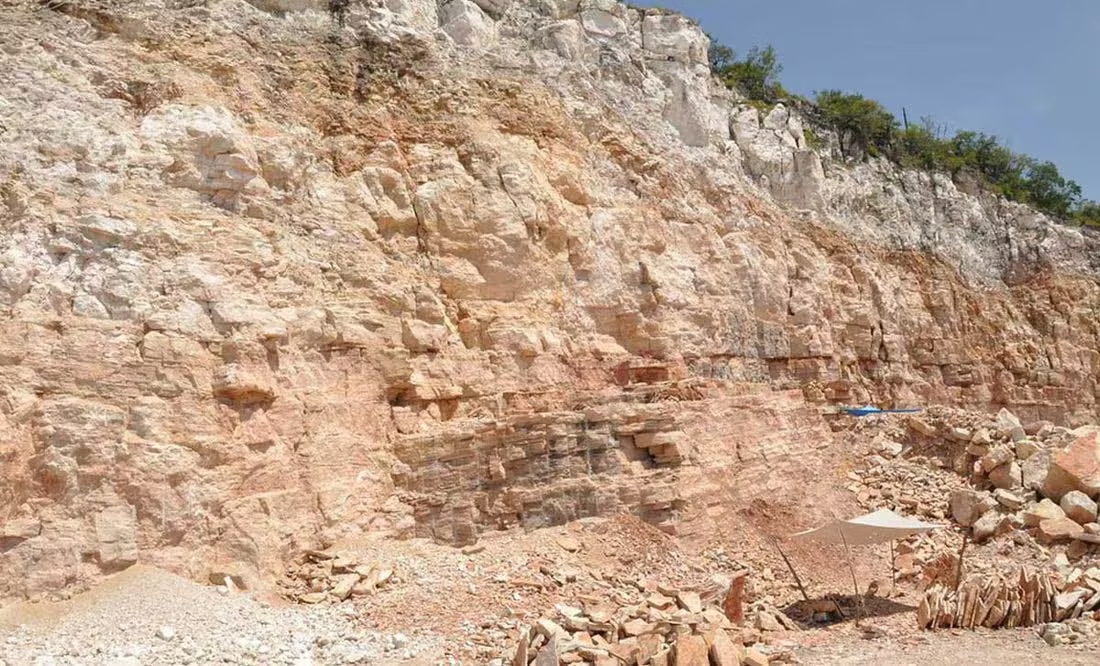
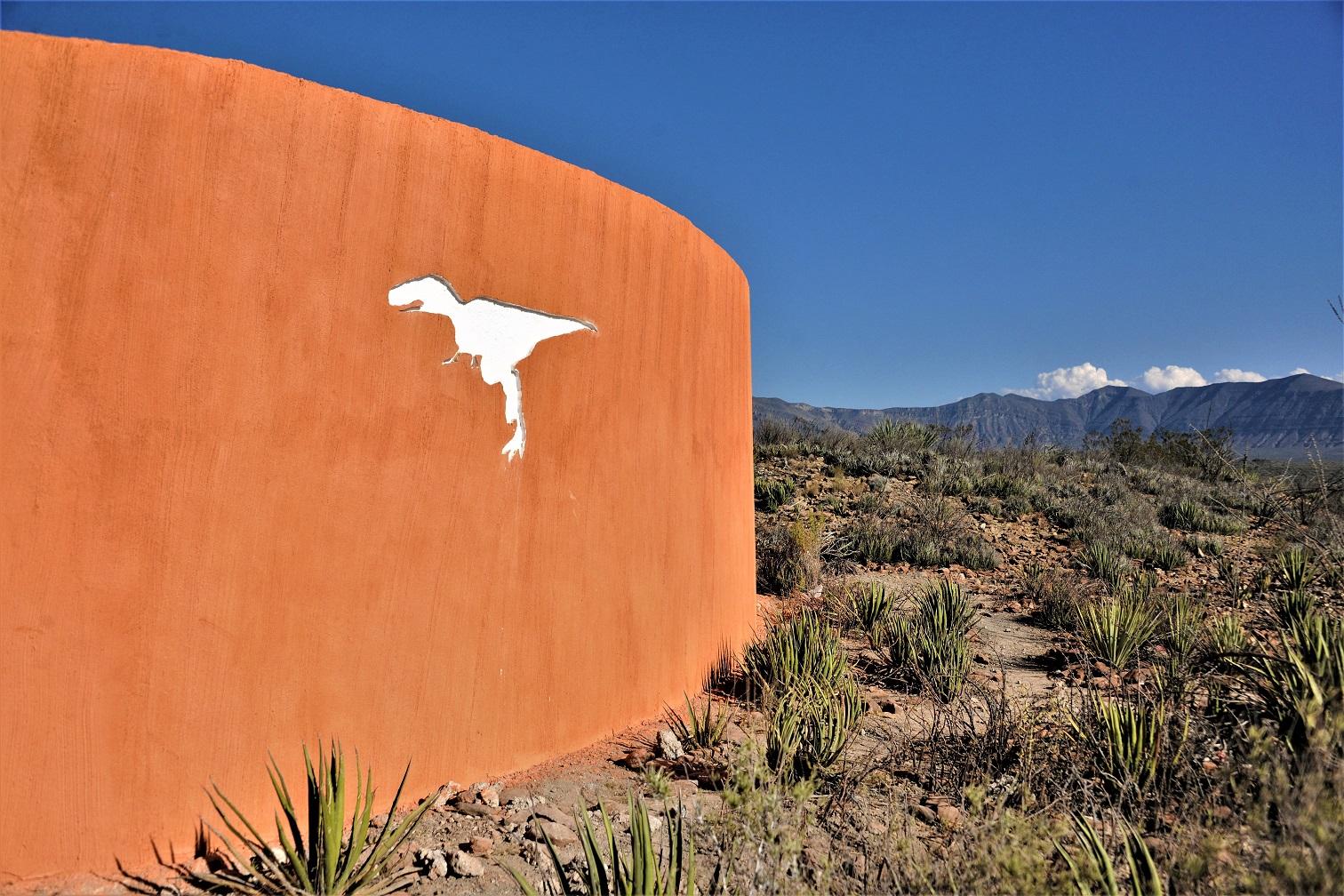
Rincón Colorado sits about 45 kilometres west of Saltillo, in the municipality of General Cepeda, Coahuila state, northern Mexico. The locality was the first paleontological zone formally opened to the public in Mexico, administered by the Instituto Nacional de Antropología e Historia (INAH) under the federal heritage agency Secretaría de Cultura. The badland outcrops here expose the Cerro del Pueblo Formation, a Late Cretaceous Campanian sequence of mudstone, sandstone, and tuff that records floodplain and coastal-plain environments along the western shore of the Western Interior Seaway about 72 million years ago. Since the 1980s, joint Mexican-North American excavations have recovered material of the lambeosaurine hadrosaur Velafrons coahuilensis, named in 2007 from a partial juvenile skeleton found at the site, along with the ceratopsid Coahuilaceratops magnacuerna and a series of large hadrosaur trackways at the adjacent Las Águilas locality. The Rincón Colorado visitor area includes a 1.7-kilometre interpretive trail divided into a paleontological-windows segment and a geologic-time segment, with seven quarry windows where in-place fossils are exposed under weather-proof covers, plus an interpretive centre. Admission is free. Collecting is prohibited. This guide covers how to reach the site, what each stop shows, the Cretaceous geology, and the access rules.
Location and Directions
The paleontological zone lies in the desert basin between Saltillo and the Sierra de la Paila, in northern Coahuila. From Saltillo, drive west on Highway 40 (the Saltillo-Torreón road) to about km 43, where a signed turnoff leads to the Rincón Colorado ejido in the municipality of General Cepeda. A short local road runs from the turnoff to the interpretive centre. Total drive from Saltillo is about 45 minutes.
The interpretive centre is at the entrance to the protected area, GPS 25.3475 degrees north, 101.6486 degrees west. Parking is gravel and free.
The Las Águilas hadrosaur trackway locality is a separate site about 20 kilometres east, on the outskirts of General Cepeda. Las Águilas is administered by the local municipal government and is reached by a marked dirt road. Site access at Las Águilas is by guided visit only, booked through the General Cepeda tourism office.
The closest commercial airports are Saltillo Plan de Guadalupe (about 40 minutes away) and Monterrey Mariano Escobedo (about 90 minutes). Saltillo and Monterrey hold the main lodging and dining options. The Museo del Desierto in Saltillo, a partner institution that holds much of the prepared Coahuila fossil collection, is a strong combined stop with Rincón Colorado.
The interpretive centre at Rincón Colorado is open Wednesday through Sunday, generally from 9 a.m. to 5 p.m. There is no entrance fee. Bilingual signage is available at the main panels. Spanish-speaking local guides are available at the centre.
What Fossils You'll Find
You will not collect at Rincón Colorado. What you can do is walk the 1.7-kilometre interpretive trail past seven covered quarry windows where in-place fossils are exposed in the rock face, plus visit the interpretive centre to see prepared material from the same beds. The Museo del Desierto in Saltillo and the Universidad Autónoma de Coahuila hold the principal mounted skeletons and a wider range of prepared specimens.
- Velafrons coahuilensis. A lambeosaurine hadrosaur described in 2007 by Terry Gates, Scott Sampson, Carlos Delgado de Jesús, Lindsay Zanno, and Eric Lund from a partial juvenile skeleton found at Rincón Colorado. The species name honours the Coahuila state.
- Coahuilaceratops magnacuerna. A long-horned ceratopsid described in 2010 from material near the Rincón Colorado area. Adult brow horns reach approximately 1.2 metres in length.
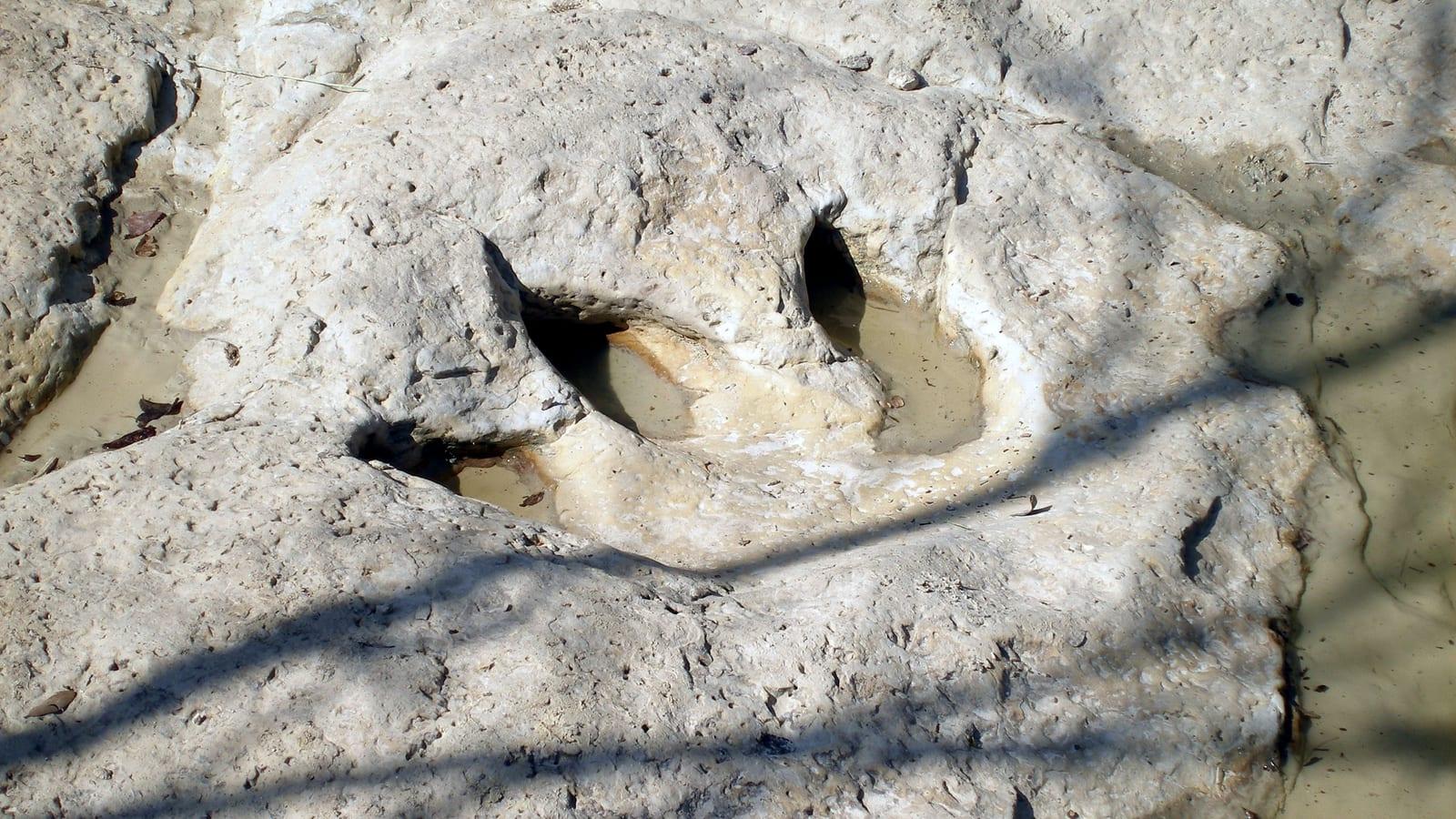
- Las Águilas trackways. More than 200 hadrosaur and theropod footprints on a single bedding plane at the Las Águilas locality. The trackways extend across several hectares of exposure.
- Turtles. Articulated trionychid and chelydrid turtles are common in the floodplain mudstone.
- Crocodyliforms. Skull and limb material of crocodylians referable to Brachychampsa-grade alligatoroids.
- Coprolites. Large dinosaur coprolites are present at several quarry windows.
- Plant fossils. Pollen, leaves, and seeds from angiosperms, conifers, and ferns document the Late Cretaceous coastal-plain vegetation.
The Museo del Desierto in Saltillo holds a full mounted Velafrons skeleton and a cast of Coahuilaceratops. The Universidad Autónoma de Coahuila is the active research home for ongoing excavations across the state.
Geologic History
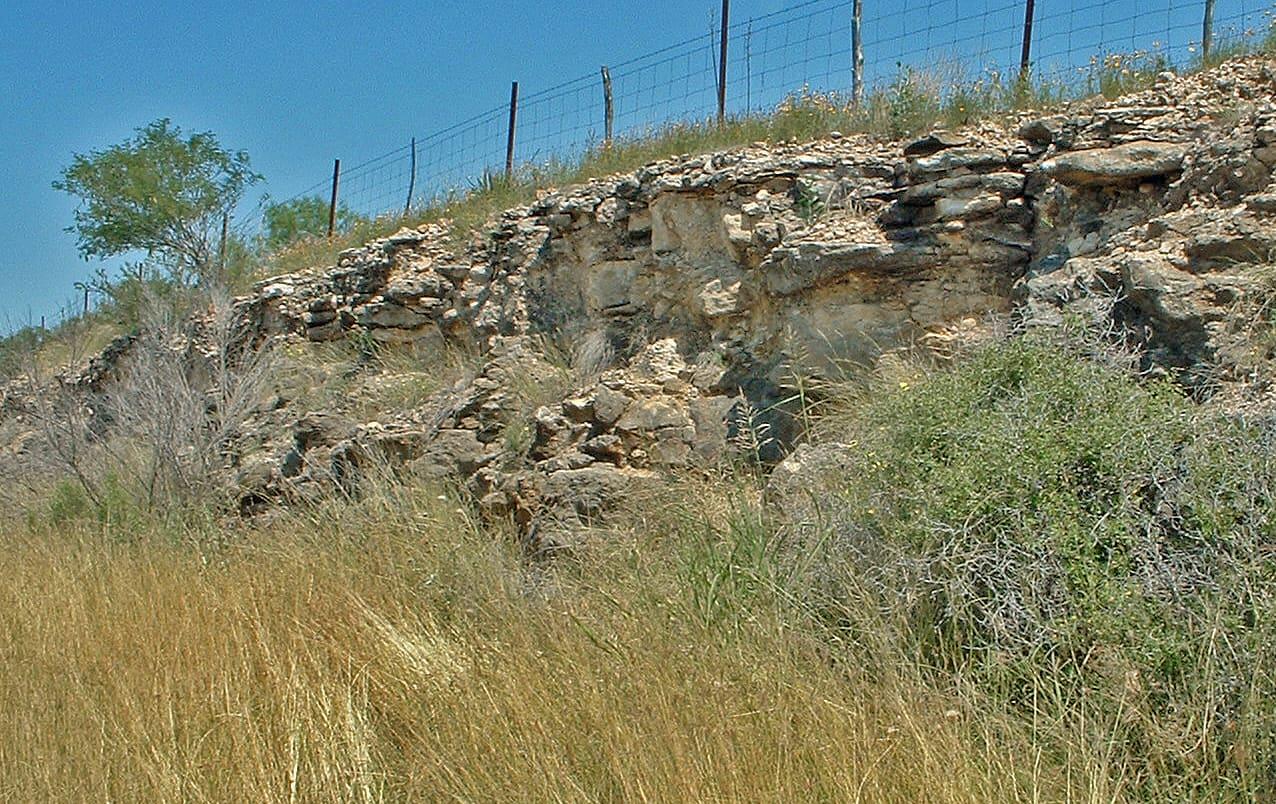
The fossil-bearing rocks belong to the Cerro del Pueblo Formation, a sequence of laminated mudstone, ripple-cross-bedded fine sandstone, and tuff that accumulated in coastal-plain, deltaic, and shallow marine environments along the western shore of the Western Interior Seaway during the late Campanian stage of the Late Cretaceous. The formation is dated to roughly 72 million years ago by ammonite biostratigraphy in the marine portions and by U-Pb ages on intercalated tuff layers.
During the late Campanian, much of central North America was covered by the Western Interior Seaway, a shallow epeiric sea that extended from the Arctic Ocean to the Gulf of Mexico. The Rincón Colorado area sat on the western shore of this seaway, on a low-relief coastal plain that drained eastward from the rising Sierra Madre Oriental highlands. Rivers, deltas, and tidal flats spread fine sediment across the plain, and tuff falls from arc volcanism to the west fertilised the floodplain soils.
The hadrosaurs and ceratopsians at Rincón Colorado lived along the river-and-delta network, sharing the landscape with turtles, crocodylians, and large predatory theropods. The mass-mortality concentrations seen at some quarry windows are interpreted as drought-driven die-offs around shrinking water holes during seasonal dry periods. The Las Águilas trackways record a single bedding plane on a tidal flat, where a large group of hadrosaurs walked across damp mud and left more than 200 prints in a few hours.
After Cretaceous deposition, the Coahuila basin was covered by Paleogene marine and continental rocks, then uplifted during late Cenozoic Sierra Madre tectonics. Modern desert erosion has exposed the productive Cerro del Pueblo horizon in badland outcrops across the western Coahuila desert.
How Rincón Colorado Became a Fossil Site
The first Cretaceous bones from the area were collected in the late 1980s by Wann Langston Jr. of the University of Texas at Austin and René Hernández of the Instituto de Geología, UNAM. Their joint Texas-UNAM expeditions identified the bone-bearing horizon at Rincón Colorado and reported the first hadrosaur material in 1990.
Systematic excavation by the Universidad Autónoma de Coahuila and the Museo del Desierto in Saltillo began in the late 1990s, with the recovery of the partial Velafrons juvenile in 2001 and its publication in 2007. The Las Águilas trackway site was identified by local ranchers in 1995 and described scientifically by Eberhard Frey and colleagues in 1999. Ongoing collaboration between UAC, the Museo del Desierto, the Royal Tyrrell Museum, and the University of Utah has produced multiple new species descriptions through the 2000s and 2010s.
Rincón Colorado was formally protected and opened to the public as a Zona Paleontológica by INAH in 2003. The interpretive trail and quarry-window protection covers were installed between 2008 and 2012.
Collecting Rules and Regulations
Collecting is prohibited. Rincón Colorado is administered by INAH under Mexico's Federal Law on Archaeological, Artistic, and Historic Monuments and Zones (Ley Federal sobre Monumentos y Zonas Arqueológicos, Artísticos e Históricos, 1972) and the National Paleontology Inventory programme. Removing fossils, rocks, or any material from the protected area is an offence under federal Mexican law.
Practical rules:
- Stay on the marked 1.7-kilometre interpretive trail. Climbing on the protected quarry-window covers is not allowed.
- Photography for personal use is welcomed throughout the trail and the interpretive centre.
- Admission is free. A small souvenir shop at the interpretive centre supports local guides.
- Drones require advance written permission from INAH and the Coahuila Secretaría de Cultura.
- Pets must be leashed on the trail and are not allowed inside the interpretive centre.
- Research collection is restricted to permitted teams working under INAH, UNAM, and the Universidad Autónoma de Coahuila authorisation.
Safety
The Coahuila desert reaches 38 degrees Celsius in summer (May through September). Summer thunderstorms can be violent. Visit in the cooler months from October through April for the most pleasant conditions.
Sun exposure is intense year round. Carry at least 2 litres of water per person, sun cover, and a wide-brimmed hat. The 1.7-kilometre trail has little shade.
Rattlesnakes (mostly Crotalus atrox) are present across the desert. Watch foot placement near rocks and brush. Stay on the marked path.
The interpretive centre has restrooms but no food service. Carry snacks and water. The road from Saltillo is paved all the way to the interpretive centre.
Cell coverage is reliable around the centre and intermittent in the open desert. Northern Mexico has historically had security advisories from some governments. Check current advisories and consider arranging a guided day trip from Saltillo for visitors unfamiliar with the area.
Sources
- Lugares INAH, "Rincón Colorado." https://lugares.inah.gob.mx/en/node/4543
- VisitMexico, "Zona Paleontológica Rincón Colorado, Coahuila." https://visitmexico.com/es/destino/2398/zona-paleontologica-rincon-colorado-coahuila
- INAH, "Coahuila Cretácica: los dinosaurios de Rincón Colorado." https://www.inah.gob.mx/foto-del-dia/coahuila-cretacica-los-dinosaurios-de-rincon-colorado
- Gates, T.A. et al., 2007. "Velafrons coahuilensis, a new lambeosaurine hadrosaurid (Dinosauria: Ornithopoda) from the late Campanian Cerro del Pueblo Formation, Coahuila, Mexico." Journal of Vertebrate Paleontology, 27.
- Loewen, M.A. et al., 2010. "Horned dinosaurs (Ornithischia: Ceratopsidae) from the Upper Cretaceous (Campanian) Cerro del Pueblo Formation, Coahuila, Mexico." In: M.J. Ryan et al. (eds.), New Perspectives on Horned Dinosaurs. Indiana University Press.