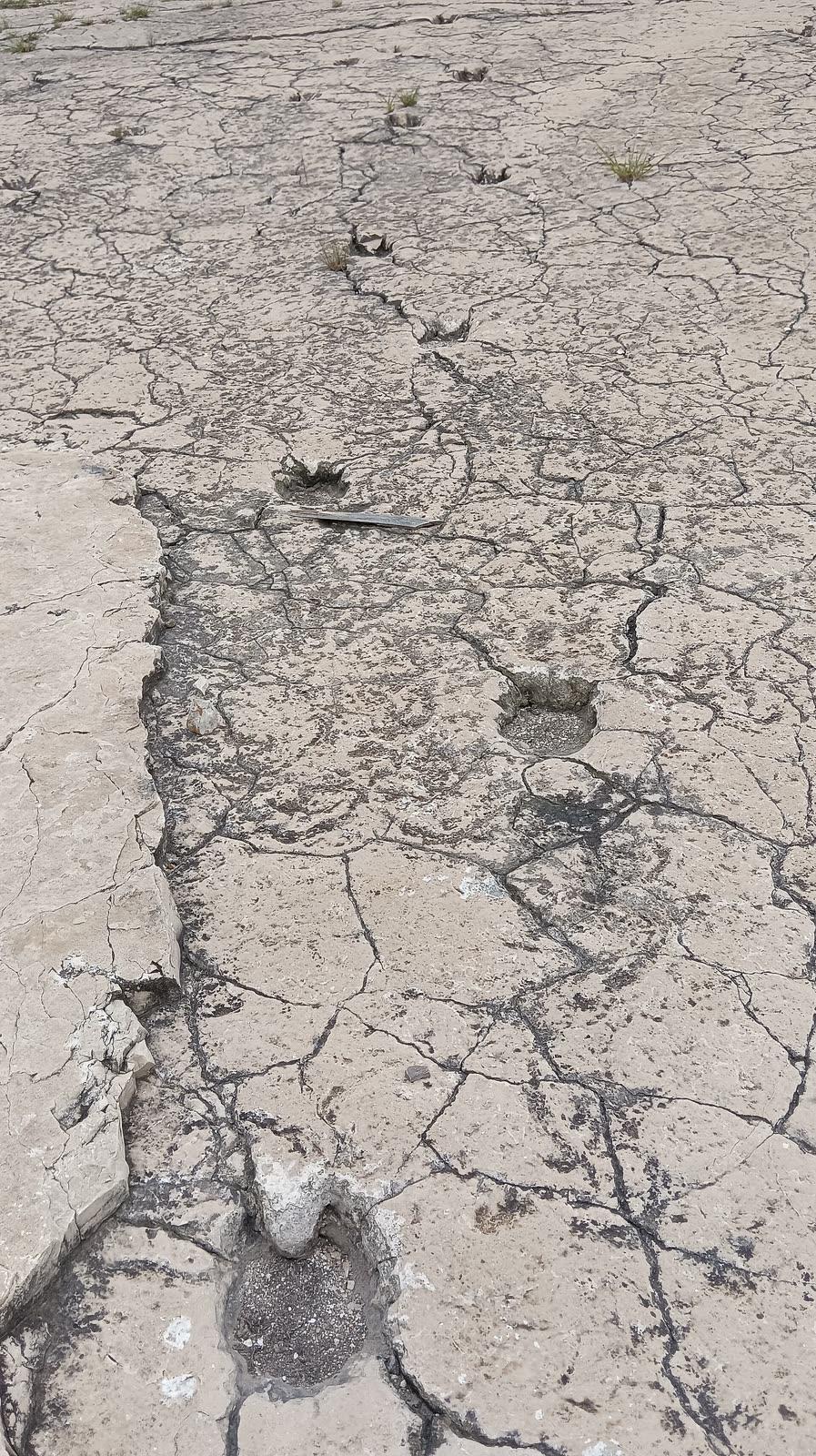
Cantera Tlayúa Fossil Quarry Guide
Image: Mario E. Fuente Cid (CC BY-SA 4.0)
Cantera Tlayúa near Tepexi de Rodríguez in Puebla, Mexico, is the leading Cretaceous fossil Lagerstätte in the Americas. Its Albian-aged lithographic limestones preserve teleost fish, reptiles, arthropods, ammonites, and plants down to skin outlines and pigment patterns. The quarry is privately owned and worked by the Aranguthy family. Visits are arranged via the local community Museo de Paleontología.
By Edward Chen · Updated 31 July 2026
Introduction
Cantera Tlayúa is an active limestone quarry about 3 km west of the town of Tepexi de Rodríguez, in the Mixteca region of southern Puebla state, Mexico. The 110-million-year-old (Albian, Early Cretaceous) lithographic limestones quarried here are one of the world's leading fossil Konservat-Lagerstätten, comparable in preservation quality to Solnhofen in Germany or Bolca in Italy, and the best-preserved Early Cretaceous fossil locality in the Americas.
The quarry has been owned and worked for decades by the Aranguthy (Aranguty) family, who continue commercial limestone extraction while collaborating closely with paleontologists from the Universidad Nacional Autónoma de México (UNAM). More than 80 fossil fish species, plus reptiles, arthropods, ammonites, and plants, have been described from the site since Carlos Beltrán Romero discovered the first Tlayúa fish in 1981.
Visitors cannot collect, but the Tepexi community operates the Museo de Paleontología "Carlos Camacho Pichardo" in town, which displays Tlayúa specimens and arranges supervised quarry visits.
Location and Directions
Tepexi de Rodríguez is in southwestern Puebla state, about 130 km south of Puebla city and 280 km southeast of Mexico City.
Directions to Cantera Tlayúa
From Puebla, take the Atlixco–Izúcar de Matamoros highway south, then federal highway 190 east, and follow signs to Tepexi de Rodríguez. The Museo de Paleontología in Tepexi is the right starting point: arrange any quarry visit and guide here. The quarry itself is on private land a few kilometres outside town and is reached on a short rough road. An Aranguthy family member or museum guide should accompany any visit.
The town hosts an annual Festival del Fósil each year, with quarry tours, talks, and demonstrations of the fossil-extraction and preparation techniques used by local quarry workers. This is the easiest time for casual visitors to access the site.
Bring closed shoes, sun protection, water, and Spanish-language ability or a translator, English is uncommon in Tepexi.
What Fossils You'll See
The Middle Member of the Tlayúa Formation consists of laminated, light-grey lithographic limestone deposited in a shallow tropical lagoon during the Albian Stage of the Early Cretaceous (about 110 million years ago). The lagoon was repeatedly cut off from the open sea and subject to mass-mortality events, producing a Konservat-Lagerstätte that rivals Solnhofen (Germany), Bolca (Italy), and Crato (Brazil) in preservation quality.
The fish fauna is the international headline of the site. More than 80 species have been described, spanning the early halecostomes, the holosteans (gars, bowfins, and their relatives), and the teleosts. The pycnodontiform fish, durophagous shell-crushers with deep, laterally compressed bodies and bizarre tooth pavements, are unusually well represented at Tlayúa, with several genera described nowhere else. Coccodus and Macromesodon are common, and the newly named Yelmochelys (a small armoured form) is a Tlayúa endemic. Early bony fish notable for their fidelity to modern descendants include the elongate Vinctifer comptoni (also found at Brazil's Romualdo Formation), the deep-bodied Tepexichthys aranguthyorum (named for the quarry-owning family), the deep-bodied Pseudotrias, the slender Tlayuamichin, and the long-bodied Notagogus deani. Early Beryciformes (the order containing modern squirrelfish and roughies) are well represented, and the Ichthyodectiformes, a new order of large predatory fish erected on Tlayúa material, record some of the earliest occurrences of fast-swimming open-water predators.
Beyond fish, the formation has produced fully articulated reptile specimens. Turtles include the early sea turtle Notochelone and several pleurodiran (side-necked) freshwater turtles. Lizards include the small, finely preserved Huehuecuetzpalli mixtecus, described in 1998 and one of the most complete Mesozoic squamates ever found. Snakes from Tlayúa include the marine Tlayuasaurus and primitive snake-related taxa preserving four legs in the Tetrapodophis grade. Crocodyliform fragments and a partial pterosaur wing are also documented.
Invertebrates are abundant and beautifully preserved. Arthropods include shrimps (Aeger, Carpopenaeus), crabs (the brachyuran Eotalichelys is one of the earliest known true crabs), isopods, and ostracods. Cephalopods include the heteromorph ammonite Engonoceras and the straight-shelled nautiloid Cymatoceras. Gastropods, bivalves, foraminifera, plant fragments (charophyte algae and rare angiosperm leaves), and finely preserved microbial mats round out the assemblage. Several fish specimens are preserved with original soft tissue including skin outlines, gut contents (often other small fish), pigment patterns visible as stripes and spots, and even eye-lens detail, preservation that approaches the Solnhofen standard.
A Springer review of Cretaceous Lagerstätten ranks the Tlayúa Quarry among the leading New World localities, citing the breadth of its fish, reptile, and arthropod assemblages.
 Photo: Mario E. Fuente Cid, CC BY-SA 4.0, via Wikimedia Commons

Geologic History
During the Albian Stage of the Early Cretaceous, what is now southern Mexico was the western margin of the proto-Gulf of Mexico, on the trailing margin of the rapidly opening Atlantic Ocean. The Mexican Pacific margin was characterised by a complex of shallow lagoons, patch reefs, carbonate platforms, and emergent islands controlled by ongoing rifting and intermittent volcanism. The Tlayúa lagoon was a partially enclosed shallow basin (estimated to have been less than 20 metres deep) protected from the open sea by a rim of patch reefs, and connected to the open ocean only by narrow passes that opened and closed periodically due to relative sea-level fluctuations.
The lagoon's restricted hydrology produced repeated episodes of unusual water chemistry, hypersaline during dry intervals, brackish during wet intervals, periodically anoxic in the deeper basin. These chemical excursions triggered recurring mass-mortality events that killed entire fish communities, which then sank into the soft carbonate mud on the lagoon floor before scavengers or wave action could disturb them. Rapid burial in fine carbonate muds preserved organisms with internal organs and pigment patterns intact. The same depositional model, restricted shallow lagoons connected periodically to the open sea, characterises every major Mesozoic limestone Lagerstätte (Solnhofen, Cerin in France, Las Hoyas in Spain, and the Crato Formation in Brazil), but each differs in lagoon geometry, climate, and biota.
The Tlayúa Formation is divided into the lower Tlayúa, the middle (fossiliferous) member, and the upper part that grades into reef-bearing limestones of the regional carbonate platform. Subsequent tectonic deformation during the Laramide Orogeny (latest Cretaceous through Eocene) folded and uplifted the Tlayúa section into the broad north-trending syncline now exposed in southern Puebla. Modern erosion has exposed the fossiliferous Middle Member at the modern surface across an area of about 5 square kilometres, of which a small fraction is being actively quarried.
The Aranguthy (Aranguty) family began commercial quarrying of the limestone for paving stone and decorative tile in the 1950s, using the laminated, easily-split rock for ornamental flooring. For decades the quarry produced occasional fossils as a by-product, which were generally discarded or kept as curiosities. The first identified fossil fish, a single specimen, was collected by the Puebla geologist Carlos Beltrán Romero in 1981 and described by paleontologists at the Universidad Nacional Autónoma de México (UNAM). Subsequent UNAM expeditions led by Ismael Ferrusquía-Villafranca, Shelton P. Applegate, and Luis Espinosa-Arrubarrena over the 1980s and 1990s established Tlayúa as a Lagerstätte of global research interest, and ongoing UNAM work continues today. Many of the most complete specimens are now displayed at the Museo de Paleontología "Carlos Camacho Pichardo" in Tepexi and at the Geological Institute of UNAM in Mexico City.
How Cantera Tlayúa Came to Be Protected
The site remains private working land owned and worked by the Aranguthy family, who collaborate closely with UNAM and the Tepexi community paleontology museum. Mexican federal heritage law protects all fossils as national patrimony under the Ley Federal sobre Monumentos y Zonas Arqueológicos e Históricos (1972), and the Instituto Nacional de Antropología e Historia (INAH) oversees enforcement. Removal of any fossil from Mexico without explicit permits is illegal, and the global trade in Tlayúa specimens has been an ongoing heritage concern.
Collecting Rules and Regulations
Is Fossil Collecting Allowed?
No. All fossils in Mexico are federal heritage. Collection by visitors and export are prohibited.
Key Points:
- Visit only with a guide from the Tepexi Museo de Paleontología or the Aranguthy family
- No collection, hammering, or removal of any fossil or rock
- Active commercial quarrying continues. Stay clear of work areas
- Photography permitted with guide approval
- Spanish strongly recommended. Consider hiring a translator
Safety
Cantera Tlayúa is an active commercial limestone quarry, not a visitor attraction, and that single fact governs everything about visiting it.
Access is at the operators' discretion and must be arranged in advance. Turning up unannounced at a working quarry is neither safe nor welcome. Contact the local museum in Tepexi de Rodríguez or arrange access through it, and go with someone who knows the site.
Machinery, blasting, and unstable faces. Quarry operations involve heavy plant and, at times, blasting. Stay with your guide, remain inside the area you are shown, wear a hard hat and eye protection, and leave when told to without arguing about it. Do not work beneath a face, and treat any wall with fresh rubble at its base as actively shedding.
The region is hot and dry. The Mixteca is at altitude with strong sun and little shade in an open quarry, so carry water, cover up, and use sun protection.
Wear boots with a firm sole. Quarry floors are rubble and ankles turn easily.
Understand the legal position before you go. Mexican law treats paleontological material as national heritage administered by INAH, and removing fossils without authorisation is an offence. The Tlayúa plattenkalk has produced scientifically important specimens, and material from here belongs in Mexican institutions. Visit to see the quarry and the museum collection rather than to collect.
Sources
- Springer: The Tlayúa Quarry: an overview of a notable Early Cretaceous fossil-Lagerstätte from Mexico
- ResearchGate: Exceptional preservation of soft tissues in Cretaceous fishes from the Tlayua Quarry
- Springer Geoheritage: The Hidden Faces of Paleontology: case studies in central Mexico
- ResearchGate: Geología y paleoambiente de la Cantera Tlayúa
- Springer: Revision of Recent Investigations in the Tlayúa Quarry
Nearby sites
 Sendero Yutoto, Mixteca Alta Fossil Hunting GuideGastropods, Bivalves
 Rincón Colorado Paleontological Zone Fossil Hunting GuideVelafrons coahuilensis (hadrosaur, type), Coahuilaceratops magnacuerna
 Austin Chalk Roadcuts Fossil Hunting GuideAmmonites, Inoceramus clams
 Dinosaur Valley State Park: Dinosaur TrackwaysDinosaur Tracks, Trace Fossils