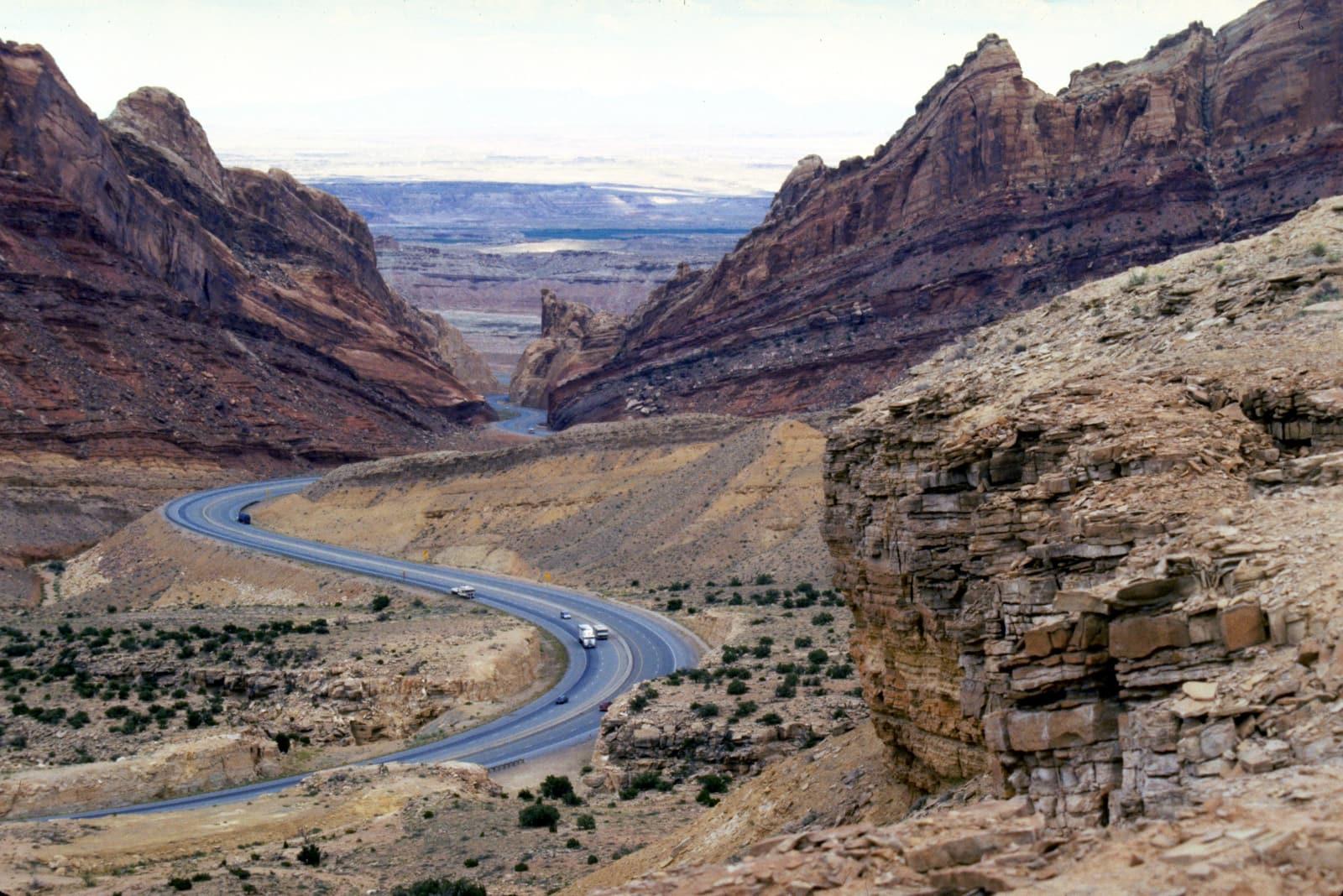
San Rafael Swell Fossil Guide
Image: Dennis Adams / National Scenic Byways (Public domain)
The San Rafael Swell in Emery County, Utah, is a vast uplift of tilted Jurassic and Cretaceous rock that exposes everything from dinosaur bone beds to marine shell layers and petrified wood. It holds the Cleveland-Lloyd Dinosaur Quarry in Jurassic National Monument, and on the surrounding BLM land you may collect a reasonable amount of common invertebrates, plant fossils, and petrified wood.
By Edward Chen · Updated 1 August 2026
Introduction
The San Rafael Swell is a giant dome of rock in Emery County, Utah, where layers laid down over tens of millions of years have been pushed up and tilted, then carved by erosion into a maze of canyons, reefs, and badlands. The "Swell" exposes a deep slice of Mesozoic time, from Triassic and Jurassic river and dune deposits through Cretaceous marine shales, and that range of rock holds an equally wide range of fossils: dinosaur bones, marine shells and ammonites, oyster beds, and petrified wood.
The headline fossil site is the Cleveland-Lloyd Dinosaur Quarry, protected within Jurassic National Monument, which contains one of the densest concentrations of Jurassic dinosaur bones ever found, with thousands of fossils representing dozens of animals. The quarry is for viewing, but across much of the surrounding public land managed by the Bureau of Land Management, hobbyists may collect reasonable amounts of common invertebrates, plant fossils, and petrified wood by hand.
Location and Directions
The San Rafael Swell sits in central Utah's Emery County, roughly bounded by Interstate 70, the towns of Castle Dale and Huntington to the west, and Green River to the east, centered near 38.85°N, 110.75°W. It is high-desert backcountry, crossed by a few paved and many unpaved roads. The Cleveland-Lloyd Dinosaur Quarry and Jurassic National Monument lie north of I-70, reached by a signed gravel road from Highway 10 near Cleveland. Check current hours, since the visitor center is seasonal.
This is remote country with no services inside the Swell, so carry plenty of water, food, fuel, a paper map, and recovery gear, and watch road conditions, since dirt roads turn impassable when wet. A high-clearance vehicle is wise for the backroads. Before collecting, learn the boundaries between BLM land, state land, and any protected areas, and know which fossils you may take.
 Photo: inkknife_2000 (7.5 million views +), CC BY-SA 2.0, via Wikimedia Commons
.jpg)
What Fossils You'll Find
The Swell's fossils reflect its many rock layers. The Jurassic Morrison Formation holds dinosaur bone, most famously the predator-rich bone bed at Cleveland-Lloyd, and the same Jurassic and Triassic rocks preserve dinosaur trackways, including a well-known Allosaurus footprint from the Swell. Cretaceous marine rocks such as the Mancos Shale contain ammonites, clams, oysters, and other shells from the seaway that once covered the region. Petrified wood and fossil plant material occur in several of the continental units.
What a hobbyist may actually collect is limited to common invertebrates, plant fossils, and petrified wood. The dinosaur bones, trackways, and any uncommon fossils are protected. Marine shell beds and petrified wood scatters on BLM land are the most rewarding targets for legal hand collecting.
Geologic History
The rocks of the San Rafael Swell span much of the Mesozoic Era. In the Triassic and Jurassic, this region saw rivers, floodplains, and great sand-dune deserts, recorded in formations such as the Navajo Sandstone and the dinosaur-bearing Morrison Formation deposited around 150 million years ago. In the Cretaceous, a broad inland sea, the Western Interior Seaway, flooded the area, leaving the marine muds of the Mancos Shale with their ammonites and clams.
Around 60 to 40 million years ago, during the mountain-building that shaped much of the West, these flat layers were arched upward into the broad dome of the Swell. Erosion then stripped and dissected the uplift, exposing the upturned edges of the layers as the dramatic San Rafael Reef and carving the canyons and badlands seen today. That ongoing erosion continually exposes fresh fossil-bearing rock at the surface.
 Photo: On^ste82, CC BY 3.0, via Wikimedia Commons

Collecting Rules and Regulations
On BLM public land, hobby collecting is allowed for some fossils but not others, and the distinction matters. It is illegal to dig, remove, collect, or make molds or casts of vertebrate fossils, including dinosaur, fish, and reptile bone, and the same protection applies to fossil trackways and to uncommon invertebrate and plant fossils. By contrast, anyone may collect, without a permit, a reasonable amount of common invertebrate fossils such as mollusks, common plant fossils such as leaves, and petrified wood, using surface collection and non-powered hand tools that cause only negligible ground disturbance. The BLM defines "reasonable" for personal use as up to 25 pounds per day plus one piece, with a yearly cap of 250 pounds, and collected material may not be sold or bartered. Do not collect inside Jurassic National Monument or other protected areas, where everything is off-limits, and if you find vertebrate bone, leave it in place and report it to the BLM or the Utah Geological Survey.
Safety
The San Rafael Swell is rugged, remote desert, so the main risks are heat, dehydration, and being stranded far from help. Carry far more water than you expect to use, tell someone your route, and do not rely on cell coverage. Summers are very hot and flash floods can roar through the canyons during storms, even from rain falling miles away, so check the forecast and stay out of slot canyons and washes when storms threaten. Dirt roads become impassable mud when wet. Watch for rattlesnakes, wear sturdy boots and sun protection, and keep clear of the steep, crumbling edges of the reef and canyon rims.
Sources
https://geology.utah.gov/apps/fossil_guide/?page=Fossil-Collecting https://www.blm.gov/programs/national-conservation-lands/utah/jurassic-national-monument https://www.blm.gov/programs/paleontology/collecting-fossils https://www.visitutah.com/articles/cleveland-lloyd-dinosaur-quarry
Nearby sites
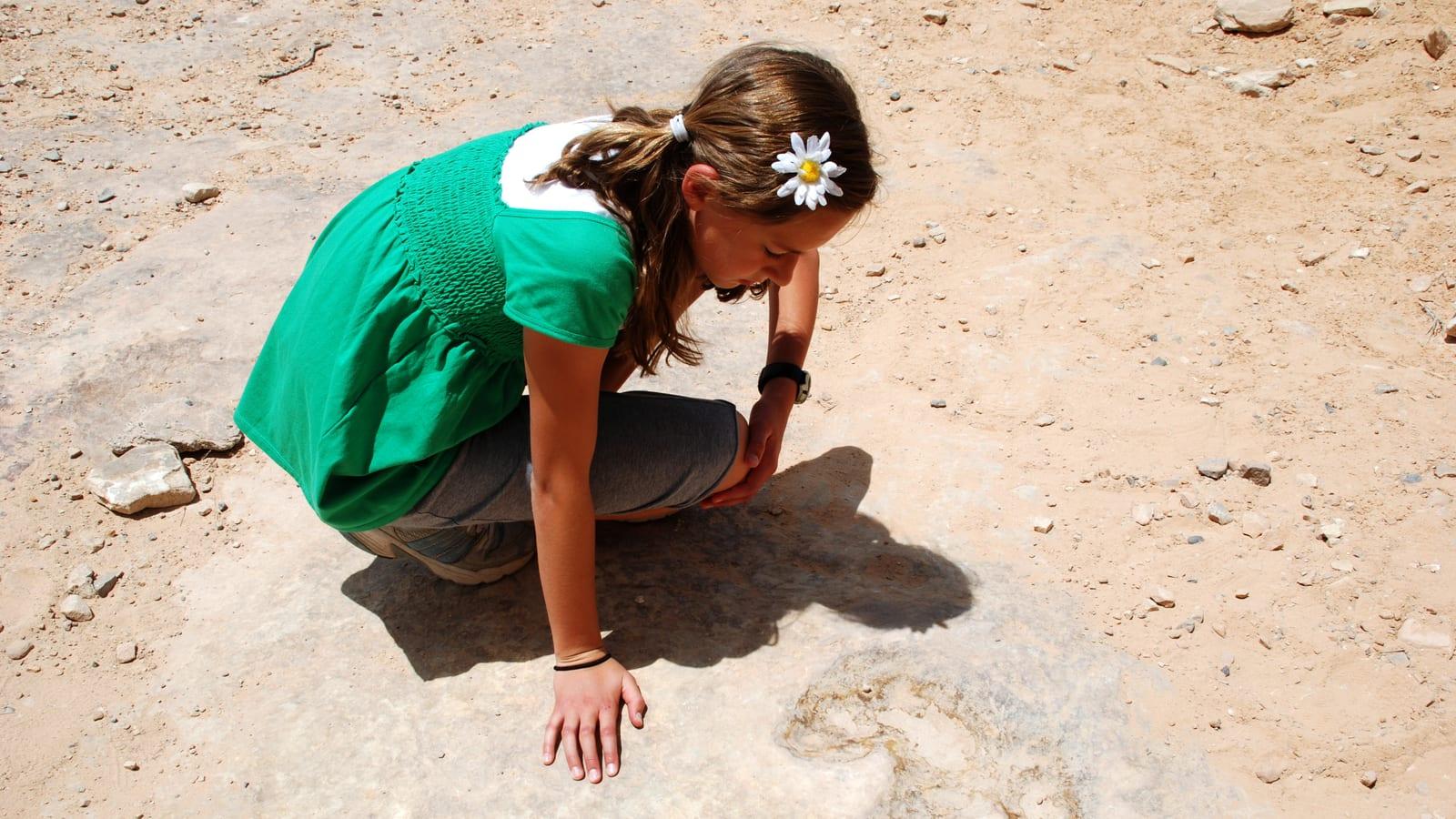 Cleveland-Lloyd Dinosaur Quarry Fossil Hunting GuideAllosaurus fragilis, Camarasaurus
 Cedar Mountain Formation Yellow Cat Member Fossil GuideDinosaurs, Utahraptor
 Fruita Paleontological Area Fossil Hunting GuideDinosaur bones, Mammal remains
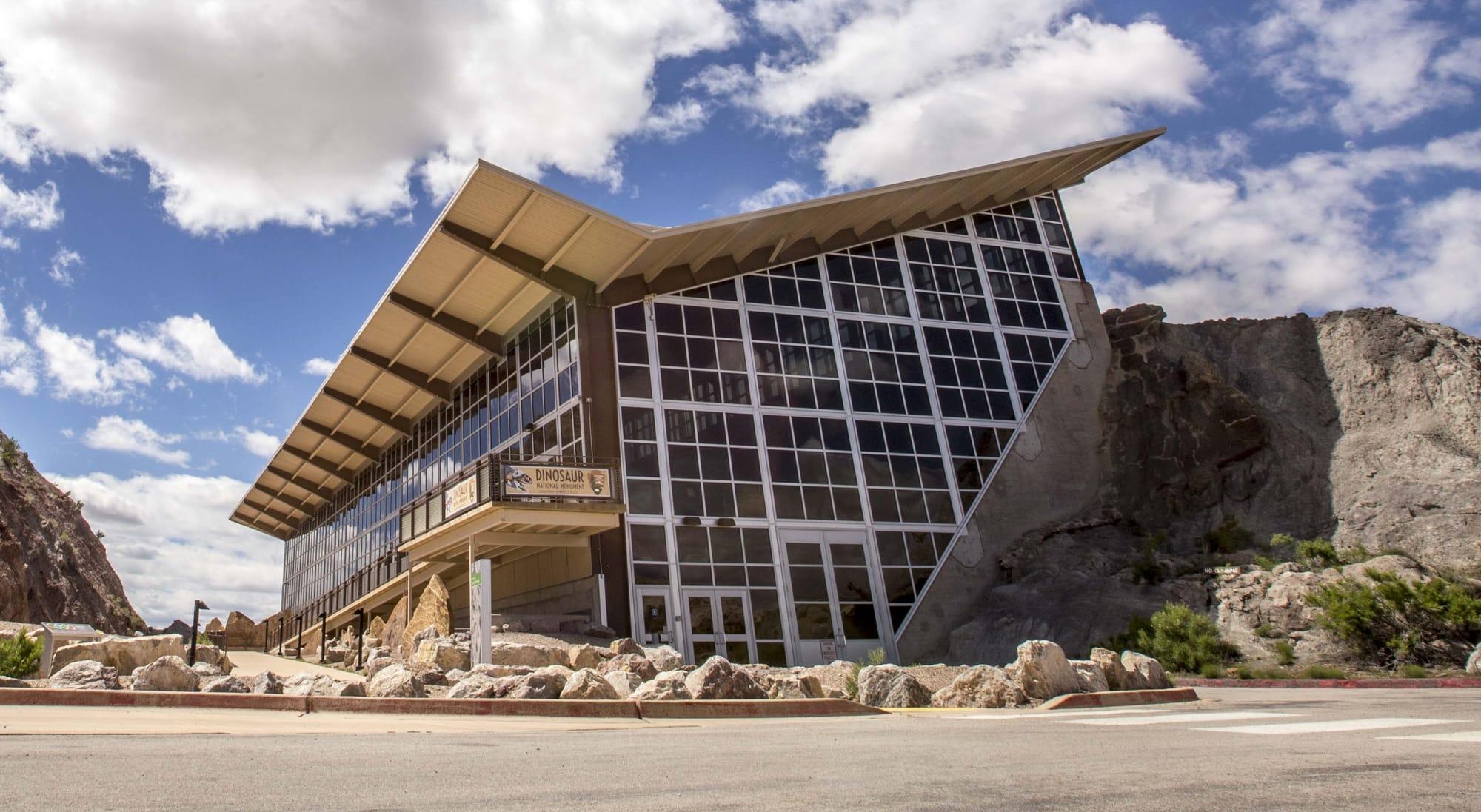 Dinosaur National Monument Quarry Exhibit Hall Fossil Hunting GuideAllosaurus fragilis, Apatosaurus louisae