U-Dig Fossils Fossil Hunting Guide
A private pay-to-dig quarry in the Middle Cambrian Wheeler Shale of the House Range, Millard County, Utah. Trilobites come out in quantity, chiefly Elrathia kingii. Tools are provided, you keep everything you find, and no reservation is needed. The last 20 miles are gravel road.
By Edward Chen · Updated 26 July 2026
Introduction
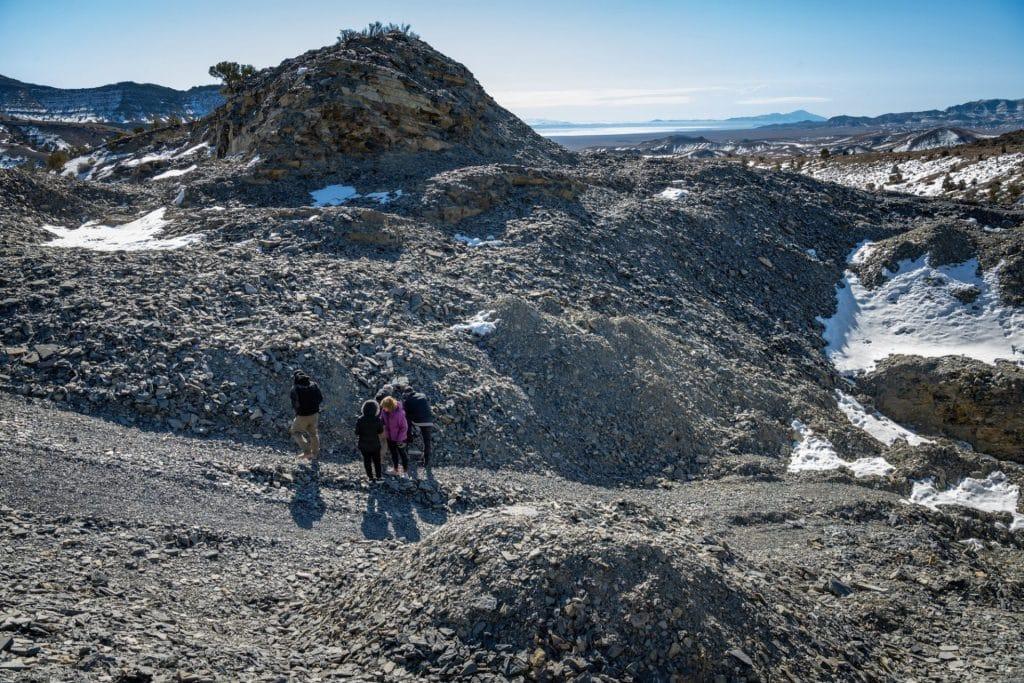
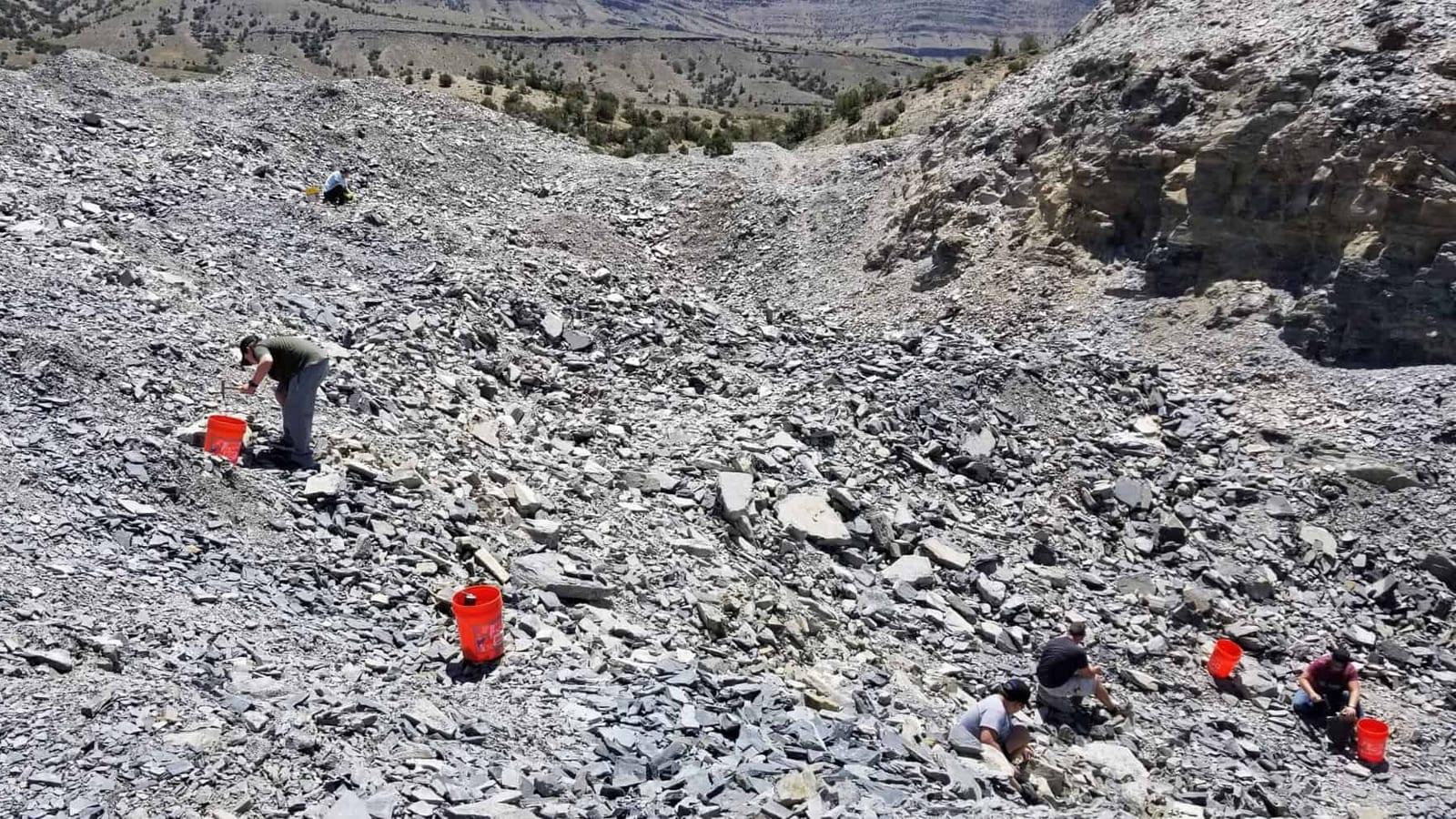
U-Dig Fossils is a private quarry in the House Range of Millard County, in Utah's west desert, working roughly 40 acres of Middle Cambrian Wheeler Shale. It is one of the most productive publicly accessible trilobite localities anywhere, and the reason is simple: the shale here is packed with them, and it splits open by hand.
The arrangement is straightforward. You pay for a block of time, they hand you tools, and everything you find is yours. There is no permit, no reservation, and no size limit. What there is instead is distance. The quarry sits at the end of 20 miles of gravel road in genuinely remote country, and that drive is the part of the trip that needs planning.
Location and Directions
The quarry is in the House Range, near 39.353 degrees north, 113.290 degrees west. Delta is the nearest town of any size and the last place for fuel, food, and supplies.
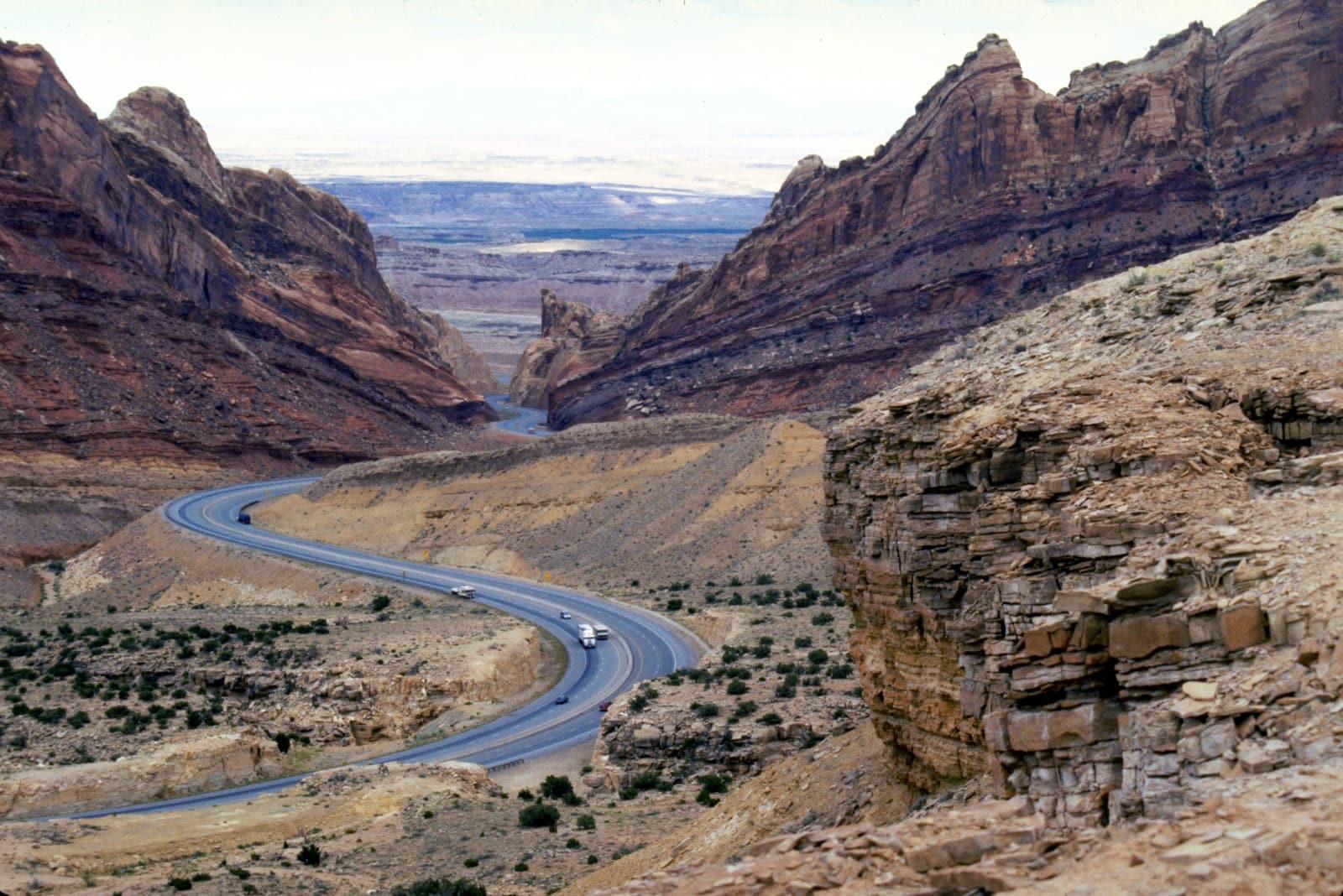
From Delta, drive 32 miles west on US-6/50, then turn north at the U-Dig Fossils sign between mile markers 56 and 57. From there it is 20 miles on a maintained gravel road to the quarry. The road is generally fine for an ordinary car in dry conditions, but it is gravel, it is long, and there is no fuel, water, or phone signal along it.
Fill the tank in Delta, carry more water than you plan to drink, and tell someone where you are going. A spare tyre in serviceable condition is not a theoretical concern on 40 miles of round-trip gravel.
The 2026 season runs from 30 March to 24 October. The gate opens at 9am and closes by 6pm, and the quarry is closed on Sundays and on Independence Day. Reservations are not needed, and the office takes all the usual forms of payment. You choose two hours, four hours, or a full day when you arrive, and children aged six and under dig free alongside a paying adult.
Photo: Smithsonian National Museum of Natural History, CC0, via Smithsonian Open Access
What Fossils You'll Find
Trilobites, in numbers that surprise first-time visitors.
Elrathia kingii is the common species and the one most people leave with, a small oval trilobite with a broad head shield, typically an inch or under. It is probably the most widely collected trilobite in the world, and this is where a great many of them come from.
Asaphiscus wheeleri is the larger and less frequent prize, broader and flatter, and a good specimen is a noticeably better find. Peronopsis interstricta, a tiny agnostid only a few millimetres long with just two body segments, turns up for those looking closely.
Several other trilobite species occur, along with brachiopods and other Cambrian invertebrates. Sizes range from a few millimetres up to around two inches.
The method is to split the shale. It parts readily into flat sheets along the bedding, and trilobites lie on those surfaces, so you work a slab apart and check each face as it opens. Tools are provided. Most visitors find trilobites within the first few minutes, and a productive four-hour session commonly produces a bucket's worth, though how many depends heavily on how methodically you work rather than how hard you swing.
Photo: Smithsonian National Museum of Natural History, CC0, via Smithsonian Open Access
Geologic History
The Wheeler Shale was deposited in the Middle Cambrian, roughly 507 to 504 million years ago, when western Utah lay under a warm sea just south of the equator. The specific setting matters. This was not a shallow shelf but a deeper basin, the House Range embayment, lying off the edge of the carbonate platform.
That deeper, quieter water is why the fossils are so abundant and so well preserved. Fine mud settled slowly onto a sea floor with little oxygen and few scavengers, so animals that died and sank were buried intact rather than broken up. The shale that resulted is thin-bedded and splits cleanly, which is what makes it collectable by hand.
The Wheeler Shale belongs to the same broader interval and setting as the Burgess Shale of British Columbia, and parts of it, particularly around nearby Marjum Pass, have yielded soft-bodied fossils of the same exceptional kind. The commercial quarry works the trilobite-bearing beds rather than those soft-bodied horizons.
Much later, Basin and Range faulting lifted the House Range into the north-south ridge it forms today, tilting these Cambrian beds and exposing them across the desert slopes where the quarry now operates.
Collecting Rules and Regulations
This is private commercial ground and the terms are the operator's.
Pay for a block of time. Two hours, four hours, or a full day, charged per person, with under-sixes free alongside a paying adult.
Tools are provided and included. You do not need to bring a hammer.
You keep everything you find. There is no limit, no reporting requirement, and no permit, which is the practical appeal of a private quarry over public land.
Dig where staff direct you. The operator manages which faces and spoil areas are open.
Note that the surrounding House Range is largely public land administered by the Bureau of Land Management, where different rules apply entirely. Do not assume the quarry's terms extend past its boundary. On BLM ground, invertebrate fossils may generally be collected in reasonable amounts for personal use, but vertebrate fossils may not be collected at all without a permit.
Safety
The remoteness is the real hazard here, more than the digging. You are 20 miles of gravel from a paved road and over 50 from a town, with no phone signal for much of it. Carry water for everyone in the vehicle plus a margin, keep the fuel tank full, and do not attempt the road in a low-clearance vehicle after heavy rain, when it can wash out.
Desert conditions are severe. Summer temperatures are high and shade at the quarry is minimal, so the heat is a genuine risk during a four-hour dig. Drink steadily rather than waiting for thirst, wear a hat, and use sun protection. The quarry sits above 6,000 feet, which increases both sun intensity and dehydration.
Splitting shale sends chips flying, so wear eye protection, and gloves are worth having for the sharp edges. The spoil slopes are loose and uneven, so wear boots with a firm sole. Rattlesnakes occur in this country, so watch where you put your hands and feet among rocks. There are no facilities beyond the basics at the office, so arrive self-sufficient.
Sources
https://u-digfossils.com/ https://u-digfossils.com/hours-of-operation https://u-digfossils.com/rates-%26-booking https://geology.utah.gov/
Frequently asked questions
- Do you need a reservation for U-Dig Fossils?
- No. Reservations are not required and the office takes all major forms of payment. You choose a two-hour, four-hour, or full-day dig on arrival.
- When is U-Dig Fossils open?
- The 2026 season runs from 30 March to 24 October. The gate opens at 9am and closes by 6pm, and the quarry is closed on Sundays and Independence Day.
- What trilobites are found at U-Dig?
- Elrathia kingii is the common one. Asaphiscus wheeleri and the tiny agnostid Peronopsis interstricta also occur, along with brachiopods and other Cambrian material.