Waco Mammoth National Monument Fossil Hunting Guide
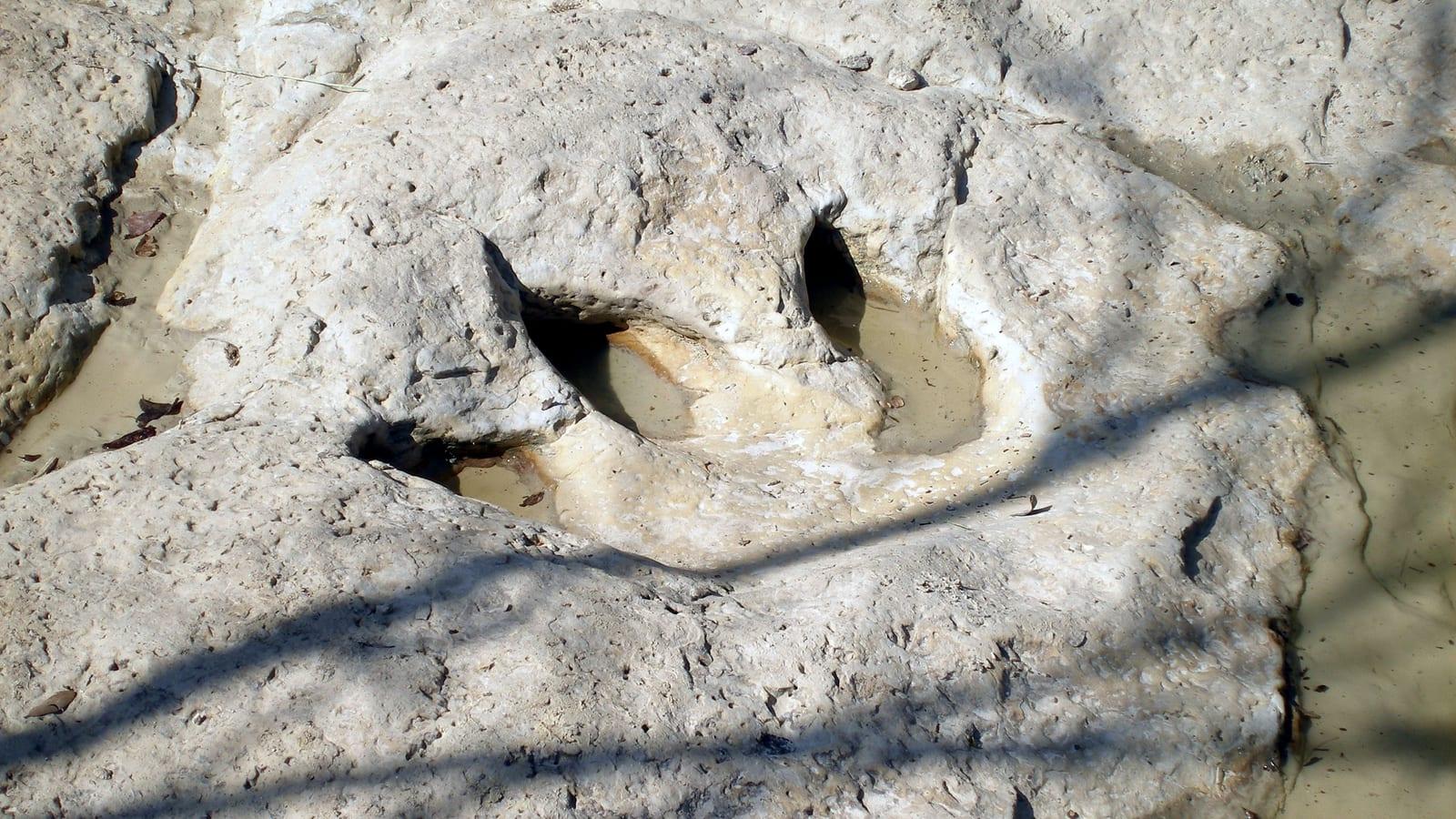
Image: Larry D. Moore (CC BY 4.0)
Waco Mammoth National Monument in Waco, Texas, preserves the nation's only recorded nursery herd of Columbian mammoths (Mammuthus columbi), killed in a sequence of late Pleistocene flooding events between roughly 67,000 and 51,000 years ago. The site is viewing-only, with all in-situ fossils preserved inside a climate-controlled dig shelter. Guided tours by NPS rangers run every 30 minutes.
By Edward Chen · Updated 27 July 2026
Introduction
Waco Mammoth National Monument sits on the banks of the Bosque River in Waco, Texas, and preserves the only known nursery herd of Columbian mammoths (Mammuthus columbi) ever excavated in the United States. Beginning in 1978, when local residents Paul Barron and Eddie Bufkin found a large bone eroding from a riverbank, paleontologists from Baylor University and later from the Mayborn Museum Complex uncovered the articulated remains of multiple Columbian mammoths killed and buried in a sequence of late Pleistocene flooding events between roughly 67,000 and 51,000 years ago. The site was designated a National Monument in 2015 and is administered jointly by the National Park Service, the City of Waco, and Baylor University. All fossils remain in-situ inside a climate-controlled dig shelter. Collecting is not permitted. Entry to the park is free, but viewing the dig shelter requires a paid guided tour.
This guide covers the visit format, the fossils preserved, and the geology of the late Pleistocene Bosque River that drowned and buried the herd.
Location and Directions
The monument is at 6220 Steinbeck Bend Drive in northwest Waco, about 5 miles from downtown and a short drive from Baylor University. From Interstate 35 take exit 339 (Lake Shore Drive) west and follow signs north on Steinbeck Bend Drive to the park entrance. Parking is free in a paved lot at the visitor centre. The grounds are open daily and include a quarter-mile walkway from the visitor centre to the dig shelter through a wooded riparian park.
Visit format
Entry to the park grounds, visitor centre, and walkways is free. Access to the dig shelter, where the fossils are visible in-situ, requires a paid ranger-led tour. Tours begin every 30 minutes and last about 45 minutes to one hour. As of the 2026 schedule, tour tickets are $6 for adults, $5 for seniors (62+), military with ID, and youth ages 4-17, and free for children 3 and under. Group rates apply for 20 or more. No reservation is required. Tickets are sold on a first-come, first-served basis at the visitor centre. Pets are not allowed in the dig shelter or inside park buildings. Only registered service animals are permitted. The dig shelter is fully enclosed and climate-controlled and is accessible for visitors with mobility limitations.
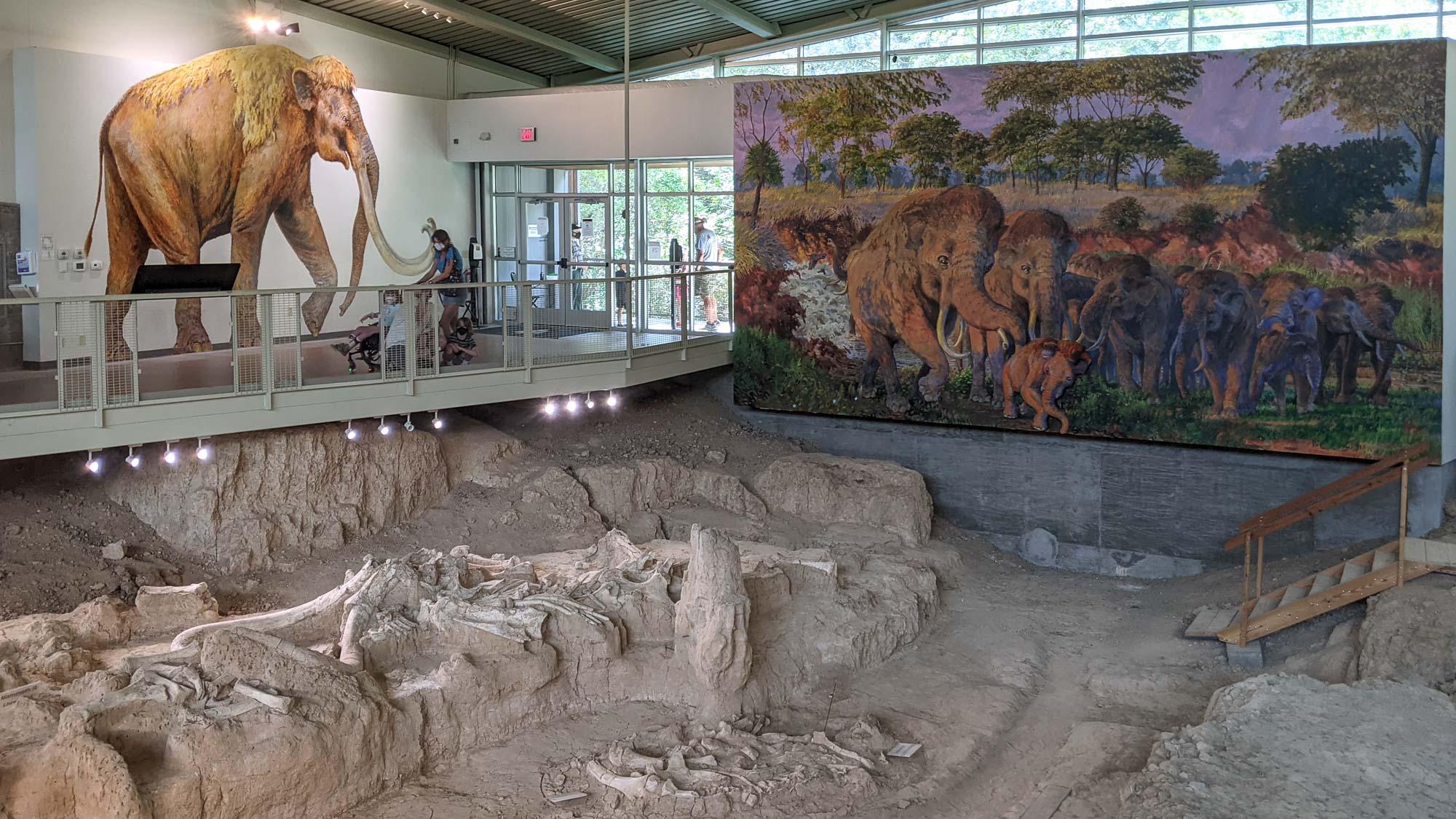
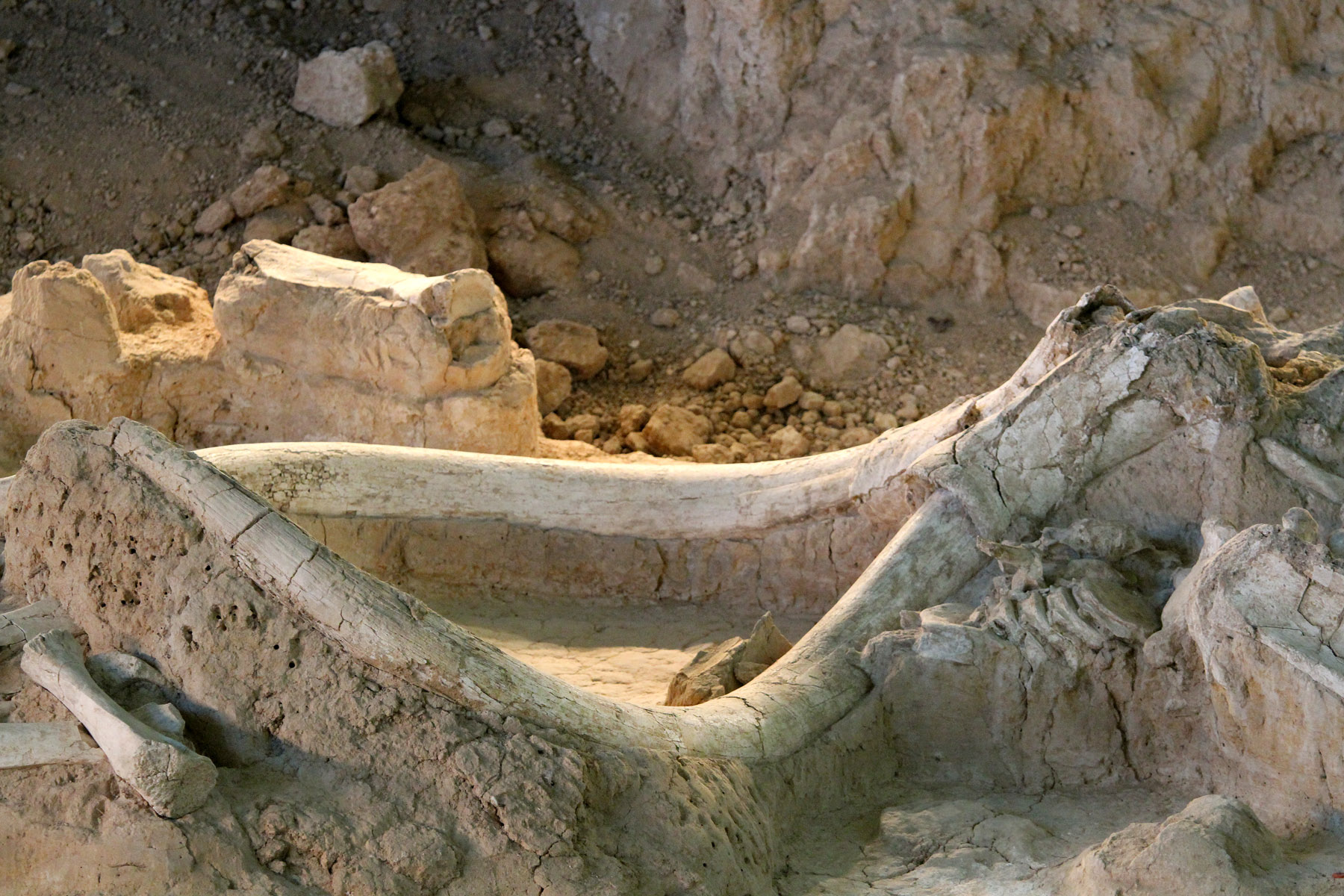 Photo: NPS Photo, public domain, via National Park Service
What Fossils You'll Find
The monument preserves the articulated and partially articulated remains of a herd of Columbian mammoths (Mammuthus columbi), the largest of the New World Pleistocene proboscideans and an animal substantially larger than the better-known woolly mammoth of higher latitudes. The site is unique because it is the only documented case in North America of a nursery herd: a group of adult females and their young preserved together where they died, rather than as isolated bones from disparate individuals. Excavation has uncovered remains of at least 24 mammoths at two distinct levels within the deposit. The first level, dated to about 67,000 years ago, preserved roughly 19 individuals, mostly females and juveniles. The second level, dated to about 51,000 years ago, preserved at least three individuals including the only adult male Columbian mammoth recovered from the site as of recent counts.
Associated finds include a small carnivore (described in early reports as a saber-toothed cat tooth, though identification is conservative), an American camel (Camelops), Western horses (Equus), and a juvenile giant tortoise. The visitor's main experience inside the dig shelter is the view of the articulated mammoth skeletons in the same position they came to rest in the late Pleistocene river sediments. The skeletons remain partly embedded. They are not lifted, mounted, or relocated. Interpretation focuses on the herd structure, mortality event, and what it tells us about Columbian mammoth social behaviour.
"Approximately 67,000 years ago a group of adult female Columbian mammoths surrounded their young to protect them. Yet on that long-ago day, they all died." National Park Service
 Photo: Jay Galvin, CC BY-SA 4.0, via Wikimedia Commons
Geologic History
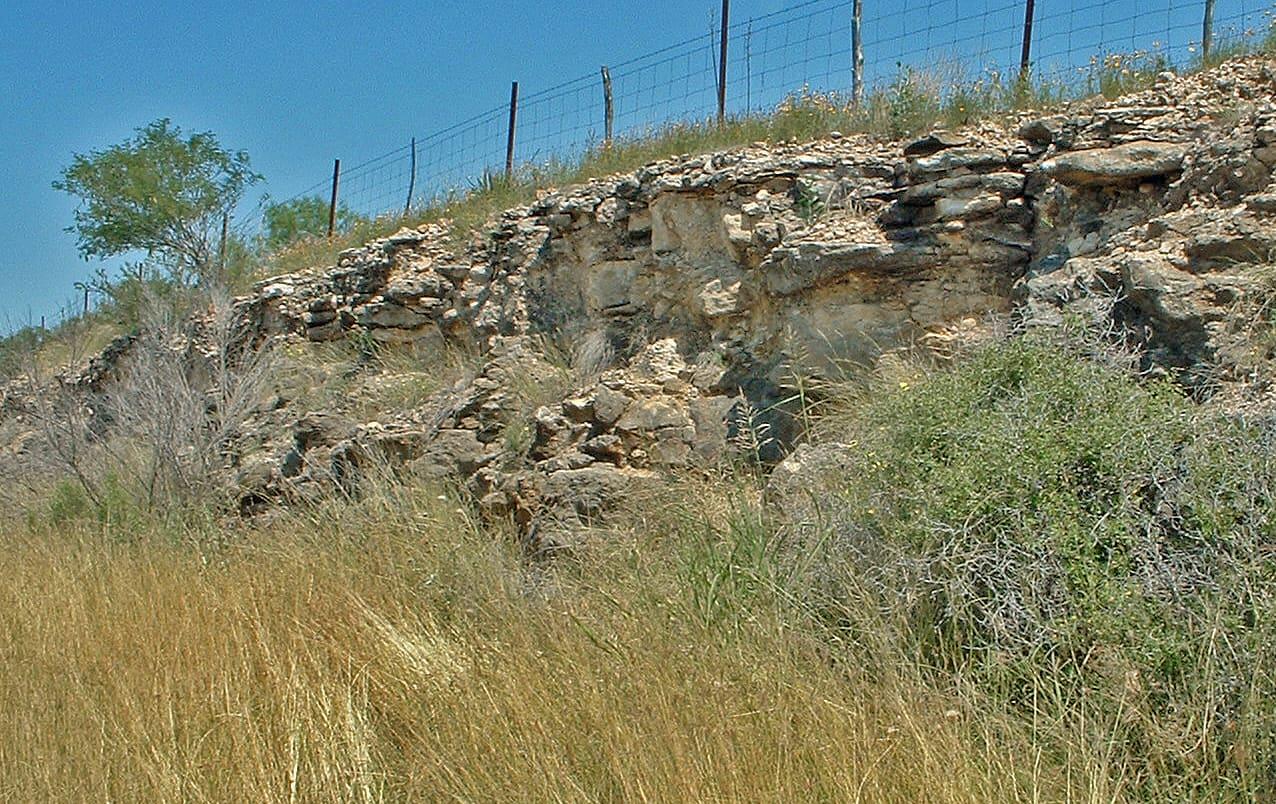
The monument sits on a Pleistocene terrace of the Bosque River, a major tributary of the Brazos River draining the Texas Hill Country. During the late Pleistocene the river drained a landscape similar to today's, but cooler and wetter, and produced a series of flood deposits stacked in the modern bluffs above the active channel. The first mammoth assemblage at the site appears to have been buried by a single catastrophic flood event roughly 67,000 years ago, in which a herd of females and juveniles took shelter in a low spot near the river and were overwhelmed by rising water and silt. A second flood event roughly 16,000 years later (about 51,000 years ago) buried additional individuals at a shallower level in the same deposit. The detailed taphonomy supports the catastrophic interpretation: the bones are preserved articulated, not scattered, and the body postures are consistent with rapid burial.
Mammoths went extinct across most of North America roughly 11,000 years ago at the end of the Pleistocene, with surviving relict populations on Wrangel Island in the Arctic Ocean lasting another several thousand years. The Waco site records mammoth ecology long before that extinction, when Columbian mammoth herds still roamed widely across the Texas plains.
How the site became a National Monument
Paul Barron and Eddie Bufkin discovered the first eroding bone in 1978. Baylor University and the Strecker Museum (now the Mayborn Museum Complex) began excavation that year and continued in periodic seasons over the following decades. The City of Waco established the site as a city park in 2009. President Barack Obama designated it a National Monument by presidential proclamation in 2015, recognising both the unique paleontology of the nursery herd and the public-engagement role the site had developed under city stewardship. Day-to-day management is shared between the National Park Service and the City of Waco, with continued Baylor University research access.
Collecting Rules & Regulations
Is Fossil Collecting Allowed?
No. The site is preserved in-situ. Visitors view the fossils inside the dig shelter on a ranger-led tour and do not handle or collect specimens.
Key Points:
- Entry to the park grounds is free.
- Tour tickets for the dig shelter: $6 adults, $5 senior/military/youth, free under 4.
- Tours every 30 minutes, no reservation required.
- The dig shelter is fully enclosed and climate-controlled.
- All fossils remain in-situ. Collection or removal is prohibited.
Safety
Waco Mammoth is one of the easier fossil sites to visit safely. The fossils are inside a fully enclosed, climate-controlled shelter, the tour is ranger-led, and the shelter is accessible for visitors with mobility limitations.
The main consideration is the walk. The dig shelter is a quarter of a mile from the visitor centre along a paved path through riparian woodland. Central Texas summers run above 95°F with high humidity and the path is only partly shaded, so carry water and take it slowly in the heat. The shelter itself is air-conditioned, so the walk is the hot part rather than the tour.
The park sits on the Bosque River in wooded bottomland. Mosquitoes are heavy from spring through autumn, so use repellent. Copperheads occur in central Texas riparian woodland, and cottonmouths near the water. Stay on the paved walkways, which is the rule in any case, and keep children with you.
Fire ants nest in the grass beside the path. Do not stand still on a mound while reading an interpretive panel.
Inside the shelter, stay on the viewing walkway and behind the rails. The skeletons are unlifted and partly embedded, and the excavation surface below is fragile.
Pets are not allowed in the dig shelter or park buildings, and a parked car is not a safe place to leave one in a Texas summer. Plan around that before you drive over.