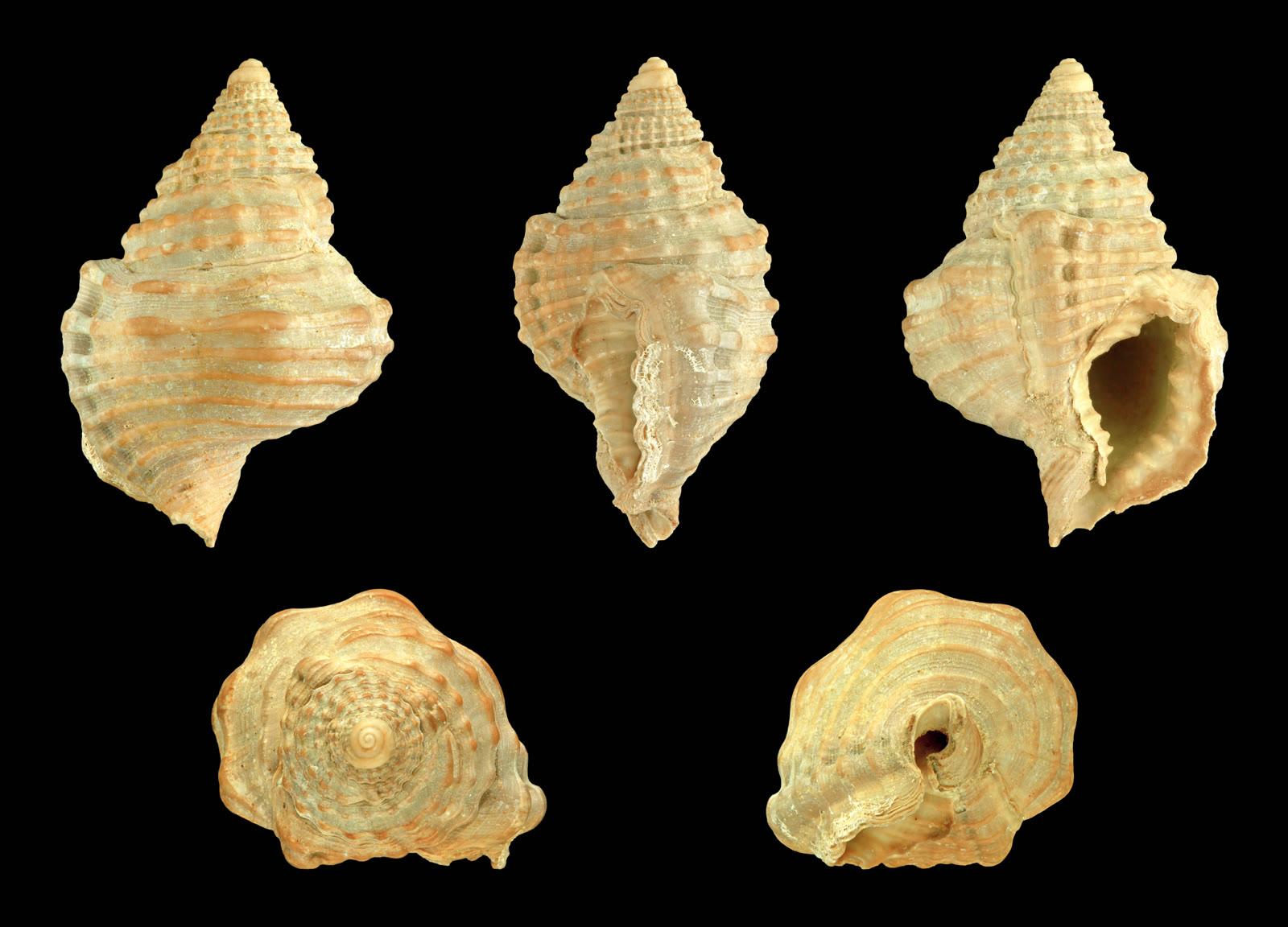
Whiskey Bridge (Stone City Bluff) Fossil Guide
Image: H. Zell (CC BY-SA 3.0)
Whiskey Bridge, where Highway 21 crosses the Brazos River between Bryan and Caldwell, Texas, exposes the Stone City Member of the Crockett Formation, a middle-Eocene marine shellbed often called the "most fossiliferous site in Texas." Free public collecting of invertebrate fossils is permitted on the navigable streambed below high-water mark.
By Edward Chen · Updated 31 July 2026
Introduction
Whiskey Bridge is the local name for the State Highway 21 bridge crossing the Brazos River between Bryan and Caldwell in central Texas. The high cut-bank on the west side of the river, Stone City Bluff, exposes the type section of the Stone City Member of the Crockett Formation, a middle-Eocene shelly marine bed widely considered "the most fossiliferous site in Texas." Generations of collectors and university geology classes have screened its glauconitic sands for gastropods, bivalves, shark teeth, sea biscuits, crabs, and dozens of other taxa.
Because the Brazos is a navigable waterway, the streambed and below-high-water-mark portions of the cut bank are public land in Texas. Invertebrate fossil collection is permitted year-round. Texas Game Wardens enforce federal vertebrate collecting rules in some adjacent settings, so stick to invertebrates and shark teeth for safety.
Location and Directions
Whiskey Bridge crosses the Brazos River at the boundary between Burleson and Brazos counties, about 12 miles west of Bryan-College Station.
Directions to Whiskey Bridge
From Bryan/College Station, take SH-21 west. The bridge is signed and the cut bank is visible on the west (Burleson County) side immediately downstream. There is a small, informal pull-off on the south shoulder of SH-21 west of the bridge. From there a short, steep path leads down to the river. Park clear of the highway and the railroad spur. The Union Pacific railway also crosses the river immediately upstream, do not walk on or near the railway tracks.
Bring rubber boots or river shoes, a small bucket or zip-top bags, a 1/4-inch screen for sieving the gravel, a small hand trowel for the bluff (use only below the high-water mark), and sun protection. Best collecting is at low river stage during late summer. Avoid the site in high water or right after major storms.
The Texas A&M Brazos Valley Master Naturalists and Dallas/Houston paleontological societies run group field trips here annually, joining one is the easiest way to learn what to look for.
What Fossils You'll Find
The Stone City Member of the Crockett Formation was deposited in a shallow inner-shelf marine environment during the middle Eocene Claibornian, between roughly 44 and 42 million years ago, when the Gulf of Mexico's coastline extended far inland of its modern position and warm, tropical waters bathed what is now central Texas.
Gastropods dominate the assemblage by sheer numbers and species diversity. The fan-shelled volute Athleta petrosus, the official Texas state fossil shell, designated in 2009, is the headline find, with its diagnostic shoulder spines and deep aperture. The high-spired Turritella with its tightly coiled whorls is abundant in lag concentrations, often whole. The carnivorous turret-shells of the family Conidae (Conorbis) and Pleurotomidae (Pleurotoma) are common, as are the sundial-shaped Architectonica, the warty Distorsio, and dozens of smaller naticid moon snails, mitrids, marginellid olive shells, terebrid auger shells, and naticid drillers. Bivalves include the heavily ribbed Venericardia, the small Glycymeris, the elongate Crassatella, the rounded clam Pitar, and the oyster Crassostrea. Brachiopods (mostly Lingula and Terebratulina) occur but are less common than molluscs. Bryozoan colonies coat shell fragments and pebbles throughout the section.
Echinoderms include the sea biscuit Eupatagus antillarum, typically recovered as broken tests on the gravel bars, and rare sand-dollar fragments. Crustaceans are well represented by isolated chelae of the swimming crab Branchioplax washingtoniana and several smaller portunid and xanthid crabs. Complete dorsal carapaces are rare but documented. Solitary cup corals (Turbinolia) are common, weathered loose from the marl.
Shark teeth are abundant though mostly small. Common species include the sand tiger Carcharias, the lemon shark Negaprion, the tiger shark Galeocerdo, the snaggletooth Hemipristis, and the medium-sized makos and lamniforms. The most prized are the broad triangular teeth of Otodus auriculatus, a direct ancestor of Otodus megalodon, which can reach several centimetres in length and represent one of the largest sharks of the middle Eocene Gulf. Bony fish remains include vertebrae, dental plates of the ray-relative Myliobatis, the spiny puffer-fish Eotrigonodon, and occasional turtle scutes from chelonioid sea turtles.
"This outcrop on the Brazos River is famous for being the 'most fossiliferous site in Texas.'" The Fossil Forum
Geologic History
The Crockett Formation is part of the broader Claiborne Group, deposited during the middle Eocene when the Gulf of Mexico's coastline lay tens to hundreds of kilometres inland of its present position. Global sea levels were high, the climate was warmer than today, and the Gulf Coast was a broad subtropical shelf swept by warm currents from the proto-Caribbean. The Stone City Member specifically represents an inner-shelf, well-circulated, normal-marine environment some 20 to 50 metres deep, with sandy and shelly bottoms supporting a varied benthic invertebrate community and an active pelagic fauna of sharks, bony fish, and marine mammals (the latter rarely preserved at Whiskey Bridge but well known from coeval units further south).
Storm reworking, hurricanes, and seasonal flooding concentrated shells, teeth, and bones into dense fossiliferous lags now exposed at Stone City Bluff. The Crockett Formation is locally divided into the lower Stone City Member (the most fossiliferous), the middle Wheelock Member (a more clay-rich, less fossiliferous deeper-water unit), and the upper Cook Mountain Member. Stone City Bluff is the type locality of the member.
Subsequent regional uplift of the Gulf Coast and incision by the Brazos River system have exhumed the Eocene section. The Brazos at Whiskey Bridge has cut through the Cook Mountain and Wheelock members and continues to undercut the Stone City Member exposed in the west bluff. The active river winnows fresh material from the eroding bluff into the channel and gravel bars year-round, with high flow events redistributing shell and tooth material along the river course.
The Stone City fauna was first described by Julia Anna Gardner and Wendell Phillips Woodring of the U.S. Geological Survey in early-20th-century work that established Stone City as a standard reference section for middle-Eocene Gulf Coast biostratigraphy and palaeoecology. The Texas A&M University geology department, the University of Texas Bureau of Economic Geology, and Texas A&I have all done extensive work at the site. It remains the most cited reference exposure for Texas Claibornian biostratigraphy.
How Whiskey Bridge Came to Be a Collecting Site
Whiskey Bridge has been a Houston Geological Society, Dallas Paleontological Society, and Houston Gem & Mineral Society field-trip staple since the mid-20th century. The combination of public navigable-stream access (the Brazos is a designated public waterway in Texas), abundant invertebrate fossils, immediate proximity to Texas A&M's geology programmes in nearby College Station, and the dramatic Stone City Bluff backdrop makes it perhaps the most-visited free fossil site in the state. Annual Earth Science Week field trips draw hundreds of students and amateur collectors.
Collecting Rules and Regulations
Is Fossil Collecting Allowed?
Yes, for invertebrate fossils, shark teeth, and other non-vertebrate material in reasonable amounts for personal use.
Key Points:
- Stay below the high-water mark. The bluff above is private land
- Do not collect vertebrate fossils (turtle bones, large mammal teeth, etc.) without checking current Texas rules
- No collecting Native American artifacts
- Stay clear of the active Union Pacific railway and SH-21 traffic
- River currents are dangerous in high water, check the gauge first
- No metal detectors or motorised tools
Safety
This is a river bluff beside a working highway bridge, and both of those need respect.
State Highway 21 is fast. Park properly and well clear of the carriageway, do not stop on the bridge itself, and do not walk the bridge or its verge to reach the bluff. Cross only where you can see and be seen, and keep children within arm's reach near the road.
The Brazos rises quickly. This is a large river with a big catchment, and levels change with rain falling far upstream on a day that is clear where you are standing. Do not work a bar or a bank position you cannot leave promptly, watch for any rise, and stay out of the water, which is muddy, deep in places, and carries strong current with submerged snags.
The bluff is steep, high, and unstable. Stone City Bluff is a cut bank actively eroded by the river, so it slumps and collapses, which is precisely why fresh material appears at its foot. Work the talus at the base rather than the face, do not climb it, and do not undercut it. Give it more room after rain.
Central Texas heat and humidity are severe in summer, with no shade at the water's edge, so carry plenty of water and go early. Watch for snakes, including cottonmouths near the water, and fire ants on the bank. Poison ivy is common in the riverside brush. Wear boots you can get muddy, because the bank clay is deep and slick.
Sources
- Houston Geological Society: Stone City / Whiskey Bridge field trip handout (PDF)
- Nautiloid.net: Whiskey Bridge Crockett Formation Eocene
- Time Scavengers: Brazos River Fossils of Southeast Texas
- The Fossil Forum: Stone City Bluff middle Eocene marine fossils
- Bradbery Adventures: Whiskey Bridge fossil hunt
Nearby sites
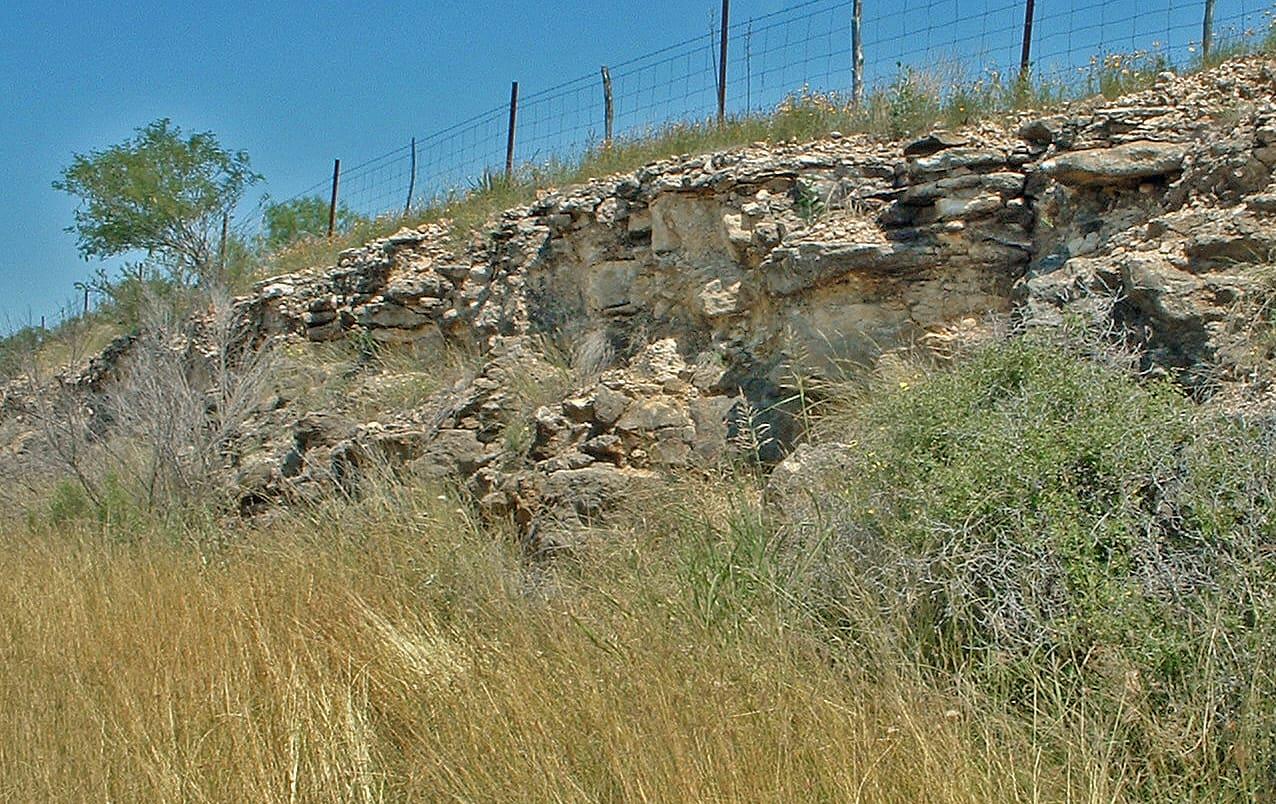 Austin Chalk Roadcuts Fossil Hunting GuideAmmonites, Inoceramus clams
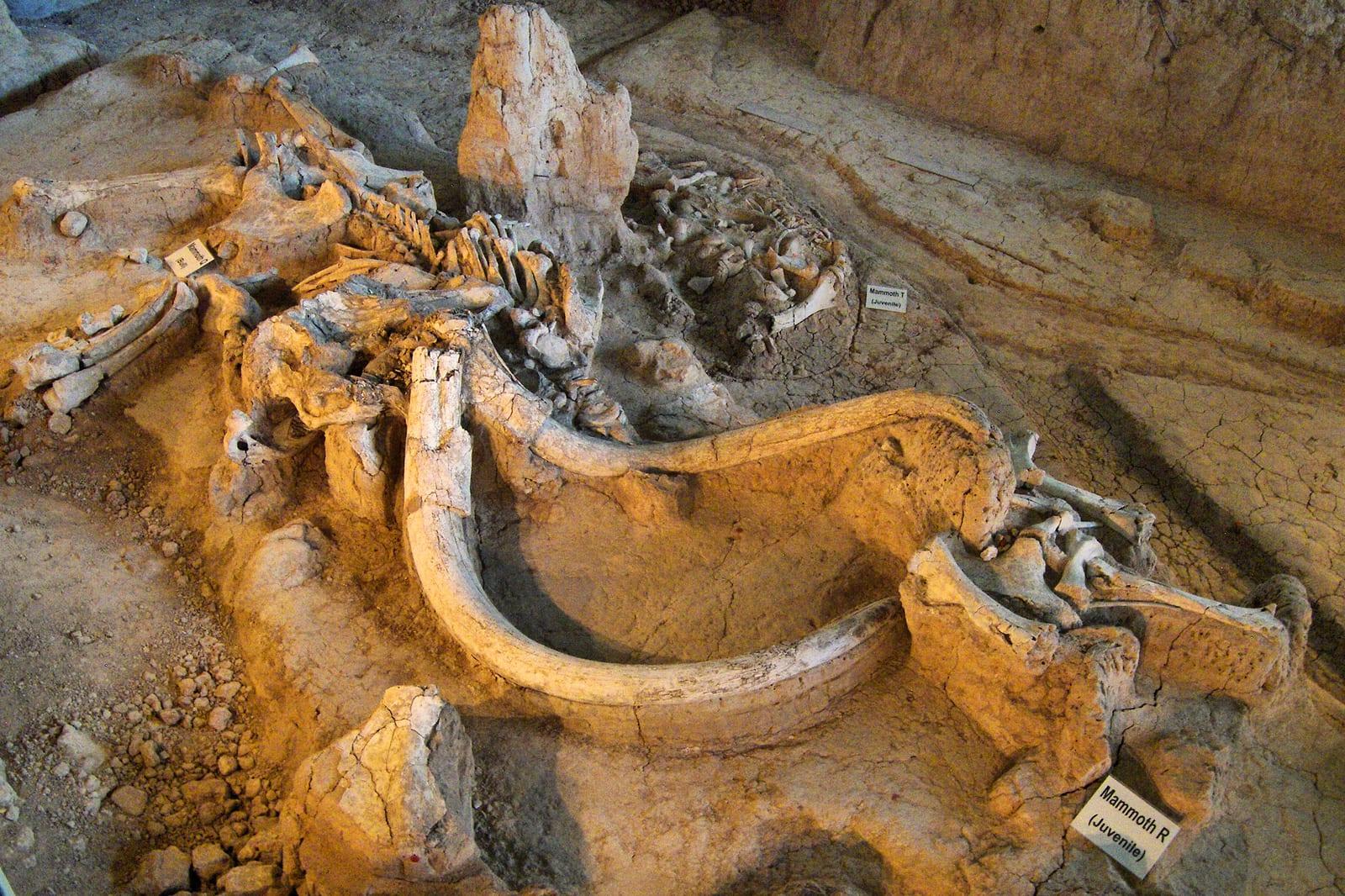 Waco Mammoth National Monument Fossil Hunting GuideColumbian mammoth (Mammuthus columbi), American camel (Camelops)
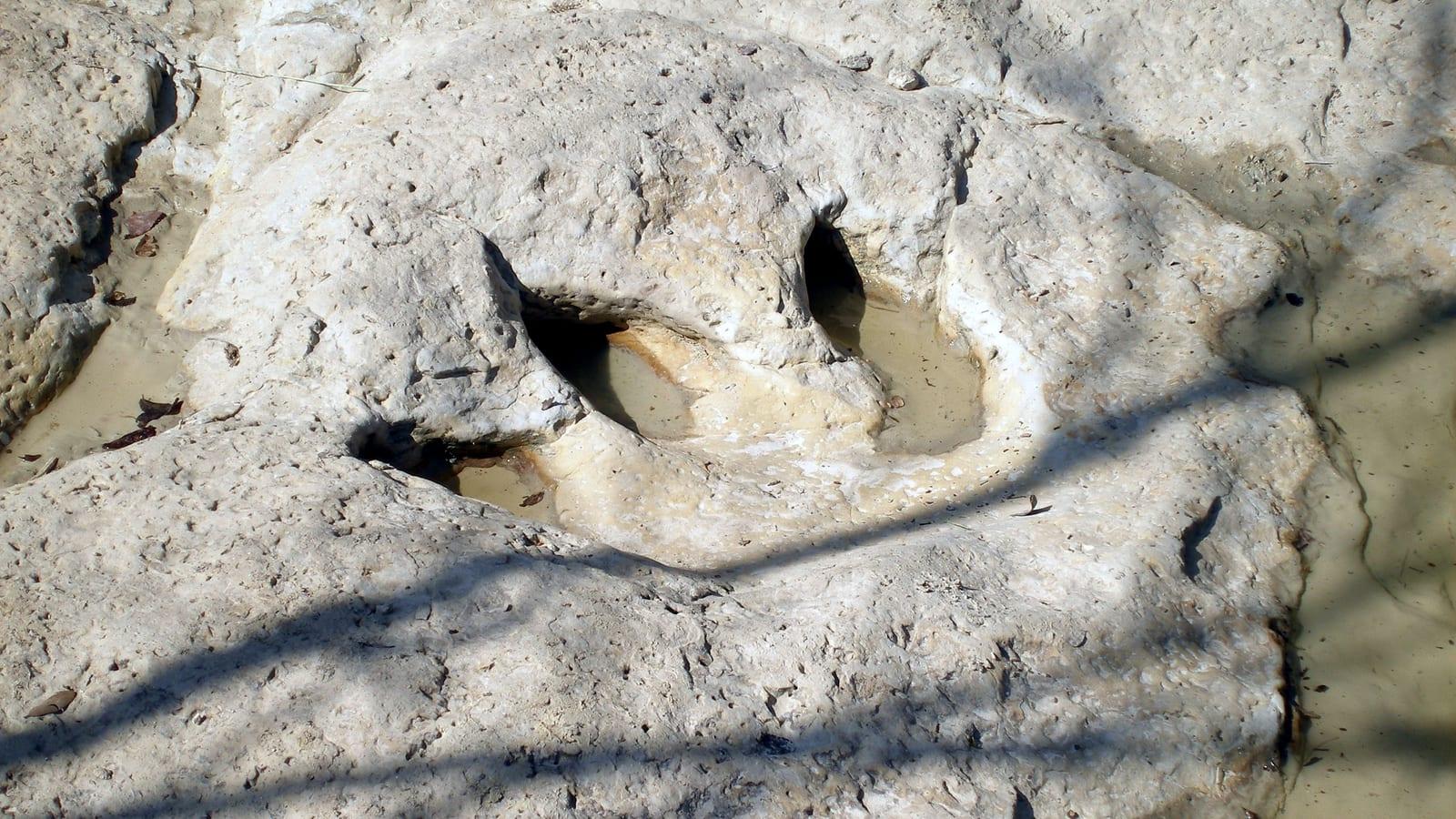 Dinosaur Valley State Park: Dinosaur TrackwaysDinosaur Tracks, Trace Fossils
 Mineral Wells Fossil Park Fossil Hunting GuideCrinoids, Echinoids