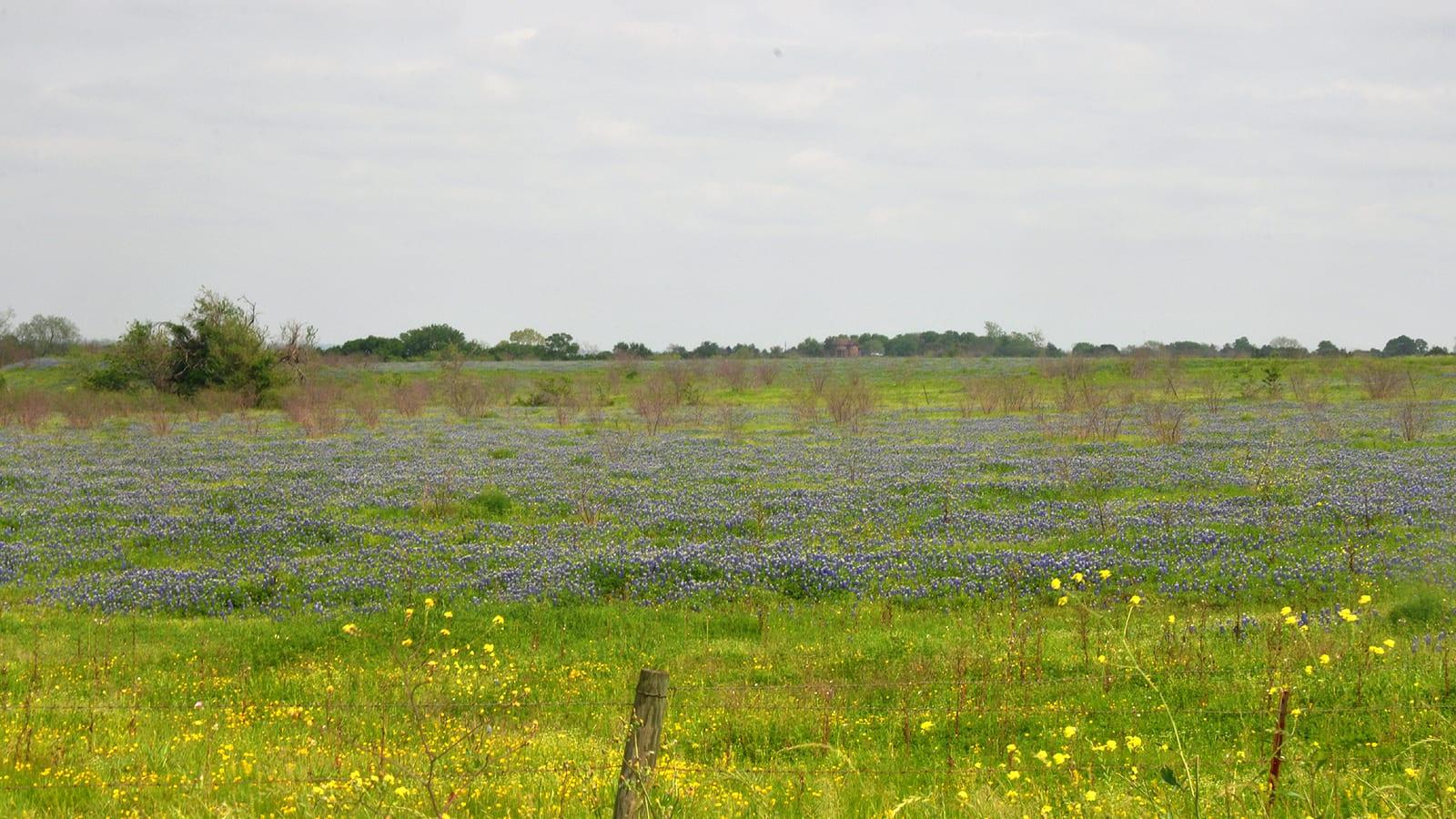
Mineral Wells Fossil Park Fossil Hunting Guide
A free city park near Mineral Wells, Texas, built on a former borrow pit where erosion has exposed Pennsylvanian marine rock. Crinoids, echinoids, brachiopods, and bryozoans lie loose on the surface in unusual abundance. No tools and no digging, because none are needed.
By Edward Chen · Updated 26 July 2026
Introduction
Mineral Wells Fossil Park occupies about eight acres on Indian Creek Road outside Mineral Wells, in Palo Pinto County west of Fort Worth. The ground was a borrow pit, dug in the 1990s to supply fill for a landfill, and when the digging stopped, erosion took over. Rain cut gullies into the exposed Pennsylvanian shale, washed the fine sediment away, and left the fossils lying on the surface.
That is the whole appeal, and it is why the park has a reputation out of proportion to its size. You do not dig here. You walk slowly and look down. The fossils are loose, weathered clean, and abundant enough that a first-time visitor with no idea what they are looking for will still find crinoid stems within a few minutes.
Location and Directions
The park is at 2375 Indian Creek Road, Mineral Wells, near 32.816 degrees north, 98.155 degrees west. Mineral Wells is on US-180 about 50 miles west of Fort Worth, and the park is a short drive from town.
Admission and parking are free. The site has a car park and a short trail down into the eroded pit, which is the collecting ground. Facilities have been developed in recent years, so expect basic amenities rather than nothing at all, but bring water regardless.
Opening is limited and seasonal, historically a few days a week rather than daily, and the park closes when conditions are poor. Check the park's current schedule before making the drive, particularly after heavy rain, when the clay becomes impassable.
Bring a container for finds, an egg carton or a small box works well for delicate crinoid material, and wear shoes you do not mind getting muddy.
What Fossils You'll Find
The abundance is what people remark on. This was a shallow sea floor teeming with echinoderms, and the surface reflects it.
Crinoids are everywhere, chiefly as stem sections and individual columnals, the small discs with a hole through the centre. Calyx plates and occasional partial crowns turn up for those looking carefully. Echinoids, the sea urchins, are the park's particular distinction. Their spines and plates are common here in a way they are not at most sites, and complete tests are the prize.
Brachiopods are abundant and varied, bivalves occur as clams and oyster-like forms, and bryozoans appear as delicate lacy and branching fragments, some of them fenestrate, the fine net-like kind. Corals are present as small solitary forms.
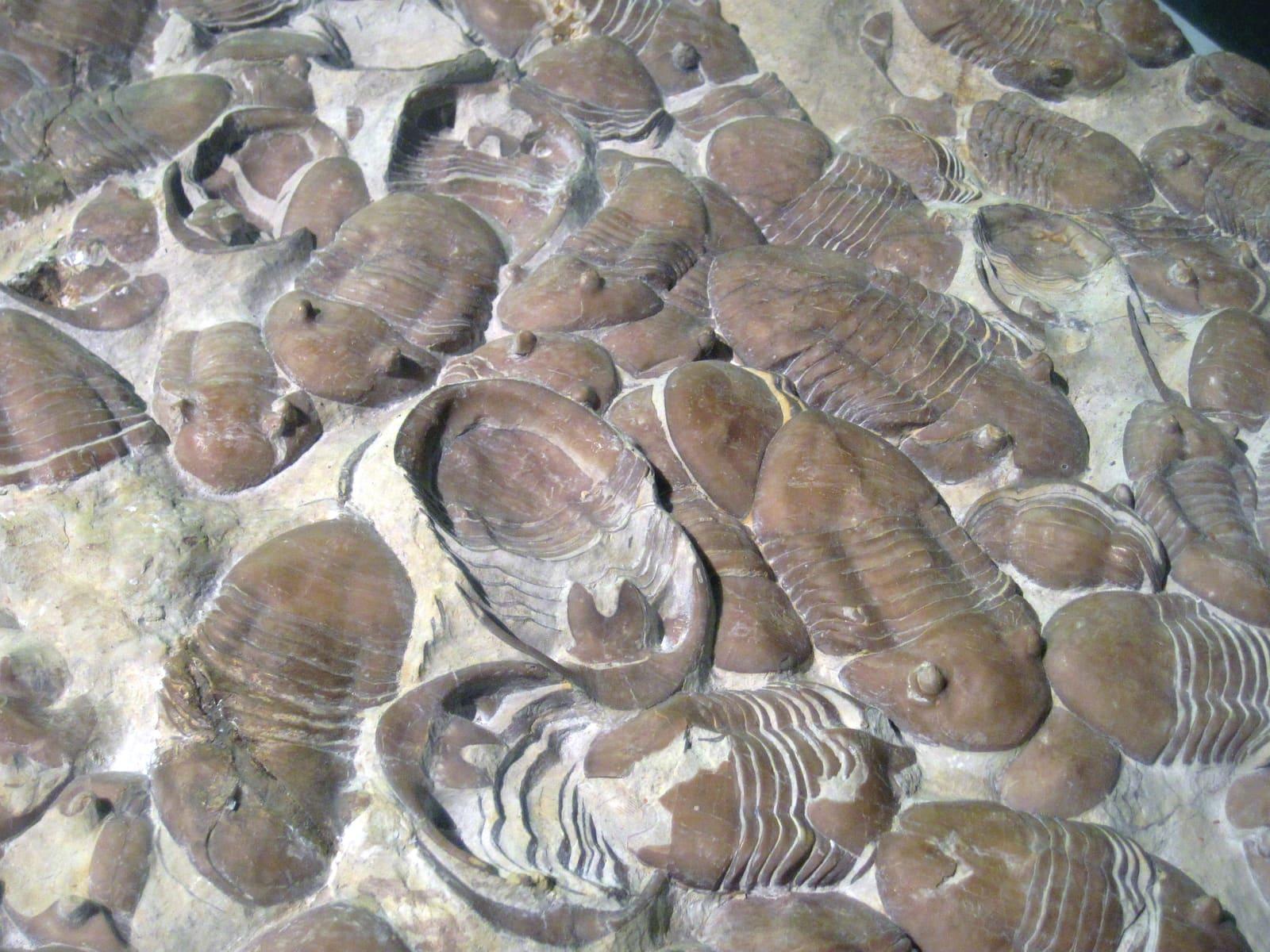
Rarer material rewards patience. Trilobite fragments turn up, usually head or tail shields rather than complete animals, and small shark teeth occur, the teeth of Paleozoic sharks quite unlike the familiar triangular ones from Florida beaches. Fossil plant fragments appear occasionally, washed in from land.
The method is to walk the gullies slowly, looking at the washed surfaces and the small fans of debris where water has sorted material. Go after rain. Every downpour strips more fine sediment and exposes a new crop, which is why a site this heavily visited stays productive.
Geologic History
The rock is the Salesville Shale, part of the Mineral Wells Formation, deposited in the Late Carboniferous roughly 306 to 302 million years ago. This region lay near the equator on the margin of a shallow sea that covered much of what is now north-central Texas.
That sea floor supported a dense marine community, and echinoderms were among its dominant animals. Crinoids grew in meadows on the bottom, anchored by long stems, and when they died the stems disarticulated into their component discs. That is why the surface here is scattered with columnals rather than whole animals: a single crinoid could produce hundreds of them.
The sediment was fine mud, which buried and preserved the fauna. Later uplift and erosion brought the beds near the surface, and the excavation of the borrow pit stripped the last of the cover. What makes the site work is the softness of the shale. It weathers and washes away readily, freeing the harder fossils and leaving them concentrated on the surface, and it does so continuously.
Collecting Rules and Regulations
Collecting is allowed, free, and visitors keep what they find. The rules are short and the important one is about method.
No digging and no tools. Collecting is surface collecting only. This is not a restriction that costs you anything, since the fossils are already loose and erosion does the excavation, but it is enforced and it protects the site.
Collect for personal use. Take a reasonable amount for your own collection rather than clearing an area, and do not collect to sell.
Stay within the park and on the open ground. Follow posted boundaries and any closed areas.
Check the schedule. The park's limited opening days are part of how it manages visitor pressure on a small site.
Because this is a city park, the terms are set locally and can change, so the park's own website is the authority.
Safety
The ground is the main hazard. The pit is a network of eroded gullies in clayey shale, uneven throughout, and the clay becomes extraordinarily slick when wet. Wear boots with a firm sole and good grip, watch your footing on the slopes, and accept that a visit after rain, which is when the collecting is best, means mud.
There is essentially no shade, and this is north Texas. Summer heat here is serious, and an hour spent walking slowly with your head down in full sun is more taxing than it feels. Carry plenty of water, wear a hat and sun protection, and consider going early in the day or outside high summer altogether.
Watch for snakes in the warmer months, including rattlesnakes, particularly in the vegetation at the edges of the pit and around loose rock. Fire ants are present, so look before you kneel or set a bag down. Supervise children on the gully slopes, and be aware that flash flooding can affect the gullies during heavy rain, which is another reason the park closes in bad weather.
Sources
https://www.mineralwellsfossilpark.com/ https://www.mineralwellstx.gov/ https://www.beg.utexas.edu/ https://www.dallaspaleo.org/
Frequently asked questions
- Is Mineral Wells Fossil Park free?
- Yes. Admission and parking are free, and visitors keep what they find. The park has limited opening days, so check current hours before travelling.
- Can you dig at Mineral Wells Fossil Park?
- No. Digging and tools are not permitted. Collecting is surface collecting only, which is all the site needs since erosion continually exposes fresh material.
- What fossils are found at Mineral Wells Fossil Park?
- Pennsylvanian marine invertebrates in quantity: crinoid stems and calyx plates, echinoid spines and plates, brachiopods, bivalves, bryozoans, corals, and occasionally trilobite fragments and small shark teeth.
Nearby sites
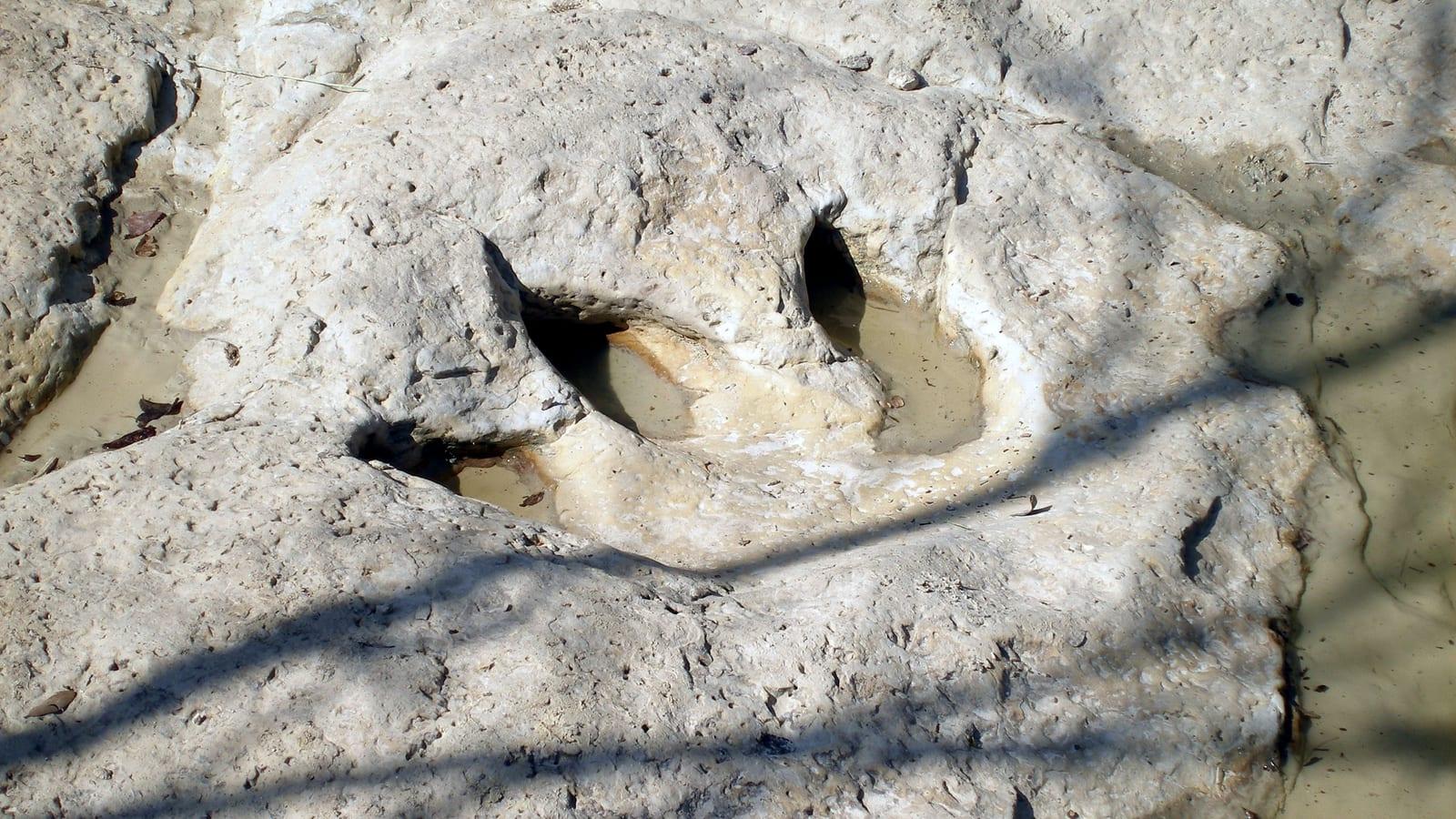 Dinosaur Valley State Park: Dinosaur TrackwaysDinosaur Tracks, Trace Fossils
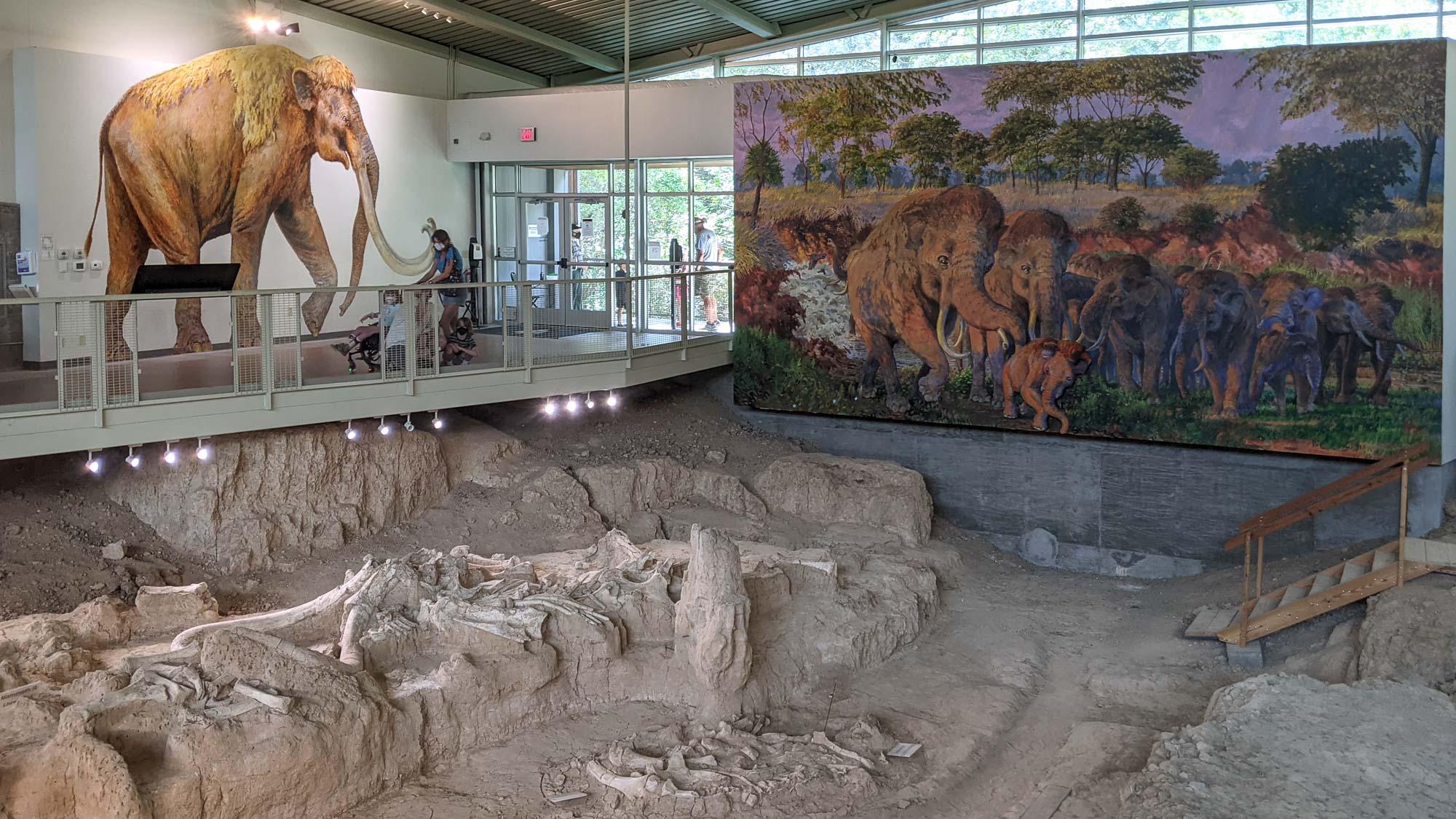 Waco Mammoth National Monument Fossil Hunting GuideColumbian mammoth (Mammuthus columbi), American camel (Camelops)
 Post Oak Creek Fossil Hunting GuideShark Teeth, Bivalves
 Arbuckle Mountains Bromide Formation Fossil GuideTrilobites, Crinoids