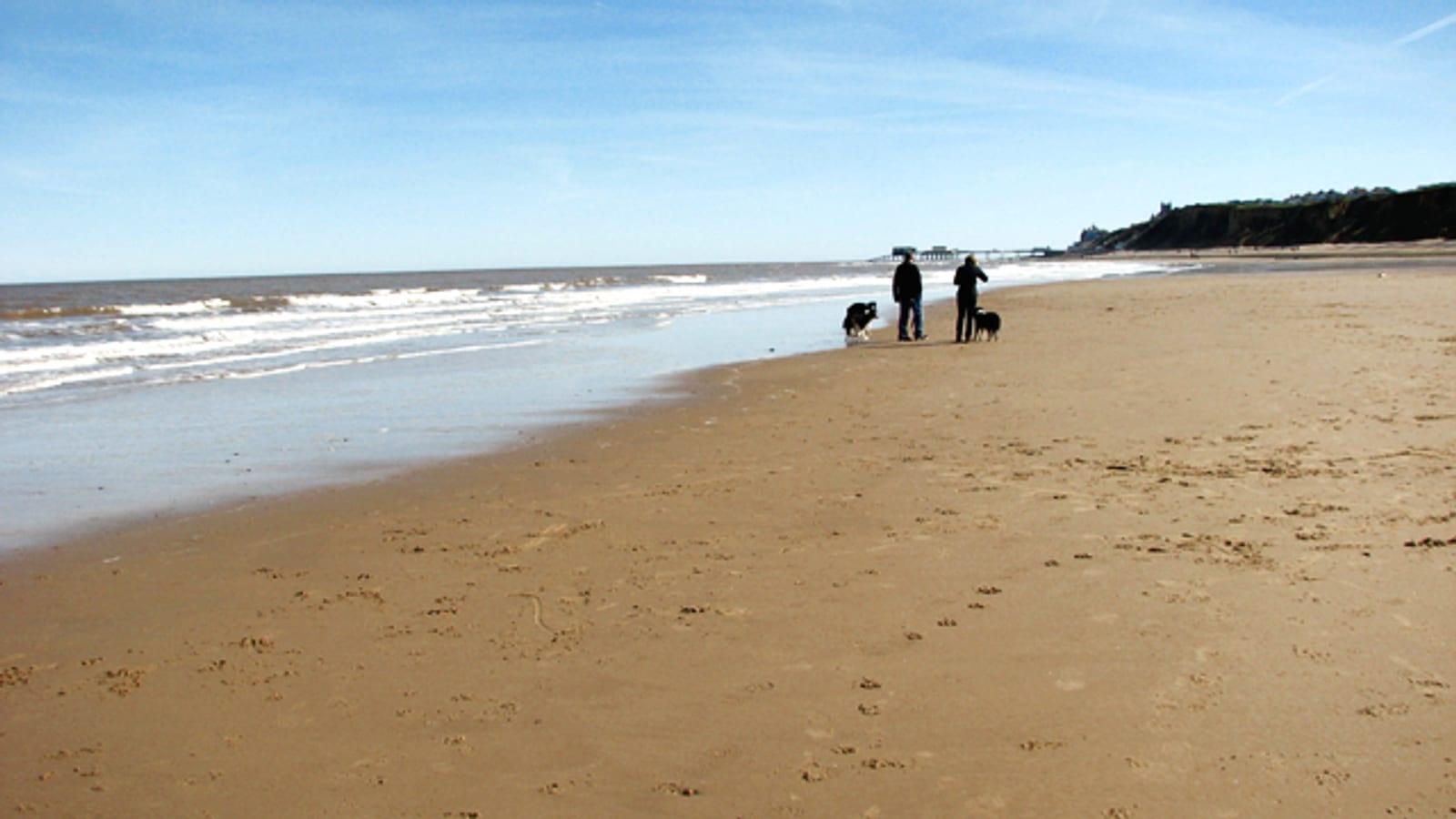
West Runton Fossil Hunting Guide
Image: Evelyn Simak (CC BY-SA 2.0)
West Runton exposes Pleistocene and Cretaceous deposits yielding mammal bones, freshwater shells, echinoids, and plant material from 700,000 years ago on the Norfolk coast.
By Edward Chen · Updated 30 July 2026
Introduction
West Runton on the north Norfolk coast holds one of Britain's most celebrated Pleistocene fossil sites. The cliffs and foreshore here expose the West Runton Freshwater Bed, a dark organic-rich deposit laid down roughly 700,000 years ago during the Cromerian interglacial stage, a warm period sandwiched between glacial advances. Within this 2-metre-thick layer, collectors have found mammal bones, freshwater shells, fish remains, plant material including pinecones and seeds, and the skeletal material of Britain's largest fossil elephant. The underlying chalk, more than 90 million years older, yields echinoids and sponges when scoured clean during low tides. This guide covers where to go, what to look for, and how to collect responsibly on this internationally important stretch of the Deep History Coast.
West Runton sits within a designated Site of Special Scientific Interest and forms part of a 22-mile coastal stretch between Weybourne and Cart Gap that has produced evidence of some of the earliest human occupation in northern Europe. The layers here tell a story spanning from the Cretaceous sea to the forests, rivers, and grasslands of the Pleistocene, all exposed in a single cliff section accessible at low tide.
 Photo: Evelyn Simak, CC BY-SA 2.0, via Wikimedia Commons
Location and Directions
Address
Beach car park at West Runton, near Cromer, Norfolk, England.
Directions and Parking
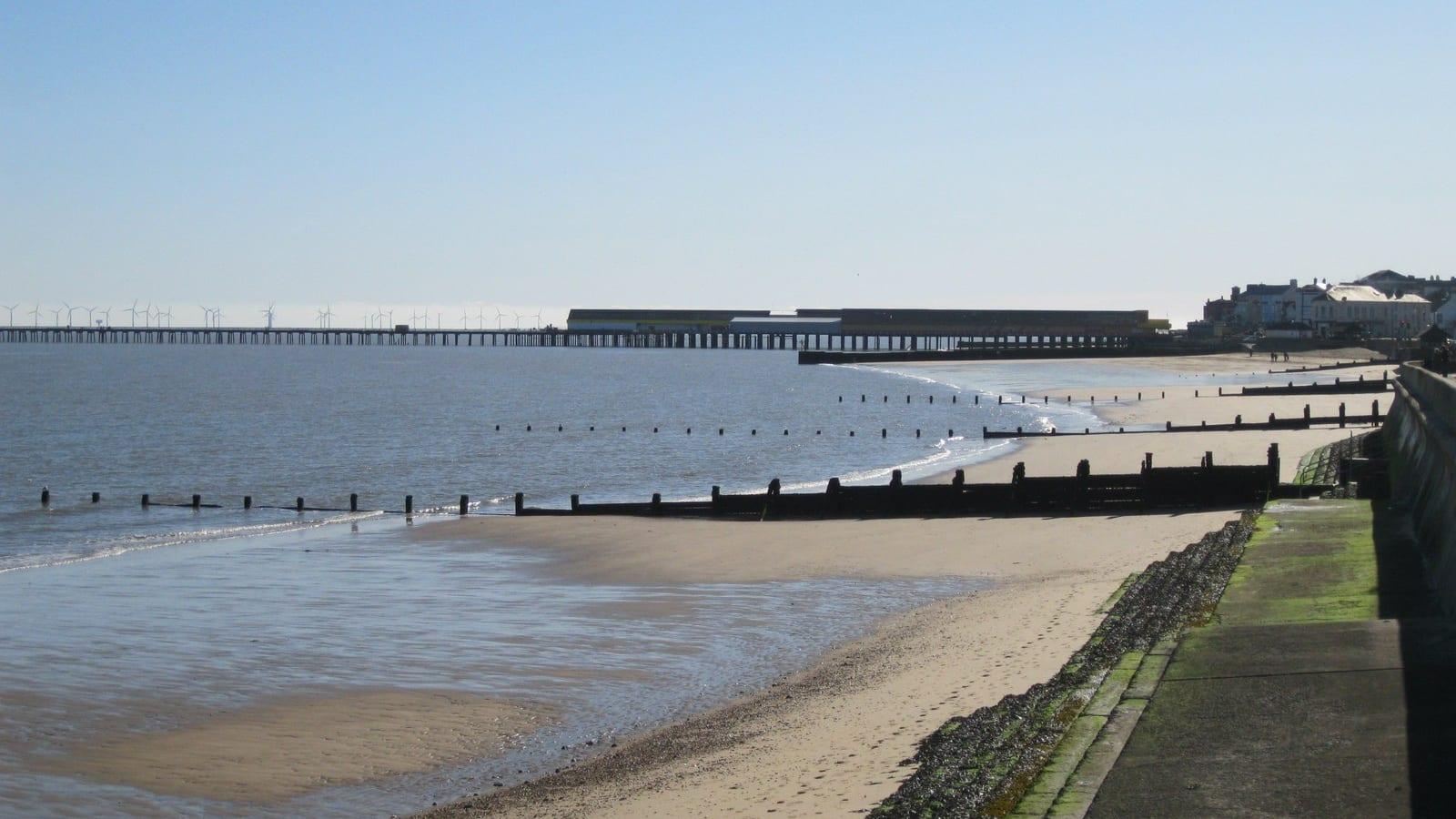
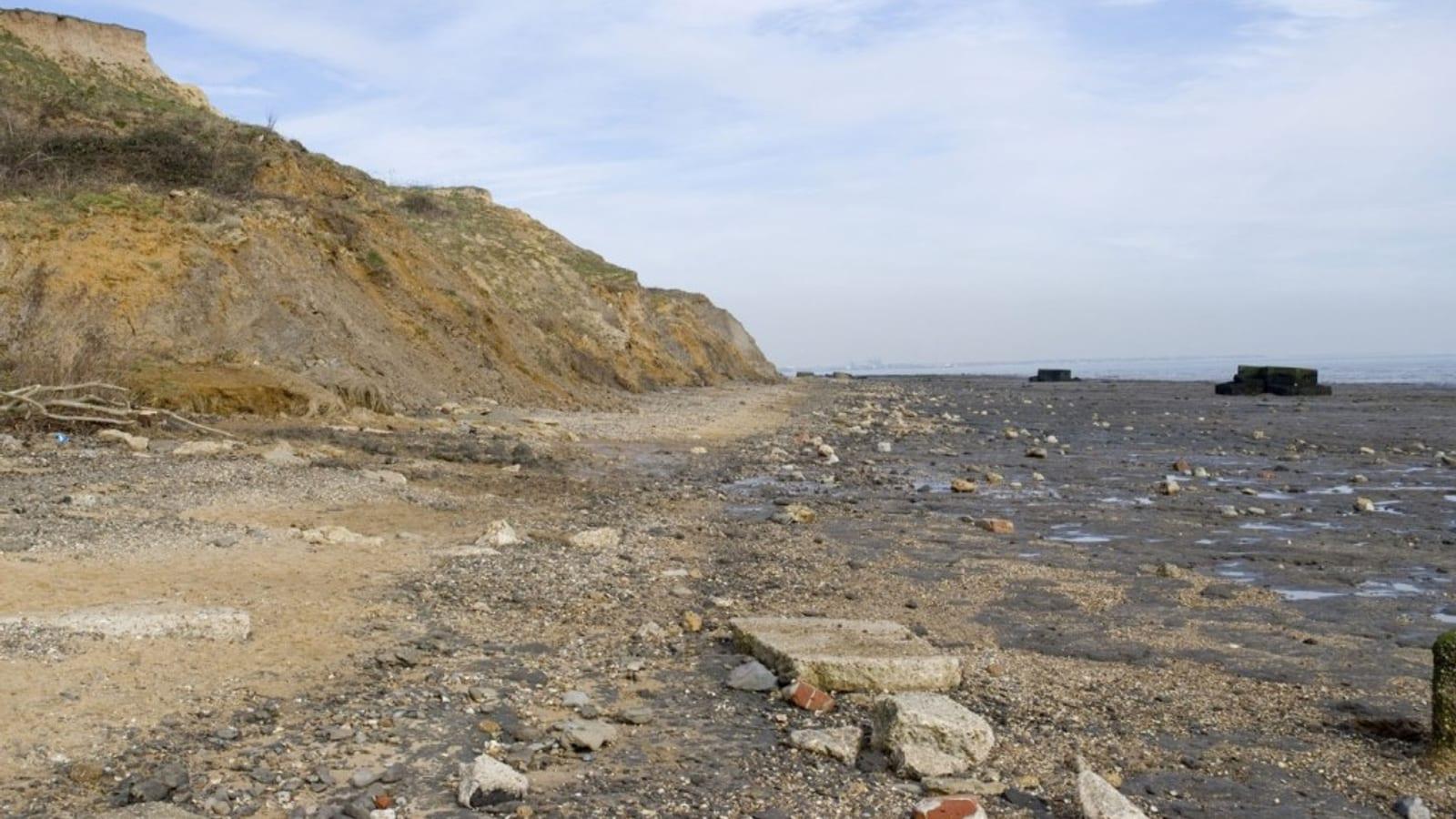
West Runton lies on the B1159 coast road west of Cromer. Driving through the village from the Cromer direction, pass the caravan sites and look for a sign pointing towards the beach near a small corner shop at the junction. Follow Beach Road all the way down to the car park, which sits directly adjacent to the beach. The car park is pay and display. Check current charges on arrival. From the car park, walk east along the foreshore. The fossiliferous beds are not far. The prominent dark West Runton Freshwater Bed appears at the base of the cliffs and is exposed as a band up to 2 metres thick. The best chalk section, including the Micraster Bed with its echinoids, lies just west of the access road at beach level. Tide timing is important: visit within two hours of low water to access the chalk foreshore and to examine the base of the cliff safely. The beach is pebbly and uneven. Sturdy footwear is essential. Do not approach the base of the crumbling cliffs.
What Fossils You'll Find
Mammal remains are the most significant finds here and include bones from the steppe mammoth (Mammuthus trogontherii), giant beaver, rhinoceros, hippopotamus, deer, wolf, bear, hyaena, and lion. Most fragments are small, often worn by wave action, but occasionally teeth and bone sections are found in loose material eroded from the Freshwater Bed. You are unlikely to find a complete bone, but any dark, dense, heavy fragment deserves a close look.
Freshwater shells are common within and below the Freshwater Bed. These small bivalve and gastropod shells come from the river and estuarine environment that existed here during the Cromerian interglacial. Look for concentrations of shell material in the darker peaty layers near cliff base.
Plant material including pinecones, seeds, and wood fragments erodes regularly from the Freshwater Bed. Coniferous forest covered the region during the Cromerian warm period, and its remains are well preserved in the organic-rich deposits. Freshwater fish remains, including scales and bone, are also present in the same beds.
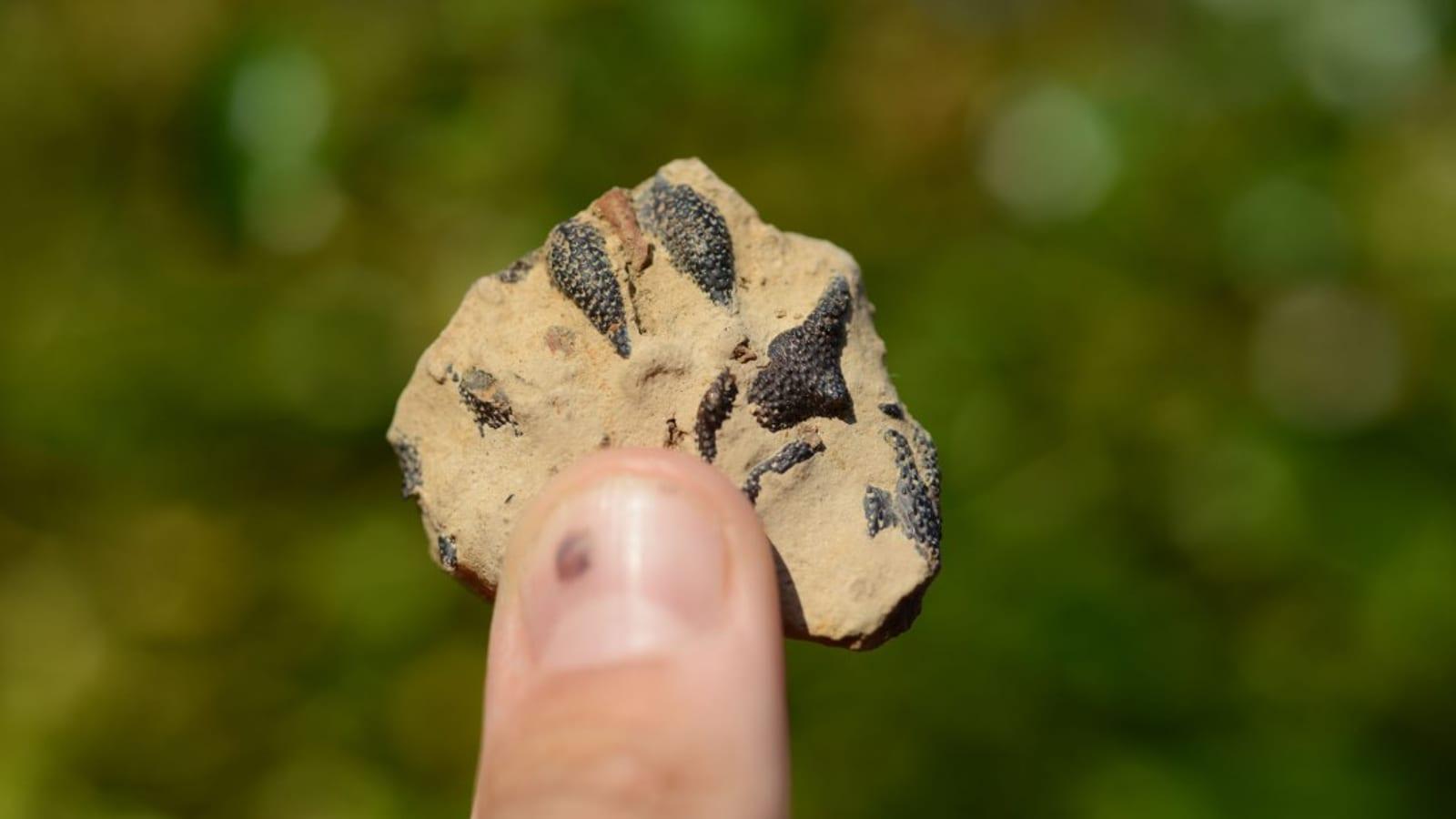
Echinoids and sponges from the Cretaceous Chalk are found on the foreshore during and after scouring tidal conditions. The chalk is exposed as wave-cut platform at low water and yields rounded flints alongside occasional chalk fossils including the echinoid Micraster. Look for these in the more seaward chalk exposures rather than under the Pleistocene cliff.
Coprolites (fossilised faeces) attributed to spotted hyaena have also been recovered from the Freshwater Bed, identifiable as pale, dense, cylindrical objects with a rough surface texture.
Geologic History
The Ancient Environment
The West Runton cliffs expose a sequence spanning more than 90 million years in two sharply contrasting sets of deposits. The lowest unit is the Paramoudra Chalk of the Cretaceous period, formed in a warm, clear, shallow sea around 85 to 90 million years ago. Above this, and separated by a significant time gap representing millions of years of erosion and missing record, lie the younger Pleistocene deposits of the Cromer Forest-bed Formation.
The West Runton Freshwater Bed, the type deposit for the Cromerian Stage, was laid down approximately 700,000 years ago during a warm interglacial period. At that time, the area supported a temperate to warm climate with coniferous and mixed woodland, rivers, estuaries, and open grassland. The fauna was unlike anything in Britain today: steppe mammoth, hippopotamus, and lion coexisted in what is now Norfolk. The freshwater bed accumulated in river and estuarine channels, preserving organic material in low-oxygen waterlogged conditions that slowed decomposition. Periglacial features, including ice-wedge casts and saucer-shaped basins, record the colder periods that bracketed the warm interglacial.
How West Runton Became a Fossil Collecting Site
The cliffs at West Runton are composed of soft, unconsolidated Pleistocene sediments overlying older chalk. Wave action at the base of the cliffs and storm scouring of the foreshore continuously erode and undercut these deposits, releasing fossil material onto the beach. The same processes that create hazardous cliff instability also deliver fresh specimens to the foreshore after storms and spring tides. The chalk foreshore is exposed only at lower states of the tide and requires timing your visit accordingly. Erosion rates along this stretch of coast are significant, and new material appears regularly after winter storms.
Collecting Rules and Regulations
Is Fossil Collecting Allowed?
West Runton beach and foreshore are publicly accessible, and collecting loose material from the beach and foreshore is permitted. The site is a designated Site of Special Scientific Interest (SSSI), which means you must not hammer the cliff faces, chip material from in-situ rock exposures, or disturb the bedrock. Surface collecting of loose material already on the beach is legal and does not require a permit. If you find significant vertebrate material such as large bones or teeth, report it to the local museum. Norfolk Museums Service has a long-standing relationship with collectors here, and significant finds may be of scientific value.
Recommended Tools
For beach collecting at West Runton, bring a small trowel or scraper to move loose sediment around fragments, a hand lens to examine shell and bone material, sealable bags or small containers for specimens, and a bucket of water to clean finds on the beach. Hammers are not needed and should not be used on the cliff face.
Safety
The cliffs at West Runton are actively eroding and subject to sudden falls without warning. Keep well away from the cliff base at all times. Do not sit or stand beneath overhanging sections. Check tide tables before visiting: the productive chalk foreshore is only accessible within roughly two hours of low water, and the beach can narrow rapidly on the incoming tide. The beach surface is uneven and can be slippery on wet pebbles and wet chalk. Seaview Beach Café, run for many years by the local community, is nearby and acts as an informal information point where mammoth material is sometimes on display.