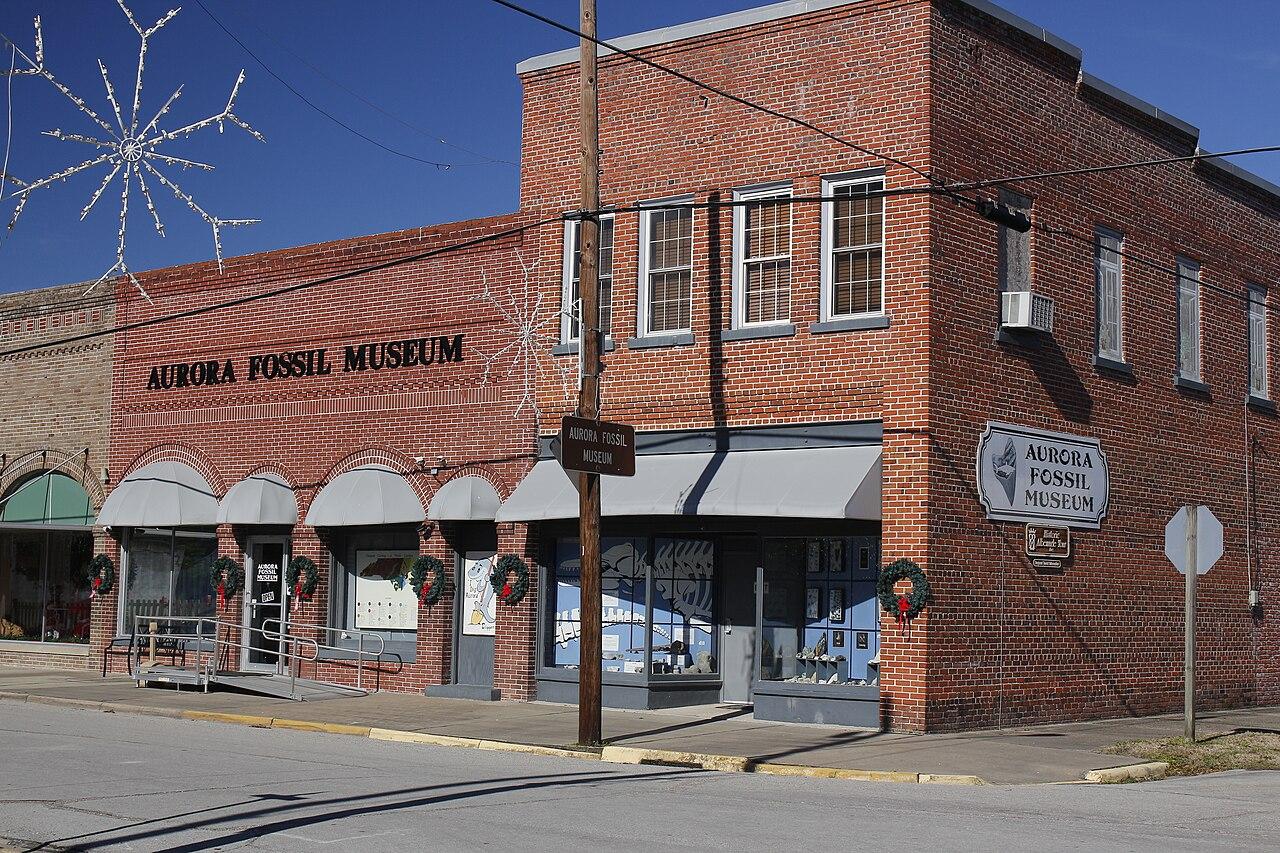
Aurora Fossil Museum Fossil Park Guide
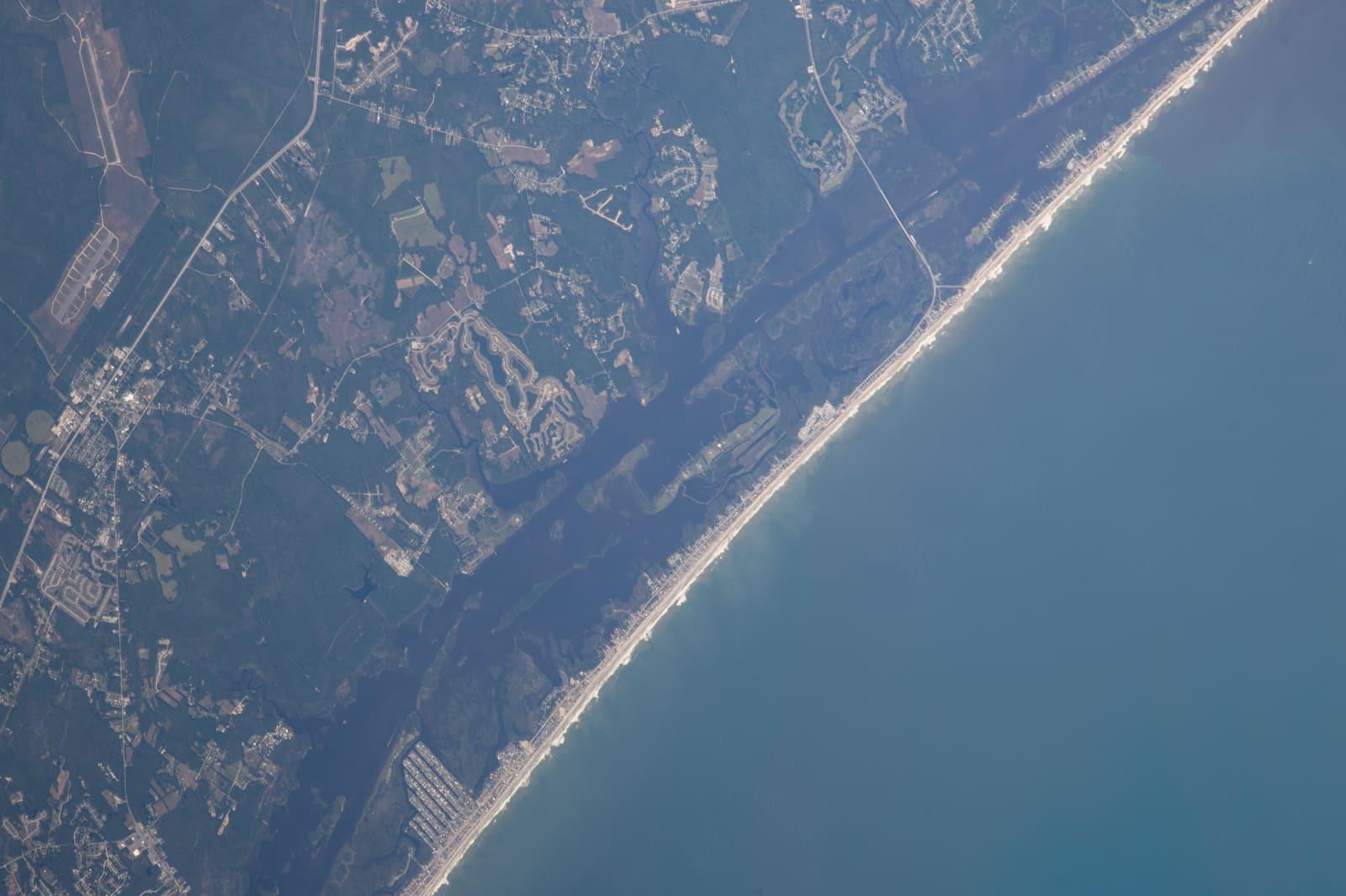
Image: RadioFan (CC BY-SA 3.0)
The Aurora Fossil Park, across the street from the Aurora Fossil Museum in coastal North Carolina, lets visitors freely dig through Miocene and Pliocene spoil piles donated by the adjacent Nutrien phosphate mine. Megalodon teeth, mako and tiger shark teeth, ray dental plates, marine shells, coral, and whale bone are all regular finds. Free collecting, family-friendly.
By Edward Chen · Updated 31 July 2026
Introduction
The Aurora Fossil Museum and its adjacent Fossil Park sit in the tiny town of Aurora on the Pamlico River in coastal North Carolina, opposite the Nutrien Corporation's PCS phosphate mine. Founded in 1976, the museum operates two open-air spoil piles in the park across the street where visitors freely sift through fresh material trucked over from the working mine. It is one of the easiest places in the United States to dig for genuine shark teeth, including the occasional Otodus megalodon.
Mine spoil from the Pungo River Formation (Early Miocene, 18–22 million years old) and the Yorktown Formation (Pliocene, roughly 2.5–5 million years old) is donated and refreshed periodically. Everything you find at the Fossil Park is yours to take home. The adjacent museum charges a small admission, displays a wall of megalodon teeth and a complete Hesperornis mount, and runs a free annual Aurora Fossil Festival each Memorial Day weekend.
This guide covers what's in the piles, how the dig works, and how to plan a family-friendly fossil weekend on North Carolina's Inner Banks.
Photo: Smithsonian National Museum of Natural History, CC0, via Smithsonian Open Access
Location and Directions
Aurora sits on the south side of the Pamlico River in Beaufort County, eastern North Carolina, roughly 30 miles east of Washington, NC, and 90 miles southeast of Raleigh.
Directions to the Aurora Fossil Park
The museum and fossil park are at 400 Main Street in downtown Aurora. From US-17 in Washington, NC, take Highway 33 east, then NC-306 across the Pamlico River on the (free) Aurora Ferry, and continue south into Aurora. Or approach from the south via NC-33 from New Bern. The fossil park is across Main Street from the museum entrance. Both the park and the museum are open Tuesday–Saturday roughly 10:00–16:00 (check current hours, they vary seasonally and around festivals). The fossil park itself is open without restriction, even outside museum hours.
What to bring: small kitchen sieve or 1/4-inch hardware-cloth screen, a wash bucket, knee pads or a small mat to kneel on, sunscreen, water, and a small container to take finds home in. The spoil is wet clay. Wear clothes you don't mind ruining. Children love this site and find teeth readily.
Photo: Smithsonian National Museum of Natural History, CC0, via Smithsonian Open Access
What Fossils You'll Find
The Pungo River Formation (Early Miocene, roughly 22 to 14 million years old) and the overlying Yorktown Formation (Late Pliocene, roughly 5 to 3 million years old) preserve shallow-marine and estuarine sediments deposited along North America's Atlantic margin during two distinct intervals of high relative sea level. Together the two units have produced more than 400 vertebrate species and several thousand invertebrate species over the last century of work at the Lee Creek phosphate mine and its associated public sites.
The most common finds at the Aurora Fossil Park are small (under one inch) shark teeth. The slender, multi-cusped teeth of the sand tiger sharks Striatolamia macrota and Carcharias taurus are by far the most abundant, most visitors fill a vial of them within an hour. The narrow-bladed teeth of mako sharks (Isurus desori, Isurus oxyrinchus, and Isurus hastalis) are similarly common, distinguished by their smooth cutting edges. The serrated, hooked teeth of the snaggletooth shark Hemipristis serra are particularly coveted because of their distinctive form, and the curved, deeply serrated cockscomb teeth of the tiger shark Galeocerdo cuvier are usually recognised on sight. Bull shark (Carcharhinus leucas), dusky shark, lemon shark, and several other carcharhinids round out the small-shark fauna.
Ray dental plates (Aetobatus, Myliobatis, Rhinoptera) are common as small polished black hexagonal slabs. Whale fossils are well represented across the spoil piles. Cetacean ear bones (bullae and periotics), small whale vertebrae and rib fragments, fossil dolphin teeth (Pomatodelphis, Eurhinodelphis), and the occasional sperm whale tooth (Acrophyseter or Orycterocetus) all appear regularly. Marine bird bones, typically isolated long-bone fragments from gulls, pelicans, and the extinct flightless bony-toothed bird Pelagornis, turn up among the screened material. Invertebrates dominate the unsifted spoil: abundant scallop and oyster shells (Chesapecten jeffersonius, the Virginia state fossil, Crassostrea virginica), bryozoan-encrusted shell fragments, the cup coral Astrhelia palmata, gastropods (Ecphora, Sinum), echinoid spines, crab claws, and small foraminifera. Occasionally even fossil plant material, palm and conifer fragments from the adjacent estuarine intervals, turns up in the spoils.
"Children and adults alike can dig through the piles and regularly find shark teeth, sometimes even those of the Megalodon." Wonderful Museums
Geologic History
During the Miocene and Pliocene, global sea levels were periodically much higher than today, drowning the Atlantic Coastal Plain and creating a series of shallow-marine and estuarine basins along the modern Carolina shoreline. Phosphate-rich, organic muddy sands accumulated across what is now eastern North Carolina under conditions of strong coastal upwelling and high biological productivity, which concentrated bone, teeth, and shell material in great densities. The Pungo River Formation (Early to Middle Miocene) records the older of these phosphate-accumulating intervals. The Yorktown Formation (Late Pliocene) records the younger.
The Pungo River Formation is a glauconitic, phosphatic sandy-clay marl interbedded with dolomitic limestone. It accumulated in 20- to 50-metre water depths in the Salisbury Embayment between roughly 22 and 14 million years ago, with periods of slow sedimentation alternating with phosphogenic episodes that concentrated phosphate nodules and fossil bone. The overlying Yorktown Formation is a younger shelly sand-and-clay unit deposited about 5 to 3 million years ago in shallower, near-shore conditions of the late Pliocene high stand. The Yorktown is more famous for its molluscs but also produces shark teeth and marine mammal remains. Both formations are commercially mined today by Nutrien at the Lee Creek (Aurora) phosphate mine north of the town. The mine extracts phosphate ore for fertiliser production. Fossils are an accidental by-product of the mining process and are sorted out of the conveyor stream by mine staff and donated to the museum.
The Lee Creek mine itself is closed to the public for safety and operational reasons, but Nutrien's longstanding partnership with the Aurora Fossil Museum, established in 1976, ensures a steady supply of fresh fossiliferous spoil material at the public Fossil Park. Each year, Nutrien delivers truckloads of fossil-bearing Pungo River and Yorktown spoil to the park, where it is loaded into the two open public piles. The piles are refreshed periodically as material is depleted, ensuring that the public collecting experience remains productive.
The fossil heritage of the Aurora region was recognised long before commercial mining. Local farmers and naturalists collected vertebrate fossils from the surface soils for at least a century before Texasgulf (the predecessor company to Nutrien at Lee Creek) opened the mine in 1965. The arrival of large-scale mining dramatically expanded the volume of fossils available and put Aurora on the international paleontological map. Major scientific collections from Lee Creek are now held by the Smithsonian, the North Carolina State Museum, and many regional university collections.
How the Aurora Fossil Park Came to Be
The Aurora Fossil Museum was founded in 1976 by local volunteers, most notably high-school teacher and amateur collector George Powell, to preserve and interpret fossils being recovered from the rapidly expanding phosphate operation. The museum's mission since founding has been to make Aurora's deep-time heritage accessible to the public, especially school groups, and the adjacent open-collection spoil piles have been the museum's flagship public-engagement feature ever since. The annual Aurora Fossil Festival on Memorial Day weekend draws thousands of visitors, and the museum now anchors regional fossil-tourism marketing for eastern North Carolina.
The source mine: Lee Creek (Nutrien Aurora)
The mine that supplies the fossil piles is officially the Nutrien Aurora Phosphate Mine. Locally it is still universally called the Lee Creek Mine, after the creek that was bulldozed to dig the giant open pits. It is one of the largest integrated phosphate mining and chemical plants in the world, occupying roughly 8,000 acres north of the town across the Pamlico River. Texasgulf Sulphur Company opened the mine in 1965. PotashCorp acquired Texasgulf in 1995, and PotashCorp merged with Agrium in 2018 to form Nutrien.
For roughly three decades after Texasgulf opened the mine, the operator allowed organised paleontological groups to collect on the mine floor under varying terms. Major vertebrate collections at the Smithsonian and at several state and university museums were built during that period. In 2009, citing safety concerns at the working pit, insurance and liability constraints, and operational disruption, the operator (then PotashCorp) ended all public and academic in-mine collecting. Since 2009 the only legal way to collect fossils from this deposit is through the spoil piles delivered to the Aurora Fossil Park.
The Smithsonian Lee Creek monographs (Contributions to Paleobiology volumes 53, 90, and 100) document the resulting scientific collection: more than 400 vertebrate species, sharks (Otodus megalodon, Carcharias, Hemipristis, Galeocerdo, Carcharodon, and dozens more), bony fish, rays (Aetobatus, Myliobatis, Rhinoptera), whales (cetacean ear bones, dolphins, sperm whales), seabirds (including the extinct flightless bony-toothed bird Pelagornis), sea turtles, crocodilians, and a small but significant terrestrial fauna of horses, peccaries, rhinos, and proboscideans transported into the marine sediments from adjacent shorelines.
The Lee Creek Mine is "probably the most prolific in the world" for fossil species collected. Clayton Ray, curator emeritus, Smithsonian Department of Paleobiology
The mine itself is fenced and signed as closed to all non-employee access. Trespassing is prosecuted. The Aurora Fossil Museum is the institutional gateway for any visitor or researcher to this fauna.
Collecting Rules and Regulations
Is Fossil Collecting Allowed?
Yes. Everything you find in the Fossil Park spoil piles is yours to keep.
Key Points:
- Free collecting. No permit, no fee, no quantity limit
- Use small hand tools and screens. No power equipment
- Keep children supervised. The piles are uneven and wet
- The active Nutrien phosphate mine itself is strictly off-limits
- Donate well-studied finds to the museum if you can
Photo: Smithsonian National Museum of Natural History, CC0, via Smithsonian Open Access
Safety
The Fossil Park is a purpose-built public site with spoil delivered for visitors to sift, which makes it one of the gentler places in this guide. The hazards are modest but worth knowing.
The spoil is sharp and abrasive. The material is phosphate mine waste full of broken shell and fossil bone, and it cuts hands over an hour of sifting. Gloves are genuinely useful here, more so than at most sites, and closed shoes with a firm sole are better than sandals on loose, uneven piles.
Sun and heat. Coastal North Carolina summers are hot and humid, the piles are open with no shade, and sifting is more physical than it looks. Carry water, use sun protection, and take breaks. Humidity makes heat exhaustion more likely than the temperature alone suggests.
Wash your hands before eating. You are handling industrial mine spoil, and the sensible habit is to clean up before touching food, and to rinse finds when you get home rather than in your mouth, which people genuinely do when testing whether something is bone.
Mosquitoes and biting insects are active in the warmer months near the Pamlico River, so bring repellent. Supervise children on the piles, which shift underfoot, and keep an eye on the sky in summer, when thunderstorms build quickly on this coast. The adjacent phosphate mine is private industrial property and is not accessible under any circumstances.
Sources
- Aurora Fossil Museum: official website
- FossilGuy: Aurora / Lee Creek Mine field guide
- UNC Media Hub: Aurora, North Carolina, is the fossil capital of the world
- Wikipedia: Aurora Fossil Museum
- Aurora Fossil Museum: History of the Aurora Phosphate Mine
- Wikipedia: Aurora mine
- Washington Daily News: Smithsonian Institution pays homage to Lee Creek mine
- Center for Land Use Interpretation: Nutrien Aurora Phosphate Mine
- Our State magazine: The Find of a Lifetime