Calvert Cliffs Fossil Hunting Guide
The Calvert Cliffs run for about 24 miles along the western shore of Chesapeake Bay in Maryland, exposing Miocene marine beds that shed shark teeth, shells, and whale bone onto the beaches below. Collecting loose material on the beach is allowed. Approaching the cliffs is not.
By Edward Chen · Updated 27 July 2026
Introduction
The Calvert Cliffs run for roughly 24 miles along the western shore of Chesapeake Bay in Calvert County, Maryland, rising in places over a hundred feet above the water. They expose one of the best-studied Miocene marine sequences in North America, and they have been yielding fossils to collectors and researchers for well over a century.
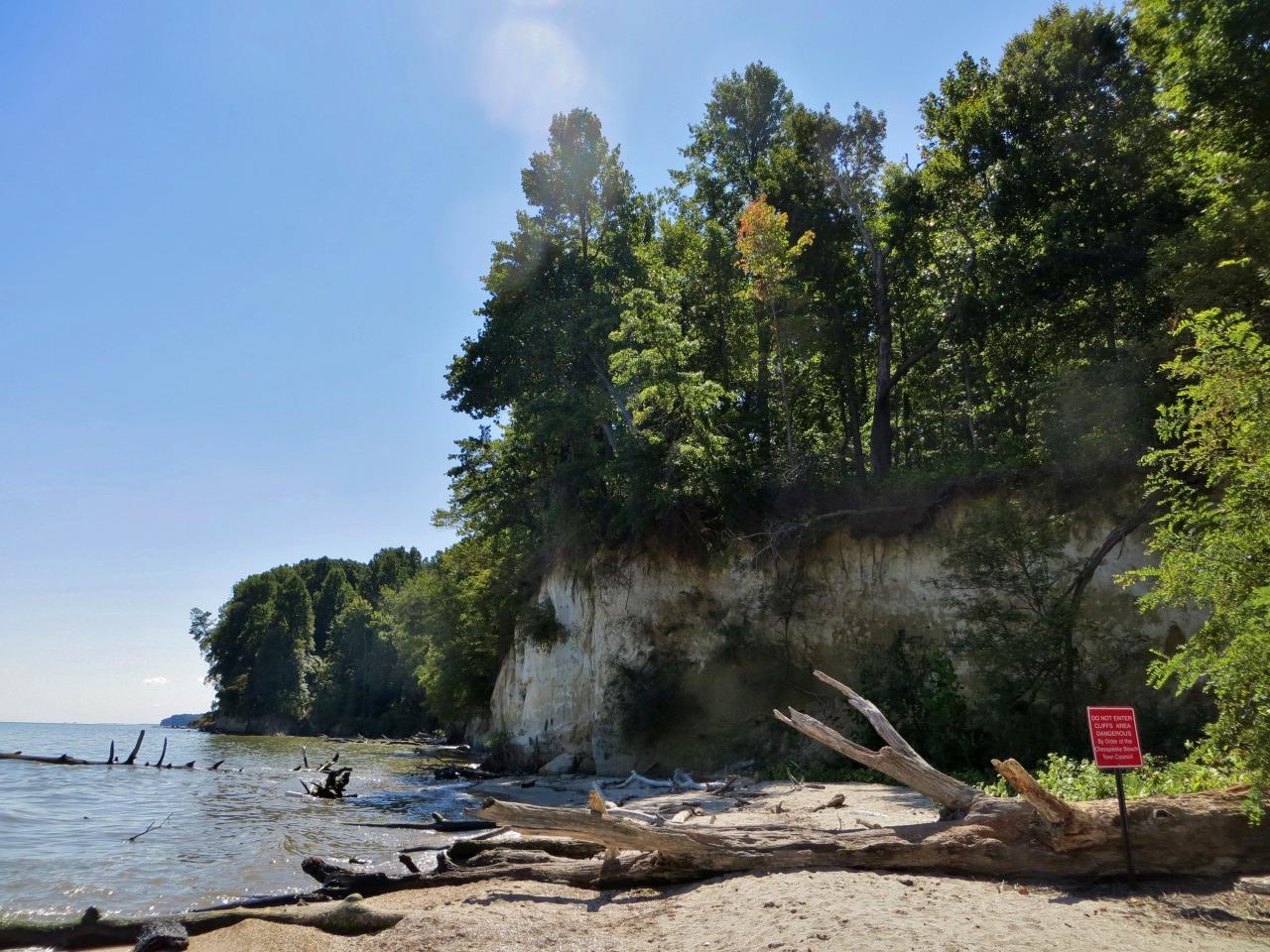
The mechanism is simple and relentless. The cliffs are soft, unconsolidated marine sediment, the bay undercuts them, and they collapse. Every collapse delivers shark teeth, shells, and occasionally whale bone onto the narrow beach below, where wave action cleans and concentrates them. You collect what the cliffs have already given up.
That same process is why the cliffs themselves are strictly off limits. They are not a face to work. They are an actively failing slope above a beach people walk on.
Photo: Smithsonian National Museum of Natural History, CC0, via Smithsonian Open Access
Location and Directions
The cliffs are not continuously accessible, since most of the shoreline is private. Three public access points matter.
Calvert Cliffs State Park, at 10540 H G Trueman Road, Lusby, near 38.399 degrees north, 76.435 degrees west, is the main one. Note the walk: the beach is about two miles from the car park along the Red Trail, level and easy but a real distance, and the same two miles back with whatever you are carrying. There is a modest parking fee.
Flag Ponds Nature Park, further north, has a much shorter walk to the beach and is the better option with small children or limited mobility.
Brownies Beach at Bay Front Park in Chesapeake Beach is the northern access, small and close to the car park.
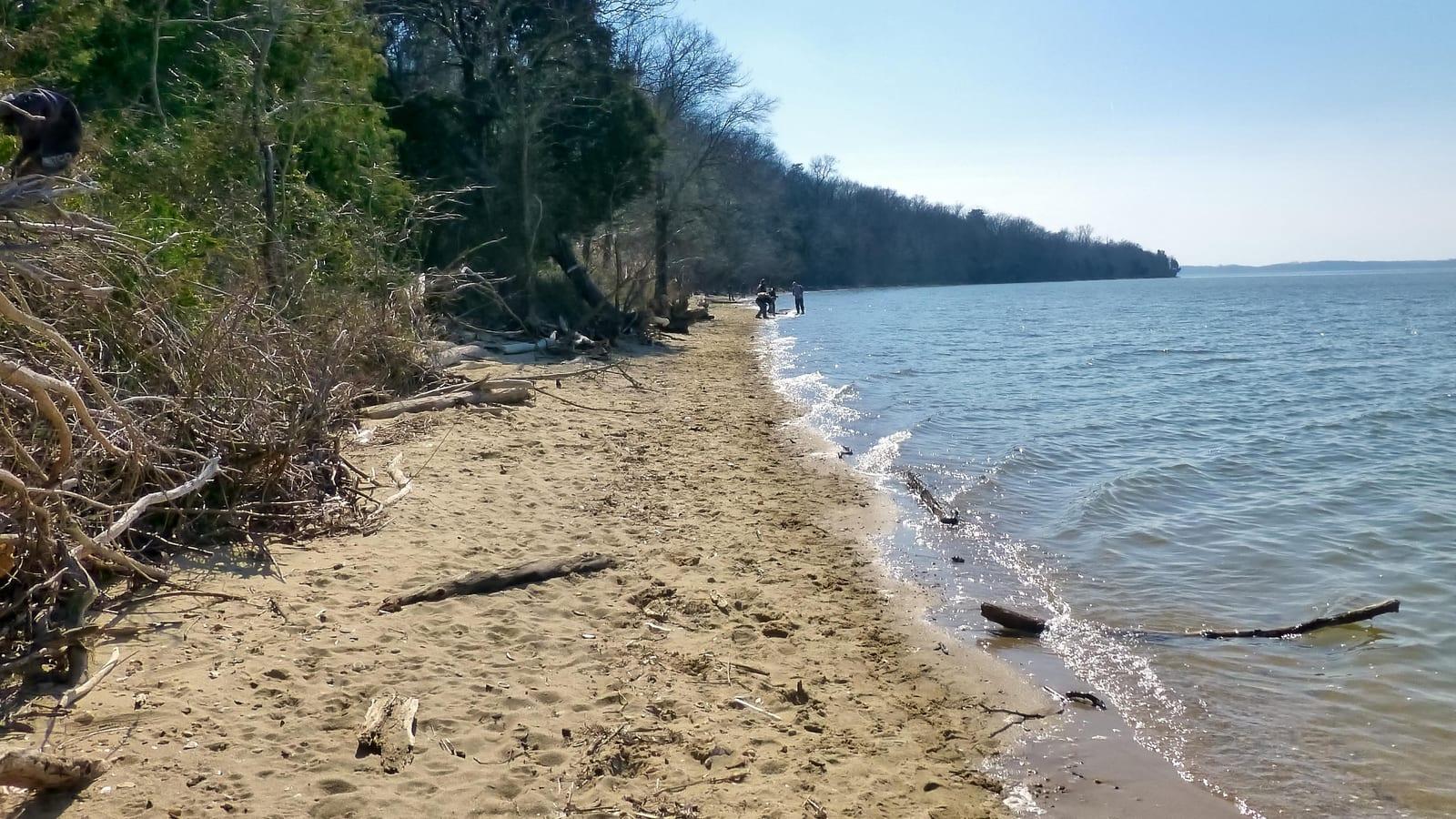
Time any visit around low tide. The beach below the cliffs is narrow, and at high water some stretches shrink to almost nothing. A tide table is worth checking before setting out, particularly at the state park where you have walked two miles to get there.
Photo: Smithsonian National Museum of Natural History, CC0, via Smithsonian Open Access
What Fossils You'll Find
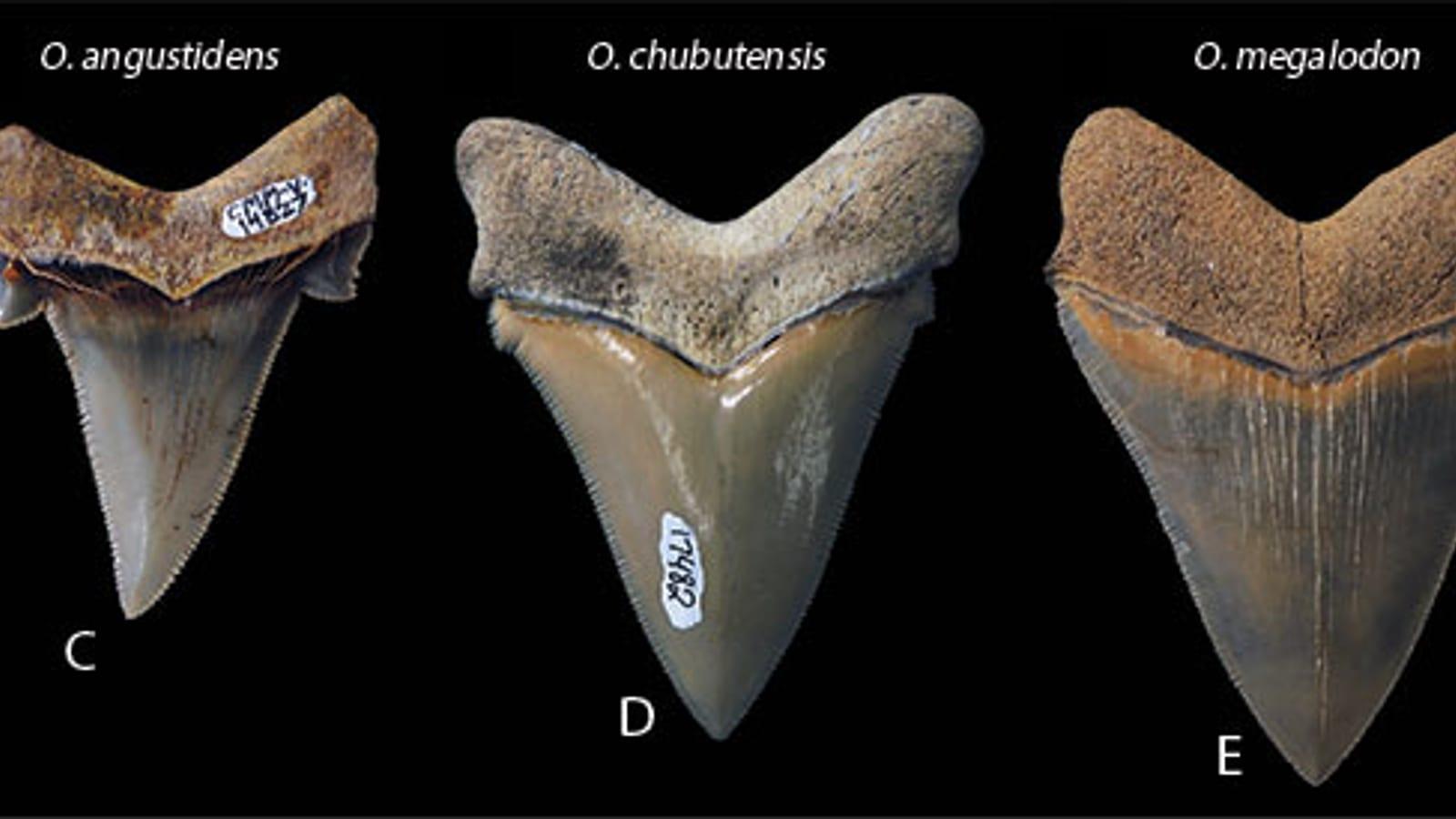
Shark teeth are the sought-after find and the reason most people come. Many species occur across the Miocene beds, and the teeth are dark and glossy against the pale sand. Most are small, in the quarter-inch to inch range. Larger teeth including megalodon are found here, and the Calvert Cliffs are genuinely one of the places where that happens, but they are uncommon and should be treated as a lucky day rather than a plan.
Marine mammal material is what raises the site above an ordinary shell beach. Whale and dolphin bone, teeth, and ear bones erode from these beds, along with crocodile and turtle material and occasional bird bone. The Calvert Marine Museum in Solomons holds the reference collections and is worth visiting to see what the beds produce at their best.
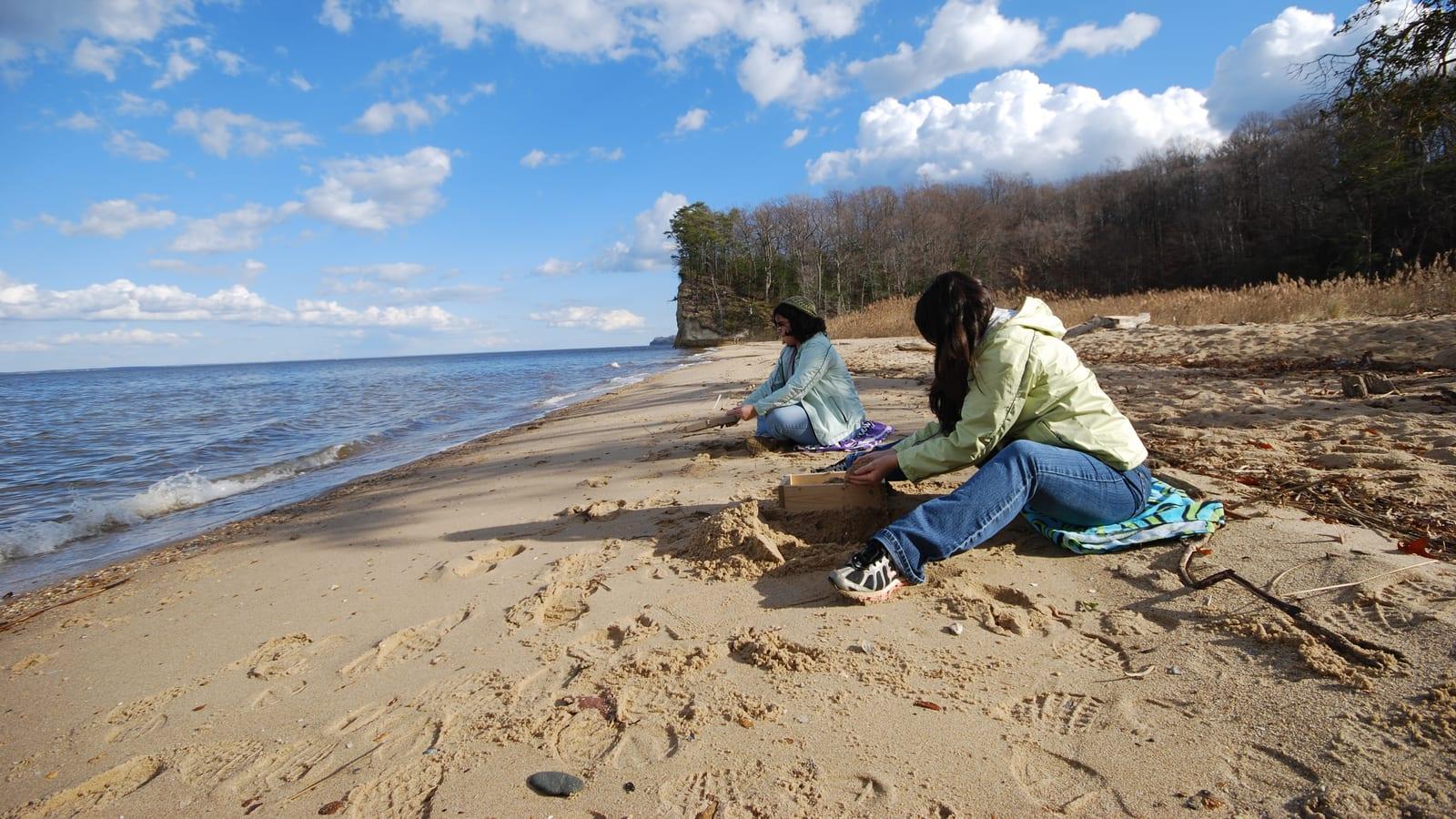
Work the wet sand at the waterline and the shell banks where waves have sorted heavy material. A small sieve helps for the smaller teeth. Storms are the single biggest variable, since a good blow both erodes the cliffs and reworks the beach, so the days after rough weather are consistently the most productive.
Photo: Smithsonian National Museum of Natural History, CC0, via Smithsonian Open Access
Photo: Smithsonian National Museum of Natural History, CC0, via Smithsonian Open Access
Geologic History
The Calvert Formation was deposited in the Early to Middle Miocene, roughly 18 to 14 million years ago, and forms the lowest of the three Chesapeake Group units exposed in these cliffs, with the Choptank and St Marys Formations above it.
Sea level then was higher, and this part of Maryland lay beneath a shallow, cool, and highly productive coastal sea. Upwelling supported dense populations of molluscs, fish, sharks, and marine mammals, and their remains settled into the sand and silt of the sea floor. The result is a sequence packed with shells and scattered with vertebrate material.
Sea level fell, the sediments became land, and Chesapeake Bay formed as a drowned river valley at the end of the last glaciation. The bay's western shore now cuts directly into those Miocene beds. Because the sediment is weak and poorly consolidated, and because the bay undercuts the base, the cliffs retreat continuously, in slumps and block falls rather than grain by grain.
That retreat is the engine of the site. It is also, quite literally, the hazard.
Photo: Smithsonian National Museum of Natural History, CC0, via Smithsonian Open Access
Collecting Rules and Regulations
Collect loose material on the beach. Surface collecting from the sand and shell hash at the public access points is permitted, and what you pick up is yours.
Do not dig into the cliffs and do not climb them. This is prohibited at all the public sites and it is enforced. Undercutting accelerates an already fast retreat, and the risk is genuine.
Do not collect beneath or beside private property. Most of the 24 miles of cliff frontage is private land, and the beach in front of it is not open. Stay at the public access points.
Report significant vertebrate finds. An isolated shark tooth is an ordinary find. Articulated whale bone or a substantial skull is scientifically important, and the Calvert Marine Museum wants to know about it. Photograph it, note the location, and contact them rather than excavating.
Each park sets its own hours, fees, and pet rules, so check the specific site you are visiting.
Photo: Smithsonian National Museum of Natural History, CC0, via Smithsonian Open Access
Safety
The cliffs are the hazard and they kill people. They are soft, actively eroding, and undercut, and they fail without warning in blocks large enough to bury someone. Do not sit at the base, do not shelter under an overhang, do not climb, and do not let children play at the foot of the slope. Keep far enough out from the base that a falling block would miss you. Rain, freeze-thaw, and storms all increase the risk, so give them still more room after bad weather. Sections of beach are closed for exactly this reason, and those closures should be respected.
The tide is the second factor. The beach below the cliffs is narrow, and a rising tide can leave you choosing between deep water and the base of an unstable cliff. Know the tide before you go down and keep track of it.
At the state park, remember the two-mile walk back. Carry enough water for the round trip, and be realistic about how much rock you want to haul. Summer brings heat, humidity, ticks, and mosquitoes on the wooded trail, so use repellent and check afterwards. Jellyfish, including sea nettles, are common in the bay in late summer if you plan to wade.
Sources
https://dnr.maryland.gov/publiclands/pages/southern/calvertcliffs.aspx https://www.calvertmarinemuseum.com/ https://mgs.md.gov/ https://www.calvertcountymd.gov/
Frequently asked questions
- Can you collect fossils at Calvert Cliffs?
- Yes, from the loose material on the beach. Surface collecting is permitted at the public access points. Digging into or climbing the cliffs is prohibited, and the cliffs collapse without warning.
- How far is the walk to the beach at Calvert Cliffs State Park?
- About two miles each way on the Red Trail from the car park. It is level and easy but it is a genuine walk, so carry water and do not overload yourself with finds on the return.
- What is the best time to hunt at Calvert Cliffs?
- Low tide, and after storms. Rough weather erodes the cliffs and delivers a fresh supply of fossils to the beach, and low tide exposes more of the productive waterline.