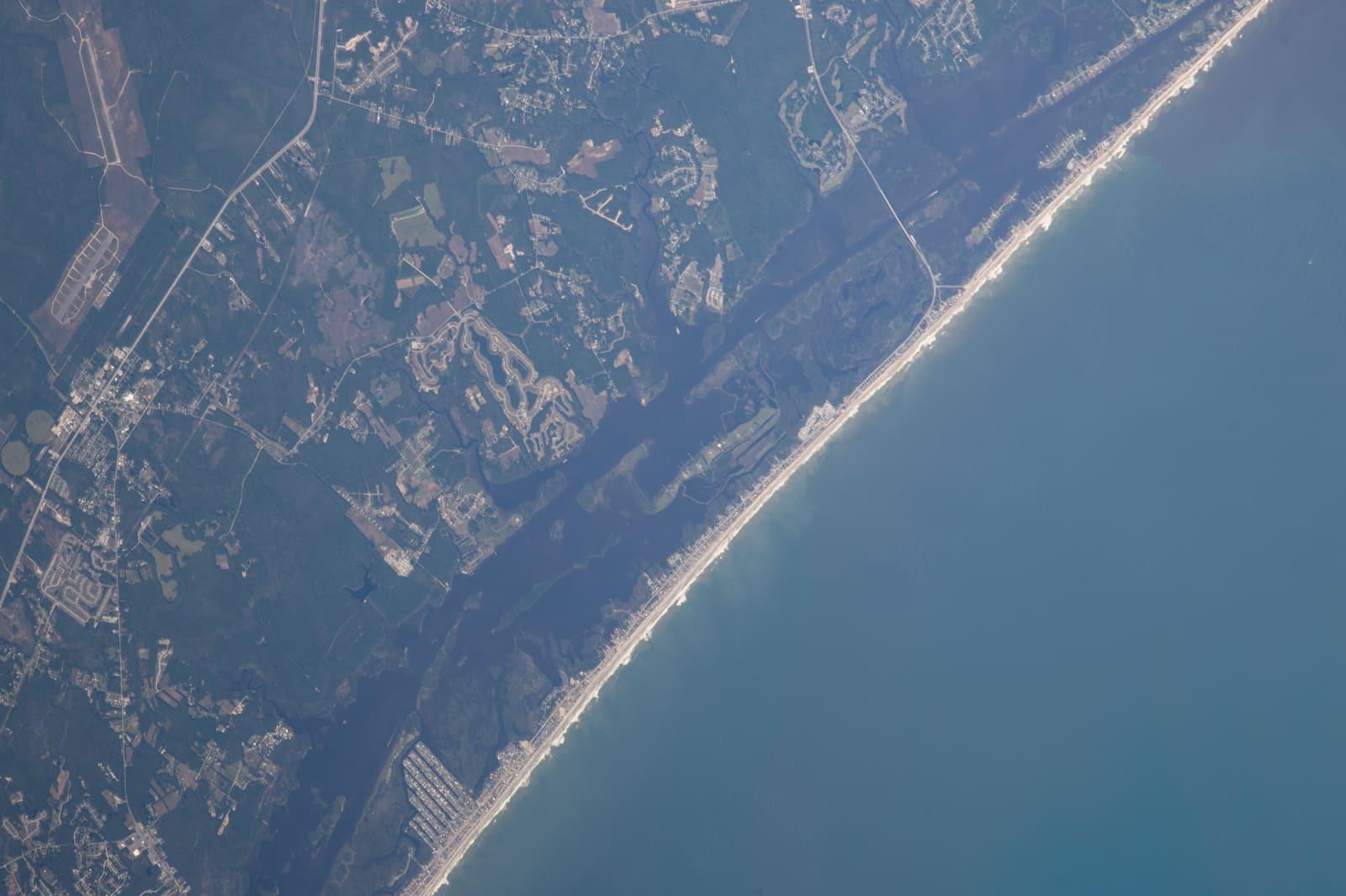
Topsail Beach Fossil Hunting Guide
Image: NASA (Public domain)
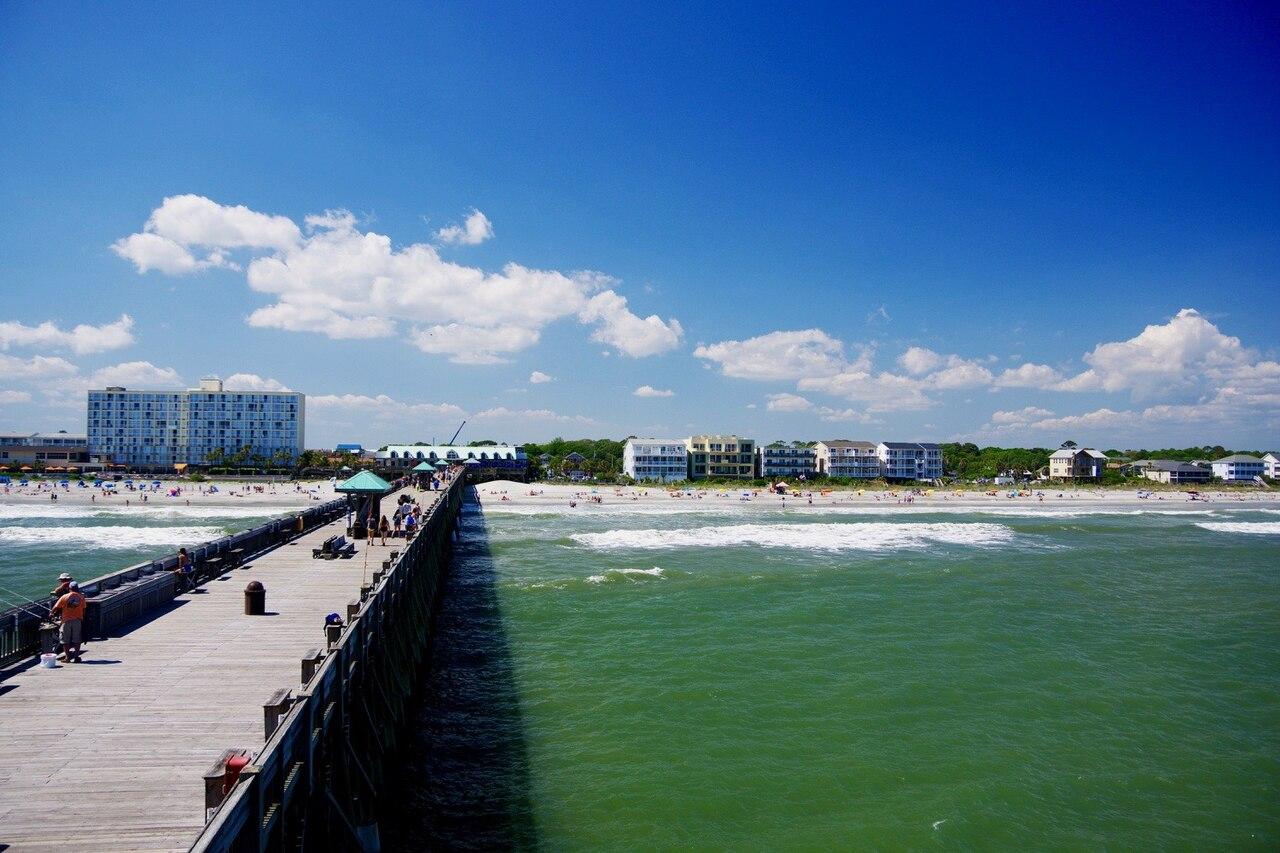
Topsail Island is a 26-mile barrier island on the southern North Carolina coast where fossil shark teeth wash up along the tide line. The black triangular teeth erode from Miocene and Pliocene marine deposits offshore and collect in the wet sand at low tide, especially near New River Inlet and the southern end at Topsail Beach. Free beachcombing, no tools needed.
By Edward Chen · Published 21 June 2026
Introduction
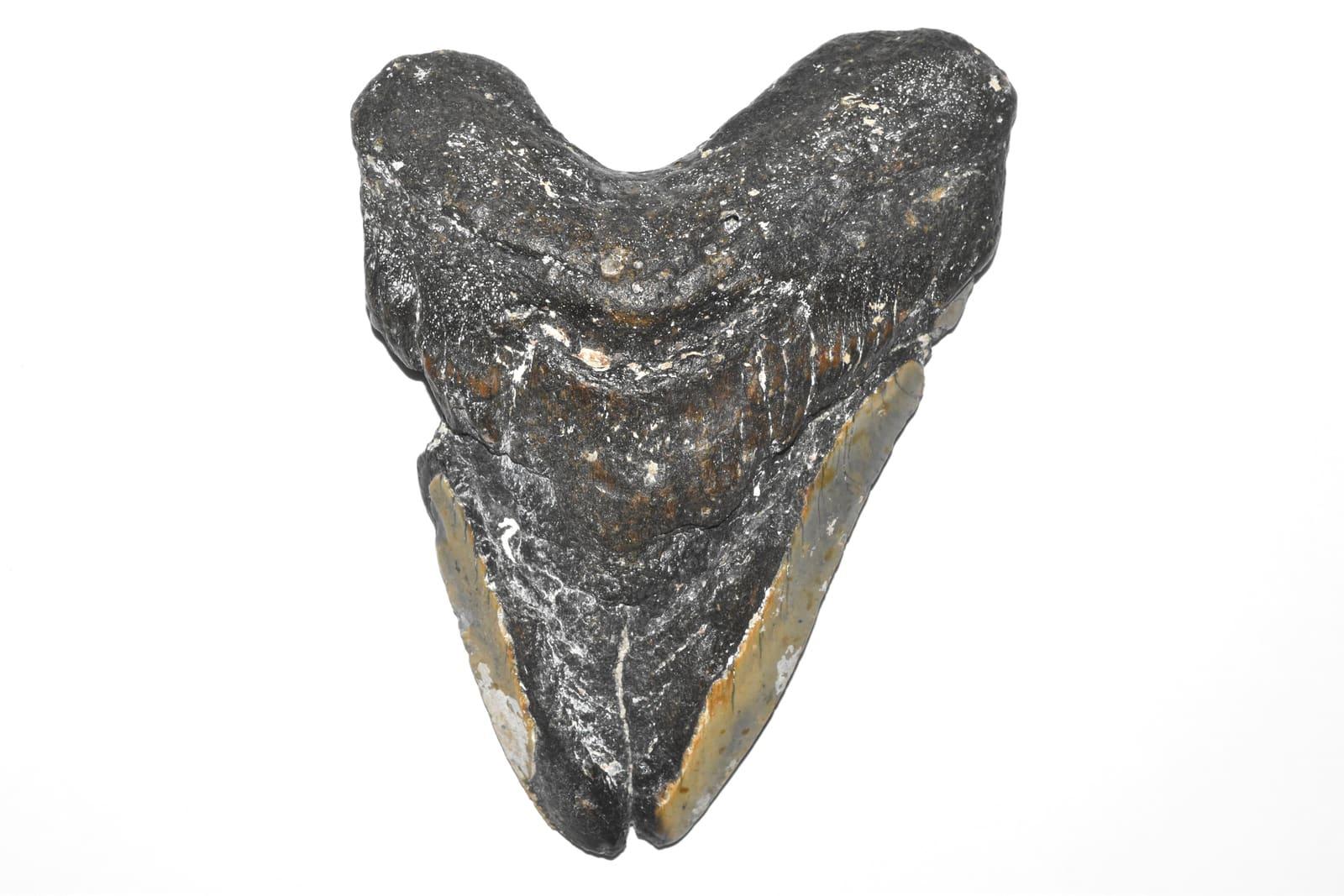
Topsail Island produces fossilized shark teeth along its 26 miles of beach, and they are free to pick up off the open sand. The teeth are not modern. They erode from Miocene and Pliocene marine deposits that lie offshore and along the inlets, then wash in and settle into the wet sand at the tide line. Most finds are small, black or dark-gray, and triangular. Larger teeth and the occasional partial megalodon tooth turn up after storms, when waves churn material out of the seabed and throw it onto the beach.
The island spans three towns. North Topsail Beach at the northern end, Surf City in the middle, and Topsail Beach at the southern tip. Each has public beach accesses, and the productive ground is the open intertidal sand rather than any single pit or outcrop.
Location and Directions
Topsail Island sits in Pender and Onslow counties on the southern North Carolina coast, reached from US Highway 17 by way of NC 50 or NC 210. The town of Topsail Beach occupies the southern end, near 34.368°N, 77.633°W. Use the marked public beach access points and the public parking in each town.
Two areas stand out. The northern end near New River Inlet in North Topsail Beach concentrates shark teeth where inlet currents sort the sand, and dark fossil teeth are frequent there. At the southern end, the stretch just north of the Jolly Roger Pier in Topsail Beach is a reliable spot. Walk the wrack line and the wet sand exposed as the tide drops.
What Fossils You'll Find
Fossil shark teeth are the main find. Common species include lemon shark, bull shark, sand tiger, and smaller requiem sharks, with the rare larger tooth from a great white or a worn megalodon. Fresh, modern teeth are white, while the fossil teeth are black, brown, or dark gray after mineralising in the seabed sediments. The dark color is the easiest way to pick them out against pale shell hash.
Alongside the teeth you will find ray dental plates, fragments of fossil bone, and a range of marine shells including whelks, scallops, and augers. The teeth are typically under an inch, so scanning slowly pays off more than covering distance.
Geologic History
The shark teeth on Topsail's beaches derive from the Pungo River Formation and the younger Yorktown Formation, marine units laid down between roughly 23 and 3 million years ago during the Miocene and Pliocene, when the sea covered the present coastal plain. These deposits accumulated shark teeth, ray plates, and shells across a shallow continental shelf. Sea-level change and erosion later exposed these sediments offshore and along the tidal inlets. Wave and current action breaks the fossils free and transports them onto the modern beach as a lag deposit, which is why you collect them loose on the sand rather than from a rock face.
Collecting Rules and Regulations
Topsail Island's beaches are public, and picking up loose fossil shark teeth, shells, and bone fragments from the open sand is free and unrestricted. No permit or fee is required to walk the public accesses and collect surface material for personal use. Do not dig into or disturb the dunes, which are protected and stabilised with sea oats. Respect private property behind the beach and use the designated public access paths and parking rather than crossing private lots.
Safety
Check the tide chart and plan your walk around low tide, which exposes the most sand and the freshest wrack line. Be aware of rip currents if you wade, and keep an eye on the incoming tide so you are not cut off near an inlet. Inlet currents near New River Inlet are strong, so stay on the beach rather than entering the water there. Sun exposure is the main hazard on a long walk, so bring water, sun protection, and footwear that handles wet sand and shell debris. A small sifter or scoop helps spot teeth in the wet sand but is not required.
Sources
https://www.topsailvacation.com/seashells-shark-teeth-fossils-your-treasure-hunting-guide/ https://www.wardrealty.com/blog/how-to-find-shark-teeth-seashells-fossils-and-more-on-topsail-island https://www.discovertopsailisland.com/directory/best-spots-for-shelling-and-shark-tooth-hunting-on-topsail-island-article-200.aspx https://waltermagazine.com/explore/shop/best-north-carolina-beaches-for-shark-teet/