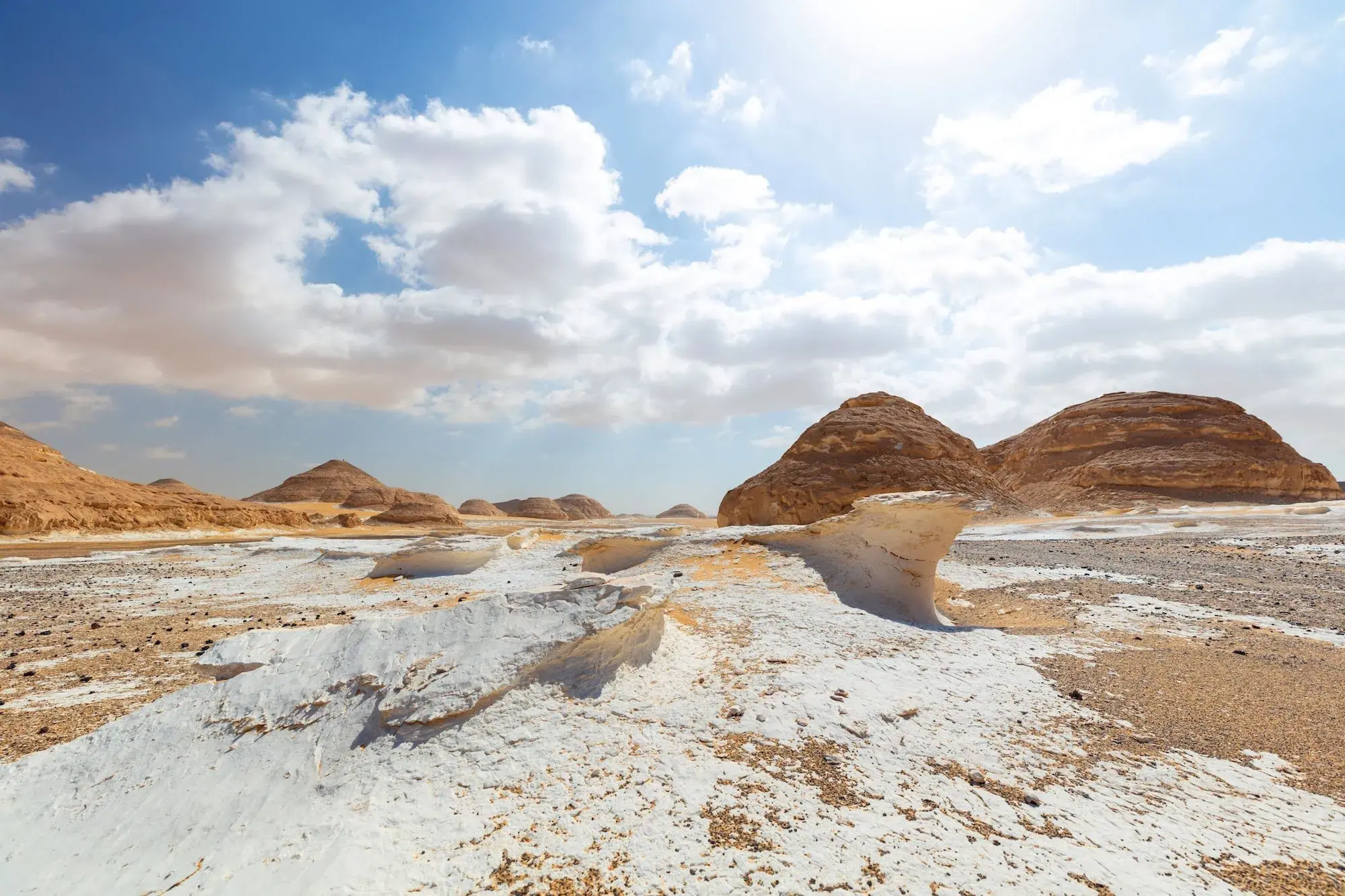
Bahariya Oasis Fossil Safari Fossil Hunting Guide
The Bahariya Oasis in Egypt's Western Desert exposes the mid-Cretaceous Bahariya Formation around Gebel el Dist and the Black Desert. Field expeditions have recovered Spinosaurus aegyptiacus, Carcharodontosaurus saharicus, and the giant titanosaur Paralititan stromeri. Reached by guided multi-day desert safari from Cairo or Bawiti.
By Edward Chen · Published 4 June 2026
Introduction
The Bahariya Oasis is a roughly 2,000-square-kilometre depression in Egypt's Western Desert, about 360 kilometres southwest of Cairo. The oasis floor sits 100 metres below the surrounding plateau, and erosion of the plateau scarp exposes the mid-Cretaceous Bahariya Formation in a series of low hills and badlands. The most productive vertebrate localities lie north of the oasis around Gebel el Dist, in the transition zone between the cultivated palm plantations of the oasis and the open Black Desert. Field work at Bahariya began with Ernst Stromer von Reichenbach of the Bavarian Academy of Sciences between 1911 and 1914, who collected the holotypes of Spinosaurus aegyptiacus, Carcharodontosaurus saharicus, Bahariasaurus ingens, and the giant titanosaur material that became Aegyptosaurus baharijensis. The original holotypes were lost in a 1944 Allied air raid on Munich. Modern field work resumed in 1999 under a Penn State, MUVP, and Egyptian Geological Museum collaboration, which produced the type material of Paralititan stromeri in 2001 and continues to recover new theropod, sauropod, and crocodyliform material through MUVP-led expeditions. Public access is by guided multi-day desert safari from Cairo or the town of Bawiti at the centre of the oasis. Collecting is prohibited under Egyptian heritage law. This guide covers how to reach Bahariya, what tour operators show, the mid-Cretaceous geology, and the rules that apply.
Location and Directions
The Bahariya Oasis lies in the northern part of the Western Desert, in Giza Governorate. The town of Bawiti, the main hub for visitors, is at GPS 28.3520 degrees north, 28.8636 degrees east. The drive from Cairo on the asphalt Bahariya Road takes about four and a half hours one way through the Sahara.
The Gebel el Dist fossil locality lies roughly 25 kilometres north of Bawiti, off the road that links Bahariya to the Black Desert and onward to Farafra Oasis. The locality is on open desert ground, not signposted, and reached by four-wheel-drive guided trip.
Tour operators in Cairo and Bawiti run standard 2-day and 3-day desert safaris that include Gebel el Dist as one of several stops, alongside the Black Desert, the White Desert, and Crystal Mountain. Typical prices at the time of writing run roughly 80 to 150 US dollars per person per day for shared private 4x4 trips, including driver, basic camp meals, and overnight in a desert camp. English-speaking guides are available with most operators. Permits to enter the Black and White Desert national parks are issued at the Bawiti tourism office.
Independent travel to the Gebel el Dist locality is not advised. The site lies in open desert with no signage, no water, and no reliable navigation landmarks. Active research excavations by international teams are not open to the public.
Bawiti has standard Egyptian-budget hotels, basic restaurants, fuel, and a small market. Cairo, with the international airport, is the main service hub.
What Fossils You'll Find
You will not collect at Bahariya. What you can do is walk across the in-place exposures of the Bahariya Formation with a guide and see the rocks that produced one of the great Cretaceous vertebrate Lagerstätten of Africa. Many of the original specimens are no longer extant, having been destroyed in the 1944 Munich air raid, but casts and modern collections are held at the Mansoura University Vertebrate Paleontology Centre (MUVP), the Egyptian Geological Museum in Cairo, and the Carnegie Museum of Natural History in Pittsburgh.
- Spinosaurus aegyptiacus. The 15-metre sail-backed theropod first described by Stromer in 1915 from Bahariya material. New specimens recovered in Morocco and reanalysed from old Bahariya field notes have reshaped the reconstruction of Spinosaurus as a semi-aquatic predator.
- Carcharodontosaurus saharicus. A large carcharodontosaurid theropod comparable in size to Tyrannosaurus rex, originally described from Bahariya in 1931 and known from later Moroccan material.
- Bahariasaurus ingens. A second large theropod, with affinities still debated.
- Paralititan stromeri. A giant titanosaur sauropod whose 1.7-metre humerus was the longest then known from any Cretaceous sauropod. Type material recovered by the Penn State expedition in 2001.
- Aegyptosaurus baharijensis. A medium-sized titanosaur described by Stromer in 1932.
- Mawsonia tegamensis. A large coelacanth fish recovered from coastal lagoon facies.
- Crocodyliforms. Stomatosuchus and Aegyptosuchus skull material come from the same formation.
The new MUVP expeditions are recovering additional small theropod, crocodyliform, and turtle material each season, with results published in journals including Royal Society Open Science, Cretaceous Research, and Scientific Reports.
Geologic History
The fossil-bearing rocks belong to the Bahariya Formation, a sequence of cross-bedded sandstone, mudstone, and minor limestone deposited in coastal, deltaic, and estuarine settings during the Cenomanian Stage of the mid-Cretaceous. The formation is dated to roughly 98 million years ago by ammonite biostratigraphy and by U-Pb ages on detrital zircons.
During the mid-Cretaceous, what is now the Western Desert lay on the south shore of the Tethys Ocean. A wide tidal coast with mangrove-like vegetation, slow rivers, and shallow lagoons developed across northeast Africa. Tide-influenced sand and silt accumulated on shoals and channel bars. Carcasses of large theropods and sauropods were washed seaward during flood pulses and buried in cross-bedded sandstone alongside the bones of estuarine fish, crocodyliforms, and turtles. The result is a mixed terrestrial-marine taphonomic assemblage with both fully terrestrial dinosaur material and abundant aquatic fauna in the same beds.
After the Cretaceous, the basin was buried under thick Paleogene and Neogene marine and continental cover, then exhumed during late Cenozoic uplift of the Western Desert plateau. Modern wind and water erosion has stripped the younger cover and exposed the Bahariya Formation in low hills around Gebel el Dist and along the southern margin of the Black Desert.
How Bahariya Became a Fossil Site
Ernst Stromer von Reichenbach, a Bavarian paleontologist working for the Bavarian State Collection of Palaeontology in Munich, led the first scientific expeditions to Bahariya in 1911 and 1914. Stromer's collecting parties recovered the type material of Spinosaurus, Carcharodontosaurus, Bahariasaurus, Aegyptosaurus, and Stomatosuchus, and shipped the specimens to Munich for description. Stromer published the type descriptions between 1915 and 1934. The original specimens were destroyed when Allied bombing of Munich on 24 April 1944 struck the Bavarian State Collection, leaving only Stromer's published illustrations and field notes.
Modern collection at Bahariya resumed in 1999 under a Penn State expedition led by Joshua Smith, Matt Lamanna, and Kenneth Lacovara, in cooperation with the Egyptian Geological Museum. The 2001 description of Paralititan stromeri was the first major new Bahariya taxon since Stromer's monographs. The Mansoura University Vertebrate Paleontology Centre, founded in 2010 under Hesham Sallam, has led MUVP expeditions to the oasis every field season since 2014, producing several new theropod and crocodyliform descriptions.
Collecting Rules and Regulations
Collecting is prohibited. All fossils in Egypt are protected under Egyptian Law 117 of 1983 on the Protection of Antiquities, which treats paleontological material as state property. Removing fossils from Egypt without a permit from the Supreme Council of Antiquities is illegal and carries criminal penalties.
Practical rules:
- Visit Gebel el Dist as part of a licensed Bahariya desert safari with an Egyptian-registered tour operator. Independent travel into the open desert is not allowed without prior permission and is dangerous.
- Stay with your guide group at all times. Do not pick up bone fragments, even loose float.
- Photography for personal use is welcomed in the desert.
- Drones require advance permission from Egyptian authorities and are restricted in most border desert zones.
- Pets are not part of standard desert safaris.
- Research collection is restricted to permitted teams working under the Supreme Council of Antiquities and partnered Egyptian universities.
Active research excavations led by MUVP and partner teams are not open to the public during the field season (typically winter months).
Safety
The Western Desert can reach 45 degrees Celsius in summer (May through September). The standard tourist visiting window is October through April, with daytime highs around 20 to 30 degrees Celsius and overnight lows in the single digits to low teens. Carry warm layers for overnight camping even in the warm season.
Sun exposure is intense year round. Carry at least 4 litres of water per person per day, plus high-SPF sun cover and a wide-brimmed hat. Sandstorms can blow up with little warning, especially in spring (March and April).
The Black and White Desert routes traverse open country with no fuel stops, no marked roads, and no cell coverage. Travel only with experienced Egyptian guides driving well-maintained 4x4 vehicles equipped with extra fuel and water.
The Egyptian Western Desert has had occasional security incidents in the last decade. Check current Egyptian and home-country travel advisories before booking a desert safari, and use a registered tour operator.
Sources
- National Science Foundation, "Bahariya Oasis ecosystem reconstruction." https://www.nsf.gov/news/mmg/mmg_disp.jsp?med_id=188399
- Phys.org, "Bizarre meat-eating dinosaur found in classic fossil site in Egypt's Sahara desert." https://phys.org/news/2022-06-bizarre-meat-eating-dinosaur-classic-fossil.html
- Wikipedia summary of the Spinosaurus literature. https://en.wikipedia.org/wiki/Spinosaurus
- Smith, J.B., Lamanna, M.C., Lacovara, K.J., et al., 2001. "A Giant Sauropod Dinosaur from an Upper Cretaceous Mangrove Deposit in Egypt." Science, 292.
- Sallam, H.M. et al., 2022. "A bizarre new abelisauroid theropod from the Bahariya Formation of Egypt." Royal Society Open Science.
Nearby sites
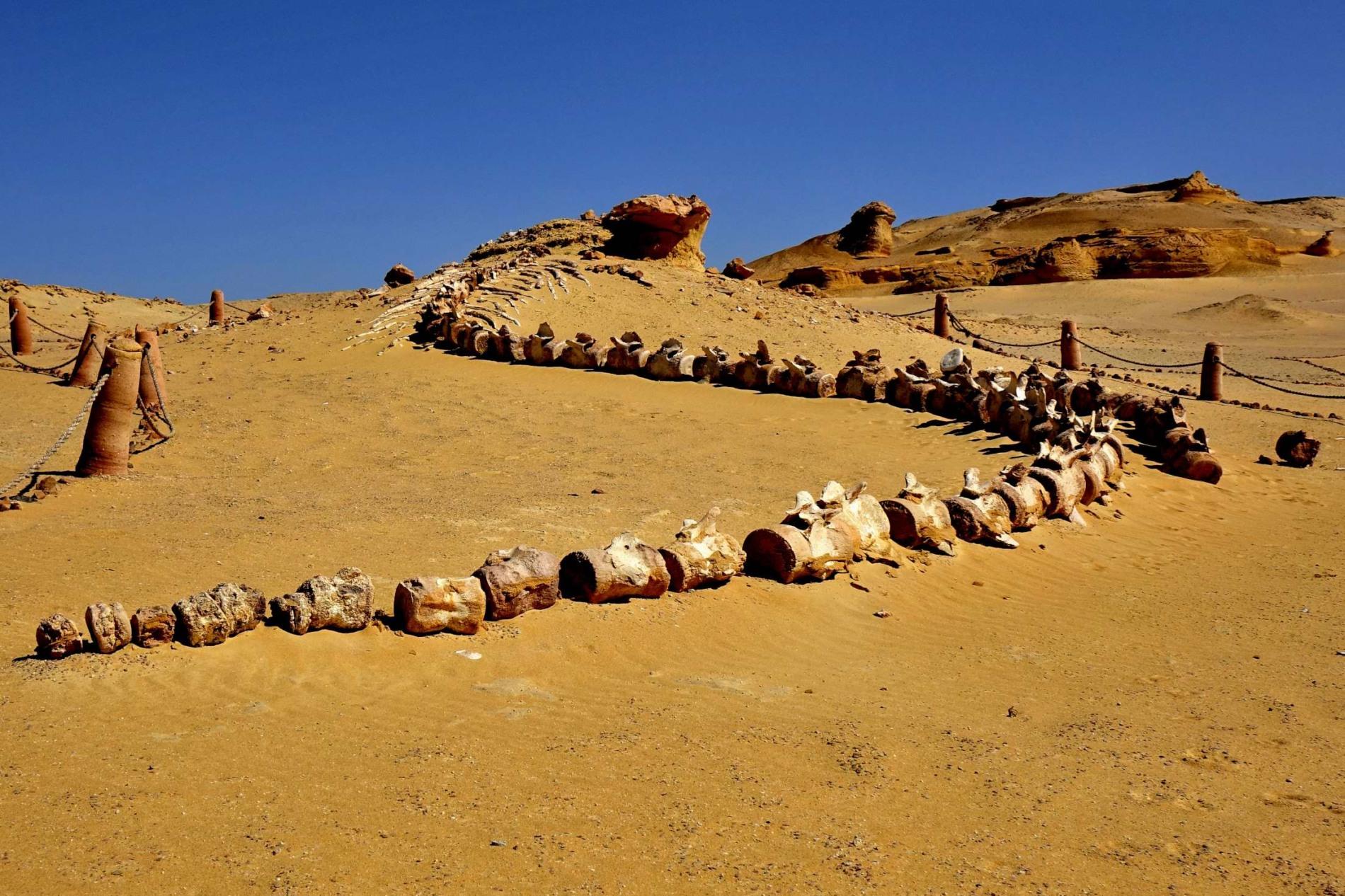 Wadi Al-Hitan (Whale Valley) Fossil GuideArchaeocete whales, Basilosaurus
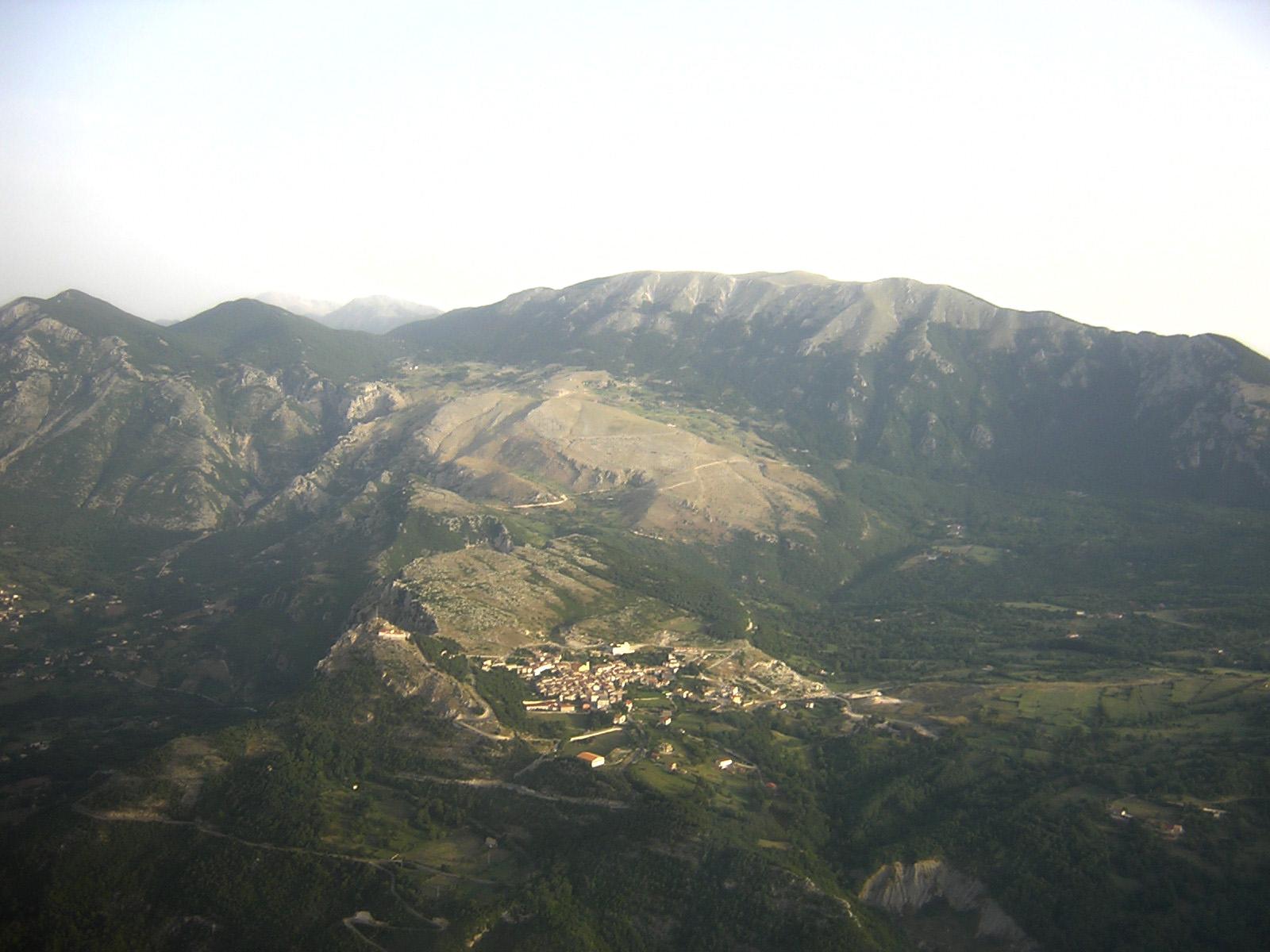 Pietraroja Plattenkalk Geosite Fossil Hunting GuideScipionyx samniticus (theropod), Notagogus parvus (fish)
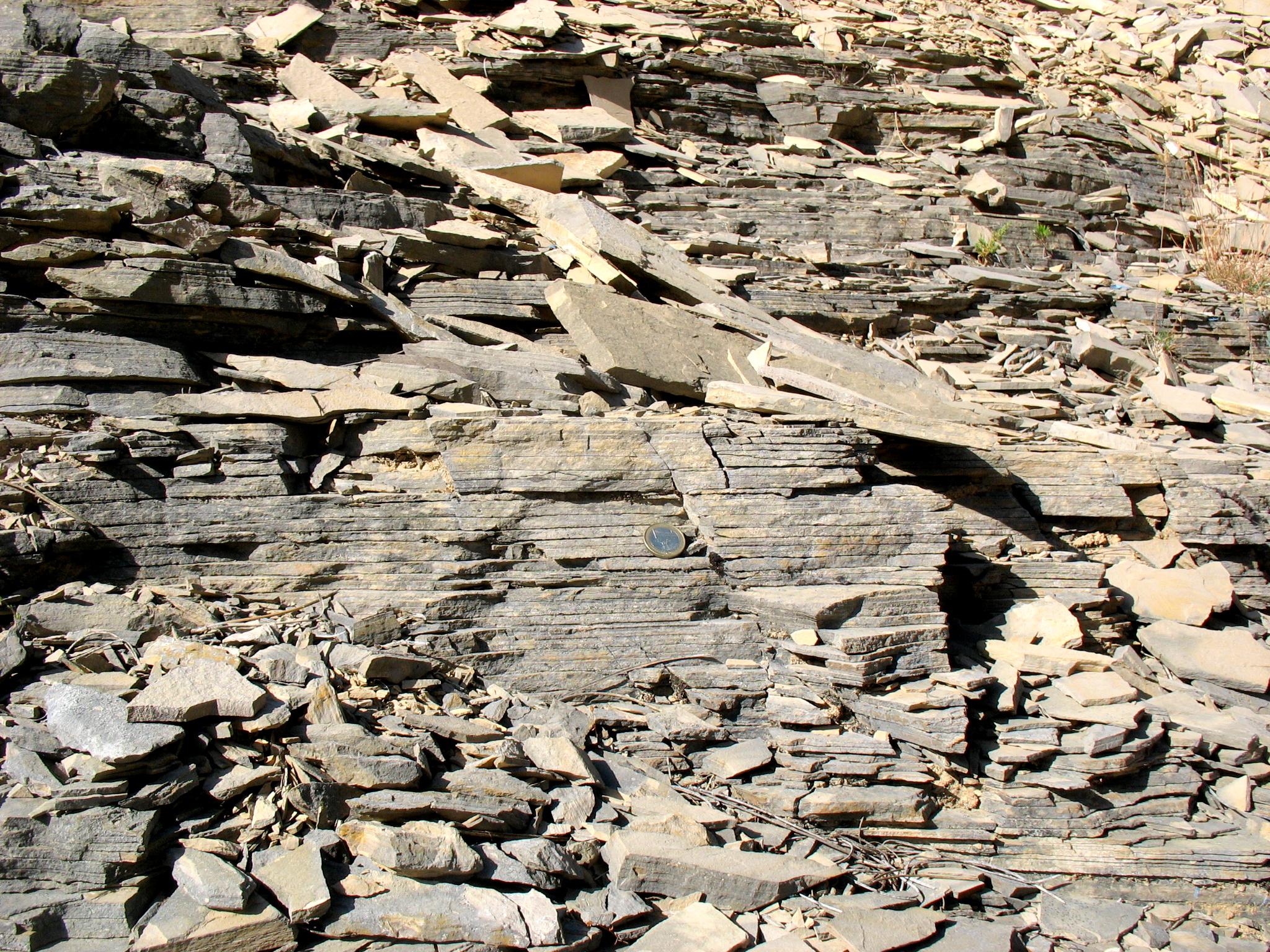 Las Hoyas Lagerstätte Fossil Hunting GuideConcavenator corcovatus (carcharodontosaurid), Iberomesornis romerali (early bird)
 Robbedale Gravel Pit Fossil Hunting GuideTheropod dinosaur teeth, Ornithopod dinosaur teeth