Pietraroja Plattenkalk Geosite Fossil Hunting Guide
Pietraroja, a small village in the Apennine foothills of Benevento Province, southern Italy, contains the Albian Pietraroja Plattenkalk Lagerstätte. The locality has produced more than 1,200 specimens of fossil fish, plants, and the small theropod Scipionyx samniticus, Italy's first dinosaur. Viewing-only at the local museum and geosite.
By Edward Chen · Published 4 June 2026
Introduction
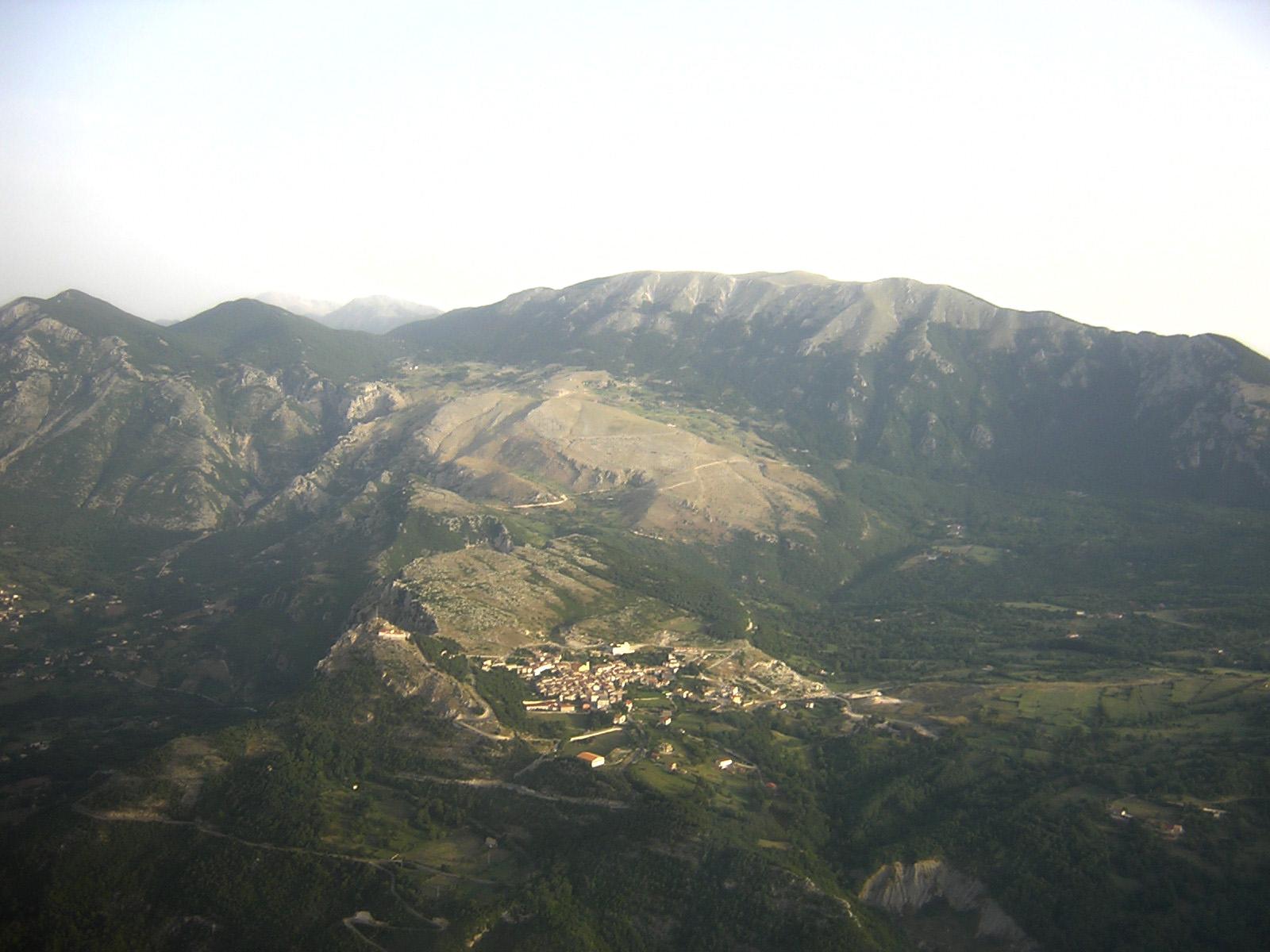
Pietraroja is a small village of about 500 residents on the southern slope of the Matese mountains in Benevento Province, Campania. The hillsides above the village expose the Pietraroja Plattenkalk, a thin sequence of finely laminated calcareous mudstone deposited in a shallow restricted lagoon during the Albian stage of the Early Cretaceous, roughly 113 million years ago. The unit was identified in the eighteenth century by Marquis Carlo Maria Lupia Riario Sforza, who collected fish specimens for his cabinet in Naples, and was first described scientifically by Oronzo Gabriele Costa of the Università di Napoli Federico II in 1850. Since then, more than 1,200 articulated specimens of fish, plants, crustaceans, and reptiles have been recovered. The most famous find is Scipionyx samniticus, a juvenile coelurosaur described from a single specimen in 1998. The Scipionyx fossil preserves muscle fibres, intestinal contents, and other soft tissues at sub-cellular resolution, and is the first dinosaur described from Italy. The locality is a designated geosite within the Matese Regional Park, and the village hosts a small municipal paleontological museum on the main piazza. Collecting is prohibited under Italian heritage law. This guide covers how to reach Pietraroja, what is visible at the geosite and the museum, the Albian geology, and the rules that apply.
Location and Directions
Pietraroja lies about 70 kilometres northeast of Naples and about 30 kilometres northwest of Benevento, in the Matese mountains. From Naples, the drive takes about 90 minutes via the A1 north and the SS372 Telesina east, then SP106 up into the mountains. From Rome, the drive takes about three hours.
The Museo Civico Paleontologico di Pietraroja is on Via Roma in the centre of the village. GPS for the museum is 41.3464 degrees north, 14.5803 degrees east. Parking is on-street and free. The museum is small (about 200 square metres of exhibition space) and is staffed by local guides. It is open primarily on weekends and during summer holidays, with weekday opening by prior arrangement. Admission is free at the time of writing, with a small donation box at the entrance.
The historic Le Cavere quarry, where Scipionyx was found in 1981 and where Costa's earlier fish material came from, is a short walk uphill from the village on a signposted path. The quarry itself is fenced off and gated, but a viewing zone with weather-proof panels at the perimeter explains the stratigraphy and lists the major species recovered.
The wider Matese Regional Park surrounds the village and contains additional geosites, hiking trails, and karst features. Pietraroja itself has two small family-run guesthouses and a handful of restaurants serving traditional Matese cuisine. Benevento and the larger town of Telese Terme provide more lodging options.
What Fossils You'll Find
You will not collect at Pietraroja. What you can do is study the village museum's small but selective collection of prepared specimens and read the panels at the gated Le Cavere quarry. Identifications below follow the published Pietraroja literature and the catalogue of the Museo Civico Paleontologico di Pietraroja.
- Scipionyx samniticus. A juvenile coelurosaur theropod about 50 centimetres long. The holotype was found in 1981 by amateur collector Giovanni Todesco and described by Cristiano Dal Sasso and Marco Signore in 1998. The fossil preserves muscle fibres, the trachea, intestines (with food remains), and possibly the liver. The original specimen is held at the Museo Civico di Storia Naturale di Milano. A high-quality cast is on display at the Pietraroja museum.
- Notagogus. A small macrosemiid fish (Macrosemiidae, Halecostomi), among the most abundant forms in the Pietraroja Plattenkalk.
- Belonostomus. A long-bodied predatory aspidorhynchid fish.
- Coelacanths. Chinlea-grade coelacanths are represented by complete specimens.
- Ophiopsis. A small halecostome fish, common in many bedding planes.
- Matoniaceae ferns. Phlebopteris dunkeri and other ferns are preserved as compressions on several horizons.
- Crustaceans. Small caridoid shrimp and ostracodes are abundant in the same beds.
The Naples Museo di Paleontologia at the Università di Napoli Federico II holds the larger historical collection of Costa-era fish specimens. The Milano Civico Museo holds the Scipionyx holotype.
Geologic History
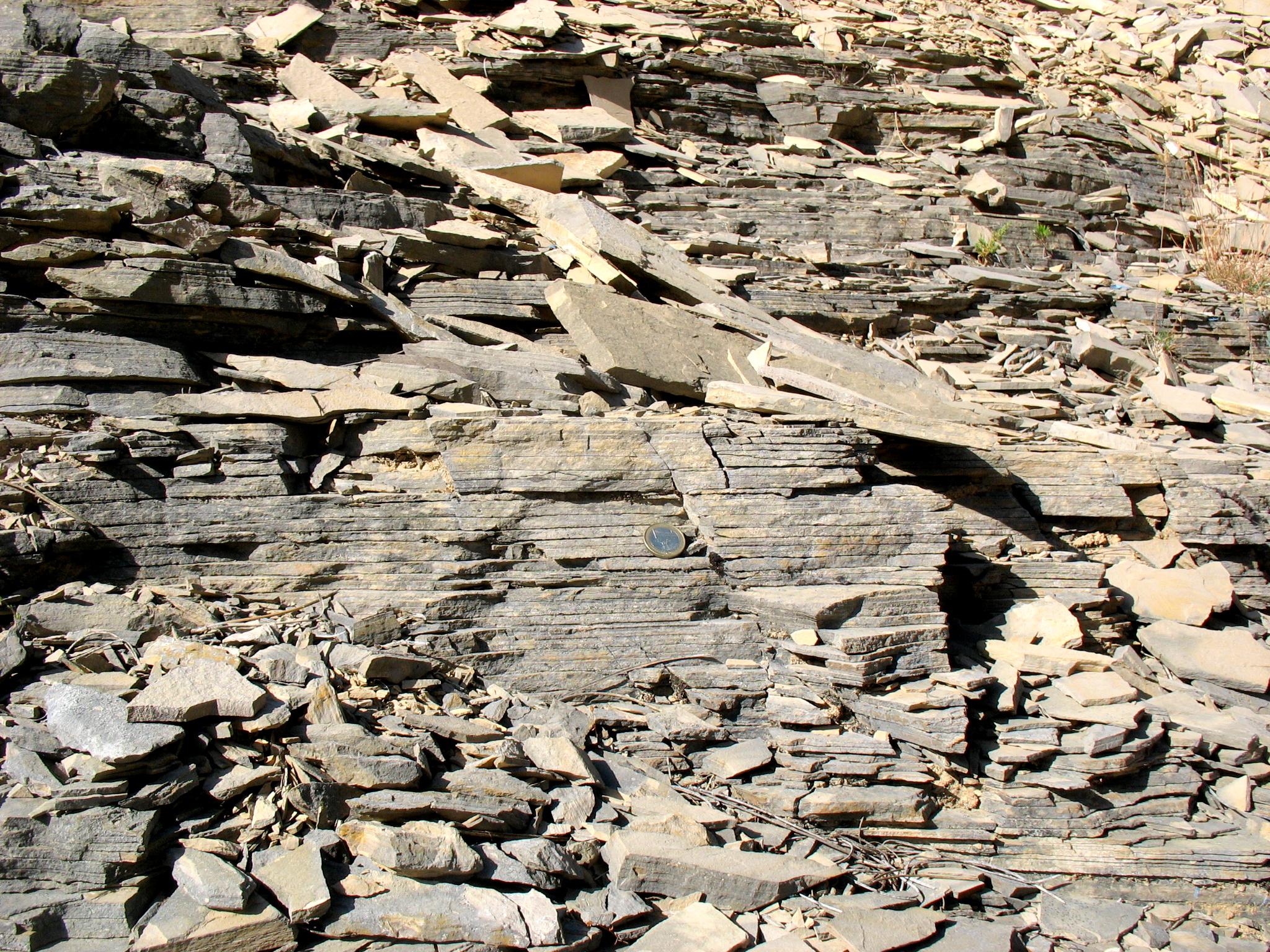
The Pietraroja Plattenkalk is a thin (about 12-metre) sequence of finely laminated, dark calcareous mudstone, calcareous claystone, and rare graded sandstone beds deposited in a small restricted lagoon on the southern margin of the Tethys Ocean during the Albian stage of the Early Cretaceous, roughly 113 million years ago. The unit sits within the wider Apennine Cretaceous carbonate platform stratigraphy and is associated with the Costa di Chianciaro horizon.
A 2024 sedimentological study published in Sedimentology by Mariano Parente and co-authors interprets the lagoon as periodically anoxic, with seasonally restricted circulation against a small carbonate platform. Mass mortality events triggered by salinity or oxygen excursions buried fish, plants, and rare reptiles in undisturbed laminated mud, allowing exceptional soft-tissue preservation. Microbial mats covering carcasses contributed to the preservation through phosphatisation of muscle and viscera.
After Cretaceous deposition, the carbonate platform was overridden by Miocene Apennine thrust tectonics and is now exposed in a tilted thrust slice on the southern flank of the Matese mountains. Modern stream cutting and small historic quarry operations have exposed the productive horizon at Le Cavere and other small outcrops around the village.
How Pietraroja Became a Fossil Site
Marquis Carlo Maria Lupia Riario Sforza of Naples acquired the first Pietraroja fish specimens for his private cabinet in the late eighteenth century. Oronzo Gabriele Costa of the Università di Napoli Federico II purchased and described much of this material in his 1850 monograph "Paleontologia del Regno di Napoli." Later quarry work through the late nineteenth and early twentieth centuries produced thousands of fish specimens that are now scattered between the Naples Museo di Paleontologia, the Museo Civico di Storia Naturale di Milano, and several private collections.
In 1981 Giovanni Todesco, a young Italian collector, found the small theropod that would become Scipionyx samniticus in one of the Le Cavere quarry blocks. Todesco kept the specimen in his private collection until 1992, when he contacted Cristiano Dal Sasso at the Milano Civico Museo. The 1998 Nature description by Dal Sasso and Signore made Scipionyx the first Italian dinosaur and one of the best-preserved theropod soft-tissue specimens known.
The Matese Regional Park was established in 1993 and includes Pietraroja as a key geosite. The municipal museum opened in 2010 as part of a regional heritage programme.
Collecting Rules and Regulations
Collecting is prohibited. The Pietraroja Plattenkalk locality is protected as a Sito di Importanza Comunitaria within the Matese Regional Park under EU Habitats Directive 92/43/CEE and as a paleontological heritage site under Italian Legislative Decree 42/2004. Removing fossils, rocks, or any material from the protected area is an offence under Italian federal law.
Practical rules:
- The Le Cavere quarry is gated. View the in-place exposures from the marked perimeter zone.
- Stay on signposted footpaths between the village and the quarry.
- Photography for personal use is welcomed at the quarry perimeter and inside the museum.
- The museum charges no admission. Donations support continued operation.
- Drones require advance permission from the park authority (Ente Parco Regionale del Matese).
- Pets must be leashed on the paths and are not permitted inside the museum.
- Research collection is restricted to permitted teams working under the regional park authority and the Soprintendenza Archeologia Belle Arti e Paesaggio per le province di Caserta e Benevento.
Safety
Pietraroja sits at about 818 metres elevation in a small mountain village. Summer temperatures reach 26 to 30 degrees Celsius, with cool nights. Winter brings snow and ice from December through March. The mountain roads up to the village can be icy.
The path to Le Cavere quarry is short but unpaved and uneven. Sturdy walking shoes are recommended. After heavy rain, mountain run-off can make the trail muddy.
Public services in the village are limited to a small grocery and two restaurants. Banks and pharmacies are in the larger nearby towns. Carry cash in small denominations for museum donations and meals.
Cell coverage is reliable in the village and intermittent on the upper hillside trails.
Sources
- Dal Sasso, C. and Signore, M., 1998. "Exceptional soft-tissue preservation in a theropod dinosaur from Italy." Nature, 392. https://www.nature.com/articles/32884
- Parente, M. et al., 2024. "Carbonate Lagerstätten: The Lower Albian of Pietraroja." Sedimentology. https://onlinelibrary.wiley.com/doi/10.1111/sed.13146
- Wikipedia, "Pietraroja Plattenkalk." https://en.wikipedia.org/wiki/Pietraroja_Plattenkalk
- Costa, O.G., 1850. "Paleontologia del Regno di Napoli." Tipografia di P. Androsio, Napoli.
- Dal Sasso, C. and Maganuco, S., 2011. "Scipionyx samniticus (Theropoda: Compsognathidae) from the Lower Cretaceous of Italy." Memorie della Società Italiana di Scienze Naturali e del Museo Civico di Storia Naturale di Milano, 37.
Nearby sites
 Pesciara di Bolca Fossil Quarry GuideEocene fish, Crustaceans
 Monte San Giorgio (Besano-Meride) Fossil Hunting GuideBesanosaurus leptorhynchus, Ceresiosaurus calcagnii
 Bernissart Iguanodons (RBINS, Brussels) Fossil Hunting GuideIguanodon bernissartensis (articulated skeletons), Mantellisaurus atherfieldensis
 Las Hoyas Lagerstätte Fossil Hunting GuideConcavenator corcovatus (carcharodontosaurid), Iberomesornis romerali (early bird)