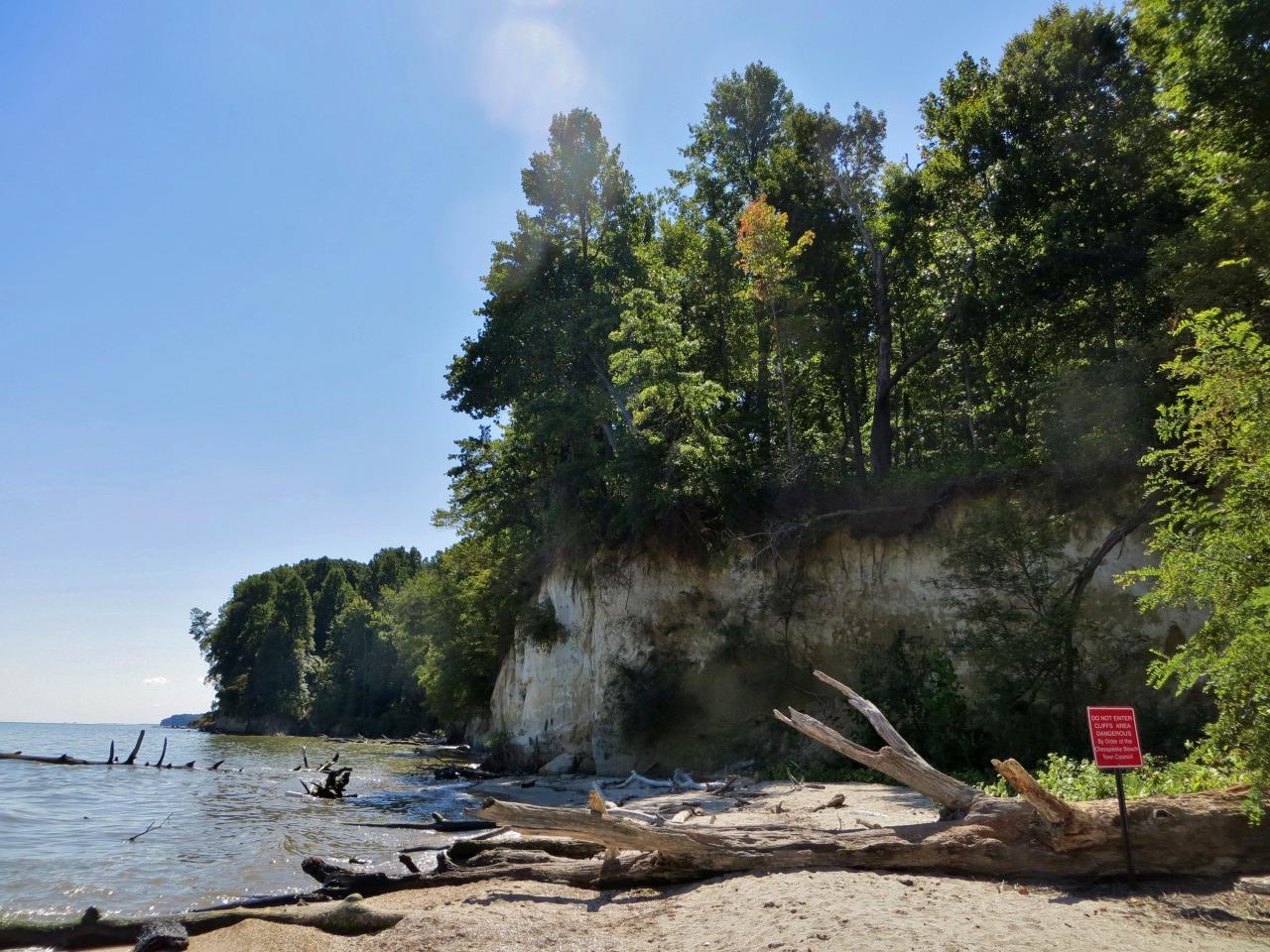
Bay Front Park (Brownie's Beach) Fossil Hunting Guide
Image: Acroterion (CC BY-SA 4.0)
Bay Front Park, locally known as Brownie's Beach, is a small town-owned beach at the north end of the Calvert Cliffs in Chesapeake Beach, Maryland. The Miocene-age cliffs shed shark teeth and other fossils onto the sand at every tide. Town residents free year-round; non-residents pay a seasonal day-use fee from Memorial Day through Labor Day.
By Edward Chen · Updated 27 July 2026
Introduction
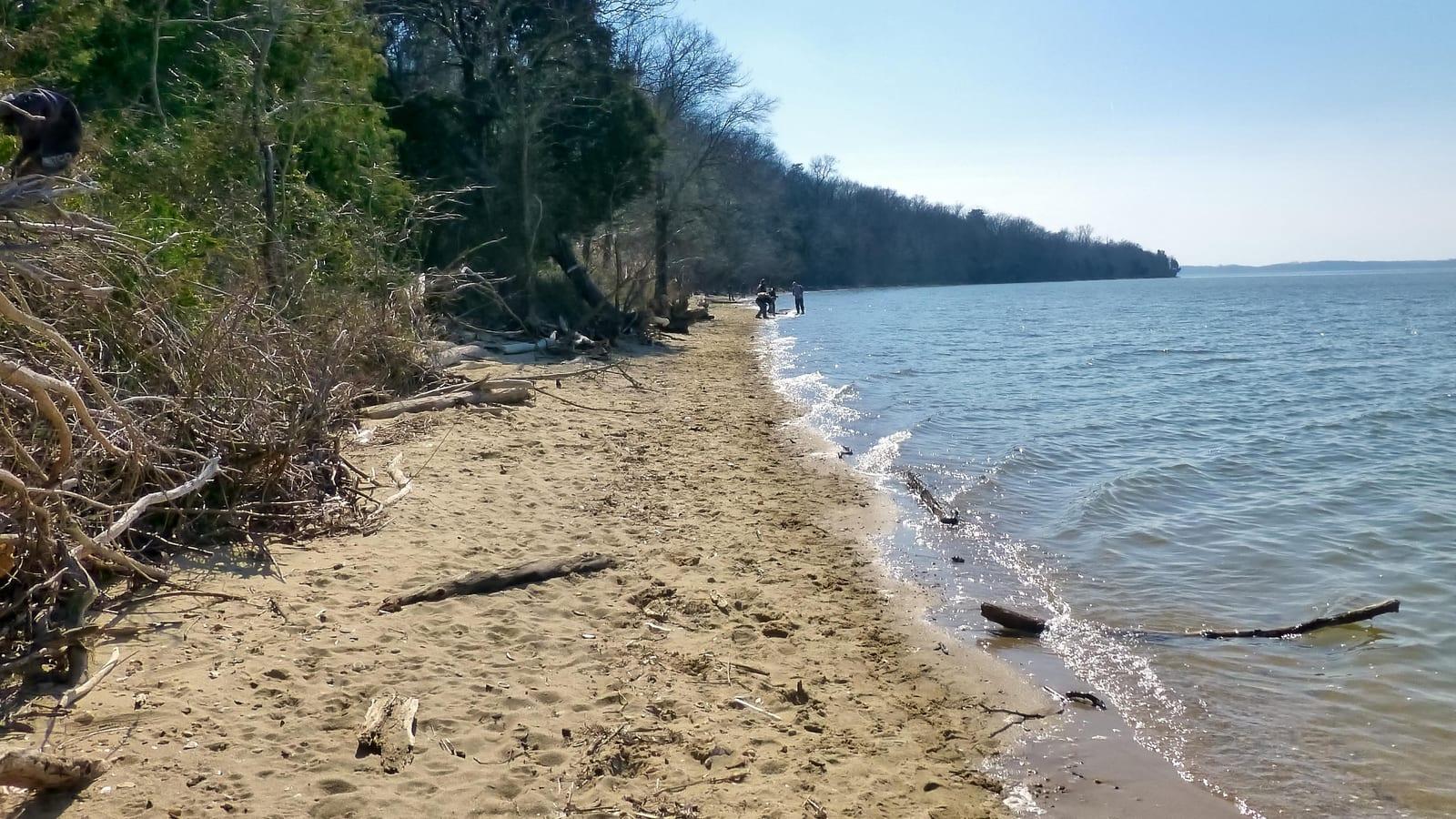
Bay Front Park, almost universally called Brownie's Beach by long-time visitors, is a town-owned beach at the south end of Chesapeake Beach in Calvert County, Maryland. It sits at the northern terminus of the Calvert Cliffs, the 24-mile escarpment of Miocene marine sediments that runs south along the western shore of the Chesapeake Bay to Drum Point. Wave action at the base of the cliffs continually loosens fossils from the Calvert Formation, which then wash onto the narrow sand and pebble beach. The site is one of the easiest places in Maryland to find genuine fossil shark teeth, and it is small enough for an hour-long visit with children. Bay Front Park is administered by the Town of Chesapeake Beach. Residents enter free year-round. Non-residents pay a seasonal day-use fee from Memorial Day weekend through Labor Day, and access is free in the off-season. The beach has been closed to non-residents in some recent seasons, so checking the town parks page before driving down is essential.
This guide covers location, the Calvert Formation fossils you can expect to find, current rules, and how the cliff-edge geology produces a steady supply of teeth.
Photo: Smithsonian National Museum of Natural History, CC0, via Smithsonian Open Access
Location and Directions
Bay Front Park is at the south end of Chesapeake Beach on the Chesapeake Bay. The street address is 7255 Bayside Road. From Washington, DC, the drive is about 45 miles southeast via US-301 and MD-260. From Annapolis, take MD-2 south to MD-260 east. Parking is in a small paved lot above the beach. The gate is staffed during the summer season and unstaffed in the off-season.
Directions to Bay Front Park
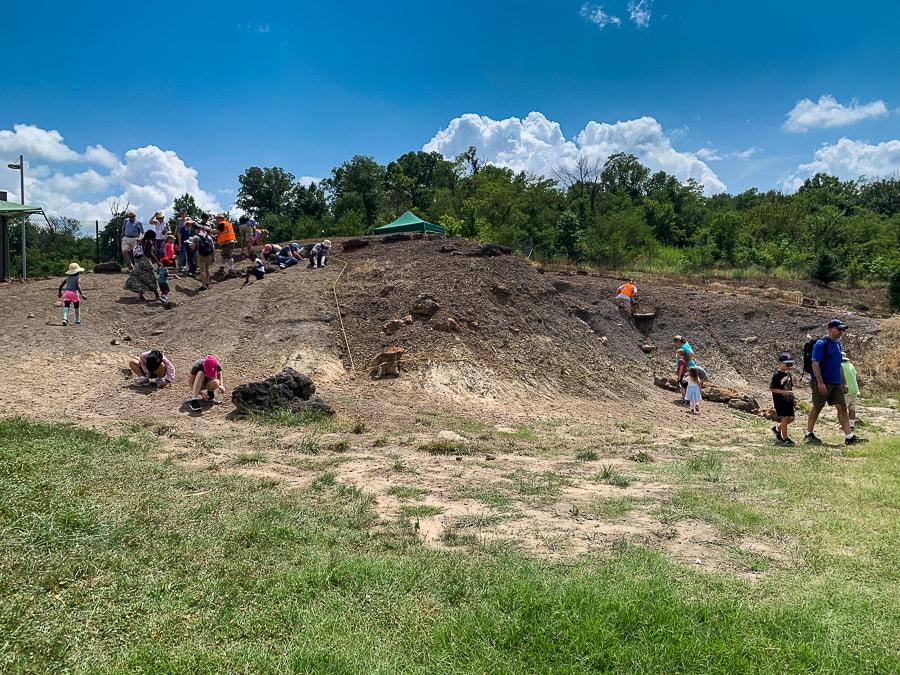
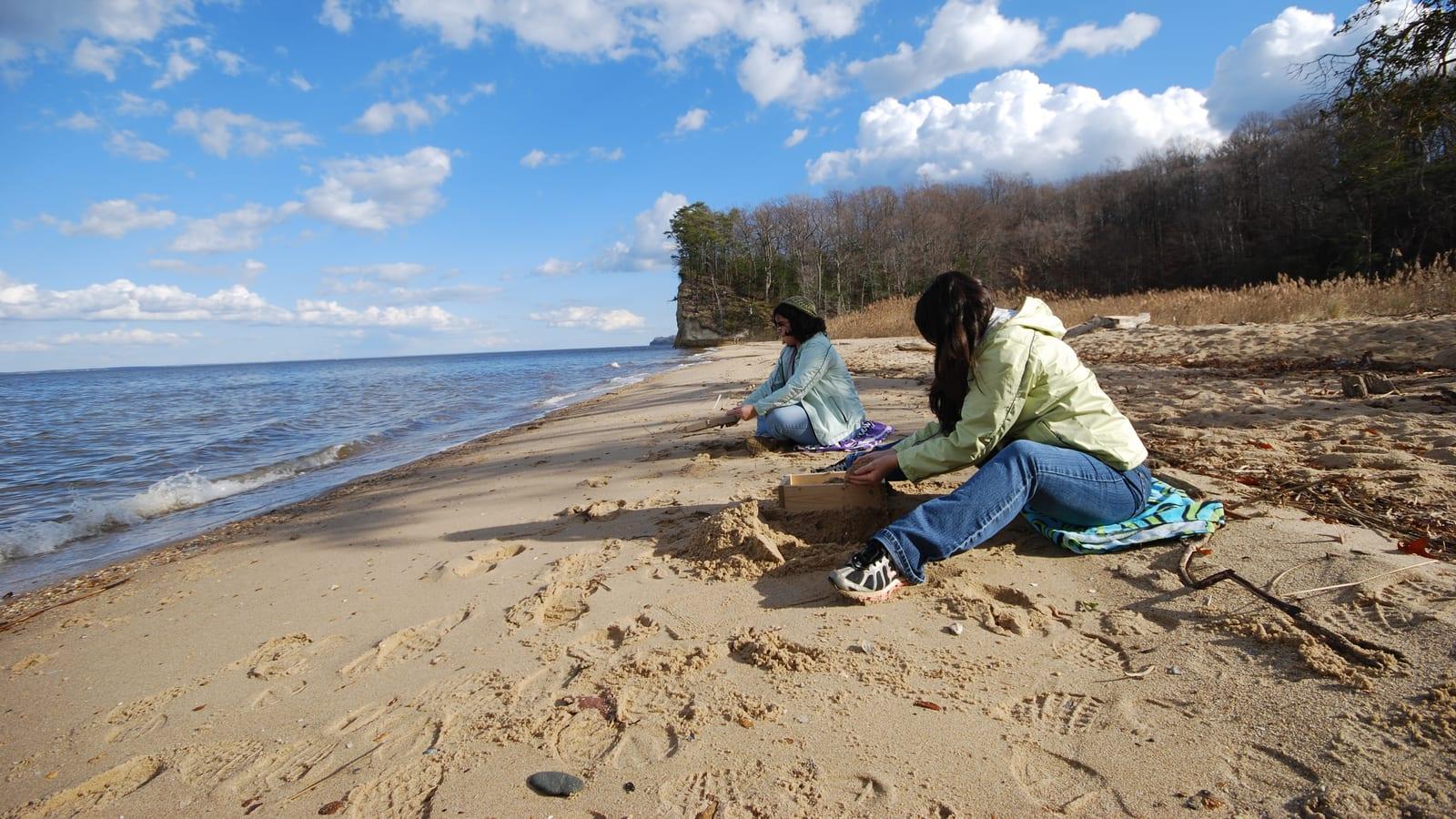
From the parking area a short flight of wooden steps drops down to the beach. The collecting area runs south from the steps along the foot of the low cliffs. At low tide the beach widens considerably and the band of dark gravel where teeth accumulate is more obvious. Bring footwear that can get wet, a small bucket or zip-top bag, and a fine kitchen sieve. The cliffs above are unstable. The rules below cover what that means in practice.
Photo: Smithsonian National Museum of Natural History, CC0, via Smithsonian Open Access
What Fossils You'll Find
The Calvert Cliffs at Chesapeake Beach expose the lower Calvert Formation, the oldest of the three Miocene formations in the Chesapeake Group (the others, the Choptank and St. Marys, crop out progressively to the south). The Calvert here is roughly 18 to 14 million years old and was deposited in a shallow embayment of the Atlantic margin during a period of high relative sea level and strong coastal upwelling. The phosphate-rich, organic-rich muddy sands concentrated fossil bone and teeth in great densities.
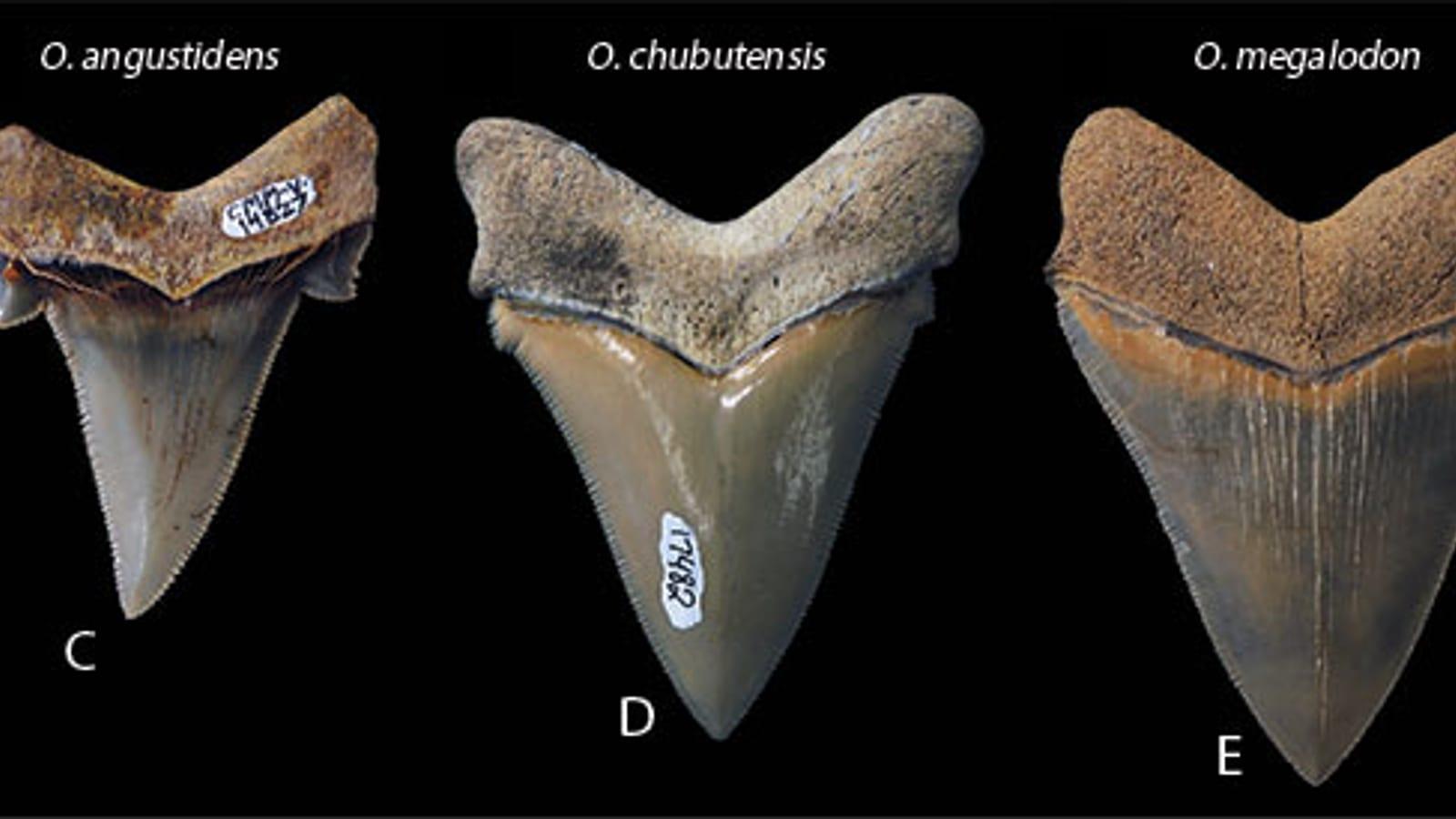
Shark teeth are the everyday find. Sand tiger teeth (Striatolamia macrota, Carcharias taurus) with slender crowns and side cusps are by far the most common. Mako teeth (Isurus desori and Isurus hastalis) are usually the next most common. Their smooth cutting edges and triangular form distinguish them from the serrated edges of Carcharhinus species. Snaggletooth (Hemipristis serra) and tiger shark (Galeocerdo cuvier) teeth are coveted. Otodus megalodon teeth do turn up at Brownie's Beach, but more often as worn tip fragments than as complete giant specimens. Complete megalodon teeth from this site usually fall in the 1- to 3-inch range. Ray dental plates (Myliobatis, Aetobatus) appear as small polished black hexagonal slabs. Whale bone fragments, cetacean ear bones, fossil dolphin teeth, and crocodile teeth are uncommon but documented. Invertebrate fossils, principally scallop (Chesapecten) and oyster (Crassostrea) fragments and the cup coral Astrhelia, are common in the gravel.
"The cliffs areas are very inviting, but extremely dangerous. The land mass making up the cliffs is very unstable and subject to collapse without warning." Maryland Department of Natural Resources, on the Calvert Cliffs
Photo: Smithsonian National Museum of Natural History, CC0, via Smithsonian Open Access
Geologic History
During the Miocene the Atlantic Coastal Plain repeatedly flooded as global sea levels rose, drowning the modern Chesapeake region under a shallow shelf sea. Phosphate-rich muddy sand accumulated under high biological productivity driven by coastal upwelling. The Calvert Formation records the older of two Miocene phosphate-accumulation episodes preserved at the Calvert Cliffs. The younger Choptank and St. Marys are exposed farther south.
The cliffs themselves are very young. The Chesapeake Bay only flooded into its present form after the last ice age, drowning the lower Susquehanna River valley and exposing the older Miocene strata as the new bay shoreline cut into them. Wave action at the base of the cliffs continually undermines the soft sediments above, producing periodic collapses that drop fresh fossiliferous material onto the beach. This passive supply of teeth is what makes the Calvert Cliffs beaches productive year after year.
How Brownie's Beach Became a Fossil Site
The beach takes its informal name from the Brown family, who ran a restaurant and bar nearby in the early-to-mid 20th century, and it has been used for casual fossil hunting at least since that period. The town acquired the beach as a public park in the 1990s and built the present stairs and parking area. It has been a regional landmark for amateur paleontology and family outings ever since.
Collecting Rules & Regulations
Is Fossil Collecting Allowed?
Yes. Surface collection of fossils that have fallen onto the beach is permitted.
Key Points:
- Beach collecting only. Digging or climbing on the cliffs is strictly prohibited.
- The cliffs are unstable and subject to collapse without warning. Keep clear of the base and never work directly beneath an overhang.
- Town residents enter free year-round. Non-residents pay a seasonal day-use fee from Memorial Day weekend through Labor Day.
- Check the Town of Chesapeake Beach parks page before visiting. The beach has been closed to non-residents in some recent seasons.
- No power equipment. Small hand sieves and hand tools only.
Safety
Brownie's Beach sits at the foot of the northern Calvert Cliffs, and the cliffs are the hazard that matters. They are soft, unconsolidated Miocene sediment, undercut by the bay and retreating continuously. That retreat is what delivers shark teeth to the sand, and it happens as slumps and block falls rather than grain by grain.
Do not sit, shelter, or dig at the base of the cliff, and do not climb it. Stay far enough out that a falling block would miss you, and give the slope more room after heavy rain or a freeze, when failures cluster. Sections of the shoreline are closed for exactly this reason and those closures are not advisory.
Work the falling tide. The beach below the cliffs is narrow, and a rising tide can leave you choosing between deep water and the base of an unstable slope. Check a tide table before you go down and keep an eye on it while you are there. Low water also exposes far more of the productive shell hash.
Sea nettles are common in Chesapeake Bay from midsummer into early autumn, and their sting is unpleasant, so think twice about wading in August. The water is cold outside high summer. Wear footwear you can get wet, since the productive ground is the wet sand and shallows and broken shell is sharp.
The beach is exposed with no shade. Carry water and sun protection, and watch the sky in summer, when thunderstorms build quickly over the bay. Supervise children near both the water and the cliff base.