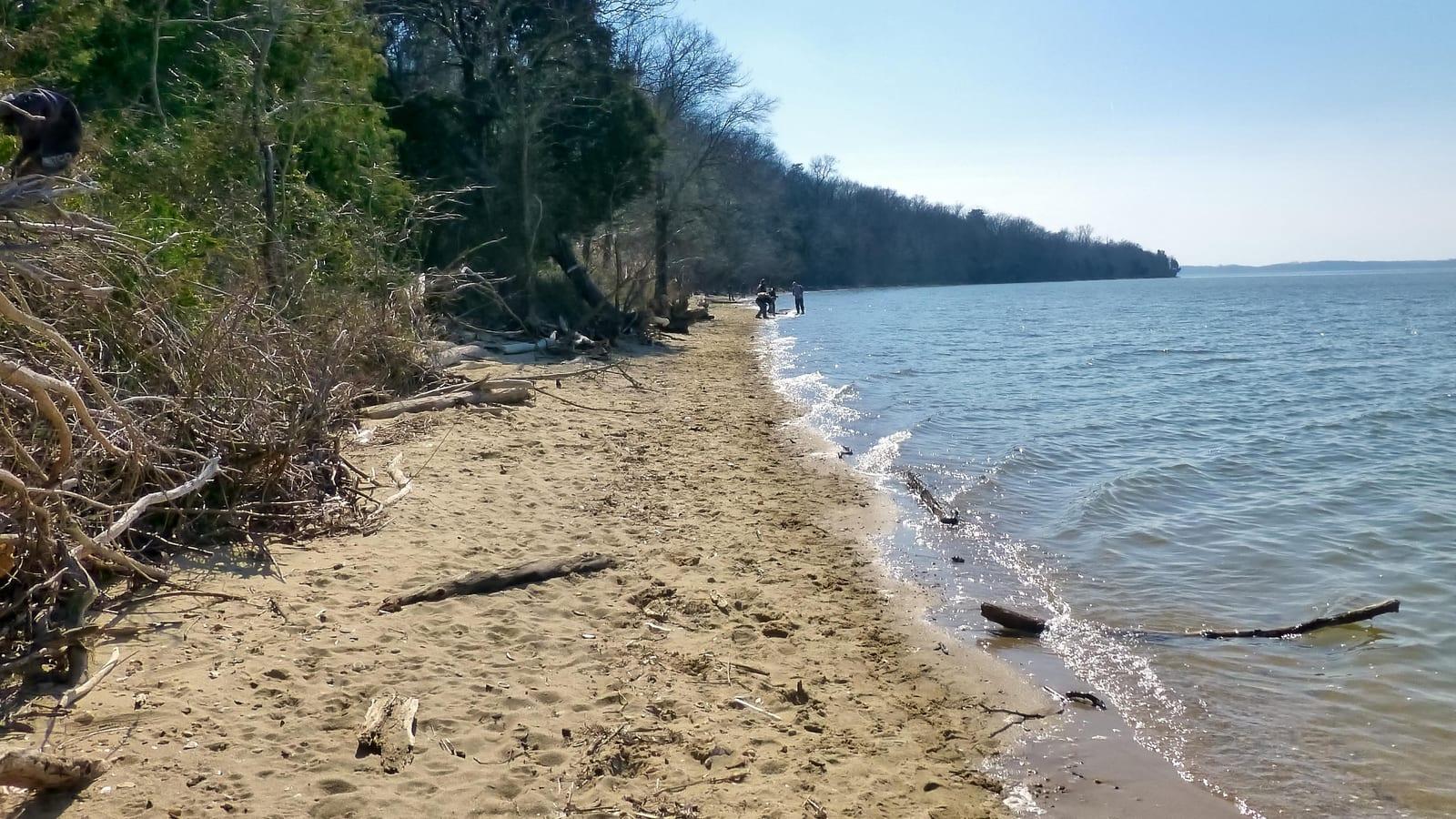
Purse State Park Fossil Hunting Guide
Image: F Delventhal (CC BY 2.0)
Purse State Park is a small, undeveloped Maryland Department of Natural Resources property on the eastern shore of the Potomac River in Charles County.
By Edward Chen · Updated 31 July 2026
 Photo: F Delventhal from Outside Washington, D.C., US, CC BY 2.0, via Wikimedia Commons
Introduction
Purse State Park is a small, undeveloped Maryland Department of Natural Resources property on the eastern shore of the Potomac River in Charles County, between Nanjemoy and Indian Head. It is the most accessible public site in the United States to collect Paleocene shark teeth and is the type of place that fossil hunters drive several hours to reach with a low tide and a tide table. The park has no facilities, no rangers on site, and no signs. The value is the cliffs and the gravel-covered tidal beach below them, where the Aquia Formation slowly weathers out fossil shark teeth, ray plates, marine reptile fragments, and worn invertebrate steinkerns. The headline fossil is Otodus obliquus, the broad-rooted ancestor of the giant Eocene and Miocene sharks that include megalodon. Teeth here are roughly 60 million years old, ten million years older than anything you can find at Calvert Cliffs to the east. This guide covers how to reach the access trail, when the tide allows productive collecting, what to expect to find, the geology that produces the fossils, and the Maryland DNR rules that govern personal collecting.
Location and Directions
Purse State Park is in Charles County, Maryland, along Wharf Road off Liverpool Point Road, near the unincorporated community of Nanjemoy. The unofficial mailing reference is Wharf Road, Nanjemoy, MD 20662. There is no street address. The parking is a small unmarked dirt pull-off.
From Washington, DC, take Indian Head Highway (Maryland Route 210) south to the town of Indian Head, then continue on Maryland Route 224 (Chicamuxen Road / Liverpool Point Road) south for roughly 12 miles. Watch for Wharf Road on the right. It is easy to miss. Follow Wharf Road to the end, where a gravel pull-off sits next to a wooden gate. The drive from the District takes about an hour and a half.
Parking is free at the pull-off and holds roughly six cars. There are no restrooms, no water, and no posted maps. Do not block the gate.
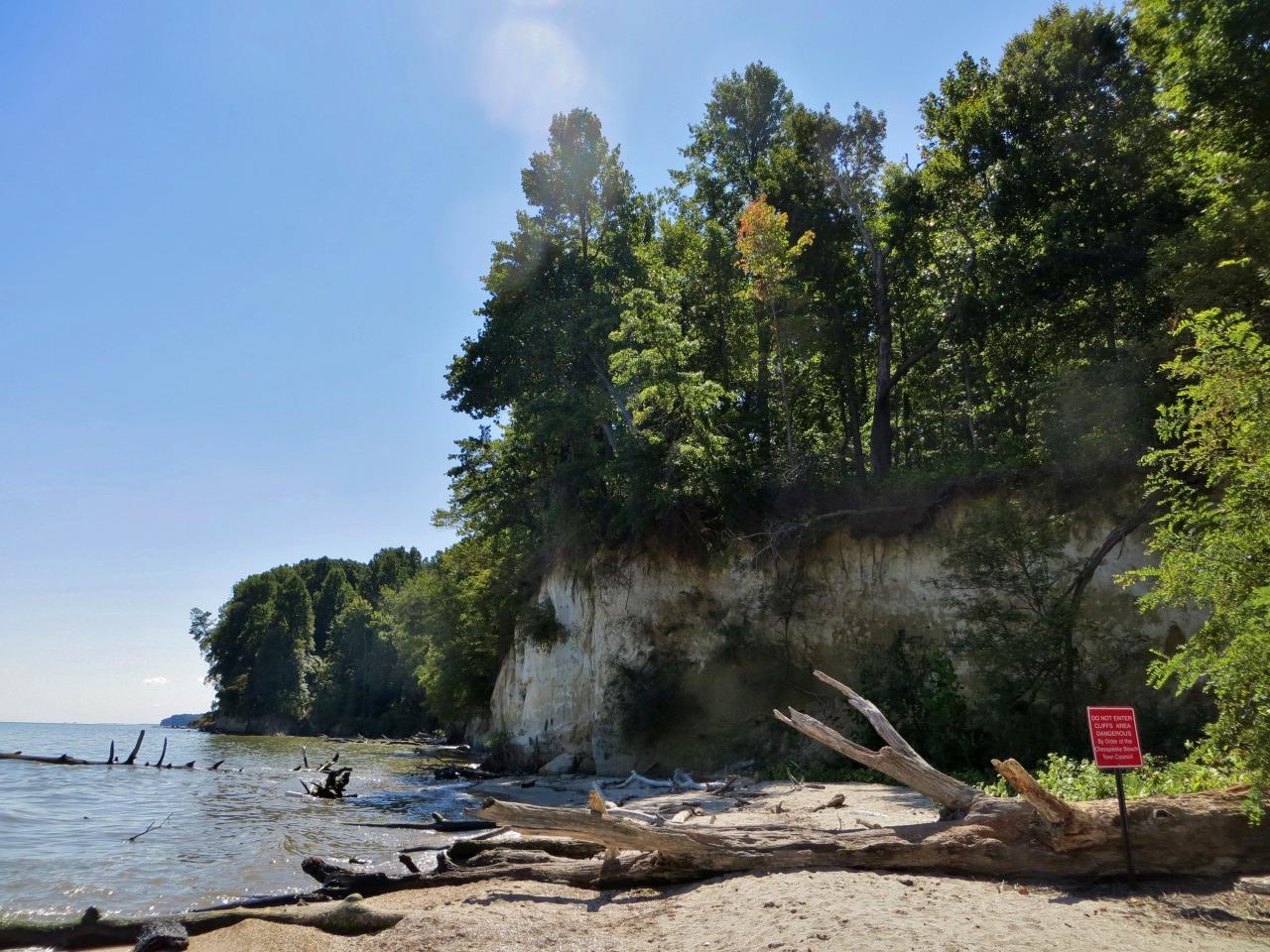
From the parking area, a short, often-muddy trail (about 200 yards) leads through second-growth hardwood forest down a moderate slope to the Potomac shoreline. The trail is unsigned but obvious. Cross any small stream crossings on logs or stones. The fossil-bearing beach extends roughly half a mile in each direction along the river, with the cliffs rising 10 to 30 feet above the high-tide line.
Tide is the single most important variable for a Purse visit. The fossil-bearing gravel and the lower part of the cliffs are only accessible at low tide. At high tide the river covers the productive beach and you cannot work safely against the cliffs. Check NOAA tide predictions for Indian Head, Maryland, and aim to arrive an hour before low tide and leave about an hour after. Collecting after winter or spring storms, when fresh material has fallen from the cliffs, is dramatically more productive than during quiet summer weeks.
 Photo: F Delventhal, CC BY 2.0, via Wikimedia Commons
What Fossils You'll Find
The fossils at Purse weather out of the Aquia Formation cliffs and accumulate as a lag in the beach gravel. Most are small but well-preserved.
Shark teeth are the headline find. The species you should expect:
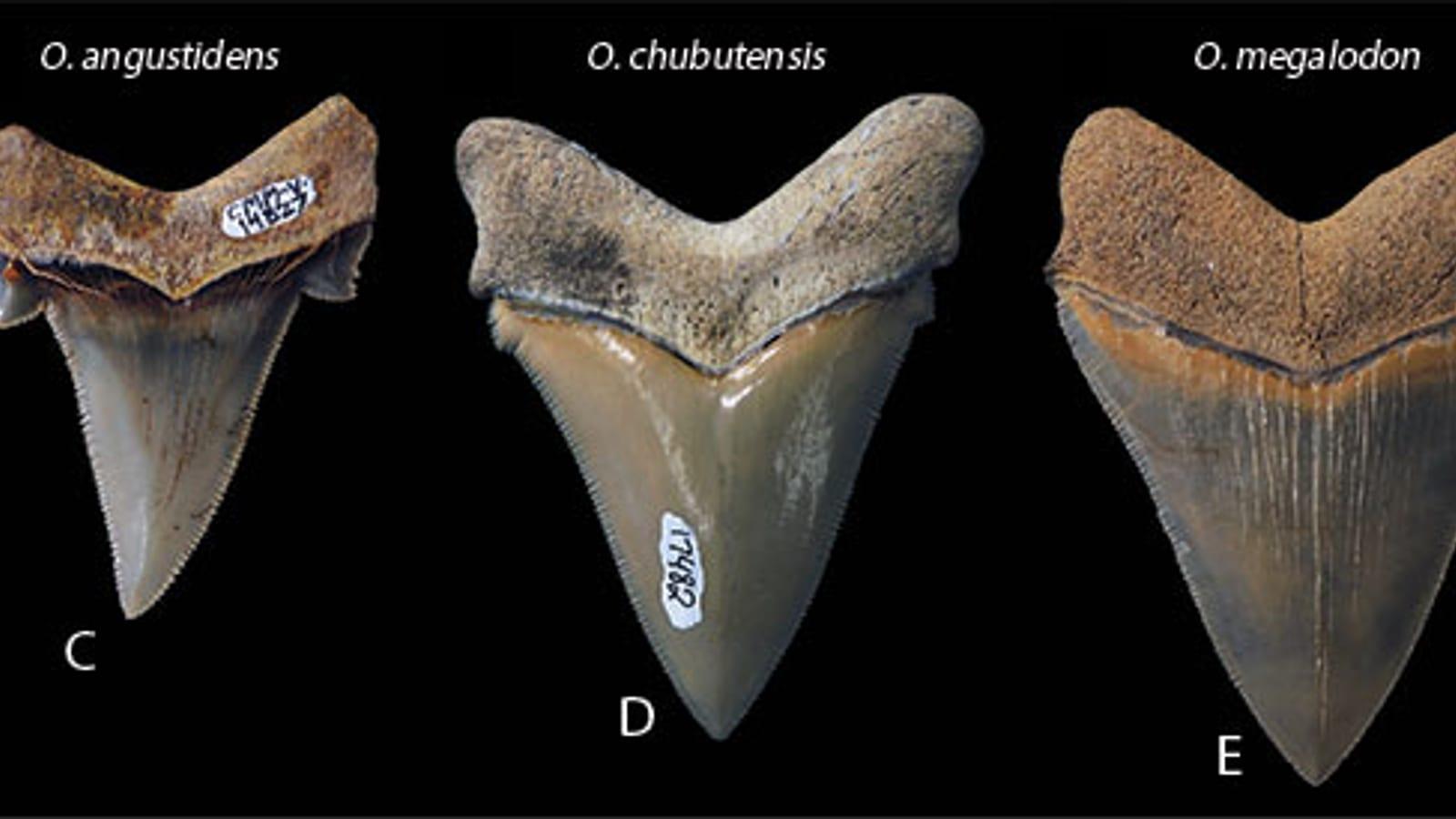
- Otodus obliquus is the prize. Teeth range from half an inch to over three inches. Most are in the one- to two-inch range. Distinctive broad triangular crown with two small lateral cusplets at the base of the root. The largest Otodus obliquus teeth on the East Coast come from the Aquia.
- Striatolamia (sand tiger relatives) teeth are abundant: long, slender, slightly curved crowns with prominent vertical striations and sharp cusplets. These are the most numerous teeth.
- Palaeohypotodus and Hypotodus teeth occur in smaller numbers.
- Ginglymostoma (nurse-shark relative) and small Squalus teeth turn up occasionally.
Ray and skate teeth and dental plates including Myliobatis and Hypolophodon are common in the gravel. They are small, often a few millimeters, and easy to miss without a sifter.
Crocodile teeth appear less often but are well documented from the Aquia. Look for slender, faintly striated conical crowns.
Marine reptile fragments, including occasional turtle shell pieces and rare partial Thoracosaurus (long-snouted crocodyliform) material, are documented from this stretch of the formation.
Invertebrate steinkerns of bivalves and gastropods preserved as iron-stained internal molds are scattered through the gravel. The Aquia shell material is rarely intact because the original aragonite has dissolved. What survives are casts of the inside of the shells.
Coprolites (fossilized fecal matter) are reasonably common as small, dark, lobed nodules.
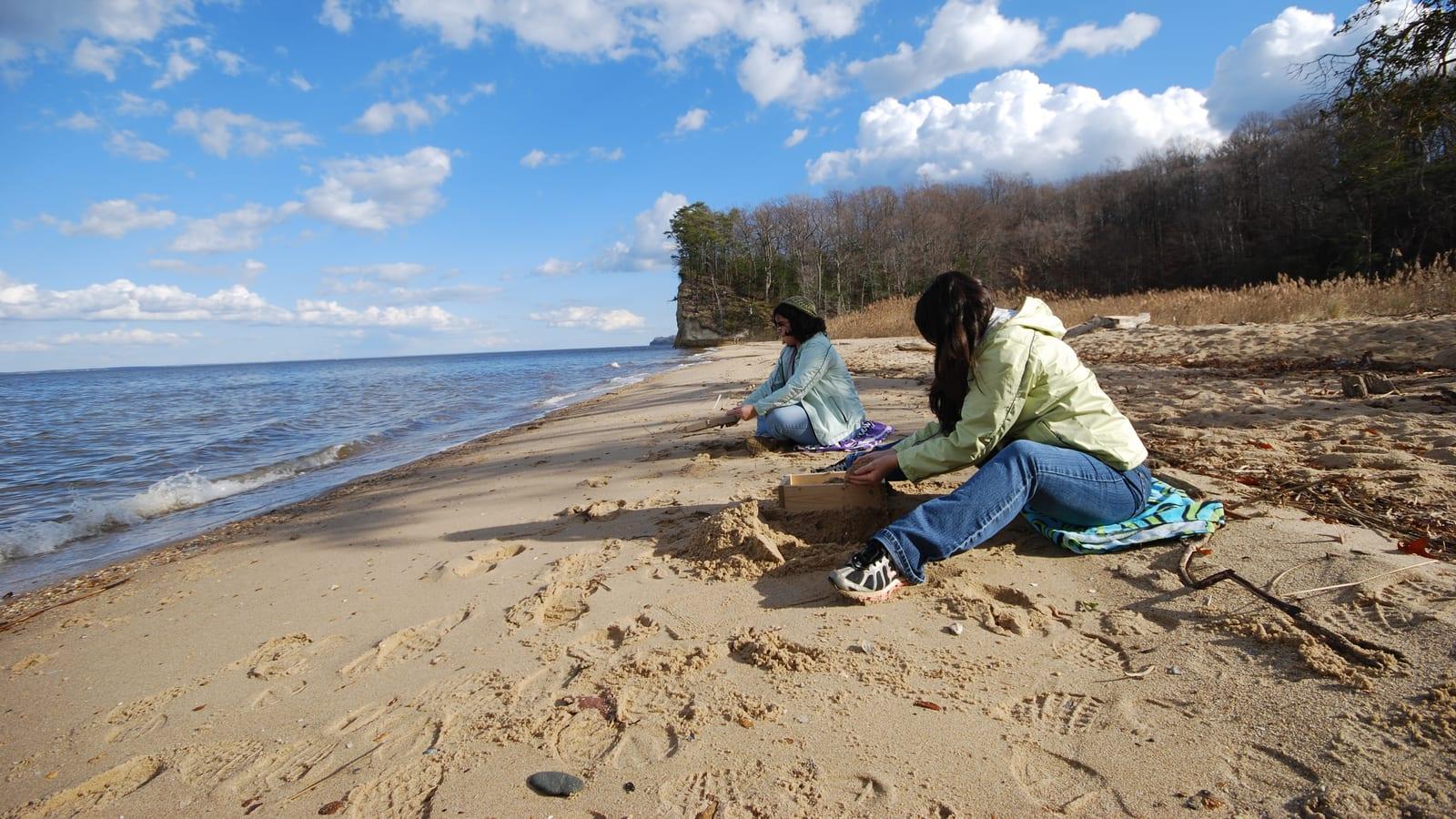
A small handheld sifter or a kitchen colander on a stick is the standard local tool for working the gravel lag at the base of the cliffs.
Geologic History
The cliffs at Purse expose the lower part of the Aquia Formation, a marine sandstone of Paleocene age (Thanetian stage, roughly 60 to 56 million years).
Aquia Formation deposition (Late Paleocene, roughly 60 million years). The Aquia was deposited in a shallow marine embayment of the Salisbury Embayment, the broad subsiding basin that underlies modern Maryland, Virginia, and Delaware. The seafloor here lay 30 to 100 meters below sea level, on the continental shelf, in warm-temperate to subtropical water. The sediment is a glauconitic, fossiliferous quartz sand: glauconite is the green mineral that gives Aquia outcrops their distinctive olive cast. Sharks, rays, crocodyliforms, sea turtles, and a diverse mollusk fauna lived in and above the seafloor. Their bones, teeth, and shells were buried in the slow-accumulating glauconite sand and partially fossilized.
Post-Paleocene history. Younger Eocene and Miocene formations were deposited above the Aquia (the Nanjemoy and the Calvert Formations are the most familiar to local fossil hunters), but at Purse those younger units have been stripped off by erosion. The cliffs at the river expose the Aquia near its base.
Modern erosion. The Potomac River is actively cutting into the cliffs from the west, while the river's rise and fall and seasonal storms continually undermine the slope. Fresh fossil-bearing material falls onto the beach during every high-water event, the wave action breaks up the matrix, and the fossils accumulate in the gravel lag along the high-tide line. This active erosion is what makes Purse a continually renewed collecting site rather than a one-time exposure.
How Purse Became a Fossil Collecting Site
The Aquia Formation has been known to East Coast paleontologists since the 19th century, when state and federal geological surveys first mapped the Coastal Plain stratigraphy. Wharf Road and Liverpool Point are old river-landing names that predate the modern road network. Small farms and tobacco wharves once lined this stretch of the Potomac. The State of Maryland acquired the Purse parcel as a small undeveloped state park in the 1960s, and DNR has managed it as an open-access shoreline since. There has never been any quarrying or excavation here. The fossils arrive on the beach because the river continually erodes the cliffs, and the cliffs continually collapse a little. Purse is one of three commonly collected Paleocene-age shoreline sites in the region, alongside the privately accessed Liverpool Point area and the Aquia Creek exposures across the river in Virginia.
Collecting Rules and Regulations
Personal collecting of small quantities of loose fossil material is allowed. Maryland DNR permits visitors to collect surface fossils from Purse State Park for personal, non-commercial use. Commercial collecting and large-scale excavation are not permitted.
Practical rules:
- Collect only loose material from the beach surface and the gravel lag. Do not dig into the cliffs, undermine the cliff face, or hammer the cliffs. The cliffs are unstable and digging is both dangerous and prohibited.
- Do not climb the cliffs from below or above. Cliff falls are common and have killed collectors at similar Chesapeake-region sites.
- A small handheld sifter or kitchen-style screen is permitted. Powered equipment, hammers and chisels against the cliff face, and shovels for excavation are not permitted.
- Vertebrate fossils may be collected for personal use under Maryland DNR's general state-park rules. Do not collect for sale.
- The site has no restrooms, no drinking water, no signs, and no cell signal in some weather. Bring everything you need for the visit and pack it out.
- Stay aware of tide. The beach narrows quickly on the rising tide and you can be cut off against the cliffs if you are not paying attention.
- The site is open dawn to dusk year-round. There is no entrance fee.
- Dogs are permitted on leash. Do not allow dogs to disturb other collectors or wildlife.
Safety
Purse State Park is a quiet, undeveloped park, and that shapes its risks. There are no facilities, no staff on site, and no phone signal in places along the shore, so you are relying on your own preparation.
Watch the tide. The beach below the cliffs narrows quickly on a rising tide, and you can be cut off against the cliff face if you are not tracking it. Check a tide table before setting out and work the falling tide rather than the incoming one. Low water also exposes far more of the productive gravel.
Keep away from the base of the cliffs. They are soft, unconsolidated Paleocene sediment, undercut by the Potomac and actively retreating. That retreat is what delivers shark teeth to the beach, and it happens in slumps and block falls rather than gently. Do not dig into them, do not climb them, and do not shelter beneath them, particularly after heavy rain.
The walk in from the parking area is through woodland on an informal path. Ticks are abundant in the warmer months in this part of Maryland, so wear long trousers, use repellent, and check yourself afterwards. Poison ivy grows along the trail and the upper beach. Snakes, including copperheads, occur in the woodland and among driftwood on the shore, so look before stepping over logs.
The Potomac is wide and tidal here, with boat traffic offshore and cold water outside high summer. Wear footwear you can get wet, since much of the collecting is done in the shallows and on slick clay. Bring water, sun protection, and insect repellent, because the shore is exposed and there is nothing available on site.
Sources
- Maryland Department of Natural Resources, "Purse State Park." https://dnr.maryland.gov/publiclands/Pages/default.aspx
- Maryland Geological Survey, "Aquia Formation." https://mgs.md.gov
- Calvert Marine Museum, "Paleocene Sharks of the Mid-Atlantic." https://calvertmarinemuseum.com
- Kent, B.W. (1994). Fossil Sharks of the Chesapeake Bay Region. Egan Rees and Boyer.
- NOAA Tides and Currents, "Indian Head, Maryland." https://tidesandcurrents.noaa.gov
.jpg)
.jpg)