Edisto Beach State Park Fossil Hunting Guide
Image: Ammodramus (CC0)
Edisto Beach State Park on Edisto Island, South Carolina, is one of the East Coast's best public beaches for fossil collecting. The beach below the high-tide line is fed by the South Edisto River and offshore Pleistocene deposits, producing shark teeth, megalodon fragments, and ice-age mammal bones tumbled smooth by the surf. Free surface collecting. SC hobby licence required for diving or below-tide collection.
By Edward Chen · Updated 1 August 2026
Introduction
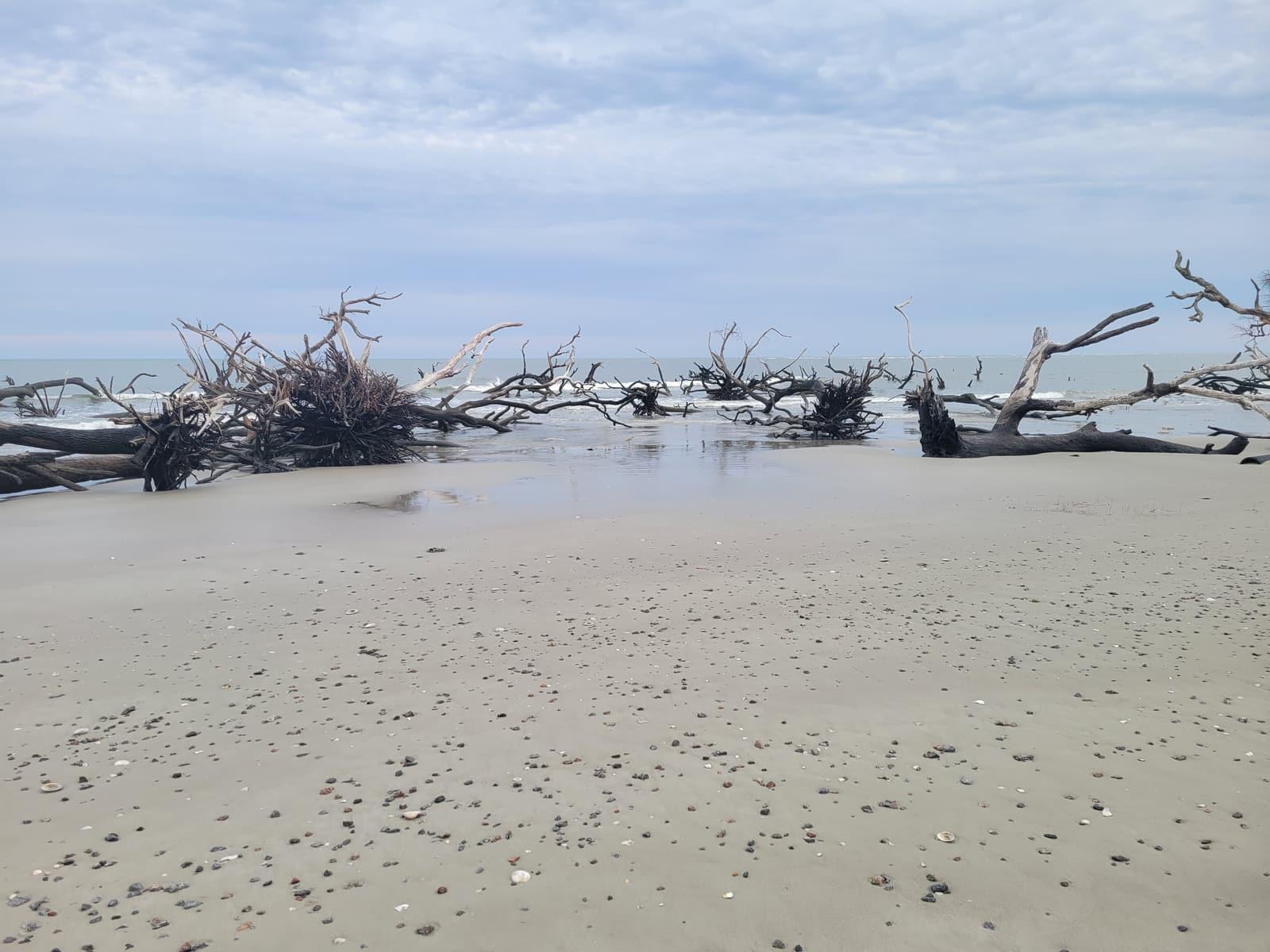
Edisto Beach State Park sits on the south end of Edisto Island, a remote barrier-island community about 45 miles south of Charleston, South Carolina. The 1,255-acre park has 1.5 miles of Atlantic shoreline plus quieter Edisto River marsh access on the back side of the island. The beach south of the park's day-use area, especially around the groins lining each block and at the South Edisto Inlet, is one of the most reliable East Coast spots for collecting Late Pleistocene "Edisto Beach deposits" fossils, shark teeth, fragments of mammoth and giant ground-sloth bone, alligator scutes, and whale earbones tumbled in by the tide.
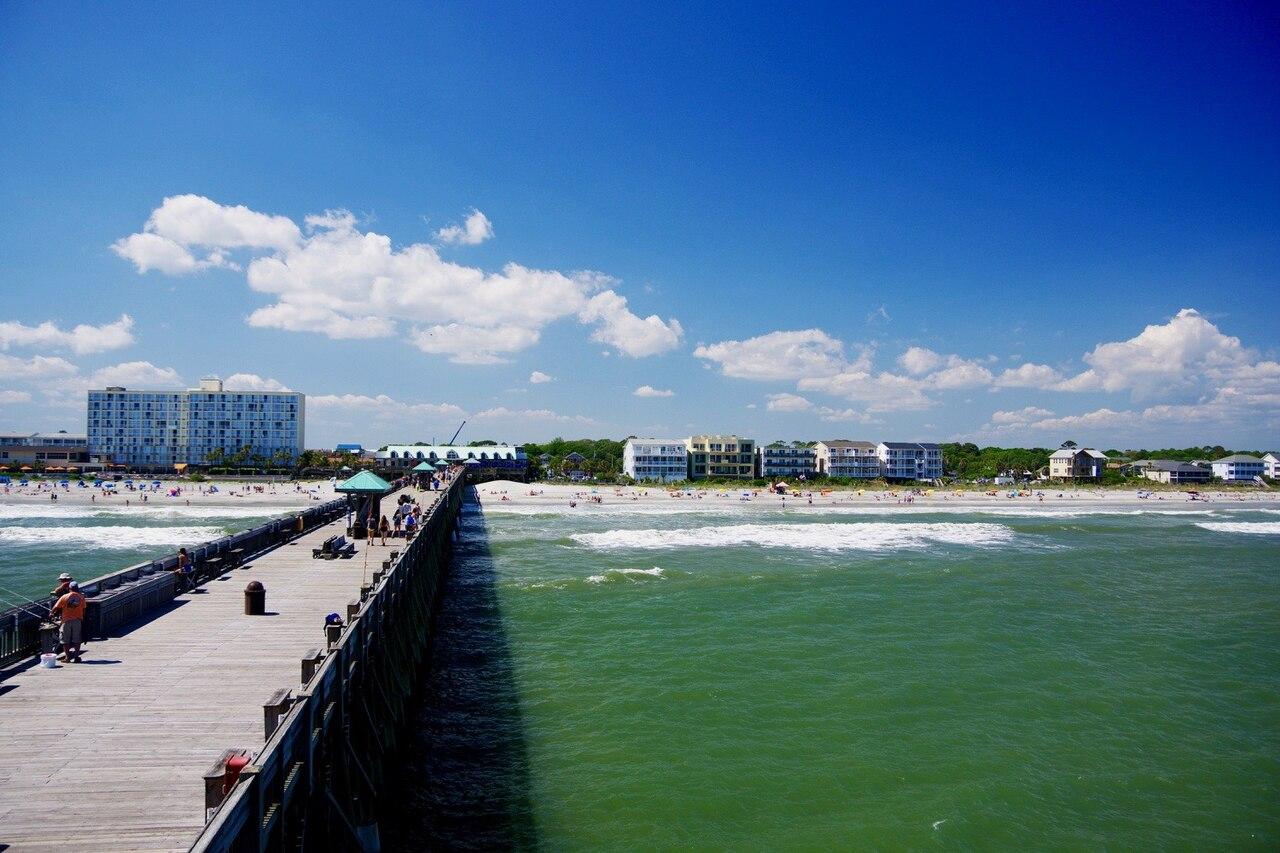
Edisto Beach is one of the two beaches (with Folly Beach near Charleston) where Atlantic megalodon teeth are most likely to turn up, they remain rare but not fine-scale. Free surface collection of fossils above the low-tide mark is allowed under South Carolina law for reasonable personal use. Collecting below the low-tide line or diving requires an SCDNR Hobby Diver Licence.
Location and Directions
Edisto Beach is in Colleton County in the South Carolina Lowcountry, reached only via SC-174, a slow, scenic drive through marshes and live-oak corridors.
Directions to Edisto Beach State Park
From Charleston, take US-17 south to SC-174 at Hollywood/Adams Run. SC-174 winds 35 miles to Edisto Island. The state park entrance is at 8377 State Cabin Rd, signed from Palmetto Boulevard. Day-use parking fees apply. The park has cabins, campsites, an interpretive centre, a maritime forest trail, and a kayak launch on Big Bay Creek.
Best collecting strategy: come at low tide on a falling tide. Winter and early spring are most productive (fewer tourists and bigger storms reworking the beach). The most-recommended stretches are the south end of the island toward the South Edisto Inlet (the south-west-facing side, where the river empties into the Atlantic) and around the groins extending into the surf on each block. Teeth are concentrated in the shell-hash strand line and in pebble lenses just below the dry-sand line. Bring a small mesh sifter, a wash bucket if you plan to screen, sun protection, and water. The walk to the most productive groins can be a mile or more on soft sand, pack light.
 Photo: See1,Do1,Teach1, CC BY 2.0, via Wikimedia Commons
What Fossils You'll Find
Edisto's beach fossils come from the "Edisto Beach deposits," a Late Pleistocene (Wisconsinan, roughly 125,000 to 12,000 years ago) marine and estuarine unit that is being actively reworked by present-day longshore drift, storm surge, and tides. Compared to nearby Folly Beach, Edisto preserves a more substantial proportion of Pleistocene terrestrial megafauna along with the more typical Miocene-to-Pliocene phosphate-derived shark teeth.
Common small fossil finds, typically fingernail to toothpick size, include sand tiger shark teeth (Carcharias and Striatolamia), distinguishable by their slender multi-cusped form. Mako teeth (Isurus), with their narrow smooth-edged blades. Snaggletooth teeth (Hemipristis serra), with finely serrated lateral cusps. Tiger shark teeth (Galeocerdo cuvier), with the iconic curved deeply serrated cockscomb shape. And bull shark and lemon shark teeth. Smaller specimens include ray dental plates of the eagle ray Aetobatus and the bull ray Myliobatis, alligator scutes and teeth from inland swamp habitats washed onto the beach, small fish vertebrae and otoliths, and broken-but-recognisable oyster shell from Crassostrea.
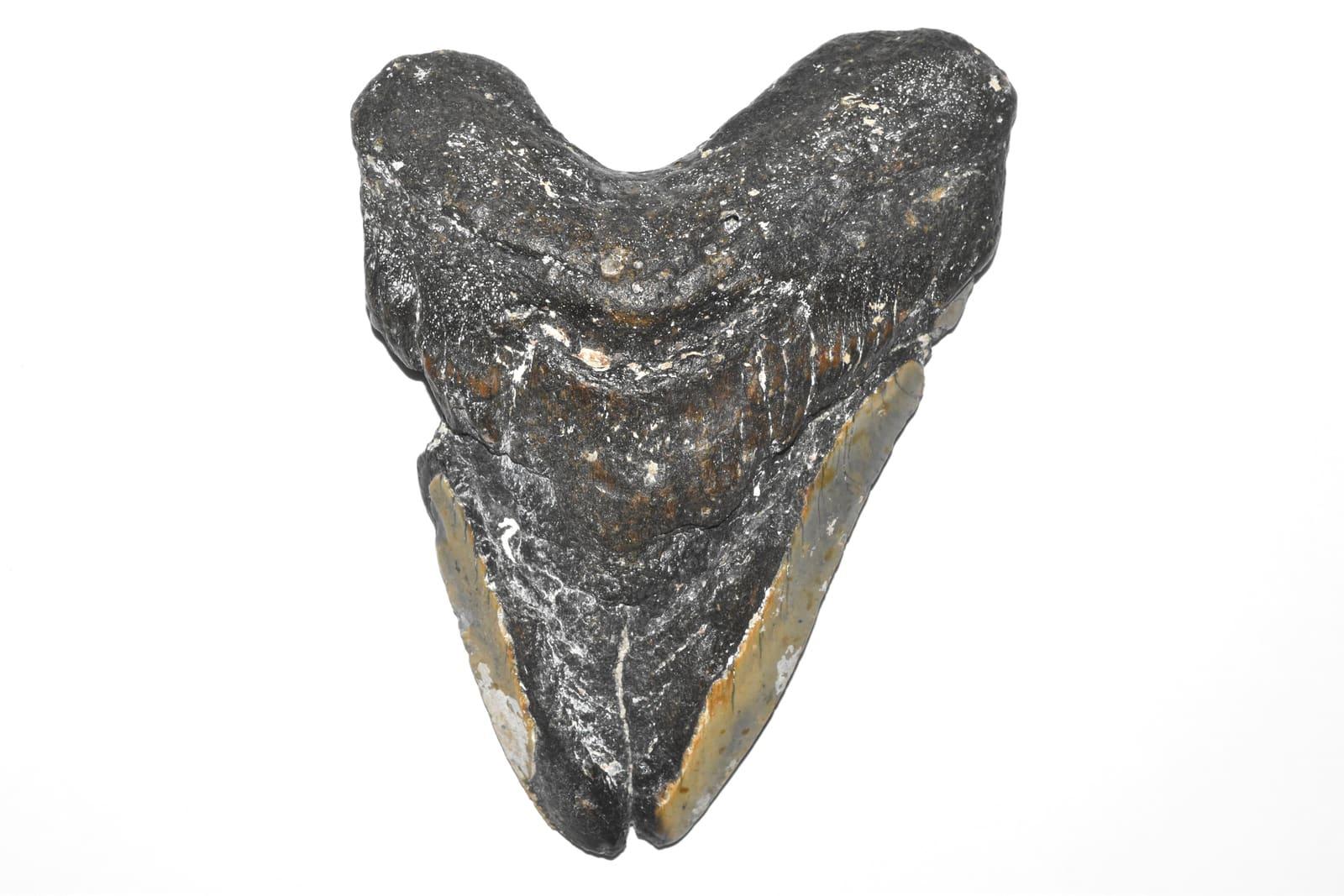
Larger and rarer finds are what give Edisto its reputation. Otodus megalodon teeth, usually as worn rootless tips or partial blades up to 8 centimetres long, occasionally as complete 12- to 15-centimetre specimens, are the most-coveted finds. The south-end groins and the South Edisto Inlet are the most reliable spots, particularly after winter storms. The great-white shark Carcharodon carcharias teeth are smaller than megalodon but recognisable by their broad triangular crowns with fine serrations. Pleistocene mammoth (Mammuthus columbi) tooth-plate fragments, solid, dark-brown ribbed sections of the enamel grinding surface, are striking Ice Age finds and are recovered several times each year by experienced collectors. Giant ground-sloth (Eremotherium laurillardi) limb bones, claws, and dermal ossicles, smaller horse and tapir bones, Bison antiquus teeth and horn cores, and deer remains all appear in the same Pleistocene reworking. Marine mammals contribute whale ear bones (bullae) of cetotheriids and balaenopterids, small whale vertebrae and rib fragments, and the occasional dolphin or porpoise tooth.
A telltale sign that the swash line is concentrated for fossils is the heavy, dark, polished iron-stained phosphate pebbles that accompany them, when you start spotting those, slow down and look carefully.
"Edisto Beach is one of the most likely locations to find Megalodon teeth." Edisto Beach official site
Geologic History
The Edisto Beach deposits accumulated in the last ice age (Wisconsinan substage of the Pleistocene, roughly 125,000 to 12,000 years ago) along a then-lower sea-level coastline. At the Last Glacial Maximum about 20,000 years ago, global sea level was approximately 120 metres lower than today, and the South Carolina coastline lay roughly 120 kilometres east of its modern position out on what is now the continental shelf. The pre-Last Glacial Maximum Pleistocene shoreline migrated repeatedly across the modern Lowcountry as ice volume waxed and waned, with major interglacial high stands during marine isotope stages 5e (about 125,000 years ago), 7, and 9. Each high stand reworked older shelly material and concentrated marine megafauna into thin transgressive bone beds. Each low stand exposed broad coastal plains where mammoths, mastodons, ground sloths, horses, and tapirs lived in pine and oak savanna.
As post-glacial sea level rose at the end of the Pleistocene, the Pleistocene deposits were partly drowned and partly reworked into the modern barrier-island system. The Edisto Beach deposits proper are a thin (1- to 3-metre thick) Late Pleistocene marine sand-and-shell unit that runs along the modern beach face and into the back-barrier marshes. As the modern barrier island migrates landward, the entire Edisto coast has been retreating at roughly 1.5 metres per year on average, these deposits are continuously exhumed, sorted by wave action, and concentrated as a swash-line lag. The South Edisto River, which empties into the Atlantic at the south end of the island, drains a Pleistocene-rich Lowcountry catchment and continuously delivers additional reworked material from inland Pleistocene fluvial deposits.
The fine-scale megafaunal preservation across the Lowcountry reflects both the broad Pleistocene fauna of the coastal plain and the slow but continuous erosion of coastal-plain deposits as the modern shoreline migrates landward. Cooper River dredge spoils, Edisto Beach renourishment events, and major storm reworkings have all produced documented surges in fossil availability over the last several decades.
How Edisto Beach Came to Be a State Park
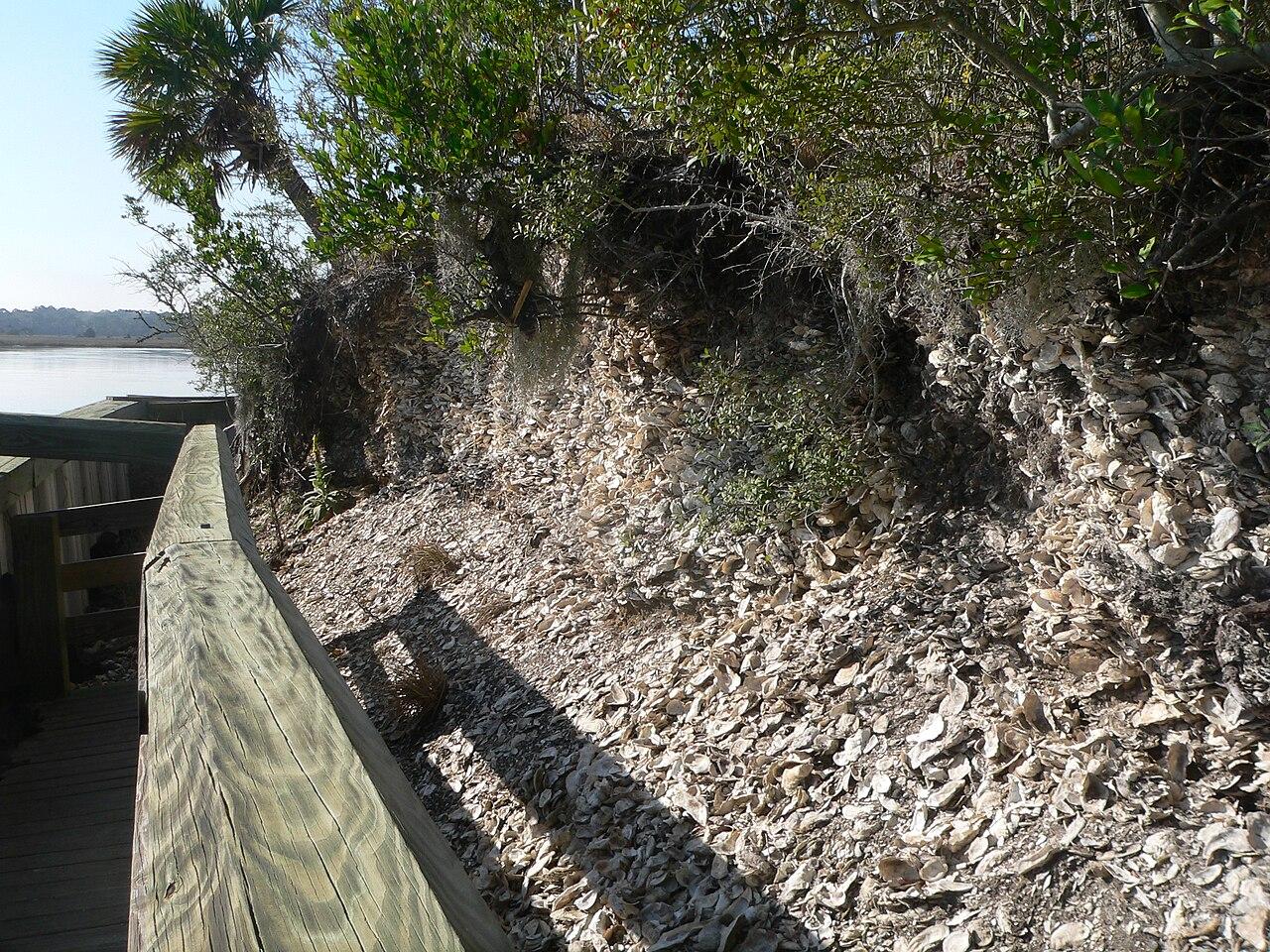
Edisto Beach State Park was acquired in 1935 as one of South Carolina's original Civilian Conservation Corps–era state parks and developed in 1937 with CCC labour. It comprises 1,255 acres of barrier island, maritime forest, salt marsh, and Atlantic beachfront, and provides public access via cabins, campsites, a small interpretive centre, the Edisto Environmental Education Center (added in 1994), the Spanish Mount Trail, and an extensive kayak-launch system on Big Bay Creek. The Spanish Mount shell midden inside the park is a Late Archaic Native American oyster-shell midden dating to about 4,000 years ago and is a National Register of Historic Places archaeological site, collecting within or adjacent to the midden is prohibited under federal and state law.
Collecting Rules and Regulations
Is Fossil Collecting Allowed?
Yes, surface collecting above the low-tide mark is allowed for "reasonable amounts" of fossil material for personal use under South Carolina law.
Key Points:
- Free collecting above the low-tide mark
- Below the low-tide mark or for SCUBA diving, an SCDNR Hobby Diver Licence is required
- No collection from inside the park's archaeological sites (Spanish Mount shell midden)
- Stay off dunes and protected vegetation
- Day-use parking fee for the state park
- Loggerhead sea turtle nesting season May–October, avoid disturbing marked nests
Safety
Edisto is a low-lying barrier island in the South Carolina Lowcountry, and its hazards are those of a subtropical coast rather than a cliff site.
Heat and humidity are the main risk. Summer here is genuinely severe, and the beach has no shade. Carry more water than you expect to need, use sun protection, and hunt early in the day around low tide, which is both cooler and more productive. Sunburn from reflected light off wet sand catches people out.
Insects and wildlife. Mosquitoes and biting flies are abundant, particularly near the marsh and the Edisto River side of the park, and repellent is not optional in the warmer months. Ticks and chiggers are present in the maritime forest along the trails. Alligators live in the ponds and tidal creeks on the river side of the park. Do not approach them, keep dogs leashed and away from the water's edge, and never feed them.
In the water, use the stingray shuffle in the shallows, sliding your feet rather than stepping down, and expect jellyfish in the warmer months. Sharp broken shell makes footwear sensible.
Watch the tide and the weather. The tidal range here is substantial and the beach changes shape with it, so know when the water turns. Edisto is reached only by SC-174, a single slow road through the marshes, which matters if a tropical system is forecast, since evacuation is not quick. Check the forecast during hurricane season and do not rely on leaving at the last minute.
.jpg)