Fukui Prefectural Dinosaur Museum and Katsuyama Dig Fossil Hunting Guide
Image: GIGA146587 (CC BY 4.0)
Japan's principal dinosaur museum stands beside the Kitadani quarry in Katsuyama, the source of most named Japanese dinosaurs. An outdoor Field Station opened in 2014 lets visitors split rock brought straight from the excavation, with researchers on hand to identify what turns up. It is reachable only on the museum's own bus tour.
By Edward Chen · Published 12 September 2026
Introduction
Fukui calls itself Japan's dinosaur kingdom, and the claim rests on one quarry. The Kitadani Dinosaur Quarry at Katsuyama has produced most of the dinosaurs formally named from Japan, and the prefecture built its museum a short distance from the working excavation.
Four Japanese dinosaur genera carry the prefecture in their names, and Fukui lists six named dinosaurs in all. Fukuiraptor, Fukuisaurus, Fukuivenator and Fukuititan all came out of these beds, and Koshisaurus was named from them too under a different name. For a country whose Mesozoic land record is thin, that concentration is the reason the site matters.
The museum is one of the largest dedicated to dinosaurs in Asia. What makes it a fossil-hunting destination rather than a gallery is the Field Station, an outdoor facility opened in July 2014 at Kitadani. There visitors work rock taken directly from the quarry.
Location and Directions
The museum is at Terao in Muroko-cho, Katsuyama, in Fukui Prefecture on the Sea of Japan coast of central Honshu.
GPS: 36.0831°N, 136.5067°E.
Katsuyama is reached by the Echizen Railway from Fukui city, then by bus or taxi to the museum. Fukui is on the Hokuriku Shinkansen.
The Field Station, sometimes called the Outdoor Dinosaur Museum, sits separately at Kitadani, closer to the quarry itself. It divides into three zones: an observation plaza overlooking the excavation, an exhibition hall, and the fossil digging experience plaza.
You cannot drive to the Field Station. The museum bars private vehicles and taxis. The only way to visit is its own dedicated bus tour, which leaves from outside the main museum. The round trip takes about two hours, of which roughly an hour is on site.
Both are ticketed, and the two tickets are separate. The Field Station tour in 2026 cost 1,300 yen for adults and 1,100 yen for high school and university students. Younger pupils and visitors aged 70 and over paid 650 yen. Museum admission is not included.
The Field Station runs a shorter season than the main museum because it is outdoors. The 2026 season ran from 17 April to 3 November, with scheduled closed days through it. Book online by 23:59 the day before. Same-day tickets are sold at the museum's main reception only when a tour has space, and never by telephone or email.
What Fossils You'll Find
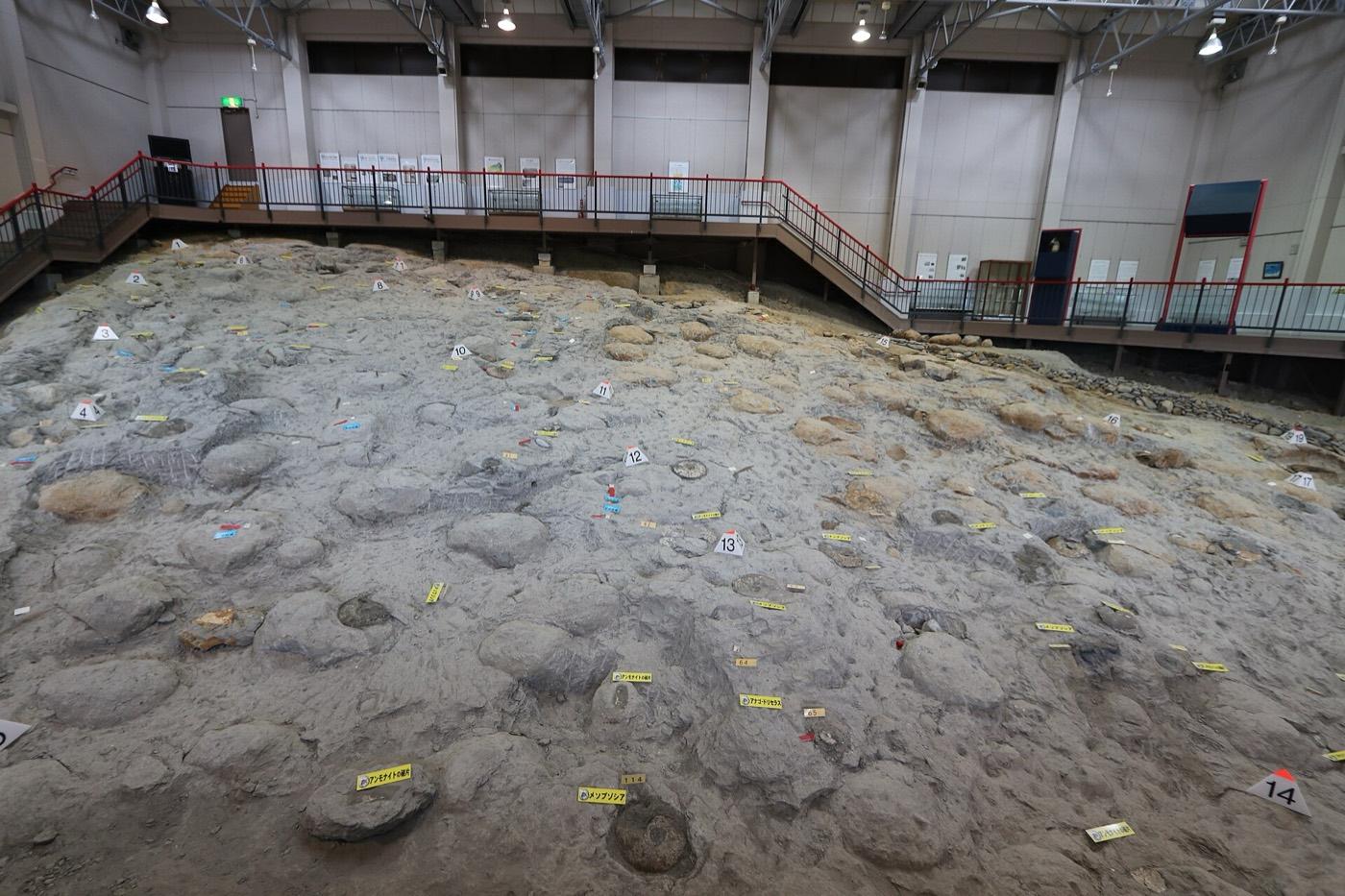
At the digging experience plaza you split rock brought from the excavation site and researchers explain what you have found. That is an unusually direct arrangement. The material is the real thing from the real quarry, not screened sediment brought in for the purpose.
The Kitadani Formation is a non-marine unit, so the assemblage is continental. Dinosaur bone and teeth occur, along with plant material, freshwater fish, turtles, crocodilians and small mammals. Plant fossils are the most common find by a wide margin, and they are what most visitors go home having identified.
Do not travel assuming you keep what you find. The museum describes participants as members of its excavation team and says that important fossils they find may serve its future research. Part of the dig site has been a national Natural Monument since 2017. Ask the museum directly before you book if keeping a specimen matters to you.
 Photo: sergejf, CC BY 2.0, via Wikimedia Commons
Geologic History
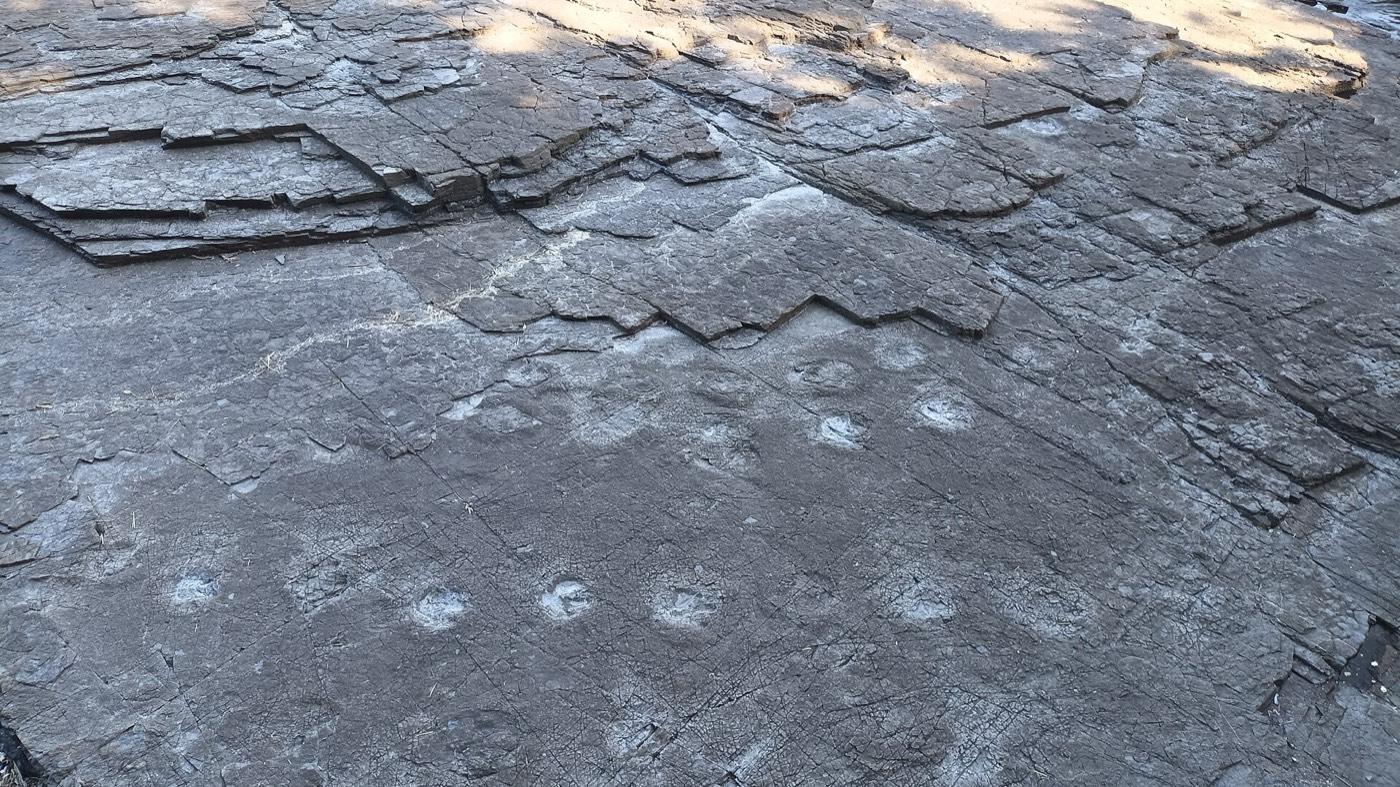
The Kitadani Formation belongs to the Tetori Group and is Lower Cretaceous, broadly late Aptian, roughly 121 to 115 million years ago.
The setting was a river floodplain with channels, ponds and vegetated banks. Fine overbank sediments buried carcasses and plant litter, which is why articulated material and delicate leaf impressions both survive.
Japan at the time lay along the eastern edge of the Asian continent. The Sea of Japan had not opened. So the animals here were part of a continental Asian fauna rather than an island one, and their relationships run to mainland groups.
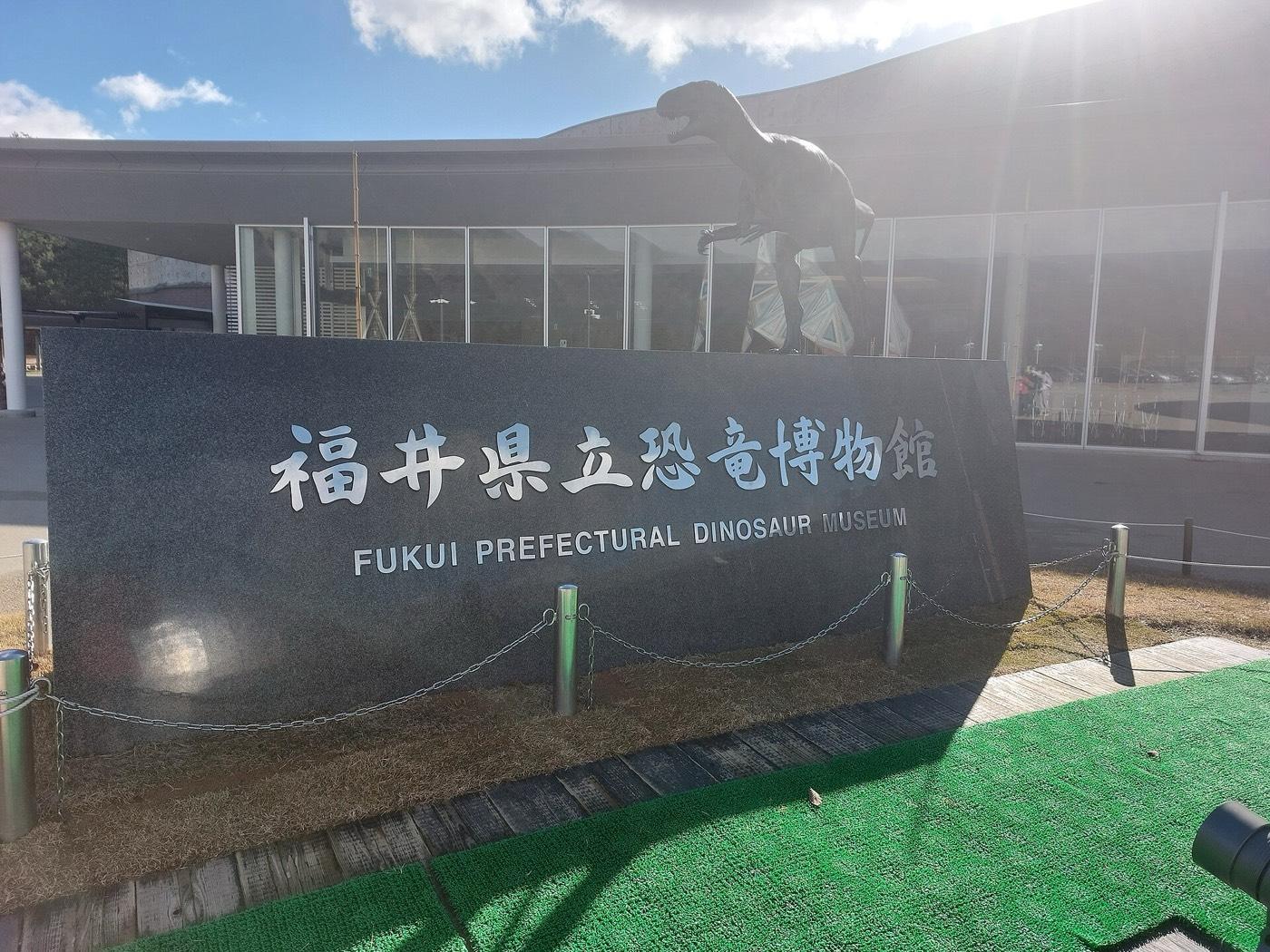
The museum building is itself a draw. The exterior is usually described as a giant silver egg. The main exhibition space is a single large hall entered from above. That is a deliberate piece of architecture rather than a shed for cases. The museum opened in July 2000.
 Photo: N.Cayla, CC BY-SA 4.0, via Wikimedia Commons
Collecting Rules and Regulations
The Kitadani quarry itself is a research excavation and is closed to the public. Do not attempt to reach it independently.
Collecting happens only within the Field Station's supervised sessions, using the material provided. The museum lends the hammer, chisel and goggles. Bring your own work gloves, which the museum requires and sells if you forget.
Japan protects designated natural monuments strictly, and several fossil localities elsewhere in the country are closed entirely. The access here is a specific arrangement made by the prefecture, not a general permission.
Show every find to the staff. Treat nothing as yours until they say so.
The Kitadani quarry is still producing. Excavation campaigns run in the field season and new material continues to be described, most recently including small theropods and early birds. That is part of why the museum keeps expanding, and it means the displays change between visits.
Safety
The digging experience issues protective equipment. Wear it. Splitting rock sends chips into the air, and eye protection is not optional.
The Field Station is outdoors and sessions can be cancelled in bad weather.
Fukui has heavy winter snow, and Katsuyama is inland and mountainous. The outdoor facility closes in the snow season, so check dates before you plan a winter trip.
Summers are hot and humid. Carry water.
Getting there has become easier. The Hokuriku Shinkansen extension from Kanazawa to Tsuruga opened on 16 March 2024 and stops at Fukui. It cuts the journey from Tokyo substantially, and the prefecture has built its tourism around the dinosaur theme in response. Expect the museum to be busy at weekends and during Japanese school holidays.
Fukuiraptor was the first of the named Fukui dinosaurs, given its scientific name in 2000. It was a medium-sized theropod of about 4.2 metres, and its identification confirmed that Japan held a genuine dinosaur fauna rather than scattered fragments.
Sources
https://www.dinosaur.pref.fukui.jp/en/ https://www.fuku-e.com/en/attractions/detail_2086.html https://en.wikipedia.org/wiki/Kitadani_Formation https://dinosaur-kingdom-fukui.pref.fukui.lg.jp/pages/fukui_dinosaur_en