Sangjogam County Park Dinosaur Trackway Fossil Hunting Guide
Image: Dittwjfsdgkvkdjg (CC BY-SA 3.0)
About 5,000 Cretaceous dinosaur footprints on the shore at Goseong in South Gyeongsang, with the Goseong Dinosaur Museum standing directly above them. The tracks lie in the Jindong Formation and the site is open to walk at low water.
By Edward Chen · Published 12 September 2026
Introduction
South Korea has one of the densest concentrations of dinosaur footprints anywhere, and Goseong county on the south coast is where that record is most accessible.
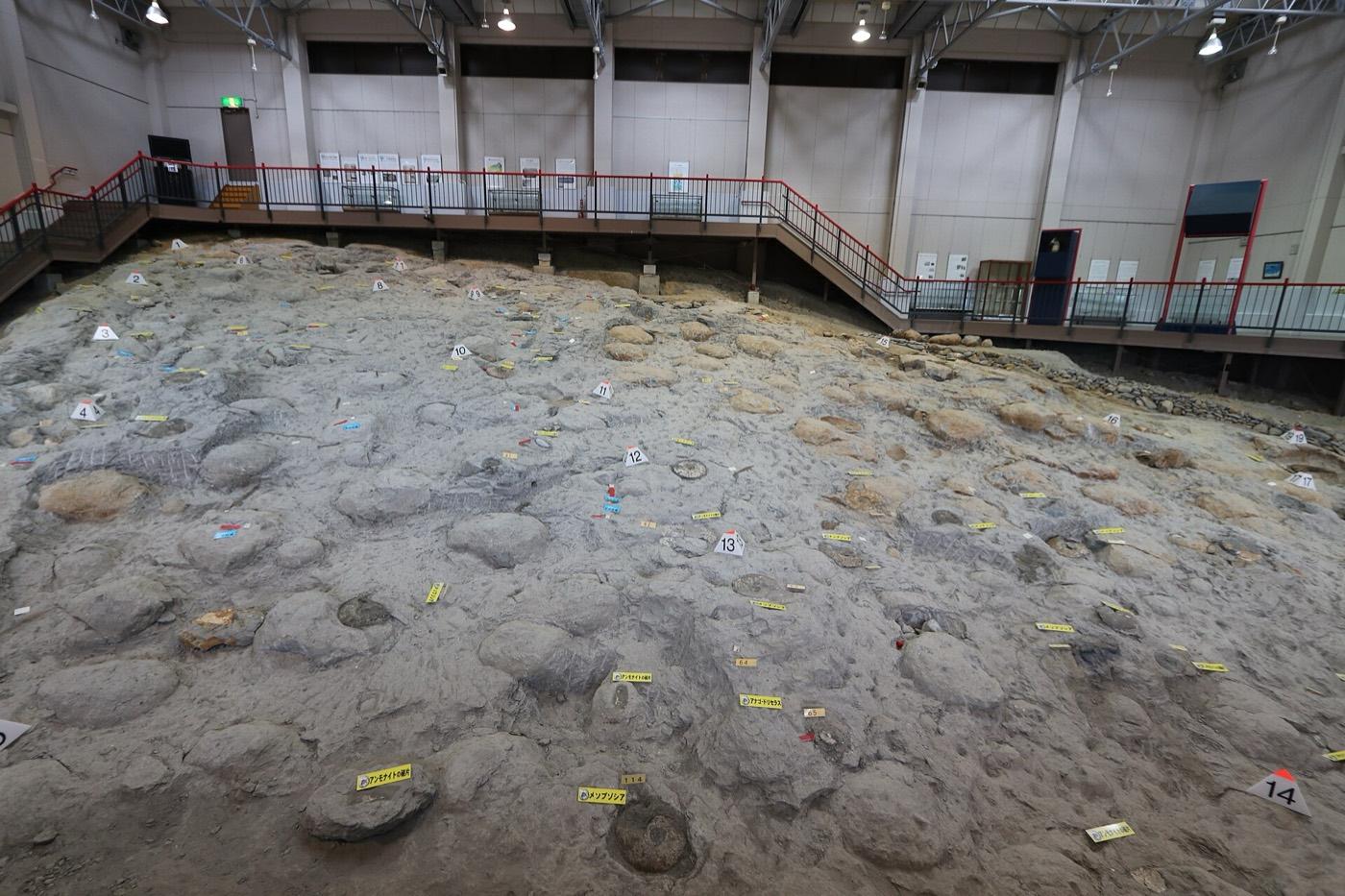
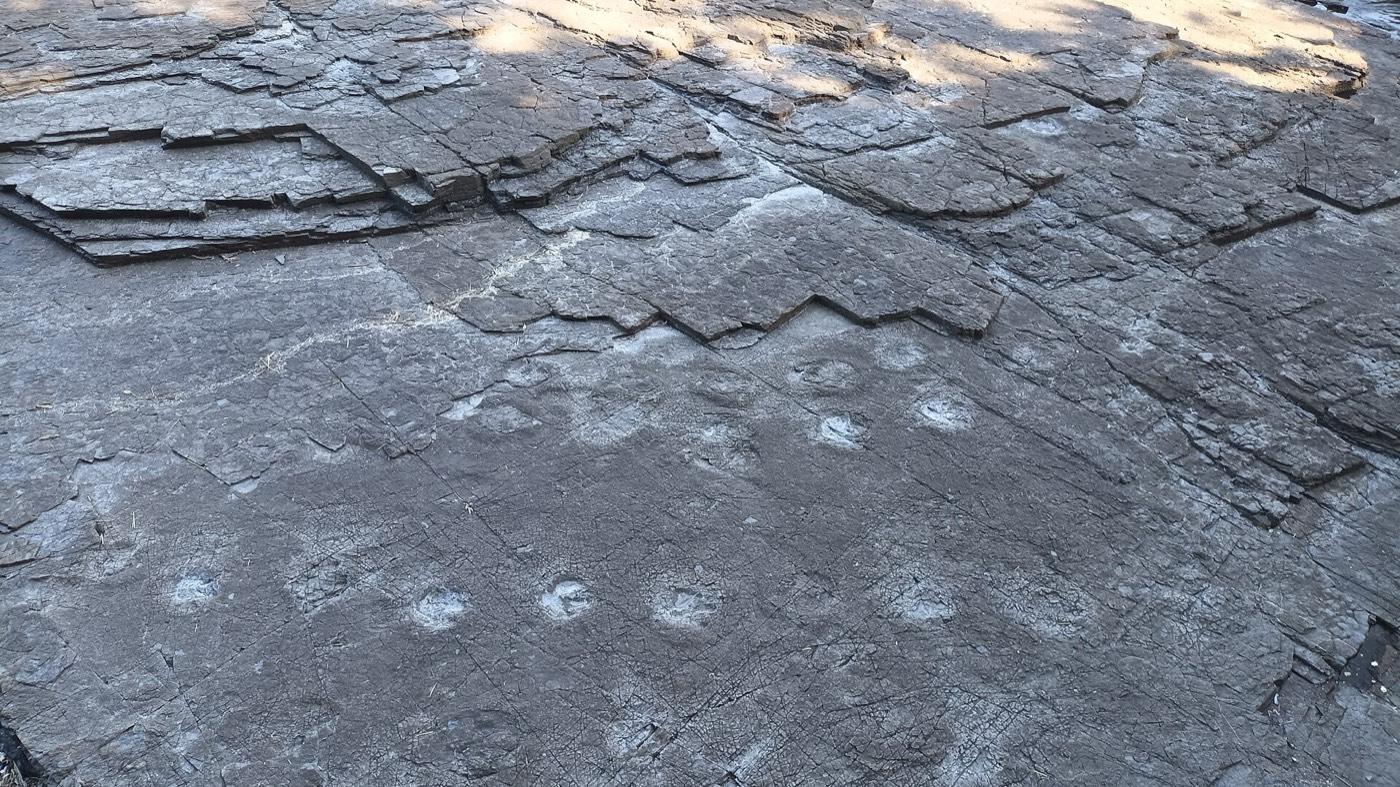
Roughly 5,000 individual tracks lie on the shore at Sangjogam. They were made by sauropods, theropods and ornithopods walking across the margin of a Cretaceous lake, and bird tracks occur alongside them.
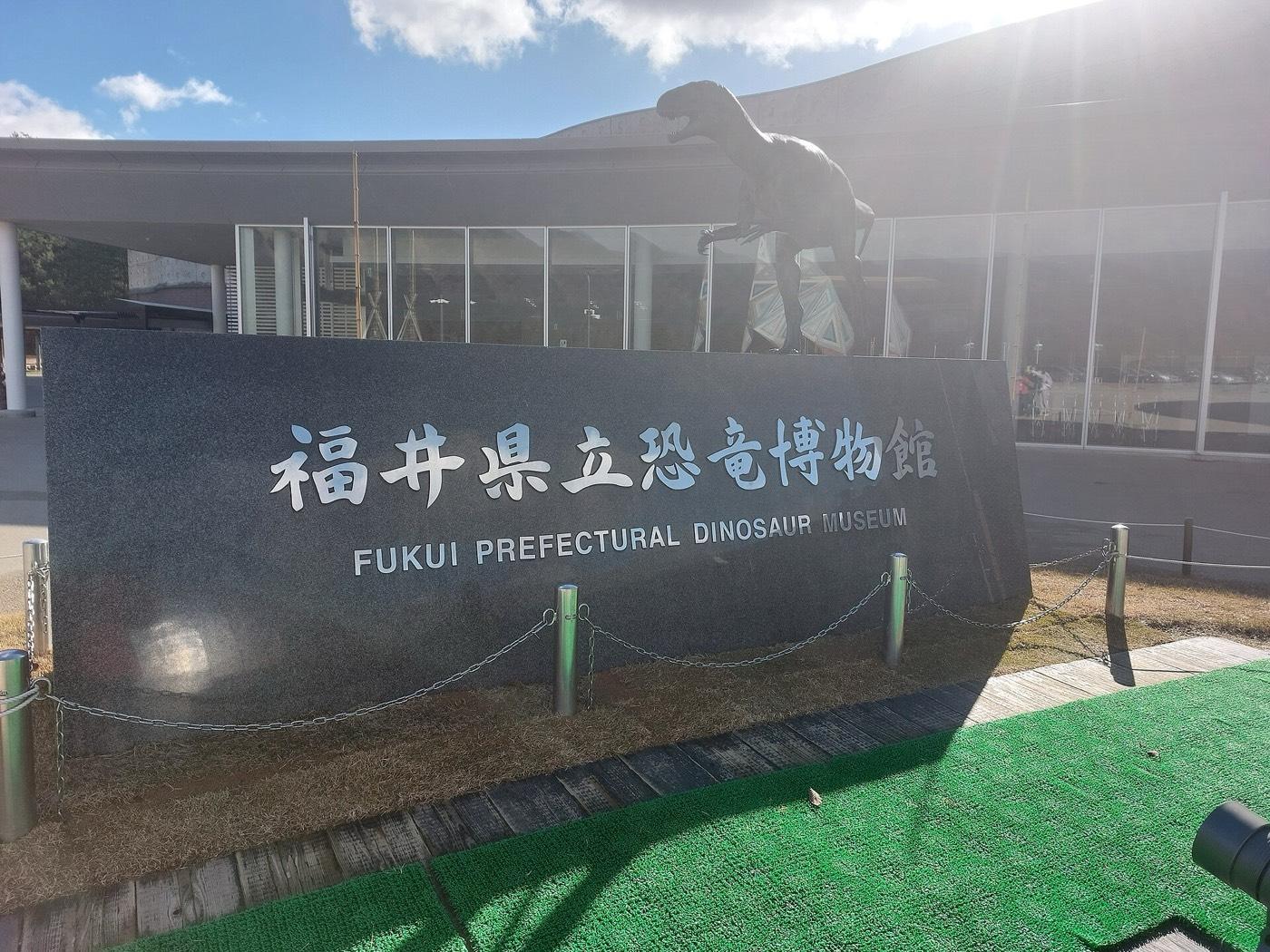
The Goseong Dinosaur Museum opened on 9 November 2004 on the headland directly above the track surfaces. That arrangement is what makes the site work for a visitor: interpretation and evidence are a few minutes' walk apart. You can see the prints in the rock immediately after you see what made them.
Research here is current rather than historical. A study published in 2025 reported a probable ankylosaur trackway from the Jindong Formation at Goseong. That adds a new element to the local ichnofauna.
Location and Directions
Sangjogam County Park is in Goseong county, South Gyeongsang province, on the south coast of the Korean peninsula.
GPS: 34.9045°N, 128.1514°E.
Goseong is reached by road from Busan and Jinju. The site lies within the Hallyeohaesang National Park area on a coast of inlets and small islands.
Museum opening runs 09:00 to 18:00 from March to October and 09:00 to 17:00 from November to February. Admission is charged.
Time the visit around low water. The track surfaces are coastal bedrock, and the best of them are more comfortably examined when the sea is out.
What Fossils You'll Find
Nothing is collectable. These are trace fossils on protected bedrock, and their value lies in the arrangement of the whole surface.
Sauropod tracks appear as large rounded depressions, often in pairs of a bigger hind print and a smaller fore print. Theropod tracks are three-toed with narrow digits. Ornithopod tracks are three-toed but blunter and broader.
Bird tracks occur on the same beds and are among the earliest substantial records of shorebird-like animals in Asia. They are small, delicate, and easy to walk over and never notice.
Low raking light picks the prints out far better than midday sun. Early morning and late afternoon are worth planning for.
 Photo: Dittwjfsdgkvkdjg, CC BY-SA 3.0, via Wikimedia Commons
Geologic History
The Jindong Formation belongs to the Gyeongsang Supergroup and accumulated in an intra-arc basin during the Cretaceous. Its fluvial and lacustrine setting represents a late stage in that basin's history.
Dating is imprecise, and it is worth being honest about why. The Jindong Formation and the units below it have produced few age-diagnostic body fossils. So the age rests on regional correlation rather than on fossils from the beds themselves. Estimates cluster around the Cenomanian, roughly 100 to 94 million years ago.
The tracks formed on the margin of a large lake. Animals crossed soft mud, the surface dried and hardened, and the next layer of sediment sealed it. Repeated cycles produced many track-bearing levels stacked through the sequence, which is why the density here is so high.
Korea's south coast holds several hundred track localities in total, and Goseong is the most developed of them. Uhang-ri in Haenam and the Jinju sites are the other well-known ones. Together they make the peninsula one of the densest concentrations of Cretaceous tracks anywhere.
 Photo: Dittwjfsdgkvkdjg, CC BY-SA 3.0, via Wikimedia Commons
Collecting Rules and Regulations
Collecting is prohibited. The trackways are designated natural monuments under Korean heritage law and are protected in place.
Do not chalk, trace, cast or wet the prints for photography. Do not hammer the surrounding rock.
Keep to marked routes where they exist. Repeated foot traffic on an exposed track surface wears it down, and this one has been open to visitors for two decades.
A note on what a track can tell you. Spacing between prints gives stride length, stride length scales with hip height, and hip height gives a rough body size and even a walking speed. That chain of inference is why a trackway is treated as data rather than as decoration. Why the count of 5,000 at Goseong matters more than any single impressive print.
 Photo: Dittwjfsdgkvkdjg, CC BY-SA 3.0, via Wikimedia Commons
Safety
The tracks are on a tidal coastal platform. Check the tide before you go out onto the rock, and do not let a rising sea cut you off from the shore.
Wet rock and algae make the platform slippery.
Korean summers bring typhoons between roughly July and September, and the coast is exposed.
Take care near the cliff edges above the shore, which are unfenced in places.
Sangjogam sits on the Hallyeohaesang coast, a national park of inlets and islands running between Busan and Yeosu. The scenery is the reason most Korean visitors come. The trackways are usually a stop on a wider coastal trip rather than the sole destination.
The county leans on the theme. Goseong has hosted dinosaur-themed expos, and the roadside signage and public art make the connection hard to miss on the drive in.
 Photo: Dittwjfsdgkvkdjg, CC BY-SA 3.0, via Wikimedia Commons
 Photo: Dittwjfsdgkvkdjg, CC BY-SA 3.0, via Wikimedia Commons
 Photo: Dittwjfsdgkvkdjg, CC BY-SA 3.0, via Wikimedia Commons
 Photo: Dittwjfsdgkvkdjg, CC BY-SA 3.0, via Wikimedia Commons
Sources
https://english.visitkorea.or.kr/svc/contents/contentsView.do?vcontsId=93691 https://www.sciencedirect.com/science/article/abs/pii/S0195667105001126 https://en.wikipedia.org/wiki/Goseong_Dinosaur_Museum https://www.sciencedirect.com/science/article/abs/pii/S0195667125001636