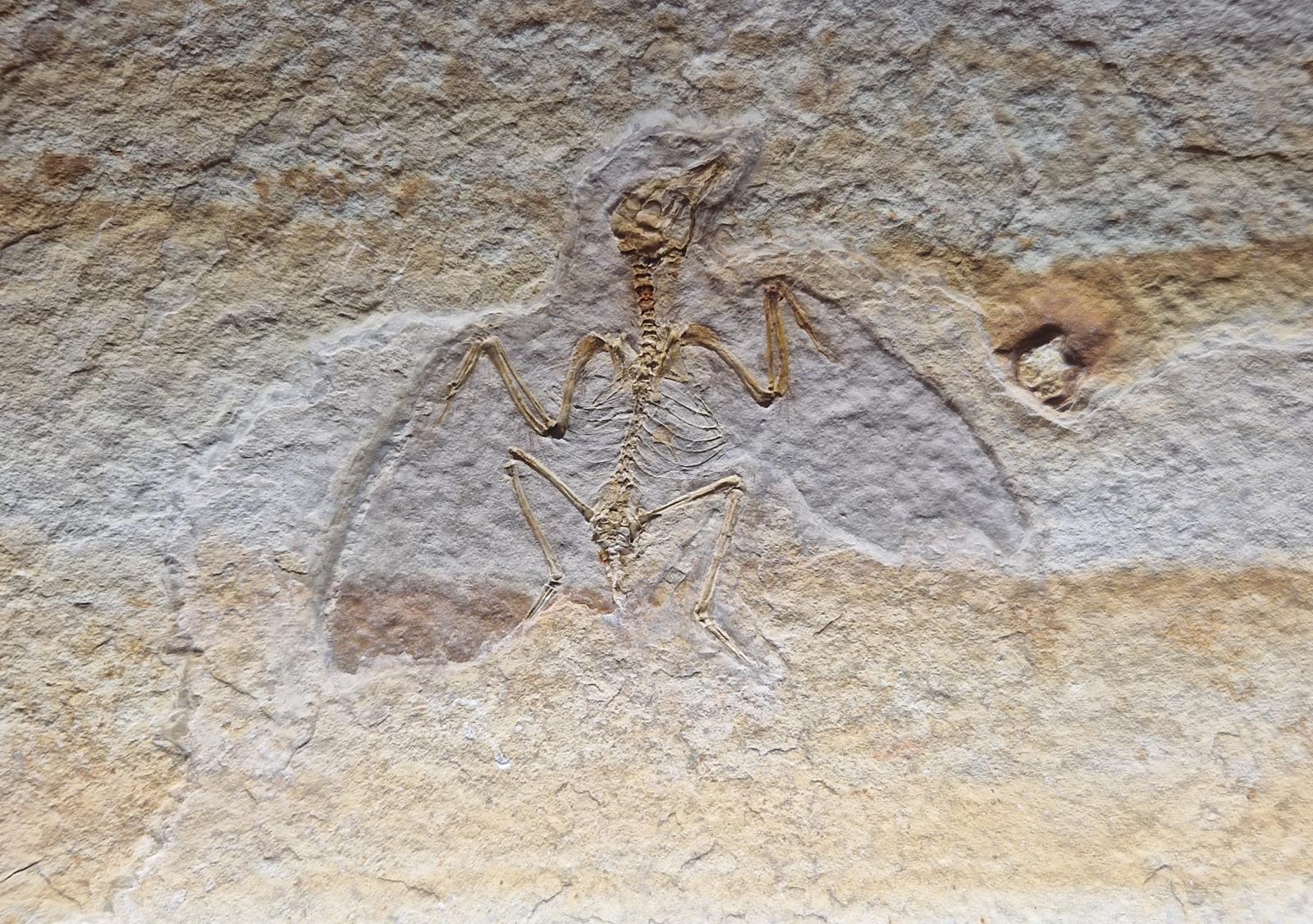
Sihetun Fossil Dig Site Guide
Image: DagdaMor (CC BY 4.0)
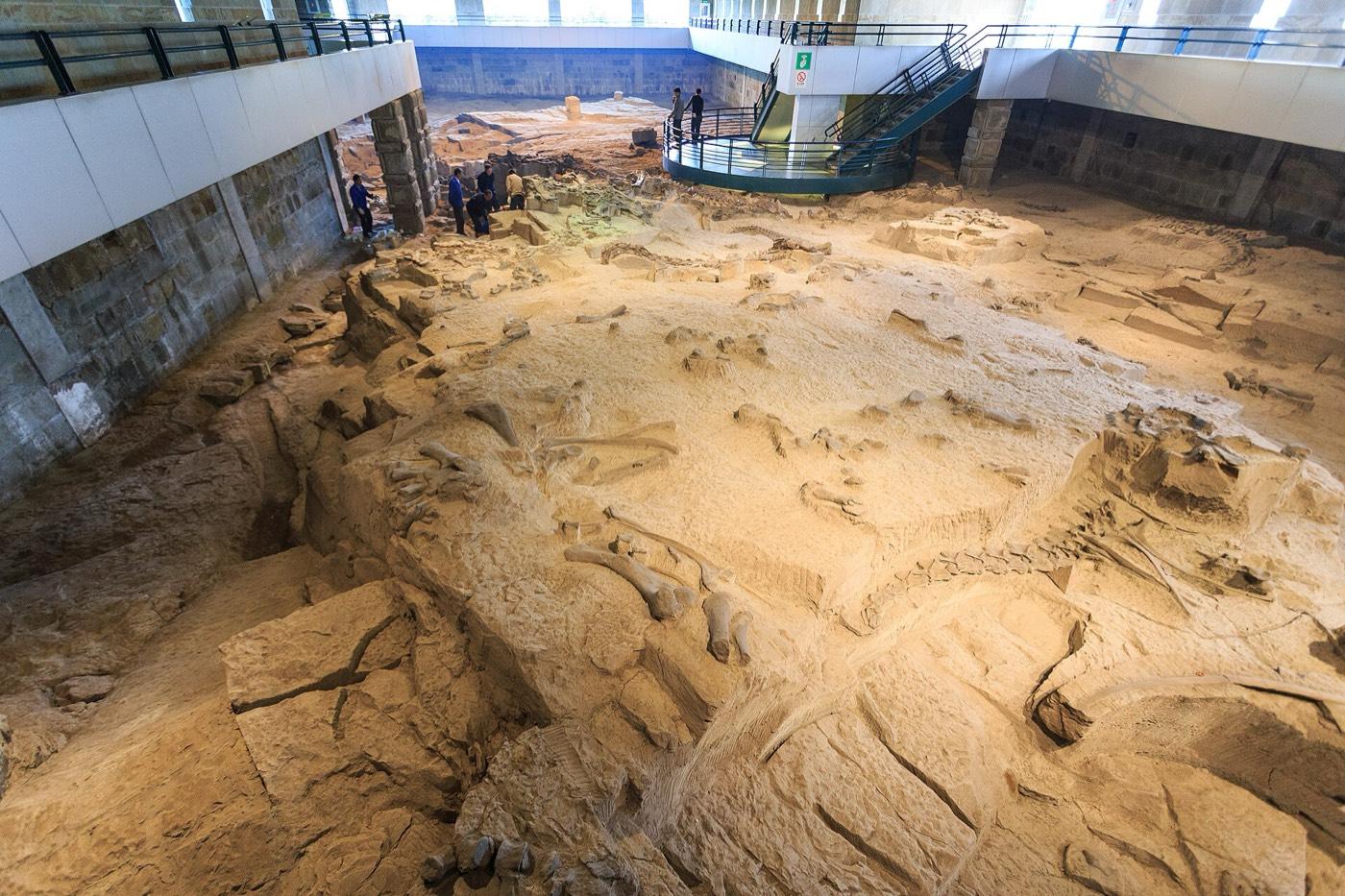
Sihetun is a hillside in Liaoning, China, where the first feathered dinosaur Sinosauropteryx was found in 1996. A protective shelter built over the original excavation leaves dozens of Jehol Biota specimens, feathered dinosaurs, early birds, mammals, fish, partly excavated and still embedded in the lakebed shale where they died 125 million years ago.
By Edward Chen · Updated 4 August 2026
Introduction
Sihetun is a small rural village in Beipiao County, western Liaoning Province, China, about 400 km northeast of Beijing. In 1996 a local farmer split open a slab of laminated shale on the hillside above the village and found a small, long-tailed theropod surrounded by a halo of fibrous filaments, Sinosauropteryx prima, the first feathered non-avian dinosaur ever described. The discovery confirmed that feathers evolved before powered flight and recalibrated the dinosaur-to-bird transition.
Rather than removing the surrounding fossils to a city museum, the Chinese authorities built a large protective shelter directly over the original excavation. Around 26 partly excavated specimens, fish, the parrot-faced dinosaur Psittacosaurus, early birds, mammals, remain embedded in the bedding planes where they were discovered, with raised walkways letting visitors look down onto the dig faces. The site is administered as the Sihetun National Geopark.
This guide covers the in-situ dig, the surrounding Jehol Biota outcrop belt, and the rules governing visitor access.
Location and Directions
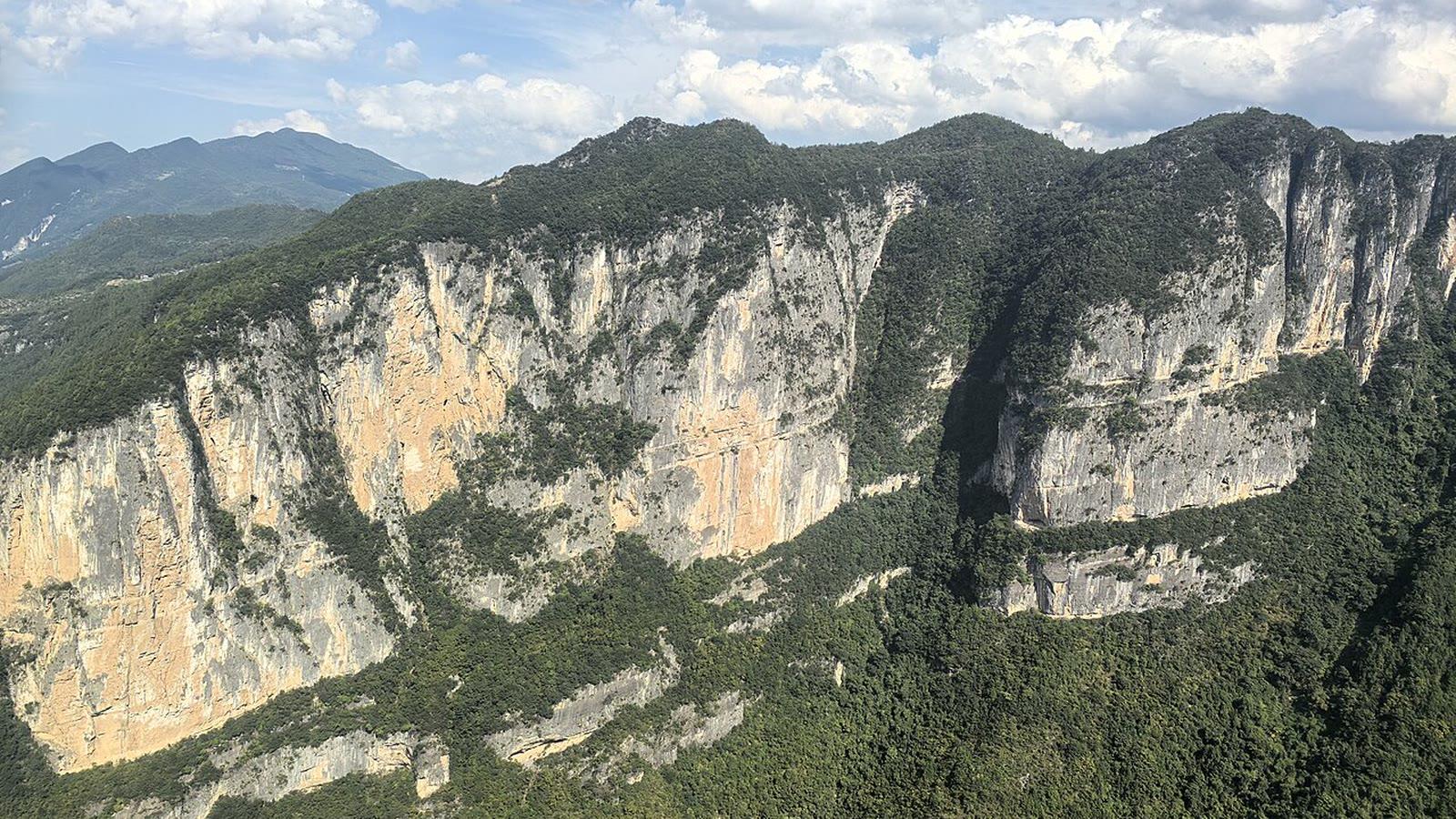
Sihetun is roughly 25 km southwest of Beipiao city in Chaoyang Prefecture, in the rolling hills of the Yixian–Jiufotang basin.
Directions to Sihetun
The most common route is to fly or train from Beijing or Shenyang to Chaoyang, then drive about an hour to Beipiao and on to the Sihetun Geopark (Sìhétún Gǔshēngwù Huàshí Bówùguǎn). The site is signed locally. A Chinese-speaking driver or guide makes the trip much easier. Entry fees are modest (around ¥60–80 at last report, confirm on arrival), and the site is typically open 08:30–17:00 with reduced winter hours.
Inside the shelter, raised viewing platforms and metal walkways lead around and over the original excavation. Interpretive panels in Mandarin (with limited English) identify each in-situ specimen and explain the volcanic ashfall events that buried them. The surrounding hillsides expose more Yixian Formation lakebed shale, many of the small "dig pits" visible across the slope are old farmer-quarried sites from the Jehol fossil rush of the late 1990s.
What Fossils You'll See
The shelter is built over Yixian Formation lakebed shales deposited around 125 to 122 million years ago. The in-situ preservation at Sihetun is what makes the site distinctive, the fossils are not just displayed but are physically embedded in the bedding planes where they died and were buried, with the original sediment all around them.
The most iconic in-situ specimen is the Sinosauropteryx prima discovery layer itself, the bedding plane in which the original 1996 farmer-found slab came from. Sinosauropteryx is a small theropod about 1 metre long, with a long tail and a body covered in fine fibrous structures (proto-feathers) preserved as a halo of dark filaments around the skeleton. Several articulated specimens of the parrot-faced ceratopsian Psittacosaurus are visible on the dig faces, including juveniles and at least one adult preserved with gastroliths (stomach stones) in the abdominal region. The early bird Confuciusornis sanctus, the most abundant bird in the Jehol Biota and a key transitional form between non-avian theropods and modern birds, appears as flattened skeletons with feather impressions still visible around the wings and tail. Salamanders (Sinerpeton, Liaoxitriton) are common across the shelter floor, often preserved with skin outlines. The small lakeside fish Lycoptera, the most abundant fossil at Sihetun, occurs in dense mass-mortality layers that look like fish-imprint paving stones. Conchostracans (clam shrimp), ostracods, and insect impressions appear at smaller scales across the same bedding planes.
The preservation mode is characteristic of the Jehol Biota: flat-bodied compressions where feathers, fur, skin outlines, and gut contents are commonly preserved as dark carbonaceous films around the bones. This degree of soft-tissue preservation is rare globally and depends on the distinctive combination of fine volcanic ash, anoxic lake bottoms, and rapid burial that operated across western Liaoning in the Early Cretaceous.
The wider Yixian and overlying Jiufotang formations across western Liaoning have produced thousands more Jehol Biota fossils studied by Chinese institutions. The four-winged dromaeosaur Microraptor gui is famous for preserving flight feathers on both forelimbs and hind limbs, demonstrating that early dinosaurs experimented with gliding flight before powered flight evolved in birds. Caudipteryx zoui, a small chicken-sized oviraptor relative with peacock-style tail feathers, is well represented. The early eutherian mammal Eomaia scansoria, one of the earliest known placental mammals, was described from Liaoning material in 2002. Repenomamus robustus is a badger-sized mammal preserved in one famous specimen with a juvenile Psittacosaurus in its stomach, direct evidence that some Mesozoic mammals ate dinosaurs. Pterosaurs include the toothed Eosipterus and the small Dendrorhynchoides. The earliest known angiosperm Archaefructus liaoningensis, a small herbaceous aquatic flowering plant, was described from Yixian material in 1998 and dramatically pushed back the known origin of flowering plants. Many of these specimens are displayed at the Liaoning Paleontological Museum in Shenyang for visitor comparison, but Sihetun itself remains the rare site that leaves the fossils where they were excavated.
"The museum will house 26 different specimens, from fish to a parrot-faced dinosaur called Psittacosaurus, all partly excavated but still embedded in the hillside where they were discovered." Smithsonian Magazine
 Photo: James St. John, CC BY 2.0, via Wikimedia Commons
Geologic History
During the Early Cretaceous (Barremian–Aptian, about 130 to 120 million years ago), what is now western Liaoning was a series of fault-bounded continental rift basins formed by extensional tectonics related to the broader breakup of Pangea. The basins filled with deep, stratified freshwater lakes that supported productive surface biological communities above persistently anoxic bottom waters. Volcanic eruptions from nearby active vents, part of an extensive Mesozoic Yanshan Movement magmatic episode, periodically blanketed the lakes with fine ash, killing surface organisms by suffocation or thermal shock and laying down the laminated ash-shale couplets that today preserve fossils so beautifully.
The Yixian Formation specifically consists of alternating andesitic lavas, volcaniclastic breccias, lake mudstones, and tuffs. The fossiliferous beds are the lacustrine intervals between the more energetic volcanic-debris-flow events. Mass-mortality layers within these intervals correspond to specific ash-fall events that killed entire lake communities at once. Zircon U-Pb radiometric dates on the ash beds at Sihetun give an age near 124.6 million years, and modern argon-argon and U-Pb work across western Liaoning places the full Yixian and overlying Jiufotang sections between roughly 130 and 120 million years ago.
The discovery of Sinosauropteryx in 1996 triggered an intense scientific gold rush across western Liaoning. Within five years, more than two dozen new feathered dinosaurs, primitive birds, mammals, and pterosaurs had been described from the region, and Western Liaoning became the best-known Mesozoic terrestrial fossil region in the world. It also fuelled a massive illegal local fossil trade, Beipiao farmers found that fossil slabs would sell on the international market for hundreds to thousands of dollars per specimen, and a generation of villagers turned to fossil prospecting full-time. Many notable Liaoning specimens spent years in private hands before being recovered for science. Some, like the famous Archaeoraptor hoax of 1999, were composite forgeries.
How Sihetun Came to Be Protected
The hillside was designated a Chinese National Geopark (中国国家地质公园) in 2001, the Liaoning Beipiao Sihetun Ancient Fossils National Geopark, in part to formally protect the site and in part to manage the public response to the international scientific interest. The Geopark is co-managed with the Beipiao municipal government and the Institute of Vertebrate Paleontology and Paleoanthropology of the Chinese Academy of Sciences. Field collecting at the locality is reserved for permitted research institutions under China's 2010 Regulation on the Protection of Paleontological Fossils, which formalised and strengthened earlier ad-hoc rules.
Collecting Rules and Regulations
Is Fossil Collecting Allowed?
No. Under China's 2010 Regulation on the Protection of Paleontological Fossils, removal and export of any vertebrate or scientifically valuable invertebrate/plant fossil is illegal.
Key Points:
- Stay on the walkways inside the shelter. Do not climb onto the dig faces
- No collection anywhere on Yixian/Jiufotang outcrops in the area
- Do not purchase fossils from villagers, sale and export are illegal
- Photography of the in-situ specimens is allowed subject to posted rules
Safety
Sihetun is a roofed site with raised metal walkways, so the visit itself is low risk as long as you stay on the structure.
Stay on the walkways. The dig faces below are the point of the site and are both fragile and uneven, and there is no way back up if you climb down onto a bedding plane. The metal walkways can be slick with dust or condensation, and the handrails are the only edge protection over the excavation.
Inside the shelter the temperature tracks the outside. Western Liaoning has hard winters, with January well below freezing, and hot, humid summers. Take a warm layer in the cold months and water in the warm ones. Winter hours are reduced, so check before travelling.
The hillsides around the shelter are covered in old farmer-dug pits from the Jehol fossil rush of the late 1990s. These are unmarked, unstable, and unfenced. There is no reason to walk out onto them, collecting is illegal anywhere on the Yixian and Jiufotang outcrops in the area, and a twisted ankle in an overgrown pit is a long way from help.
The practical difficulty is language and distance rather than terrain. Interpretive panels are in Mandarin with limited English, the site is about 25 kilometres from Beipiao and an hour from Chaoyang, and getting there without a Chinese-speaking driver or guide is awkward. Arrange transport for the return leg before you arrive rather than expecting to find it in the village.
Do not buy fossils from people at or near the site. Sale and export are illegal under China's 2010 Regulation on the Protection of Paleontological Fossils, and the legal exposure is yours.