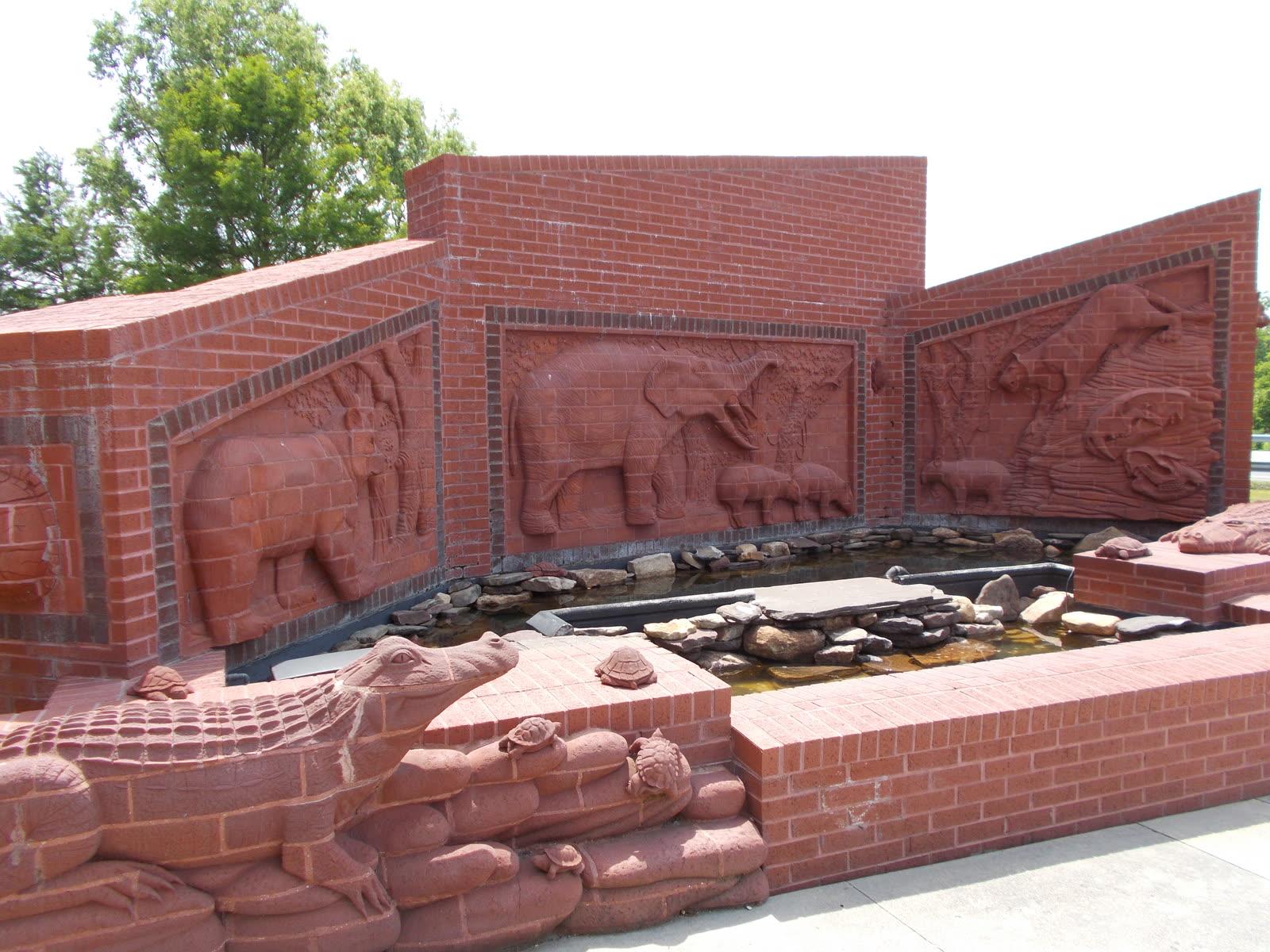
Gray Fossil Site Fossil Hunting Guide
Image: Leslie Anne Perry (CC0)
The Gray Fossil Site in Gray, Tennessee, is an early Pliocene sinkhole lake deposit about 4.9 to 4.5 million years old. It yielded Bristol's Appalachian panda, tapirs and rhinoceroses. You can tour the museum and viewing deck for a fee. Hands-on digging is limited to the Big Dig program.
By Edward Chen · Published 1 October 2026
Introduction
The Gray Fossil Site in Gray, Tennessee, is an early Pliocene sinkhole lake deposit about 4.9 to 4.5 million years old. East Tennessee State University (ETSU) runs the site and its museum. You pay a ticket to enter the museum and its viewing deck. You cannot dig on your own, but a paid program called the Big Dig puts visitors in the pits.
Tennessee Department of Transportation crews found the deposit in May 2000. On a road widening project near Gray, they hit a dark layer of clay that held abundant fossils. The deposit covers roughly 4 to 5 acres and reaches 35 to 45 m deep.
The site is still under excavation, and new finds occur regularly. The Gray Fossil Site and Museum opened in August 2007. It operates under the ETSU Don Sundquist Center of Excellence in Paleontology. The ETSU collection holds more than 30,000 cataloged fossils from Gray and other Appalachian localities.
Location and Directions
The museum is at 1212 Suncrest Drive, Gray, TN 37615, in Washington County. Its coordinates are 36.387 degrees north and 82.499 degrees west. The telephone number is (423) 434-4263.
A parking lot stands outside the main entrance. A second lot sits behind the annex building. Both lots have accessible spaces. The building has power-assist doors at the main entrances and an elevator to all public floors.
The museum is open Tuesday to Saturday from 10:00 to 17:00 and on Sunday from 13:00 to 17:00. It is closed on Monday, except in March, June and July, when it opens 10:00 to 17:00. Allow 1.5 to 2 hours.
Admission is $11 for adults and for children aged 4 and over. Children aged 3 and under are free. Seniors, military and AAA members pay $1 less. ETSU students and faculty enter free with identification, and teachers enter free with documentation.
What Fossils You'll Find
 Photo: Zilantophis, CC BY-SA 4.0, via Wikimedia Commons

The fossils at Gray come from a forest beside a lake. ETSU records two nearly complete skeletons of Pristinailurus bristoli, Bristol's Appalachian panda, a new genus and species. The larger form was nearly three times bigger than a modern red panda.
The most common mammal is the dwarf tapir Tapirus polkensis, with more than 100 individuals. Many are articulated skeletons that cover all growth stages. The site also yields the wide-bodied rhinoceros Teleoceras, the short-faced bear Plionarctos and the wolverine Gulo sudorus. Beavers of the genera Dipoides and Castor also occur.
Researchers reported the peccaries Mylohyus elmorei and Prosthennops serus from Gray. Both were first records for the Appalachians. Alligators, tortoises, venomous lizards and a giant flying squirrel also appear in ETSU reports.
Visitors see these fossils as displays. The Paleontology Hall has a dig pit, and a window looks into the Fossil Preparation Lab. The Collections Room shows the larger holdings. The Ice Age at Saltville exhibit shows fossils 10,000 to 40,000 years old, including mammoths and mastodons.
Geologic History
The Gray deposit is not a named formation. It is lake sediment inside a sinkhole in the Knox Group, a Cambrian and Ordovician dolostone. The sources name no formation for the lake deposit, so this guide names the Knox Group sinkhole fill.
Groundwater dissolved the dolostone and the ground collapsed. A published paper counts up to eleven paleosinkholes at Gray. A lake formed in the basin, and fine clay and silt settled in layers. Large boulders in the fill show that the sinkhole walls were high.
Mammal fossils date the deposit to the latest Hemphillian and earliest Blancan land mammal ages. ETSU gives an age between 4.5 and 4.9 million years, in the early Pliocene. The fossils show a warm, humid oak and hickory forest with pine, tupelo and alligators. Wikipedia reports a climate close to modern Atlanta, Georgia, in temperature, with about 1,343 mm of rain a year.
The size of the deposit varies by source. ETSU gives 4 to 5 acres and a thickness of 35 to 45 m. A published paper gives a lake deposit of about 2.6 to 3.5 hectares with a maximum depth of 42 m.
Collecting Rules and Regulations
You cannot collect fossils at the Gray Fossil Site. It is an active research excavation. ETSU staff control all digging.
The Big Dig is the one public excavation program. It costs $125 per person and runs on select Saturdays from July to September, 10:00 to 16:00. You must book, and places are limited. Participants need to be 12 or older. A paying adult aged 18 or over must accompany anyone aged 12 to 16. The price comes from a 2022 article, so confirm it before you book.
On the Big Dig you dig, clean specimens and examine sediment under a microscope. You also tour the active pits and the paleontology lab. Registration is at visithandson.org/the-big-dig.
On the Big Dig, each fossil gets a catalog card with your name, the work done and the date. The fossil then goes to the lab for research. You earn credit if it enters an exhibit or a research project. This guide found no statement that participants take fossils home.
Safety
Museum visitors face no field hazards. The building is fully wheelchair accessible. Firearms, weapons, tobacco products and pets are not allowed. Service dogs are welcome.
The Fossil Site Viewing Deck overlooks the active excavation pits during dig season, from May to October. Staff supervise every entry into the pits on the Big Dig.
Dress for outdoor work on the Big Dig. The program runs from 10:00 to 16:00 in summer, so bring water and sun protection. Wear sturdy shoes.
Paleontology tours run several times a day. The ETSU page lists starts at 09:30, 11:30, 13:30 and 15:30. The Hands On! Discovery Center page lists different times and a $2 fee. Ask at the front desk for the current schedule.
Sources
https://www.etsu.edu/gray-fossil-site-museum/about/annotated-information.php https://www.etsu.edu/gray-fossil-site-museum/about/exhibits.php https://www.etsu.edu/gray-fossil-site-museum/visit.php https://visithandson.org/visit/ https://northeasttennessee.org/digging-big-a-hands-on-experience-at-gray-fossil-site/ https://news.etsu.edu/articles/celebrating-25-years-of-the-gray-fossil-site https://pmc.ncbi.nlm.nih.gov/articles/PMC6276594/ https://en.wikipedia.org/wiki/Gray_Fossil_Site
Nearby sites
 Maysville Ordovician Roadcut Fossil Hunting GuideBrachiopods, Trilobites
 East Fork State Park Fossil Hunting GuideTrilobites, Brachiopods
 Big Bone Lick State Historic Site Fossil Hunting GuideAmerican mastodon (Mammut americanum), Columbian mammoth (Mammuthus columbi)
 Cowan Lake State Park Fossil Hunting GuideBrachiopods, Bryozoans