Marble Mountain Fossil Beds: Mojave Cambrian Trilobite Guide
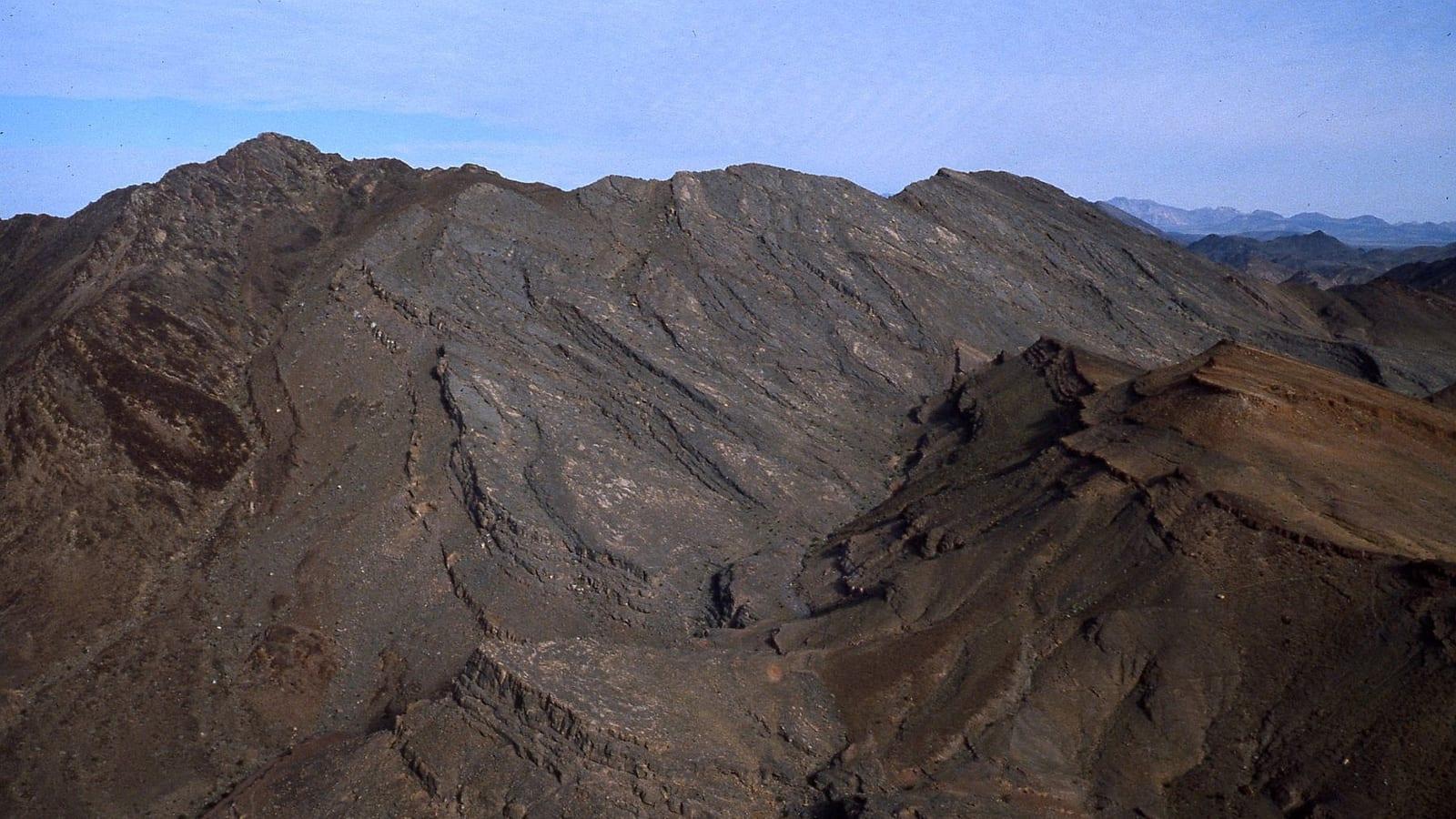
Image: LCGS Russ (CC BY 3.0)
The Marble Mountain fossil beds expose the Lower Cambrian Latham Shale north of Chambless on Route 66, producing olenellid trilobites under BLM casual-collection rules within the Trilobite Wilderness.
By Edward Chen · Updated 3 August 2026
Introduction
The Marble Mountain fossil beds rise out of the Mojave Desert north of the abandoned Route 66 crossing at Chambless, in San Bernardino County, California. On the western slope of the range, a thin sliver of dark grey-green shale called the Latham Shale is exposed in a low ridge above a broad alluvial wash. Recent peer-reviewed work places the Latham Shale in Cambrian Series 2, Stage 4 (Bonnia–Olenellus Biozone), roughly 518 to 514 million years old, making this one of the most accessible Lower Cambrian trilobite-bearing units in the western United States. The Marble Mountain fossil beds yield trilobites of the suborder Olenellina, the long-headed early trilobites that mark the start of the Cambrian record in North America, alongside brachiopods, hyolithids, and rare Anomalocaris fragments documented in the same shale.
The site lies inside the Bureau of Land Management's Trilobite Wilderness (37,308 acres covering the Marble Mountains in a 12-mile northwest-southwest band), which in turn sits within the Mojave Trails National Monument. Per the BLM's Marble Mountains trilobite fossil collection guidance, casual collection of common invertebrate fossils, including trilobites, is allowed for non-commercial personal use under the Paleontological Resources Preservation Act, using only non-powered hand tools and producing no more than 1 square metre (1 square yard) of surface disturbance per visit. The 25-pound-per-day non-vertebrate limit set out in PRPA applies. This guide covers how to drive in, what to look for in the float and the dig pits, the regional Cambrian setting, and the limits that apply to collecting on this BLM unit.
Photo: Smithsonian National Museum of Natural History, CC0, via Smithsonian Open Access
Location and Directions
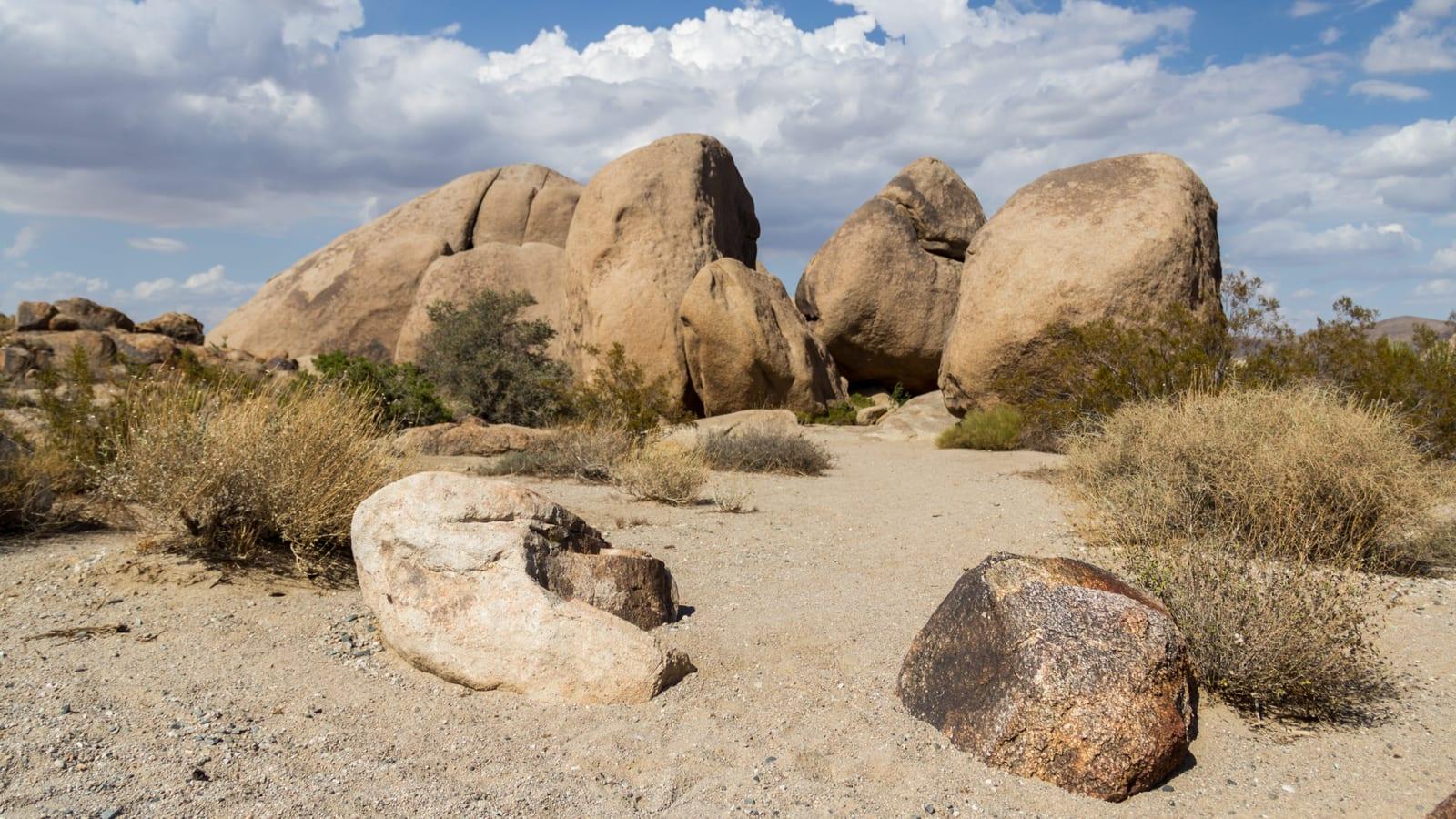
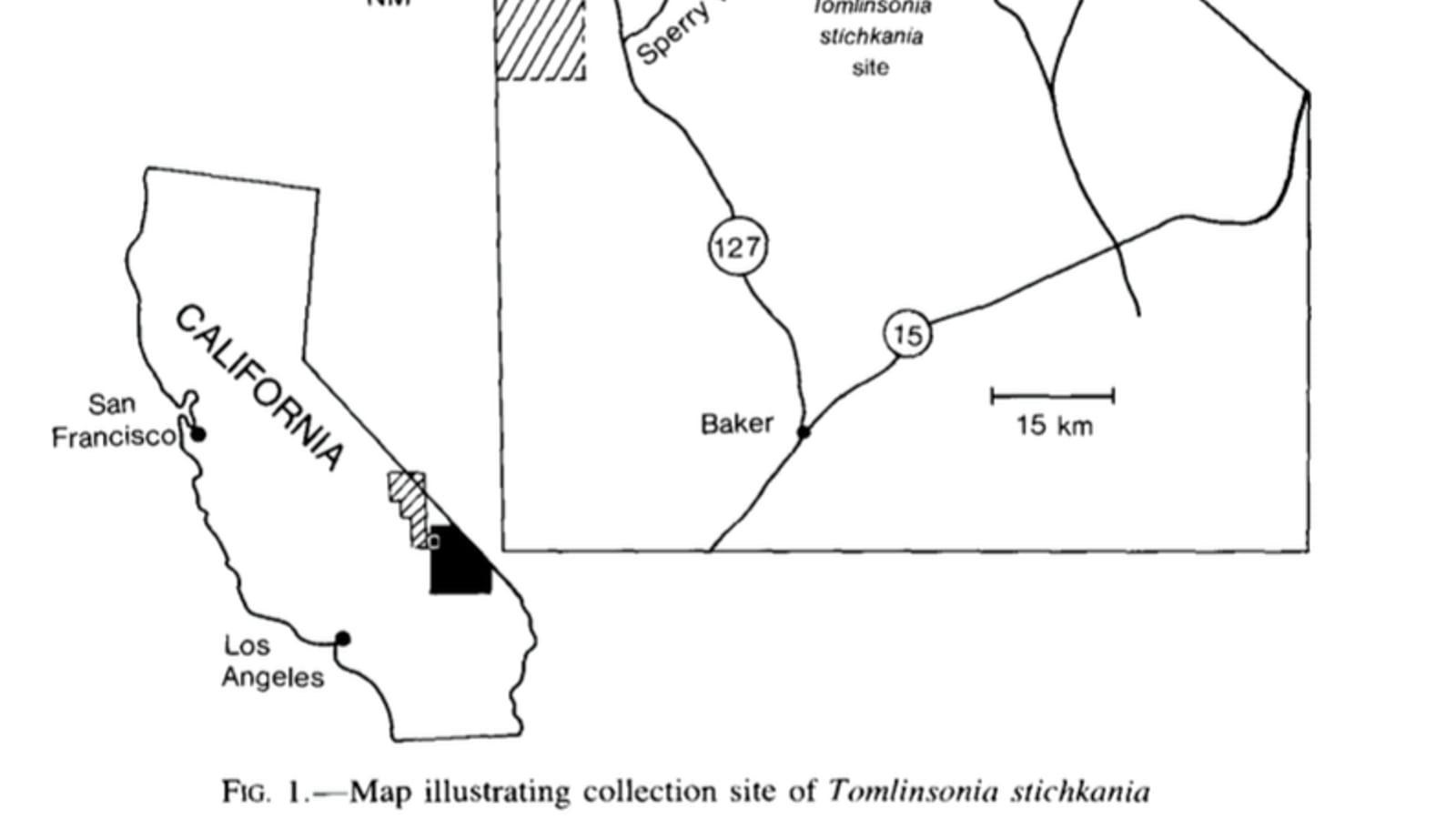
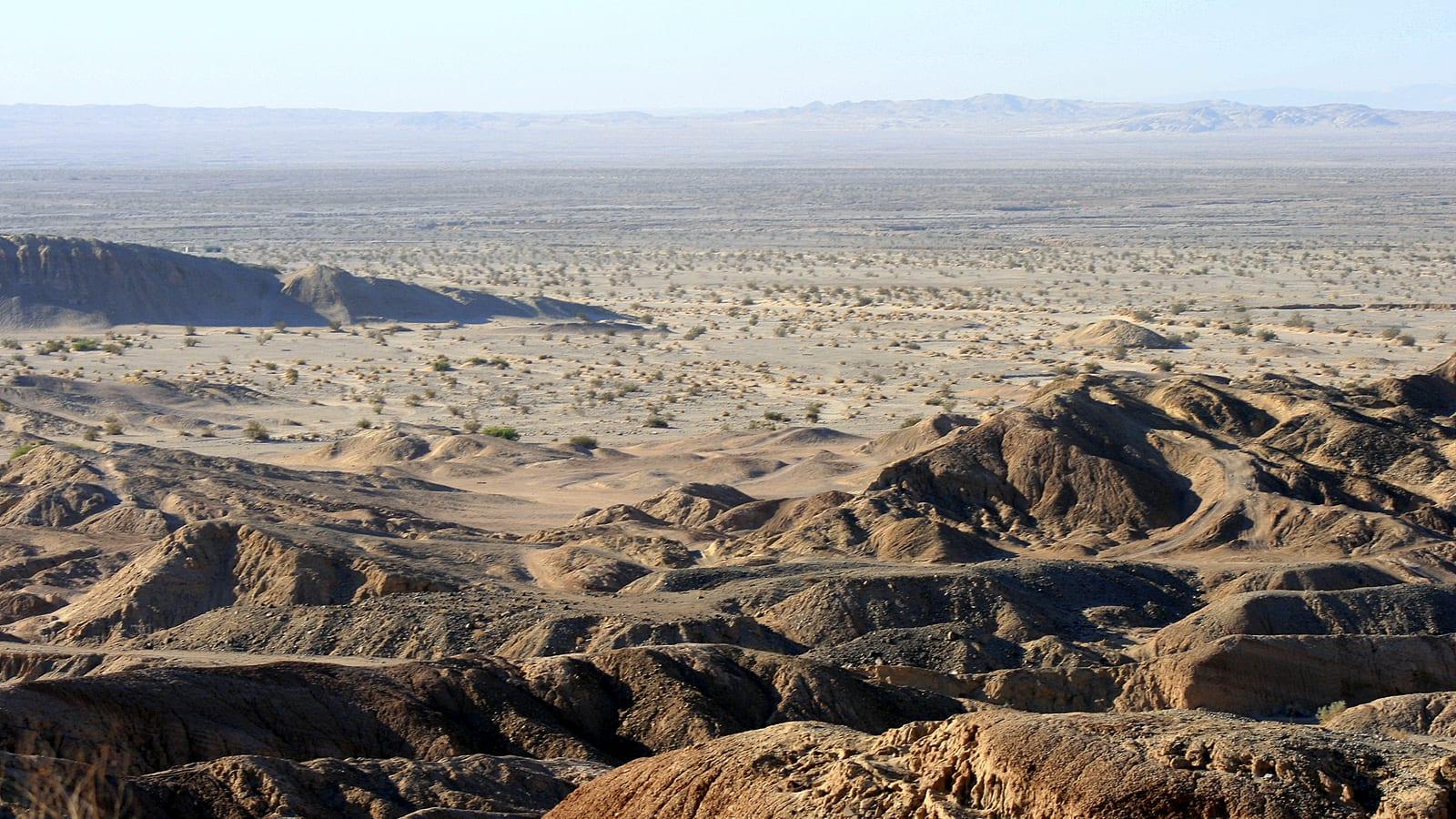
The fossil-bearing exposures are on the southwestern flank of the Marble Mountains, in the Mojave Desert about 30 miles east of Twentynine Palms and 50 miles west of Needles. There is no formal trailhead and no developed parking. The access route is a series of unmaintained dirt roads.
From Interstate 40, take the Kelbaker Road exit south at the Cadiz Summit area, or alternatively take the Essex Road exit and head west. Both routes connect to historic Route 66, which runs east-west across the desert south of the freeway. Drive Route 66 to the abandoned town site of Chambless. From Chambless, turn south onto Cadiz Road and drive about four miles south. At the sharp left bend where Cadiz Road turns east, the Cadiz Farms agricultural compound is visible on the left. Continue east for two miles to a railroad crossing.
Just before the railroad crossing, turn north onto unsigned graded road NS376 and drive 0.4 miles. At the intersection with NS299, turn east and drive 0.2 miles. Make a final turn north onto NS380 and drive 0.7 miles to a small flat parking area at the base of the mountain. Park here and walk west to east along the wash. As you climb the slope, watch for shallow dig pits in the shale. These mark the productive horizons that earlier collectors have worked.
The roads are passable in dry weather in a high-clearance two-wheel-drive vehicle. After winter rain, the wash crossings become impassable and the surface clays soften. Summer temperatures on the slope routinely exceed 110 degrees Fahrenheit. Visit between October and April. There is no water, no shade, and no cell coverage at the site.
Photo: Smithsonian National Museum of Natural History, CC0, via Smithsonian Open Access
What Fossils You'll Find
The Marble Mountains fauna is a classic Lower Cambrian assemblage preserved in dark shale. Most fossils appear as flattened impressions on cleaved bedding surfaces, and the easiest way to find them is to split shale plates with a hand chisel along the natural cleavage.
Brachiopods are the second common fossil. The Latham Shale has produced some of the earliest articulate brachiopods, small calcitic shells with hinge teeth, alongside the more common inarticulate forms. Look for circular to slightly oval shell impressions a few millimeters across, often paired on the same bedding plane.
Hyolithids, small conical shells of an extinct lophophorate group, occur as elongated triangular impressions, sometimes with the operculum (the cap that closed the wide end of the cone) preserved nearby.
Trace fossils, including horizontal feeding burrows and surface trails, are common on bedding tops.
Anomalocaris, the large Cambrian apex predator, is documented from the Latham Shale but is genuinely rare. Specimens are usually disarticulated frontal appendage fragments, and any apparent find should be photographed in place and reported to a museum rather than collected.
The most productive technique is to inspect float in the dig pits first, learn what the shale looks like when it splits cleanly, and then split fresh slabs against a hard surface.
Geologic History
The fossil-bearing rocks are part of the Lower Cambrian section of the Marble Mountains, deposited during the Cambrian Stage 4 of the Cambrian Period, roughly 518 to 514 million years ago. Three units are stacked in this section, and only the middle one is fossil-rich.
Zabriskie Quartzite (lower). A pale, well-cemented quartzite that represents a beach-to-shoreface sand body deposited as the Cambrian sea transgressed eastward across the Mojave region. Fossils are rare in this unit.
Latham Shale (middle, ~518 million years). A thin (typically 25 to 40 meters) unit of dark, fissile, slightly calcareous shale deposited offshore in quiet, oxygen-poor water below normal wave base. The depositional setting was a low-energy shelf where fine mud accumulated steadily and trilobites and other epifaunal animals lived on the seafloor. Periodic storms or shoaling events occasionally winnowed the shells into thin concentration layers, which are the most productive horizons for collecting today. The Latham Shale is the source of essentially all the well-preserved trilobites at the Marble Mountains.
Chambless Limestone (upper). A massive, fossil-poor limestone deposited as the shelf shallowed back into clear-water carbonate conditions. Algal-mound textures are visible in places.
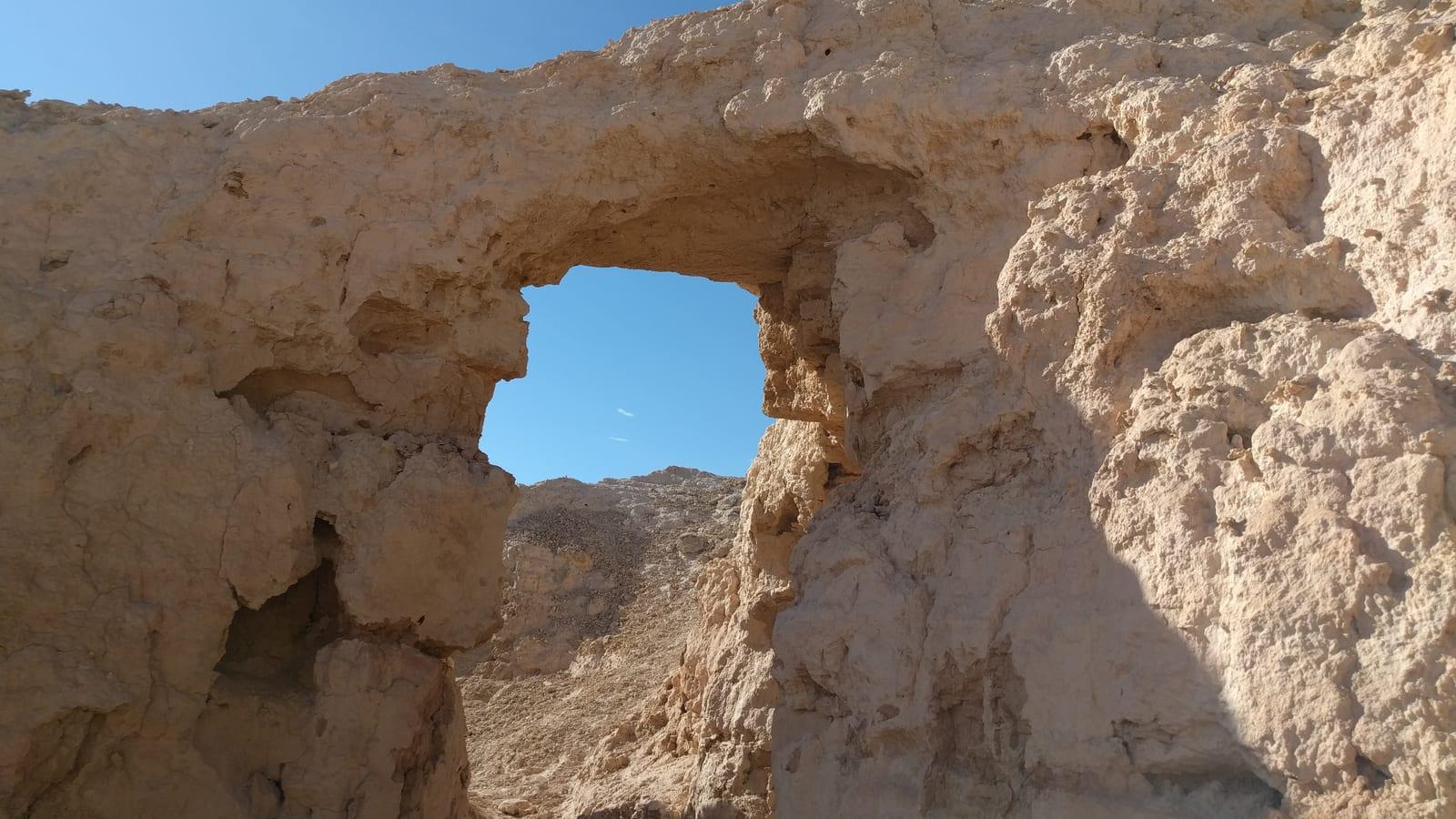
After Cambrian deposition, the section was deeply buried, then uplifted and tilted during the Mesozoic and Cenozoic mountain-building events that created the modern Mojave ranges. The Marble Mountains are a tilted block of Paleozoic and Mesozoic rock with the Latham Shale exposed in cross-section along the lower slopes. Erosion of the soft shale produces the slope of broken plates that visitors work today.
Photo: Smithsonian National Museum of Natural History, CC0, via Smithsonian Open Access
How the Marble Mountains Became a Fossil Collecting Site
The Marble Mountains have been known to professional paleontologists since the early twentieth century, when reconnaissance mapping by the U.S. Geological Survey identified the Latham Shale as one of the key Lower Cambrian reference sections in California. The site has never been quarried for fossils. All of the dig pits visible on the slope today are the work of decades of casual rockhound digging, which has helped expose new shale faces but has not significantly altered the geometry of the outcrop.
The Bureau of Land Management Needles Field Office formally recognized the site as a rockhounding locality and incorporated it into the Trilobite Wilderness Study Area, which protects the surrounding desert landscape while allowing limited surface collecting under the standard BLM hobby rules. The site remains popular with school groups, university field classes, and amateur collectors, in part because of its accessibility from Interstate 40 and Route 66.
Photo: Smithsonian National Museum of Natural History, CC0, via Smithsonian Open Access
Collecting Rules and Regulations
Casual collection of common invertebrate fossils is allowed under the BLM's PRPA implementation, with explicit limits set out in the agency's published Marble Mountains trilobite fossil collection guidance and the general BLM casual-collection summary:
- Casual collection is defined by the BLM as "the collecting of a reasonable amount of common invertebrate or common plant paleontological resources for non-commercial personal use", bartering, selling, or trading is prohibited.
- The BLM caps non-vertebrate casual collection at 25 pounds per person per day (PRPA implementation).
- Surface collection only, no powered tools, and ground disturbance from any non-powered hand tool may not exceed 1 square metre (1 square yard) per site.
- Vertebrate fossils may not be collected under any circumstances. This is unlikely to come up in a Cambrian site, but the rule applies.
- Inside the Trilobite Wilderness boundary, new road construction, vehicle off-roading, and any activity that further disturbs the surface are prohibited under the Wilderness Act. Stay on existing tracks when driving in.
Note: older site descriptions reference a "one trilobite per day" limit from the historic Needles Field Office rockhounding guidance, the current PRPA-based BLM guidance supersedes this and uses the 25-pound, 1-square-metre framework above. (Verify before visiting. The BLM is the authoritative source.)
Photo: Smithsonian National Museum of Natural History, CC0, via Smithsonian Open Access
Safety
The Mojave is the hazard at the Marble Mountains, not the outcrop.
There is no water, no shade, no cell coverage, and usually nobody else on the slope. Summer temperatures routinely exceed 110°F, and the site is not survivable on foot without water in those conditions. Visit between October and April. Whatever the season, carry several litres per person, keep more in the vehicle than you plan to drink, and tell someone your route and your expected return before you leave pavement.
Getting there is the other half of it. Access is by unmaintained dirt road, NS376 to NS299 to NS380, with wash crossings that soften after winter rain and become impassable. Take a high-clearance vehicle, carry a full-size spare and the tools to fit it, and do not attempt the route in a low-clearance car. Recovery out here is expensive where it is available at all.
On the slope, the shale is loose and moves underfoot, so wear boots with ankle support. Splitting shale plates throws sharp flakes. Wear eye protection and keep other people out of the line of the chisel.
Mojave rattlesnakes and sidewinders are present and are most active early and late in the day during warm months. Look before you put a hand on a ledge or reach into a dig pit. Cactus and catclaw are everywhere and go through thin clothing.
Flash flooding fills the washes during summer storms, and the storm can be over a mountain you cannot see from the slope. Do not camp in a wash and do not try to cross a running one.
Sources
- Bureau of Land Management, Trilobite Wilderness, wilderness-area boundaries and acreage.
- Bureau of Land Management, Marble Mountains Trilobite Fossil Collection guidance, published collection rules for the site.
- Bureau of Land Management, Paleontological Resources: Can I collect fossils?, casual-collection limits under PRPA.
- Bureau of Land Management, Mojave Trails National Monument, overarching land designation.
- Skovsted, C.B., Pan, B., Topper, T.P., Betts, M.J., Li, G. & Brock, G.A. (2019). Brachiopods from the Latham Shale Lagerstätte (Cambrian Series 2, Stage 4) and Cadiz Formation, California. Journal of Paleontology 93(1): 11–22.
- USGS, Geolex unit reference for Cadiz Formation and Latham Shale.
- University of California Museum of Paleontology, The Marble Mountains (Waggoner, 2000).
Frequently asked questions
- What fossils are found in the Marble Mountains?
- The Cambrian Latham Shale, roughly 518 to 514 million years old, yields trilobites, brachiopods, hyolithids, and trace fossils. Trilobites such as Olenellus are the classic find.
- How do you find trilobites in the Latham Shale?
- Split the greenish shale along bedding planes with a chisel and hammer, and search the loose slabs at the base of the outcrop. Safety glasses are essential.
- Where are the Marble Mountains fossil beds?
- The trilobite-bearing Latham Shale is exposed in the Marble Mountains of the Mojave Desert in San Bernardino County, California. It is remote desert, so carry water and fuel and confirm current access before collecting.