Los Dedos Paleontological Park, Caldera Fossil Hunting Guide
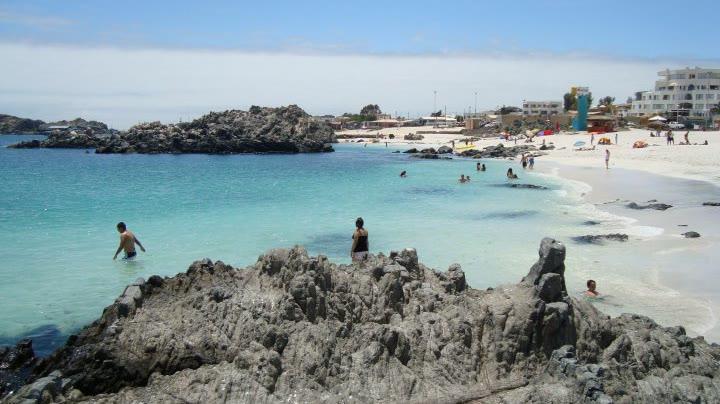
Image: Vioroska tello (CC BY-SA 3.0)
A paleontological park in the Atacama where Miocene whales, giant sharks and sea lions lie in desert sediment a few minutes from the beach at Bahía Inglesa. Entry is free and the fossils stay where they are.
By Edward Chen · Published 17 September 2026
Introduction
The Atacama is the driest desert on Earth. Parts of it have gone decades without measurable rain.
That dryness is why the whales are still here. A few kilometres inland from the turquoise water at Bahía Inglesa, desert sediment holds the remains of a Miocene sea.
In 2004 the Consejo de Monumentos Nacionales established a 159-hectare protection zone here, and the park sits inside it. The administrator, CIAHN Atacama, says the area has been expanded step by step since.
What the sediment contains is remarkable for its range. Whales, sperm whales, dolphins, sea lions, giant sharks and seabirds all occur in the Bahía Inglesa Formation.
Cerro Ballena lies north of Caldera, 15 to 20 kilometres from here. Road widening there in 2010 and 2011 exposed more than forty fossil whale skeletons in a single stretch. Researchers linked the mass death to toxic algal blooms.
Entry to Los Dedos costs nothing. The fossils stay in the ground, which is the point of a park rather than a quarry.
Location and Directions
The park lies about 12 kilometres south of Caldera, past Bahía Inglesa, in the Atacama Region.
Caldera is on Route 5, the Pan-American Highway, about an hour north-west of Copiapó. Copiapó has the nearest airport.
Bahía Inglesa is the resort village on the coast and it has the accommodation. The park is a short drive from it on desert road.
The park is still being equipped. CIAHN Atacama, which administers it, lists basic services, signage and a perimeter fence as work in progress, and publishes no opening hours. Contact CIAHN before a long drive.
Admission is free. For context, visit the Museo Paleontológico de Caldera first. The museum charges an entry fee.
The site is 12 kilometres south of Caldera. Take route C-354 towards Bahía Inglesa for 5 kilometres from the city centre, then the C-302 turn-off towards Puerto Viejo for about 7 kilometres.
What Fossils You'll Find
You look rather than collect. This is a protected park and the material is in place.
Marine mammals dominate. Baleen whales, sperm whales, dolphins and sea lions all occur in the formation.
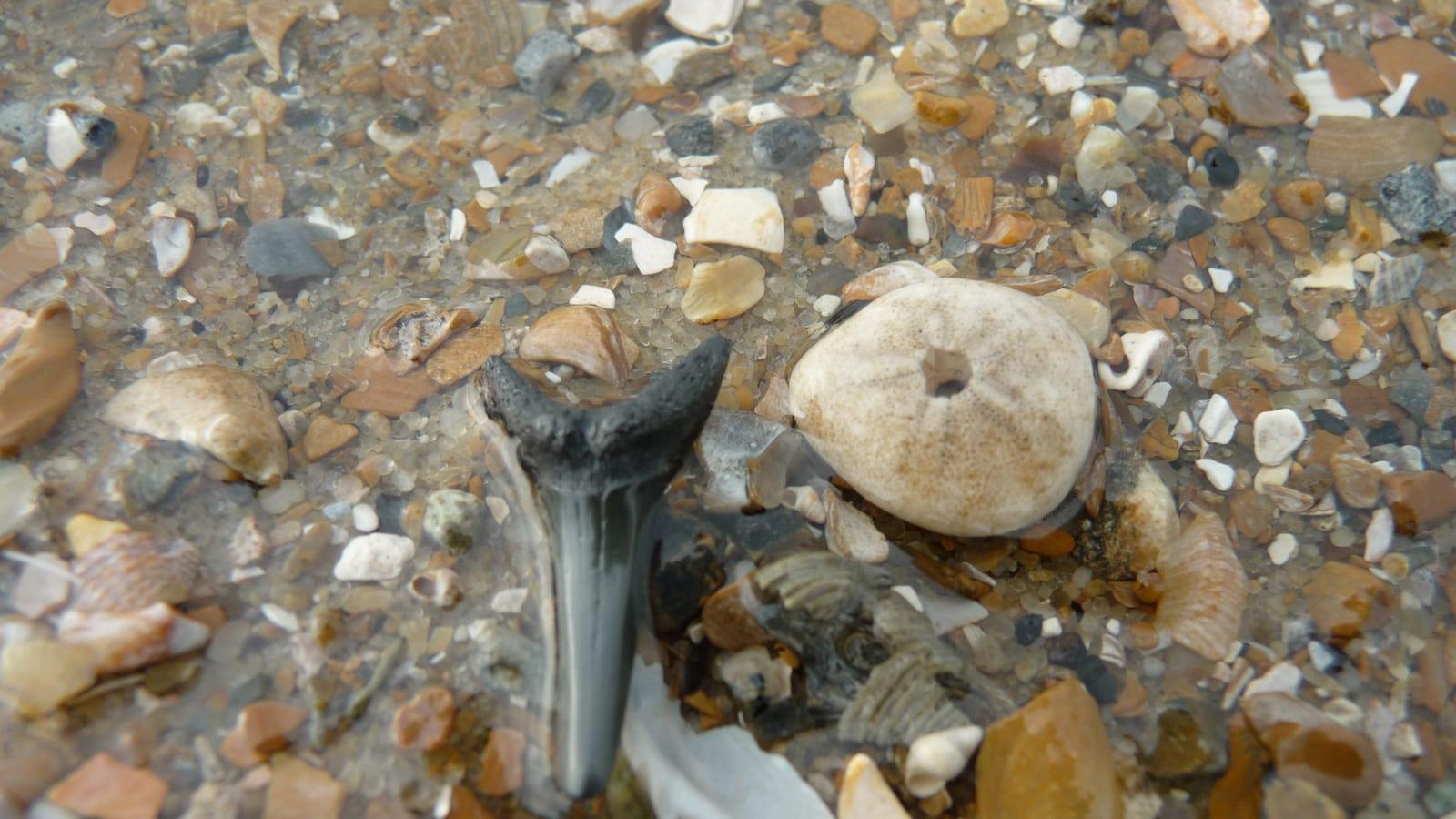
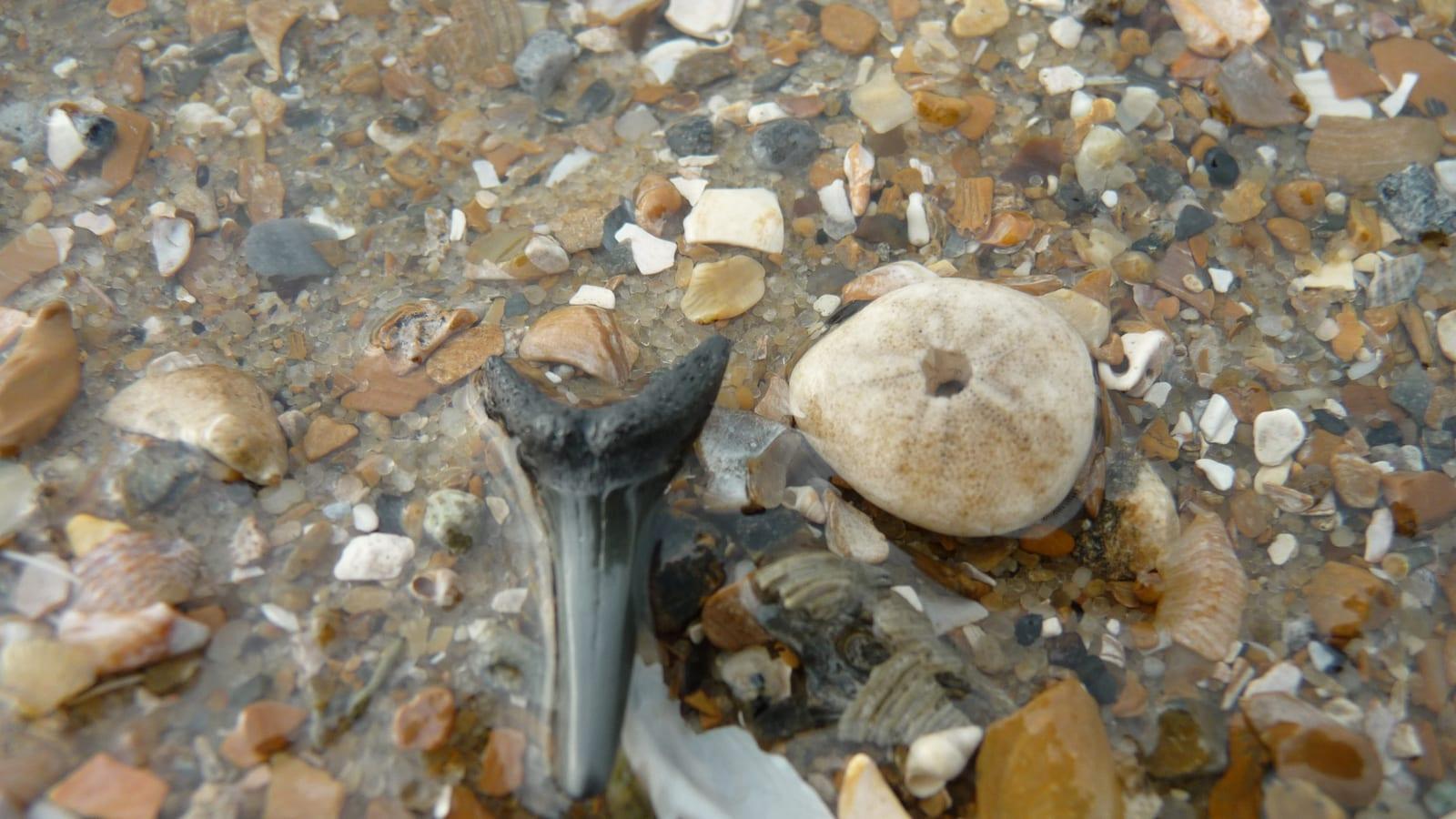
Sharks are the other headline. Teeth of very large sharks come from these beds, and megalodon material is the draw for most visitors.
Seabird remains occur as well. The Chilean Miocene coast supported penguins and other diving birds in numbers.
Bone often weathers proud of the pale sediment, which makes the larger pieces visible from a path.
The Museo Paleontológico de Caldera holds the material recovered from Los Dedos and Cerro Ballena. Between the two, a visit gives you both the ground and the specimens.
 Photo: Pyenson et al., Proceedings of the Royal Society B, CC BY 3.0, via Wikimedia Commons
Geologic History
The Bahía Inglesa Formation is a marine sequence of Miocene to Pliocene age that crops out along this part of the Atacama coast.
It formed on a shelf fed by the Humboldt Current, a cold, nutrient-rich flow that still runs up this coast today.
Upwelling made the water extraordinarily productive. That productivity supported whales, seals, seabirds and the sharks that fed on all of them.
Phosphate-rich sediment accumulated on the bottom, and it preserved bone unusually well.
The same productivity carried a risk. The Cerro Ballena study concluded that harmful algal blooms poisoned marine mammals repeatedly, and that their bodies washed into a tidal flat and were buried.
Later uplift of the Andean margin raised the sea floor above sea level. The desert climate then left it almost untouched.
Collecting Rules and Regulations
Collect nothing. Los Dedos has sat inside a national monuments protection zone since 2004, and the site was heavily looted before that.
Chilean law treats palaeontological material as national patrimony. Removing fossils is an offence and exporting them is a serious one.
Stay on the marked routes. Vehicle tracks across the sediment cause real damage and the surface does not recover in this climate.
Photograph freely. Nothing about the park restricts a camera.
If you find something exposed and unrecorded, note where it is and tell the Museo Paleontológico de Caldera. The museum is the institution responsible for the area's material.
Do not build cairns or move bone to photograph it better. Position is data.
Safety
This is a desert. Carry far more water than you expect to need and wear a hat.
Ultraviolet levels in the Atacama are among the highest measured anywhere. Sun protection is not optional.
Shade is absent. Visit early or late rather than in the middle of the day.
The ground is loose and uneven, with low cliffs and gullies. Wear proper footwear rather than beach sandals.
Mobile coverage is patchy away from the road. Tell someone your plan, particularly if you drive out alone.