Oyster Fossils at Santa Margarita Ranch, San Luis Obispo County
Santa Margarita Ranch in San Luis Obispo County, California sits on uplifted Late Miocene sea floor belonging to the Santa Margarita Formation. Thousands of giant Crassostrea titan oyster fossils, some the size of footballs, weather out of the soil along a ridge the ranch calls Oyster Ridge. Fossils are viewable during Margarita Adventures zipline tours. No independent collecting is permitted.
By Edward Chen · Updated 3 August 2026
Introduction
Santa Margarita Ranch is a working cattle ranch in the Santa Lucia Mountains of San Luis Obispo County, California, about 14 miles inland from the Pacific shoreline. Much of the ranch sits on uplifted Late Miocene sea floor belonging to the Santa Margarita Formation. Giant oyster fossils, many the size of footballs, weather directly out of the soil along a feature the ranch calls Oyster Ridge. The fossils are viewable during Margarita Adventures zipline tours that cross the property. No independent fossil collecting is permitted.
Location and Directions
The ranch headquarters and Margarita Adventures tour center are at 22719 El Camino Real in the town of Santa Margarita, roughly 10 miles north of San Luis Obispo along US Highway 101. Visitors exit the highway at the Santa Margarita exit and follow signs east into the ranch. The tour departure area sits at the base of the Santa Lucia foothills. GPS coordinates for the tour center are approximately 35.398 N, 120.613 W.
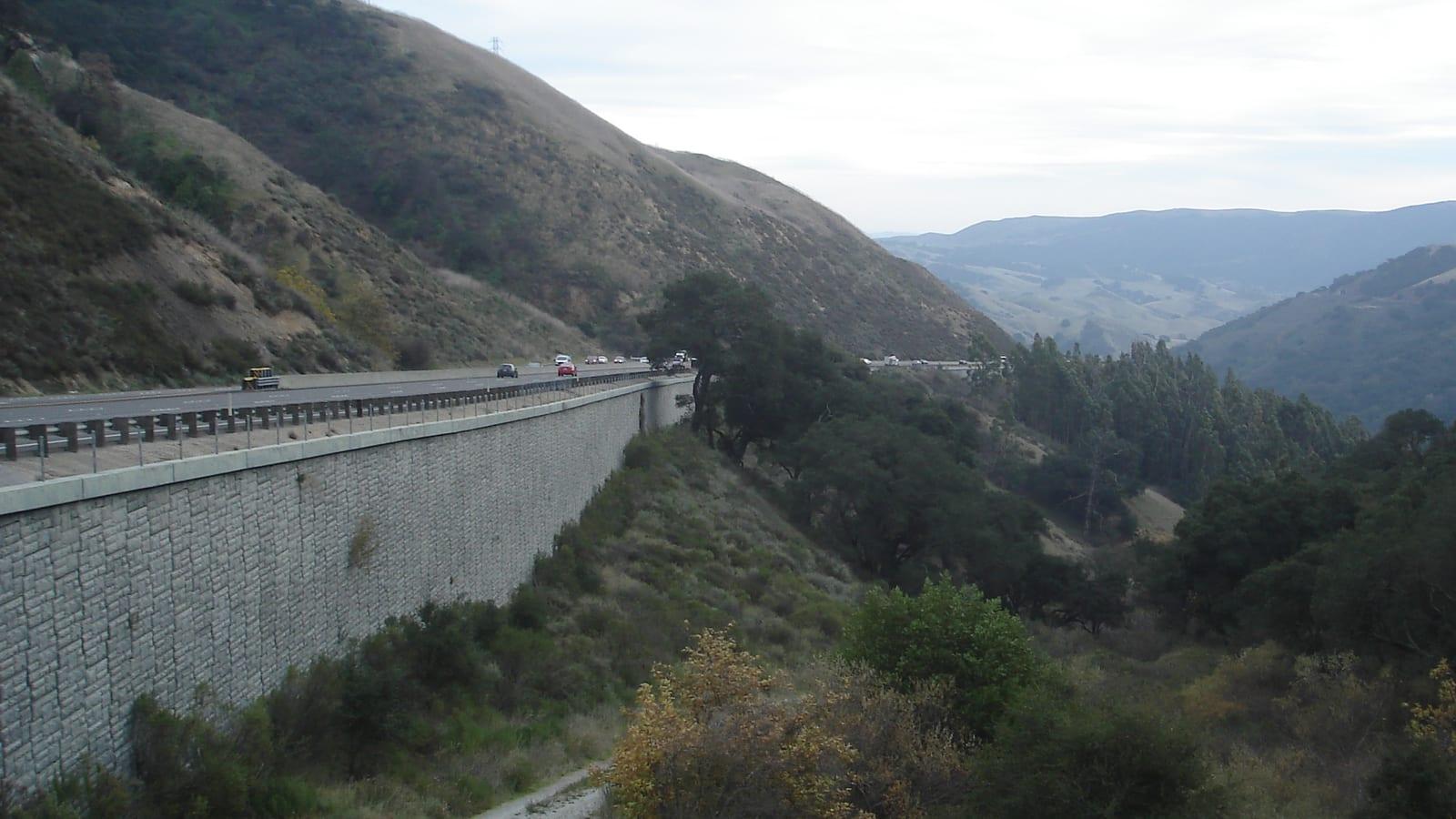
The ranch lies between the Nacimiento Fault to the west and the Rinconada Fault to the east. Movement along these faults over the past several million years pushed the former sea floor up into the mountains and gives the property its steep, rolling topography.
What Fossils You'll See
The most conspicuous fossils on the ranch are shells of Crassostrea titan, a giant oyster that lived in the shallow seas covering central California during the Late Miocene, roughly 11 to 5 million years ago. Individual C. titan shells at the ranch reach 20 cm (8 inches) or more across. In the broader Santa Margarita Formation, specimens can grow up to 60 cm in length. The species has two nearly equal-sized valves, unlike many modern oysters that have one flat and one cupped valve. In life-position beds elsewhere in the formation, C. titan shells stand vertically side by side rather than lying flat on the seafloor.
According to a book referenced by Ancient Peaks Winery (which operates a vineyard on the ranch), the Titan oyster first appeared in the middle Miocene about 16 million years ago and went extinct at the end of the Miocene roughly five million years ago. At the peak of its range about 10 million years ago, the species lived in a shallow sea that extended far into California's Central Valley.
Beyond oysters, the Santa Margarita Formation across its full geographic range preserves a broad marine fauna. The Natural History Museum of Los Angeles County documents common invertebrate fossils from the formation including the sand dollar Astrodapsis antiselli, Astrodapsis whitneyi, and Dendraster ashleyi, the bivalves Dendostrea vespertina and Pacipecten discus, and the barnacle Balanus gregarius. Vertebrate fossils from the formation elsewhere in California include at least 20 species of sharks and rays, bony fish, sea cows, dolphins, whales, and sea lions. Whether any of these have been formally collected on the ranch itself is not documented in publicly available literature.
At the departure point of the Renegade zipline, the ranch displays large oyster specimens unearthed on the property. From that same vantage point, visitors can look out across Oyster Ridge, where compressed shell beds visibly spill from the hillside soil.
 Photo: James St. John, CC BY 2.0, via Wikimedia Commons
Geologic History
The Santa Margarita Formation was first named in 1904 by geologist H. W. Fairbanks during his mapping of the San Luis Obispo quadrangle. He identified coarse-grained sandstones and conglomerates exposed along Santa Margarita Creek, a few miles from the present ranch. The type section was later designated along that same creek by C. A. Hall in 1962, where the formation reaches approximately 1,500 feet thick.
In the type area near the town of Santa Margarita, the formation consists of conglomerates, coarse sandstone, and interbedded diatomaceous earth over 50 feet thick, with volcanic ash layers. It conformably overlies the Monterey Formation (Middle Miocene) and is unconformably overlain by the Paso Robles Formation and Pleistocene alluvium. The original USGS description notes Ostrea titan (the older name for Crassostrea titan) in beds over 30 feet thick.
The formation accumulated in a tidal, shallow-marine environment at water depths of roughly 5 to 100 metres, with water temperatures around 18 degrees Celsius. The sediments record a warm, moderately deep shelf sea that covered much of what is now the California Coast Ranges during the Late Miocene (Tortonian to Messinian stages of the international timescale, approximately 11.6 to 5.3 million years ago).
Tectonic compression between the Pacific and North American plates, concentrated along the Nacimiento and Rinconada faults, gradually pushed these sea-floor sediments up into the Santa Lucia Mountains. The Margarita Adventures website notes that the main road to the ranch requires frequent repair due to slow buckling from fault movement. The result is that land once 5 to 100 metres underwater now stands in mountain terrain more than a thousand feet above sea level and 14 miles from the modern coastline.
Collecting Rules and Regulations
Is Fossil Collecting Allowed?
No. Santa Margarita Ranch is private property. There is no public access to fossil-bearing ground outside of organized tours. Visitors may view the oyster fossil display at the Renegade zipline departure during a Margarita Adventures tour, and they can see Oyster Ridge from the air during the zipline flight, but collecting, digging, or removing material is not permitted.
How to Visit
The fossils are accessible through Margarita Adventures, which operates zipline, e-bike, and nature tours on the ranch. Zipline tours run from 10 a.m. to 4 p.m. and include six ziplines spanning more than 7,500 combined feet across the property. The 1,300-foot Renegade zipline passes directly over the fossil-bearing terrain. Tours conclude with an optional wine tasting at Ancient Peaks Winery, which grows grapes in the calcareous, shell-rich soils of Oyster Ridge.
Contact Margarita Adventures at (805) 438-3120 or visit margarita-adventures.com for current pricing and reservations.
Safety
The ranch is in rolling mountain terrain with seasonal heat. Summer temperatures in the Santa Margarita area commonly reach 100 degrees Fahrenheit. Bring water, sun protection, and closed-toe shoes. The zipline tour involves physical activity at height and has its own safety requirements covered in the booking process. There is no independent hiking access to the fossil beds.
Sources
- https://www.margarita-adventures.com/soar-over-sea-fossils/
- https://www.margarita-adventures.com/natural-wonders-slo-county/
- https://ancientpeaks.com/the-titans-of-margarita-vineyard/
- https://ngmdb.usgs.gov/Geolex/UnitRefs/SantaMargaritaRefs_11775.html
- https://research.nhm.org/ip/santa-margarita-formation/
_in_fossiliferous_sandy_limestone_(Santa_Margarita_Formation,_Miocene;_Lopez_Lake_area,_San_Luis_Obispo_County,_California,_USA)_1.jpg)