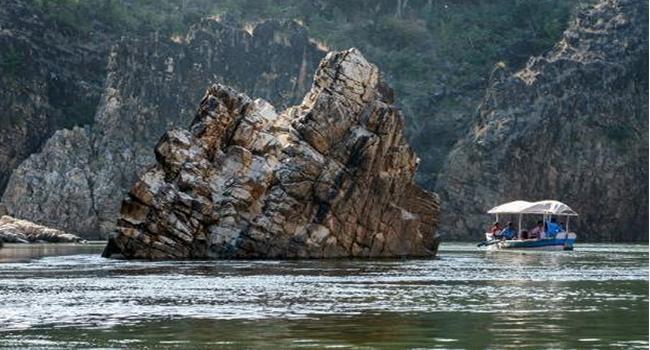
Lameta Geological Park Fossil Hunting Guide
India's first geological park is being developed at Lamheta Ghat on the Narmada River in Jabalpur District, Madhya Pradesh. The site protects the type section of the Late Cretaceous Lameta Formation, the source of India's first described dinosaur and a major Maastrichtian dinosaur nesting horizon. Free public access.
By Edward Chen · Updated 4 August 2026
Introduction
Lameta Geological Park (also called Lamheta Geological Park) is a five-acre paleontological park under development at Lamheta Ghat, on the south bank of the Narmada River in the southwestern outskirts of Jabalpur, Madhya Pradesh. The site was approved by the Geological Survey of India under the Ministry of Mines in January 2022 as India's first formally designated geological park. The park sits at the type locality of the Lameta Formation, a Late Cretaceous continental sequence of mudstone, sandstone, and calcareous beds named for Lameta Ghat itself by William Theobald in 1856. The Lameta Formation is the source of the first dinosaur described from India, Titanosaurus indicus, named by Richard Lydekker in 1877 from vertebrae collected by Captain William Henry Sleeman on the Bara Simla Hill in 1828. The formation is also one of the most important Maastrichtian dinosaur nesting horizons in the world, with hundreds of titanosaur egg clutches recorded across the Narmada Valley. The current park development includes the protection of the type section, an interpretive trail along the riverbank, a small visitor centre, and replicas of major Lameta dinosaurs. UNESCO has recognised Lamheta as a geoheritage site. Public access to the riverbank exposures is free at the time of writing. Collecting is prohibited. This guide covers how to reach the site, what is visible along the river, the Late Cretaceous geology, and the rules that apply.
Location and Directions
Jabalpur sits in the eastern part of Madhya Pradesh, about 320 kilometres east of the state capital Bhopal and about 850 kilometres south of Delhi. Jabalpur Dumna Airport has daily domestic service from Delhi, Mumbai, and Hyderabad. Jabalpur Junction is on the main Indian Railways Delhi-Mumbai and Delhi-Chennai routes.
Lamheta Ghat is on the south bank of the Narmada River, about 12 kilometres southwest of the Jabalpur city centre. From Jabalpur, take the road toward Bhedaghat (a separate famous marble-gorge tourist site) and turn off at the signed Lamheta Ghat exit. The drive takes about 30 minutes. GPS for Lamheta Ghat is 23.1322 degrees north, 79.8442 degrees east.
The Bhedaghat Marble Rocks tourism complex and the Dhuandhar Falls lie about 8 kilometres further west and are commonly combined with a Lameta Ghat visit. The full Bhedaghat-Lameta circuit takes a half day from Jabalpur.
Auto-rickshaw and taxi service from Jabalpur city is the easiest option for visitors without a private vehicle. Local guides at the Bhedaghat tourism centre can include Lameta Ghat in their standard half-day tour.
The current site has limited formal infrastructure. The Geological Survey of India and the Madhya Pradesh state government have funded a Rs 35 crore (~USD 4.2 million) development plan for the park, expected to deliver a visitor centre, fenced viewing zones, and a covered fossil display by 2027. Until full development, visitors can walk the riverbank exposures and read on-site notices about the in-place fossils and the type section.
There is no admission charge at the time of writing. The wider Bhedaghat complex charges separate entry fees and boat ride fees.
Jabalpur has standard Indian-city hotels, restaurants, and full services. The Jabalpur Mahakaushal University museum holds prepared Lameta material, and the Indian Statistical Institute branch in Kolkata maintains the principal academic collection.
 Photo: Joseph H. Hartman, CC0, via Wikimedia Commons
.jpg)
What Fossils You'll Find
You will not collect at Lameta Geological Park. What you can do is walk the riverbank exposures at Lamheta Ghat and the nearby Bara Simla, Chui Hill, and Chota Simla sections, and view replicas at the GSI on-site display. Identifications below follow the published Lameta Formation literature.
- Isisaurus colberti. A titanosaur sauropod, described from Bara Simla material by Wilson and Upchurch in 2003 (originally as Titanosaurus colberti). The genus is named for the Indian Statistical Institute, whose researchers collected and studied the material.
- Jainosaurus septentrionalis. A second titanosaur sauropod, described from Bara Simla material by Hunt and colleagues in 1995.
- Rajasaurus narmadensis. An abelisaurid theropod, described by Wilson, Sereno, and Bandyopadhyay in 2003 from material recovered near Rahioli in Gujarat and from comparable Lameta sites in Madhya Pradesh. Adult length around 9 metres.
- Indosuchus raptorius. A second abelisaurid theropod, originally described from fragmentary material by Friedrich von Huene and Charles Matley in 1933.
- Indosaurus matleyi. A third abelisaurid theropod from the same beds.
- Titanosaur egg clutches and nests. Hundreds of in-place nesting horizons have been recorded across the Narmada Valley, including at Lameta Ghat. The 2022 PLOS One study by Dhiman, Verma, and colleagues documented more than 50 nest clutches from the lower Narmada exposures, with up to 12 eggs per clutch.
- Plant fossils. Angiosperm leaf compressions, charophyte algae, and palm wood are recorded in the same beds.
- Trace fossils. Lizard tracks, coprolites, and rooted intervals indicate floodplain pedogenesis and active animal communities.
The Geological Survey of India regional office in Jabalpur is the academic point of contact for current site updates. The Geological Museum at the GSI Calcutta headquarters and the Indian Statistical Institute in Kolkata hold prepared Lameta specimens.
Geologic History
The Lameta Formation is a continental sequence of greenish and red mudstone, calcareous sandstone, marl, and rooted carbonate horizons (the so-called "limestone bands" of older literature). The formation accumulated on a wide floodplain across what is now central India during the Maastrichtian stage of the Late Cretaceous, between roughly 70 and 66 million years ago. The unit sits directly below the Deccan Traps basalts, which buried much of central India in voluminous lava flows at the end of the Cretaceous and immediately into the Paleocene.
During Lameta deposition, central India was a wide alluvial plain with seasonal rivers, ephemeral lakes, and large dinosaur populations. Titanosaurs nested on the calcareous floodplain surfaces, laying egg clutches in shallow scrapes that were buried under fresh mud during seasonal floods. The Lameta floodplain hosted a fully-developed dinosaur ecosystem, with titanosaurs, abelisaurid theropods, lizards, snakes, frogs, and freshwater turtles, plus plant material and pollen documenting open conifer woodland and floodplain herbaceous vegetation.
The Deccan Trap basalts that overlie the Lameta Formation began erupting around 67 million years ago and continued through the Cretaceous-Paleogene boundary into the early Paleocene. The Lameta dinosaur fauna lived in the last few hundred thousand years before the end-Cretaceous mass extinction, and the Lameta-Deccan succession is a globally important section for understanding terrestrial conditions across the K-Pg boundary in southern Gondwana.
After Deccan eruption, the central Indian section was capped by basalt and slowly exposed by Neogene and Quaternary erosion. The Narmada River has cut down through the basalt cap and the underlying Lameta Formation, exposing the productive horizons in cliff sections at Lameta Ghat, Bara Simla Hill, Chui Hill, and Chota Simla Hill.
 Photo: Joseph H. Hartman, CC0, via Wikimedia Commons
.jpg)
How Lameta Ghat Became a Fossil Site
Captain William Henry Sleeman of the British East India Company collected the first vertebrae from Bara Simla Hill in 1828. The material was sent to England and was described by Richard Lydekker in 1877 as the type material of Titanosaurus indicus, the first dinosaur named from India and one of the first sauropods named anywhere. William Theobald of the Geological Survey of India formally named the Lameta Formation for Lameta Ghat in 1856.
Friedrich von Huene and Charles Matley led the next systematic collecting effort in the 1920s and 1930s. Their 1933 Royal Society monograph "The Cretaceous Saurischia and Ornithischia of the Central Provinces of India" established the species list that has anchored Indian Cretaceous paleontology since then. Sohan Lal Jain, Ashok Sahni, and Suresh Bandyopadhyay led major modern excavations in the 1960s through 1990s, and Jeffrey Wilson, Paul Sereno, and Bandyopadhyay published the redescriptions of Rajasaurus and Isisaurus in 2003.
The site was recognised as a UNESCO geoheritage site under the GSI's National Geological Monument programme. In January 2022 the GSI approved the development of India's first formal Geological Park at Lamheta, with a Rs 35 crore budget over five years and a five-acre core area. The park is under active development at the time of writing.
Collecting Rules and Regulations
Collecting is prohibited. The Lameta Formation type section and surrounding paleontological sites are protected under the Indian Geological Survey's National Geological Monuments framework and under the Ancient Monuments and Archaeological Sites and Remains Act, 1958. Madhya Pradesh state heritage regulations also apply.
Practical rules:
- Stay on marked riverbank paths and behind any temporary chain fencing at the type section.
- Do not pick up bone fragments, eggshell, or rock float, even loose surface material.
- Photography for personal use is welcomed.
- There is no admission fee at the time of writing. Local guides at Bhedaghat can lead a half-day combined Lameta and marble-rocks tour for a modest fee.
- Drones require advance permission from the GSI regional office in Jabalpur.
- Pets are discouraged on the riverbank trail.
- Research collection is restricted to permitted teams working under the GSI and the Madhya Pradesh state government.
Safety
Jabalpur has a tropical climate with three distinct seasons. The recommended visiting window is October through March, with daytime temperatures around 20 to 30 degrees Celsius. Summer (April through June) reaches 40 degrees Celsius. The monsoon (July through September) brings heavy rain and can swell the Narmada River, covering the lower bedrock exposures.
The riverbank can become slippery after rain or seasonal water level changes. Wear sturdy walking shoes with good grip. Sturdy walking sticks help on uneven rock.
The Narmada is a fast-flowing river. Do not enter the water at Lameta Ghat. Bhedaghat boat rides operate within designated tourist zones only.
Mosquitoes are present in the warmer months. Carry insect repellent.
Auto-rickshaw and taxi service from Jabalpur city is reliable. Cell coverage is reliable at Lameta Ghat and across the Bhedaghat area.
Sources
- Wikipedia, "Lameta Formation." https://en.wikipedia.org/wiki/Lameta_Formation
- Knocksense, "GSI: India's first Geopark to come up in Madhya Pradesh's Jabalpur district." https://www.knocksense.com/india/india-news/geopark-in-madhya-pradesh
- Drishti IAS, "India's First Jio Park to be Built in Madhya Pradesh." https://www.drishtiias.com/state-pcs-current-affairs/indias-first-jio-park-to-be-built-in-madhya-pradesh
- Wilson, J.A., Sereno, P.C., Srivastava, S., Bhatt, D.K., Khosla, A., and Sahni, A., 2003. "A new abelisaurid (Dinosauria, Theropoda) from the Lameta Formation (Cretaceous, Maastrichtian) of India." Contributions from the Museum of Paleontology, University of Michigan, 31.
- Dhiman, H., Verma, V., et al., 2023. "New Late Cretaceous titanosaur sauropod dinosaur egg clutches from lower Narmada valley, India: Palaeobiology and taphonomy." PLOS One.
Nearby sites
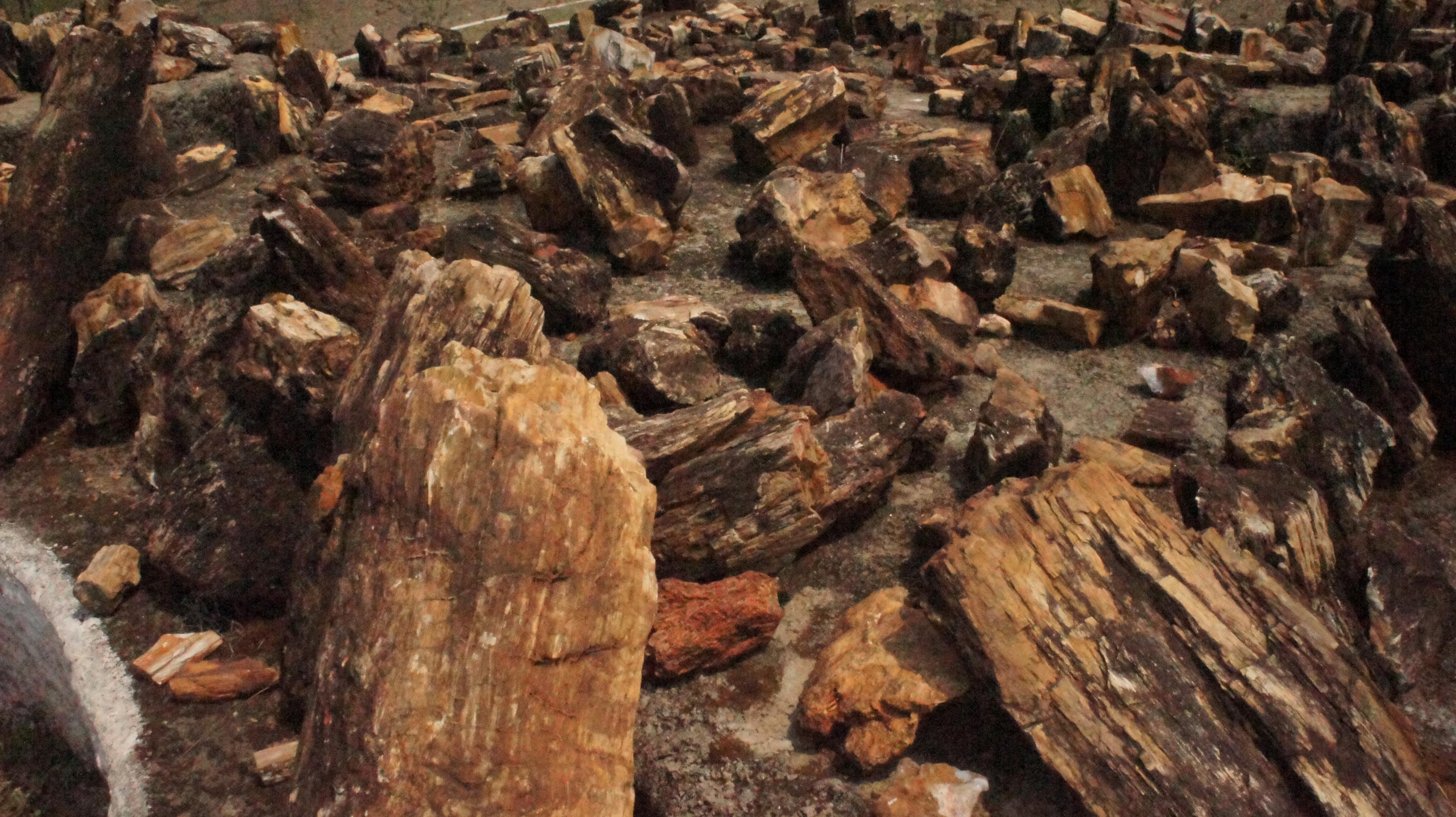 Ghughua National Fossil Park Fossil Hunting GuidePetrified Wood, Seeds and Fruits
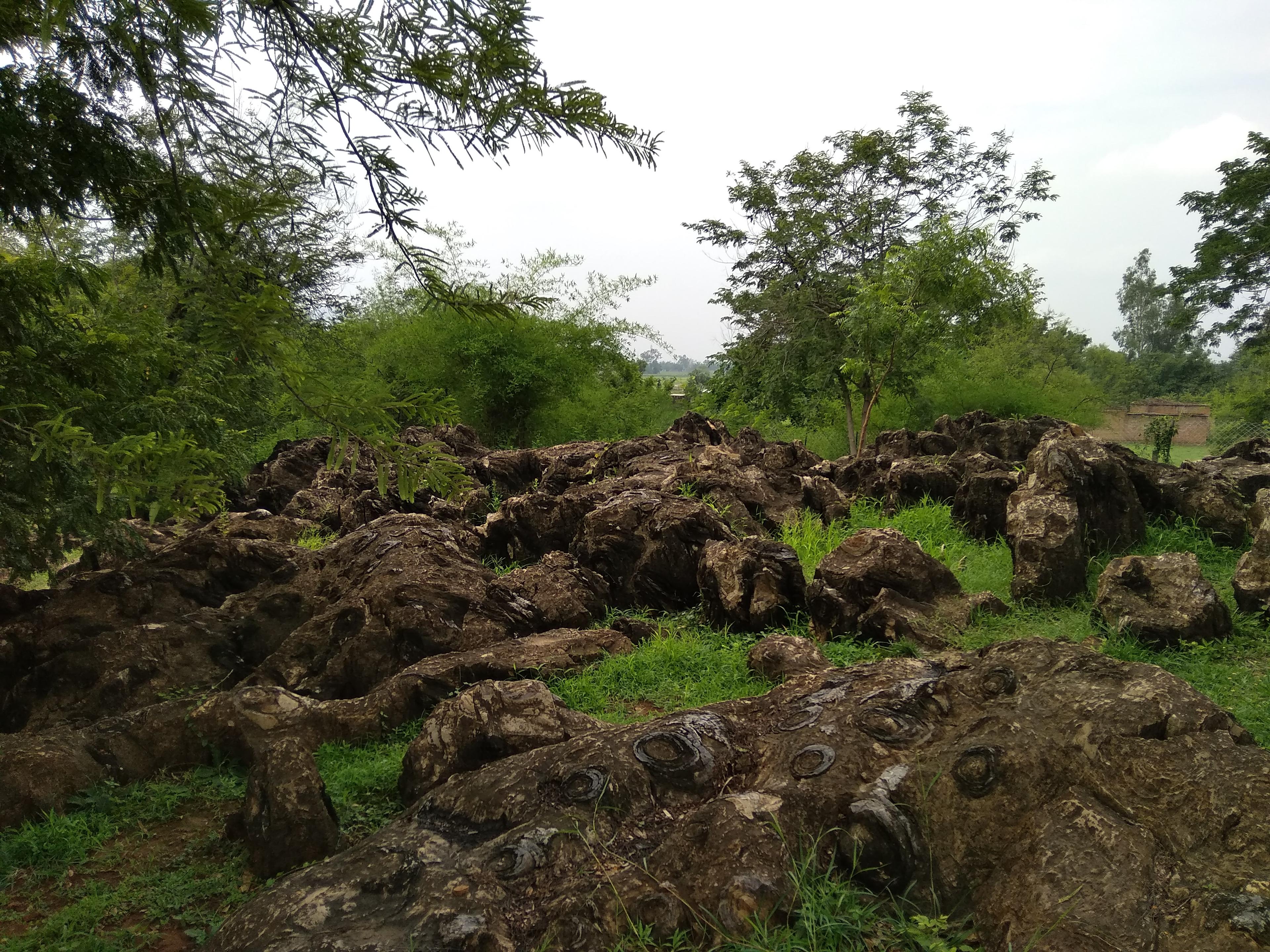 Salkhan Fossils Park: 1.4-Billion-Year-Old StromatolitesStromatolites, Microbialites
 Wadadham Fossil Park Fossil Hunting GuideDinosaur Bones, Dinosaurs
 Raiyoli (Balasinor) Dinosaur Fossil ParkDinosaur Eggs, Dinosaur Bones