Springfield Plateau Crinoid Sites (Caplinger Mills) Fossil Guide
Image: James St. John (CC BY 2.0)
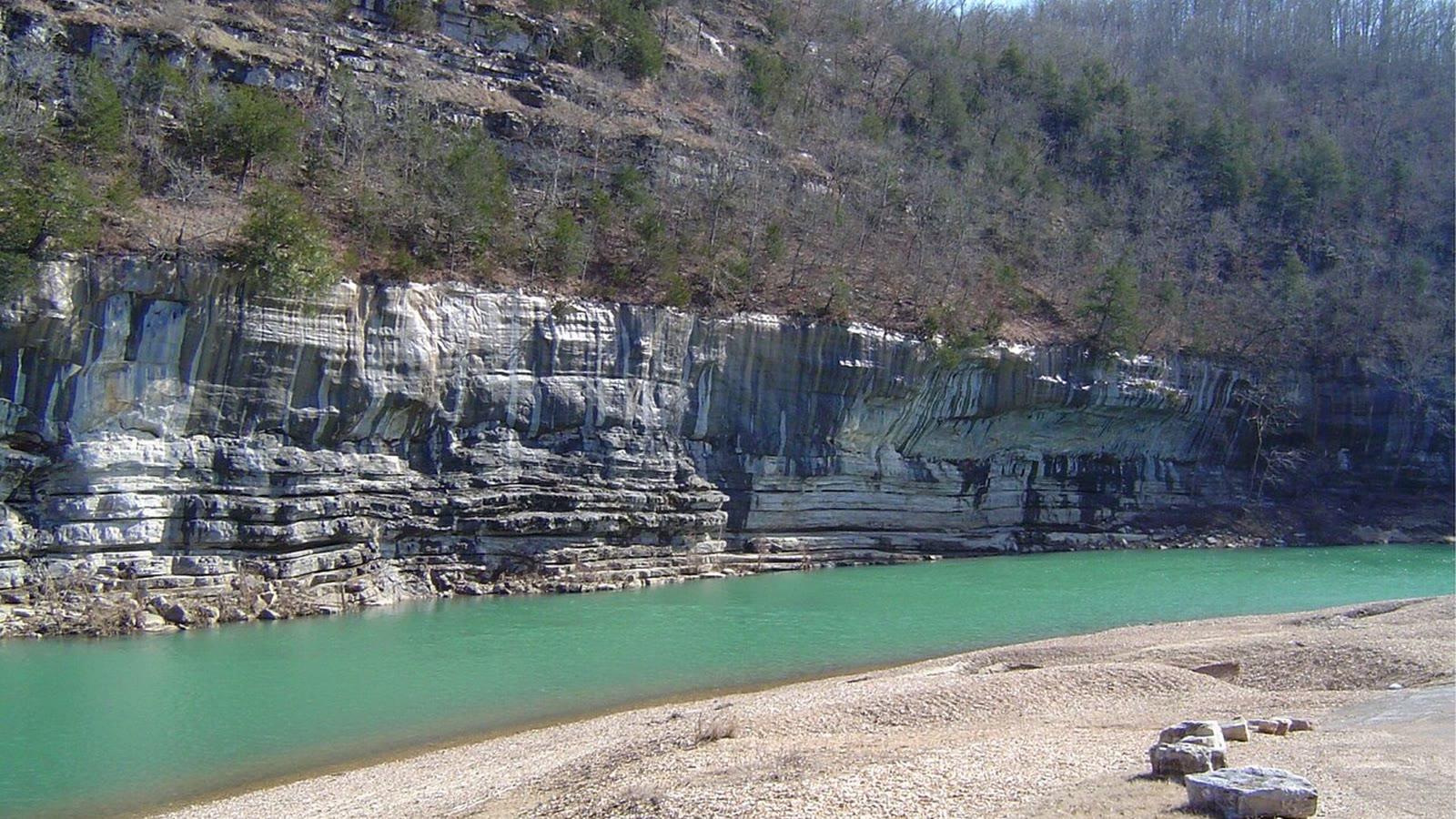
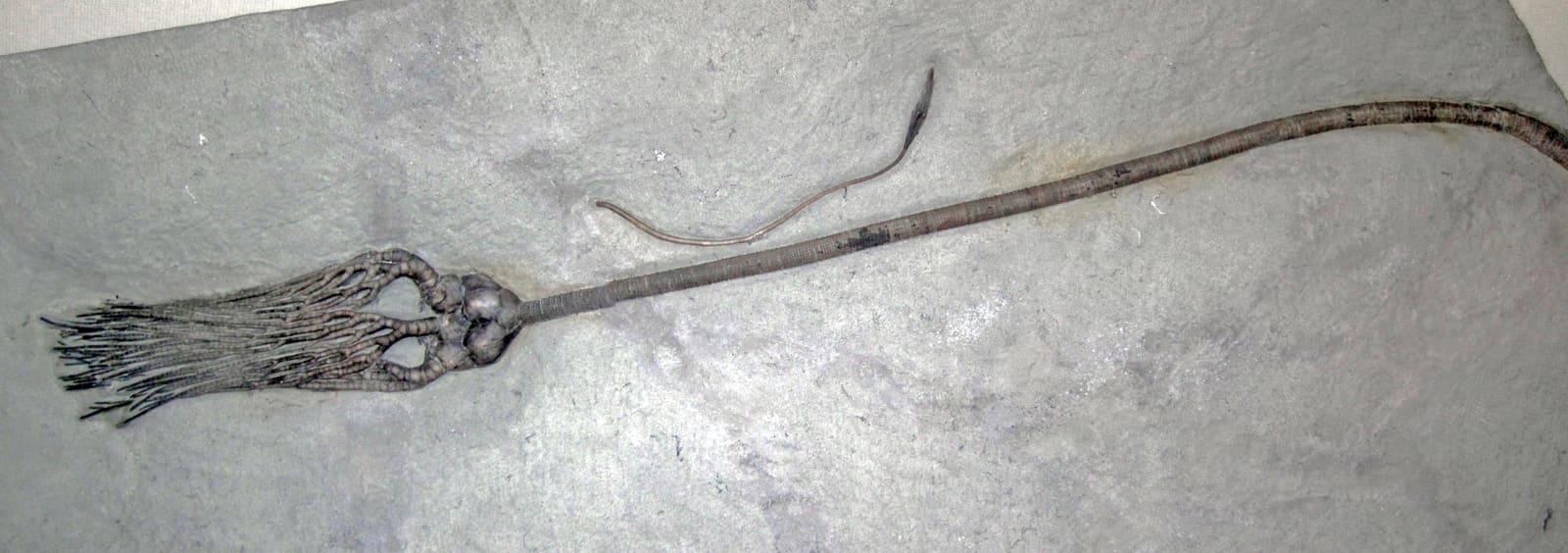
The Springfield Plateau of southwestern Missouri is built on Mississippian Burlington-Keokuk Limestone, one of the world's richest sources of fossil crinoids, the "sea lilies" that are Missouri's state fossil. Around Caplinger Mills on the Sac River in Cedar County and across the plateau, road cuts, creek beds, and quarries expose crinoid stems and crowns, brachiopods, and other Mississippian marine life.
By Edward Chen · Published 22 June 2026
Introduction
Southwestern Missouri sits on the Springfield Plateau, a broad upland built from thick Mississippian limestones that are among the most famous crinoid-bearing rocks on Earth. Crinoids, the stalked, flower-like relatives of starfish and sea urchins often called "sea lilies," were so abundant in the shallow Mississippian seas that their broken stems make up much of the rock itself. Missouri honored them by naming a crinoid the state fossil, and collectors come from far away to hunt the plateau's limestone for stem segments, cups, and the prized complete crowns.
The community of Caplinger Mills, on the Sac River in Cedar County, lies in this crinoid country, where the river and local outcrops cut into the fossil-rich limestone. Across the plateau, the same Burlington and Keokuk limestones are exposed in road cuts, creek beds, and quarries, making the region one of the best places in the central United States to find Paleozoic invertebrate fossils. As almost everywhere, the key to collecting is knowing whose land you are on.
Location and Directions
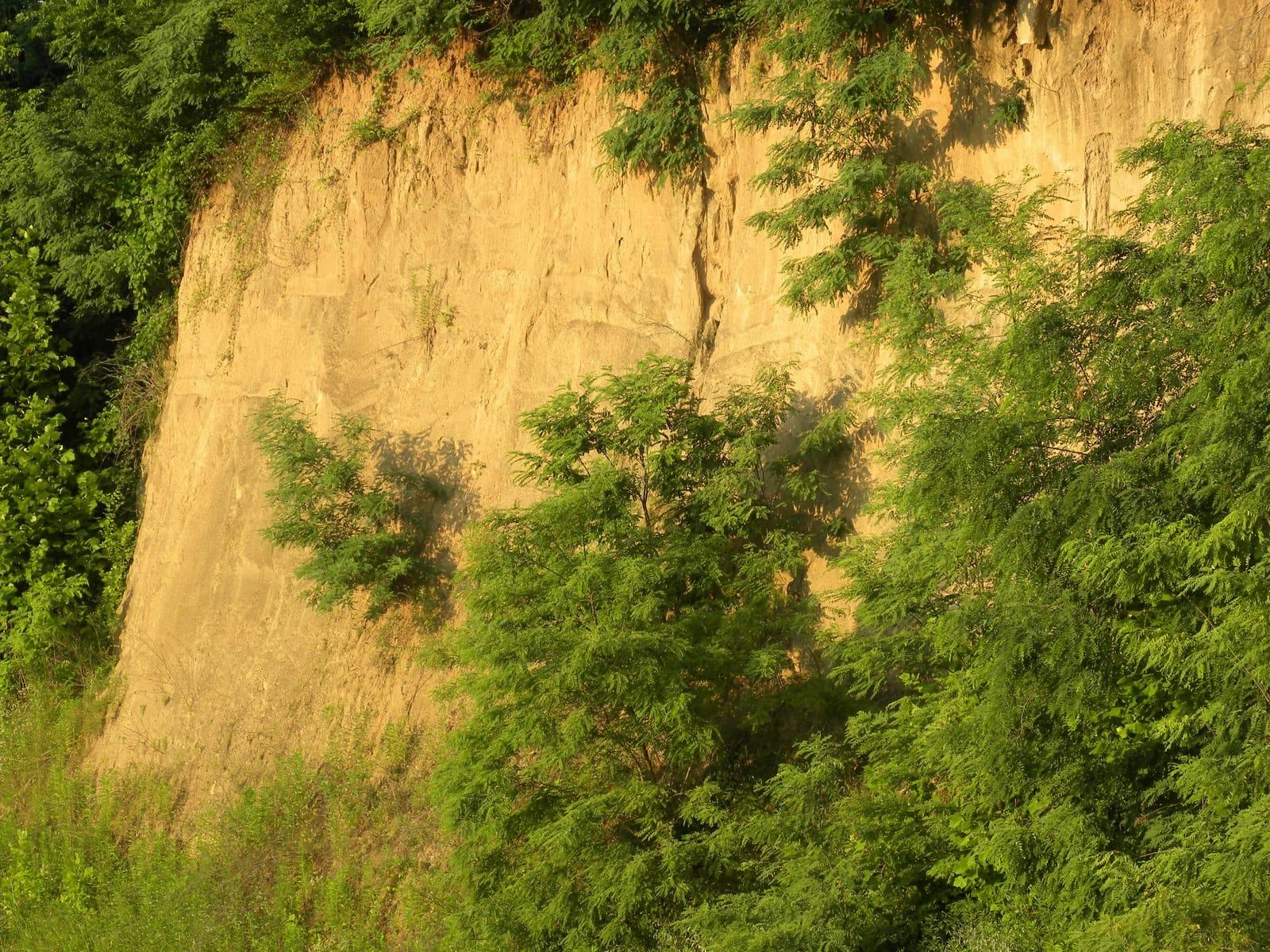
The Springfield Plateau covers a large part of southwestern Missouri, centered on Springfield and reaching across Cedar County and its neighbors. Caplinger Mills sits on the Sac River in Cedar County, near 37.79°N, 93.80°W, northwest of Springfield. There is no single public fossil park. Instead, the crinoid-bearing limestone is exposed in countless road cuts, stream banks, hillsides, and working and abandoned quarries spread across the plateau.
Reach the area by the highways through Cedar County and the wider Springfield region, and scout for exposures of the pale, chert-rich limestone. Before collecting, determine land ownership: creek beds, road cuts, and quarries are usually private, and you need permission. Bring a hammer and chisel, hand lens, wrapping for fragile crowns, water, and sturdy footwear. Low water in the Sac River and other streams exposes more rock and is the best time to search.
What Fossils You'll Find
Crinoids are the stars of the Springfield Plateau. Their round or star-shaped stem segments, often called "Indian beads," are everywhere in the limestone, and patient searching turns up the cup-shaped calyxes and, with luck, complete crowns with the arms preserved. The Mississippian limestones of Missouri have produced some of the largest and finest crinoid faunas in the world, and many beautiful museum and collection specimens come from this region.
Alongside the crinoids, the rock holds other Mississippian marine fossils: brachiopods of many kinds, lacy and branching bryozoan colonies, button-shaped and bud-shaped blastoids (another stalked echinoderm), and corals, both solitary horn corals and colonial forms. The abundant chert in the Burlington-Keokuk limestone sometimes preserves these fossils in silica, making them stand out where the softer limestone has weathered away. Most collecting is done by splitting and searching weathered limestone and picking loose material from creek gravels.
Geologic History
The limestones of the Springfield Plateau were deposited during the Mississippian subperiod of the Carboniferous, roughly 350 to 340 million years ago, when a warm, clear, shallow sea covered the region and Missouri lay near the equator. The Mississippian is sometimes called the "age of crinoids" because these animals carpeted the sea floor in vast meadows. As they died, their skeletons broke into countless plates and stem pieces that piled up to form the thick Burlington and Keokuk limestones, rocks made in large part of crinoid debris.
After the sea withdrew, these flat-lying limestones were uplifted into the broad Springfield Plateau and slowly eroded. Streams such as the Sac River cut down through the rock, and weathering dissolved the limestone to leave resistant chert and concentrate fossils in the soil and creek gravels. This continuing erosion, plus quarrying and road building, keeps fresh fossil-bearing rock exposed across the plateau.
Collecting Rules and Regulations
Access here is governed by land ownership, so permission comes first: road cuts, creek beds, hillsides, and quarries are almost always private, and you must have the landowner's or operator's consent before entering or collecting. Surface collecting of common invertebrate fossils such as crinoids, brachiopods, and bryozoans for personal, non-commercial use is generally acceptable where you have permission. Take a reasonable amount, fill any holes, close gates, and leave the land as you found it. Do not collect in state parks, conservation areas, or other protected lands without checking their specific rules, and never stop on a road cut where parking is unsafe or prohibited. Active quarries are dangerous and off-limits without an escort. Report any unusual or scientifically significant finds to the Missouri Geological Survey or a museum, and never sell material collected as a landowner's courtesy without their agreement.
Safety
Road cuts and quarry faces can shed loose, falling rock, so wear eye protection when hammering, keep clear of unstable faces, and never work directly beneath an overhang. Stay well away from traffic on highways, and never park or collect on a busy shoulder. Creeks and rivers can rise quickly after rain, so avoid stream beds in wet weather and watch the forecast. Summers are hot and humid. Carry water and sun protection. Watch for venomous snakes such as copperheads, plus ticks, chiggers, and poison ivy. Always get permission before entering private land, and treat working quarries as no-go areas unless escorted.
Sources
https://dnr.mo.gov/document-search/crinoid-missouris-official-state-fossil-pub0660/pub0660 https://en.wikipedia.org/wiki/Paleontology_in_Missouri https://www.lakeneosho.org/MissouriFossils/Publication.html http://www.fossilspot.com/STATES/MO.HTM