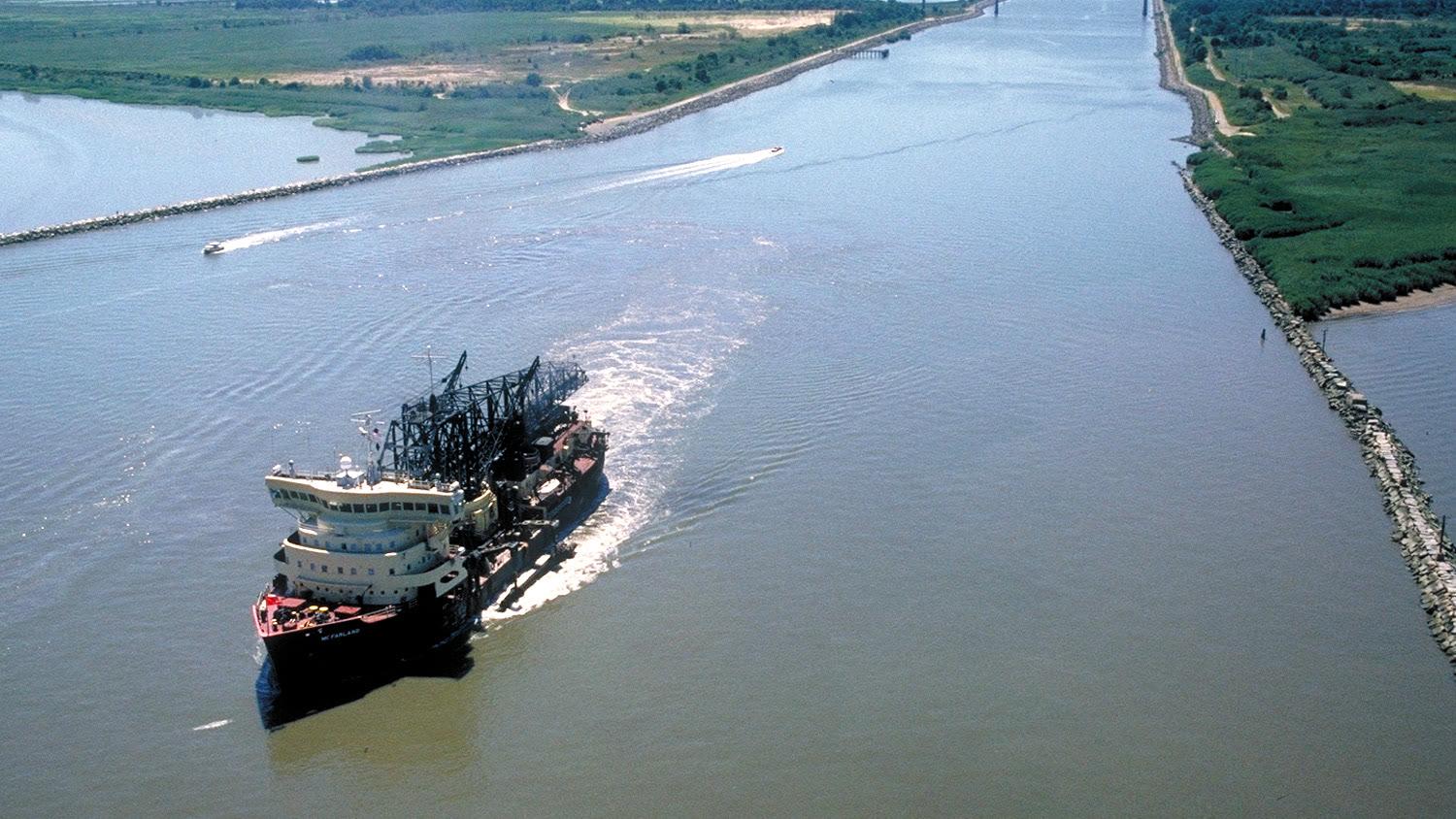
C&D Canal, Reedy Point Fossil Hunting Guide
Image: Anthony Bley, U.S. Army Corps of Engineers (Public domain)
The spoil banks beside the Chesapeake and Delaware Canal are the only real fossil ground in Delaware, and they are currently closed. The Army Corps has capped them with fossil-free dredge material. Read this before you travel.
By Edward Chen · Published 17 September 2026
Introduction
Delaware is a small state built almost entirely of loose coastal plain sediment. Natural rock exposures are close to non-existent.
So the state's best fossil site is an accident of engineering. When the Chesapeake and Delaware Canal was dug, and again when it was widened in the 1920s and the 1960s, the spoil went onto the banks.
That spoil came from the Mount Laurel Formation, a marine sediment of the Late Cretaceous. Dredging brought 70 to 80 million year old shells to the surface.
The state fossil came from here. Belemnitella americana is an amber-coloured, bullet-shaped internal shell of a squid-like animal, and it is the signature find of the canal.
Most of the historically good exposures were covered long ago. The spoil areas near the Reedy Point Bridge were the last of them.
They are now closed. The Army Corps has placed new dredge material from a section of the canal that holds no fossils, and it caps the ground collectors used. Fossilguy, the site record this page relies on, states the position plainly. The dredge area is closed to the public and no fossil collecting is permitted.
This page therefore records what the canal produced and where the access question now stands. Do not plan a collecting trip around it.
Location and Directions
The site is on the Chesapeake and Delaware Canal in New Castle County, south of Delaware City.
From Delaware City take Route 9 south towards the Reedy Point Bridge. Dirt access roads run beside the canal on both banks beneath the bridge.
The north side of Reedy Point was the productive area. It is the part now capped.
Telephone the C&D Canal office before you travel anywhere on Corps land here. Take the number from the Corps' own site rather than from a hobby page. Access varies by section, some stretches allow walkers and anglers, and the position changes.
The canal itself remains a good place to walk. The fossils are the part that is gone.
What Fossils You'll Find
Belemnites first. Belemnitella americana is common enough that a patient hour usually produces one, and its shape makes it unmistakable.
Bivalve internal moulds are the most abundant material. These are steinkerns, casts of the inside of a shell, and they often survive better than the shell itself.
Gastropods and oysters occur through the same sediment. Large clam and oyster shells turn up whole.
Shark teeth are possible but they are not the main event here. The canal is an invertebrate site with vertebrate extras.
Echinoderm fragments appear as well, and the Delaware Geological Survey publication lists a much longer species list than a visitor will see in a day.
What the spoil held was concentrated at the waterline, where the tide sorted and cleaned it. That is where collectors worked while the area was open.
Geologic History
The Mount Laurel Formation was laid down in a shallow sea that covered the Atlantic coastal plain during the Campanian and Maastrichtian.
Sea level then stood far higher than it does now. The shoreline lay well inland of the modern one, and Delaware sat under water.
The sediment is glauconitic sand and clay, green when fresh, and it accumulated on a quiet offshore bottom.
The animals in it lived in that sea. Belemnites swam in it, the bivalves and gastropods lived on and in the mud below, and sharks moved through the water above.
None of this rock reaches the surface naturally in Delaware. Every fossil at the canal is here because a dredge lifted it.
That dependence on engineering is also the site's weakness.
Collecting Rules and Regulations
The area is closed. The cited site record states that the dredge area is closed to the public and that no fossil collecting is permitted.
The rule that governs Corps projects is 36 CFR 327.14(a). It prohibits the removal of paleontological resources from a Corps water resource development project except in accordance with the written permission of the District Commander. Breach carries a fine of up to 5,000 dollars or six months.
Older guidance describes small-scale collecting for private collections as permitted and selling as a federal offence. That wording comes from a Delaware Geological Survey publication of 1988 rather than from the Corps. The sale point belongs to a separate statute, which applies to Interior and Forest Service land rather than to Corps land.
If you want to work the canal, write to the Philadelphia District and ask. That is the only route the regulation describes.
Do not enter a closed dredged material placement facility. It is federal ground, it is signed, and a citation is a realistic outcome.
The material is not gone forever. The Corps will dredge the fossil-bearing reaches again at some point, and the picture may change.
Safety
The canal is a working shipping channel. Large vessels pass close to the bank and they generate wash without warning.
Stay well back from the water's edge. The banks are steep in places and the footing is loose spoil.
Ticks are present in the vegetation through the warmer months. Cover your legs and check yourself afterwards.
The access roads are unsurfaced and they flood. A low car may struggle after heavy rain.
There are no facilities. Delaware City has the nearest shops and fuel.
Sources
Nearby sites
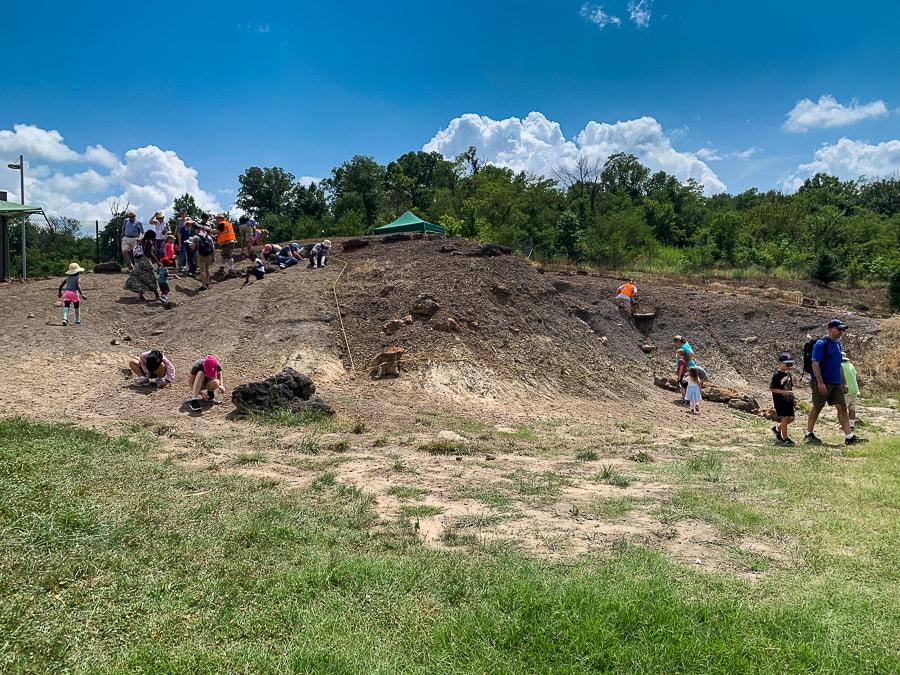 Dinosaur Park (Laurel, Maryland) Fossil Hunting GuideTheropod teeth, Sauropod bone
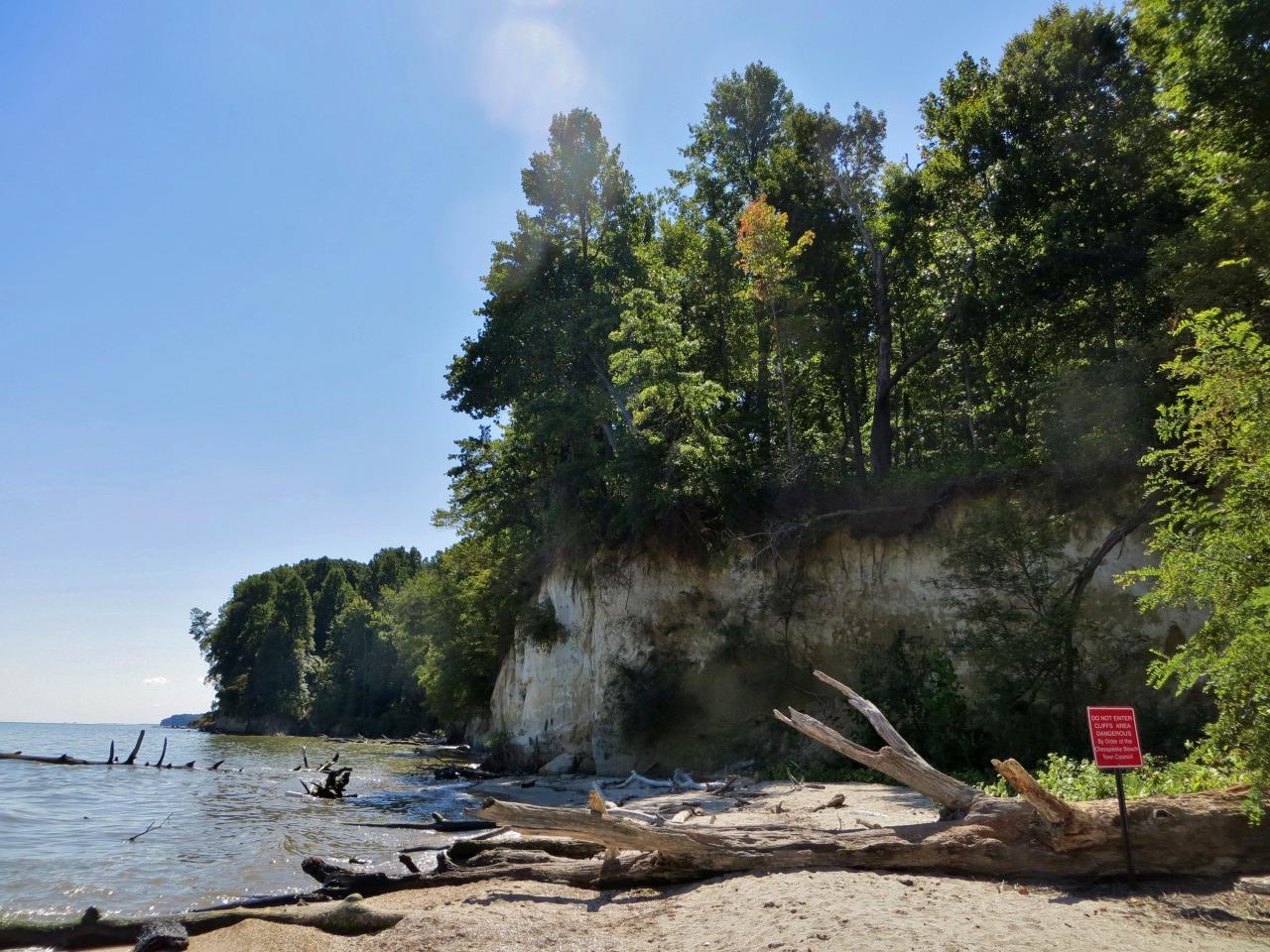 Bay Front Park (Brownie's Beach) Fossil Hunting GuideShark Teeth, Ray dental plates
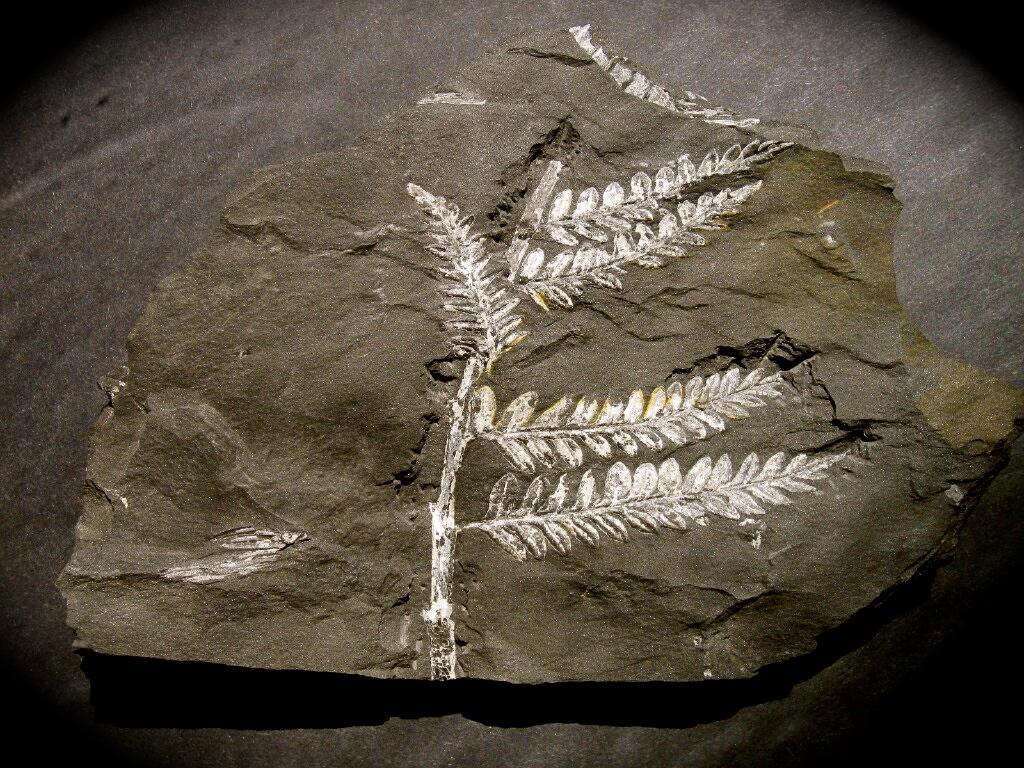 St. Clair Fern Fossils Hunting GuideFossil ferns (Alethopteris), Fossil ferns (Neuropteris)
 Big Brook Preserve Fossil Hunting GuideShark Teeth, Belemnites