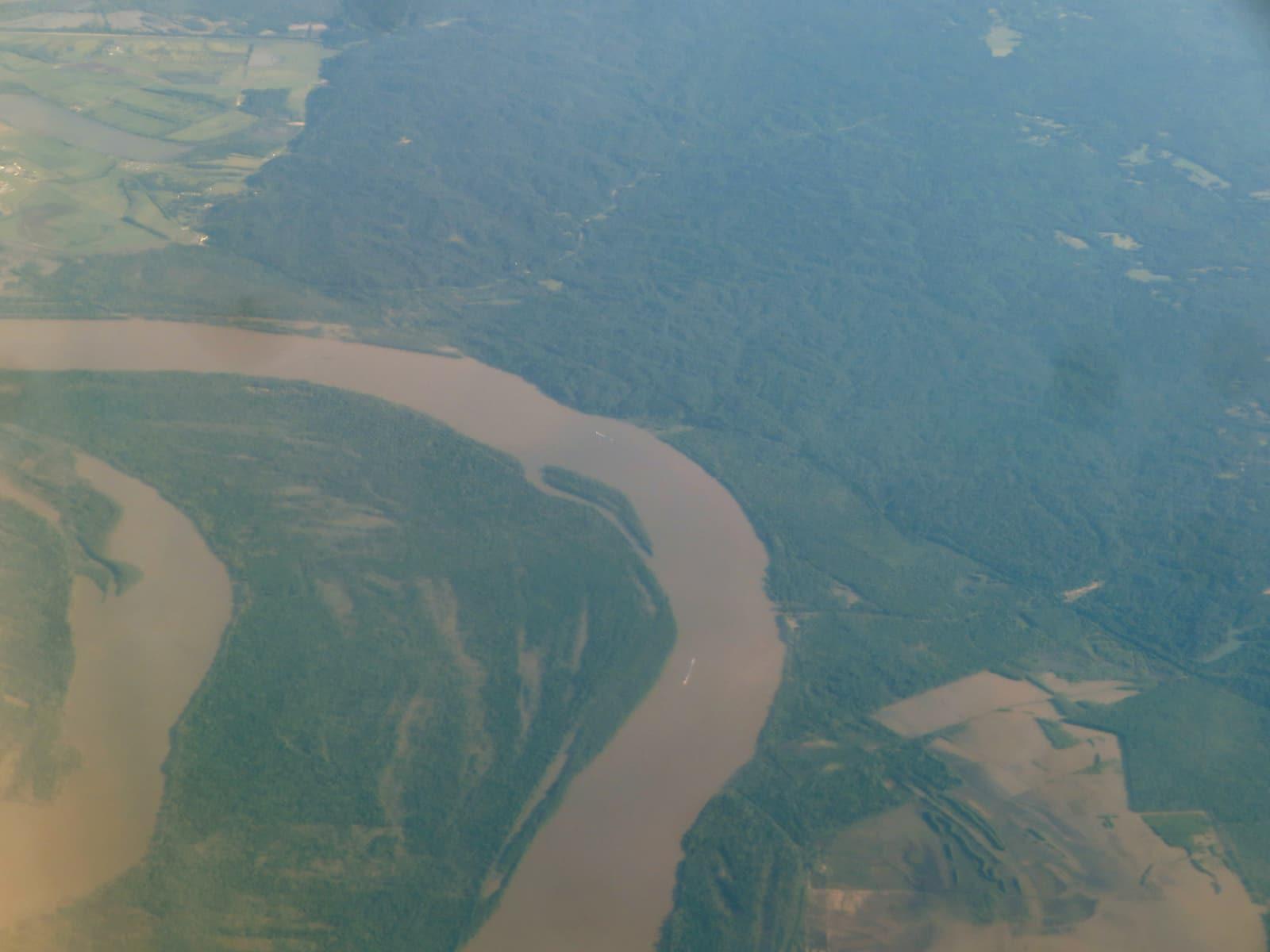
Tunica Hills Loess Fossil Guide
Image: Ken Lund (CC BY-SA 2.0)
The Tunica Hills of West Feliciana Parish, Louisiana, are great piles of Ice Age windblown silt, or loess, cut by steep ravines and bayous. Streams here erode Late Pleistocene fossils out of the banks, and the region has produced many of Louisiana's mastodons along with other Ice Age mammals, land snails, and plant remains. Much of the area is a wildlife management area or private land, so know the rules before collecting.
By Edward Chen · Published 22 June 2026
Introduction
The Tunica Hills are a surprising landscape for southern Louisiana: a country of sheer bluffs, high ridges, deep ravines, and rushing creeks, clothed in one of the richest upland hardwood forests in North America. They sit in West Feliciana Parish, just east of the Mississippi River and north of Baton Rouge, reaching up to the Mississippi state line. What makes the hills, and what makes them fossil-rich, is loess: thick layers of fine, windblown silt blown in from Ice Age river floodplains and piled up here during the last glacial period.
Because loess erodes so easily and the hills are sliced by countless streams and bayous, Late Pleistocene fossils weather out of the stream banks. The region has produced many of Louisiana's mastodons, along with other Ice Age mammals, and the loess also preserves land snails and plant remains from the glacial world. Finds are usually isolated teeth or single bones rather than skeletons, and much of the prime ground is a state wildlife management area or private land.
Location and Directions
The Tunica Hills lie in West Feliciana Parish near St. Francisville, in the southeastern corner of the loess belt, roughly near 30.95°N, 91.52°W. The state-managed Tunica Hills Wildlife Management Area, in two tracts north and west of St. Francisville, and nearby preserves protect much of the dramatic terrain, and the creeks and ravines of the area, such as those in the Little Bayou Sara drainage, are where Pleistocene fossils erode from the banks.
Reach the area via US Highway 61 and local roads through St. Francisville and into the hills. Check current rules and any access permits for the Tunica Hills Wildlife Management Area through the Louisiana Department of Wildlife and Fisheries before visiting, and get permission for any private land. Wear boots you can wade in, bring water and insect protection, and time visits for low, clear water in the creeks. The terrain is steep and the streams can be slick, so move carefully.
What Fossils You'll Find
The headline fossils of the Tunica Hills are Ice Age mammals. The region is well known for mastodons, the elephant-like browsers of the Pleistocene, and many of Louisiana's mastodon finds have come from here. Other large Ice Age mammals occur as well, typically found as isolated teeth or individual bones eroding from the creek banks rather than as complete skeletons. The loess and stream deposits also preserve smaller fossils, including the shells of land snails that lived in the Ice Age forests, and plant remains such as wood and leaves that record the cooler, glacial-age vegetation.
Most fossils are found by walking the creek beds and banks after the water has dropped, watching for bone, tooth enamel, and shell weathering out of the silt. Patience and a careful eye matter more than digging, since the fossils tend to be scattered.
Geologic History
During the last glaciation, great ice sheets to the north ground bedrock into fine rock flour, which meltwater rivers carried south and spread across their floodplains. Strong, dry winds picked up this silt and blew it east of the Mississippi, where it settled into thick blankets of loess, up to roughly thirty feet deep in the Tunica Hills. This windblown silt, deposited in the Late Pleistocene, built the steep hills and easily eroded ravines that define the area today.
Studies of the stream terraces and fossil-bearing creek deposits in the Little Bayou Sara and adjacent valleys point to a Late Pleistocene age, with radiocarbon dates on the order of twenty-five to thirty-five thousand years ago for some deposits. The animals and plants of that cool, forested Ice Age landscape were buried in the loess and stream sediments, and the modern creeks, cutting rapidly down through the soft silt, continually expose their remains.
Collecting Rules and Regulations
Know the land before you collect. Much of the best terrain is the Tunica Hills Wildlife Management Area, managed by the Louisiana Department of Wildlife and Fisheries, where collecting fossils may be restricted and where hunting seasons and access rules apply. Check the current regulations and any required permits before going, and do not assume collecting is allowed. On private land, get the owner's permission first, since trespassing is illegal. Ice Age vertebrate fossils such as mastodon teeth and bones are scientifically valuable, and a find is far more useful with its location recorded and reported. If you find significant vertebrate material, photograph it, note where it is, and contact the LSU Museum of Natural Science or the Louisiana Geological Survey rather than simply removing it. Take only a reasonable amount of common material where collecting is permitted, leave the stream banks as undamaged as possible, and never sell material collected as a courtesy without the owner's agreement.
Safety
The Tunica Hills are genuinely steep for Louisiana, with high, crumbling loess bluffs that can collapse, so stay back from undercut banks and do not climb unstable slopes. Creek beds are slick, and water can rise quickly after rain, so avoid the ravines in wet weather and watch the forecast. The climate is hot and very humid much of the year, so carry plenty of water and watch for heat illness. Be alert for venomous snakes, including cottonmouths near the water and copperheads in the woods, plus ticks, chiggers, mosquitoes, and poison ivy. Wear boots with good grip, tell someone your plans, and during hunting seasons in the wildlife management area, wear blaze orange and check the schedule.
Sources
https://en.wikipedia.org/wiki/Paleontology_in_Louisiana https://countryroadsmagazine.com/outdoors/knowing-nature/tunica-hills/ https://markgelbart.wordpress.com/2011/08/28/the-fossil-rich-region-of-tunica-hills-louisiana/ https://www.lsu.edu/mns/research-and-collections/collections/vertebrate-paleontology.php