Coffee Sand and Owl Creek Formation Fossil Guide
Image: Wilson44691 (Public domain)
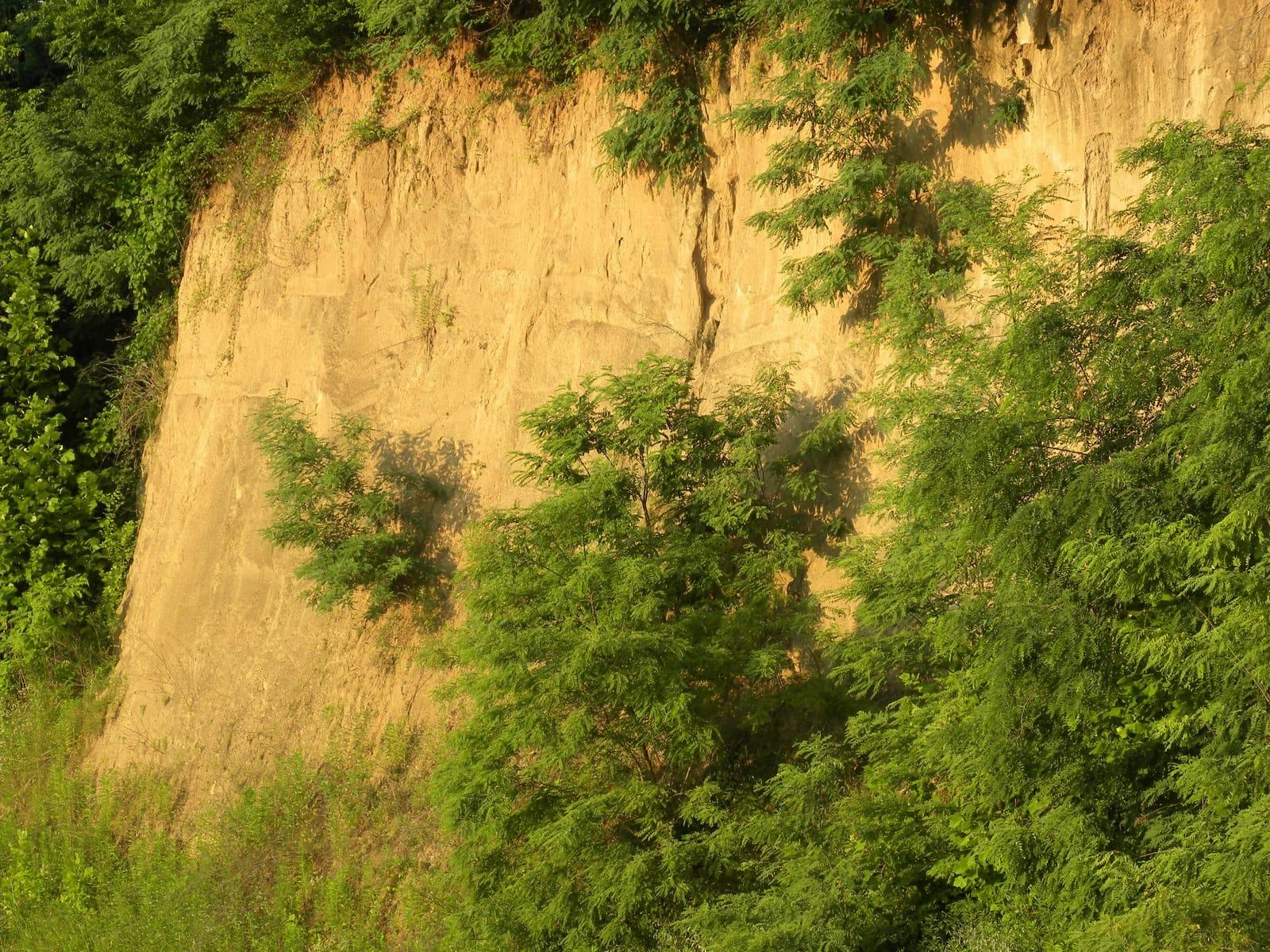
The latest-Cretaceous Coffee Sand and Owl Creek Formation of Tippah and Union counties in northern Mississippi are famous for marine fossils, above all ammonites that still keep the pearly aragonite of their original shells, along with shark teeth, clams, snails, and rare marine reptile remains. Outcrops are creek beds and road cuts, mostly on private land.
By Edward Chen · Published 22 June 2026
Introduction
The northern Mississippi counties of Tippah and Union expose some of the youngest Cretaceous rocks in the state, the Coffee Sand and the overlying Owl Creek Formation, and these beds are a favorite of fossil collectors. The Owl Creek Formation in particular is celebrated for its ammonites, many of which still preserve the original pearly, iridescent aragonite of their shells, an exceptional kind of preservation for rock this old. The formation has been studied since the early 1800s and remains a classic locality for the very end of the Age of Dinosaurs.
These were marine sediments, laid down in a warm, shallow sea near the eastern edge of the Mississippi Embayment in the last few hundred thousand years before the great end-Cretaceous extinction. Along with ammonites, the beds yield shark teeth, clams, snails, and occasional remains of marine reptiles such as mosasaurs. The outcrops are creek banks and road cuts scattered across the countryside, most of them on private land where permission is required.
Location and Directions
The richest exposures lie around Ripley in Tippah County and New Albany in Union County, in north-central Mississippi near 34.60°N, 88.95°W. The Owl Creek Formation takes its name from Owl Creek near Ripley, its type locality, and the unit and the underlying Coffee Sand also crop out in creek beds and cuts toward New Albany and the surrounding area. The two units intergrade, with the Coffee Sand passing northward and upward into the Owl Creek beds.
There is no public fossil park here. The productive spots are stream banks and road cuts on private property. Identify the landowner and get permission before visiting, and never stop to dig where road traffic makes it unsafe. Bring a trowel, screen, sturdy bags, and water, and time visits for low water in the creeks. Local and regional paleontological societies sometimes organize trips, which is the easiest way to learn the productive layers and proper technique.
What Fossils You'll Find
The Owl Creek Formation is best known for ammonites, including the small, ornate Discoscaphites iris and the straight-shelled Eubaculites carinatus, often found with their nacreous shell layers intact and shimmering. These ammonites are so distinctive that they help date the rock to the final stretch of the Cretaceous. Shark teeth are common, and the remains of mosasaurs and other marine reptiles turn up from time to time.
The dark, glauconitic, fossil-rich sands and clays also hold abundant bivalves, including oysters such as Exogyra, plus gastropods (snails), nautiloids, and other marine shells. The Coffee Sand contributes its own marine and nearshore fossils. Most material is found loose in weathered outcrop and creek gravel or by carefully screening the soft sediment.
Geologic History
The Coffee Sand and Owl Creek Formation were deposited in the Late Cretaceous, in the Maastrichtian stage roughly 67 to 66 million years ago, along the eastern margin of the Mississippi Embayment, a great seaway that reached up the center of the continent. The sediments accumulated in shallow marine to nearshore settings, the dark, glauconite- and mica-rich sands and clays recording a productive, well-oxygenated sea floor teeming with mollusks and fish.
The ammonites of the Owl Creek Formation indicate that its highest beds formed within roughly the last half-million years of the Cretaceous, just before the asteroid impact and mass extinction that ended the period. In fact, the region preserves a fossil-rich layer at the Cretaceous-Paleogene boundary, making it scientifically important for studying that catastrophe. Long after burial, gentle uplift and erosion of the Gulf Coastal Plain exposed these beds in the creeks and cuts of northern Mississippi, where weathering continues to free fossils.
Collecting Rules and Regulations
Because the outcrops are almost all on private land, the first rule is permission: identify the landowner and get explicit consent before entering or collecting, since trespassing is illegal. Surface collecting of common invertebrate fossils such as ammonites, clams, and snails, and of shark teeth, for personal, non-commercial use is generally acceptable where you have permission. Take a reasonable amount, fill any holes, and leave the site as you found it. Vertebrate fossils such as mosasaur and dinosaur remains are scientifically important and, on public land, protected. If you find significant vertebrate material, document its location and report it to the Mississippi Office of Geology or a museum rather than removing it. Do not collect on road cuts where stopping is prohibited or unsafe, and never sell or barter material collected as a landowner's courtesy without their agreement.
Safety
Fieldwork here means hot, humid weather for much of the year, so carry plenty of water and sun protection and watch for heat illness. Creek banks and road cuts can be steep, muddy, and unstable, so keep clear of overhanging faces and loose slopes. Watch for venomous snakes such as copperheads and cottonmouths near water, plus ticks, chiggers, and poison ivy in the brush. Creeks can rise quickly after rain, so avoid them in wet weather and check the forecast. Always get landowner permission, and stay well away from traffic if working near a road.
Sources
https://en.wikipedia.org/wiki/Owl_Creek_Formation https://ngmdb.usgs.gov/Geolex/UnitRefs/OwlCreekRefs_3148.html https://pmc.ncbi.nlm.nih.gov/articles/PMC5444368/ https://woostergeologists.scotblogs.wooster.edu/2010/05/28/a-paleontological-meeting-at-the-owl-creek-formation/