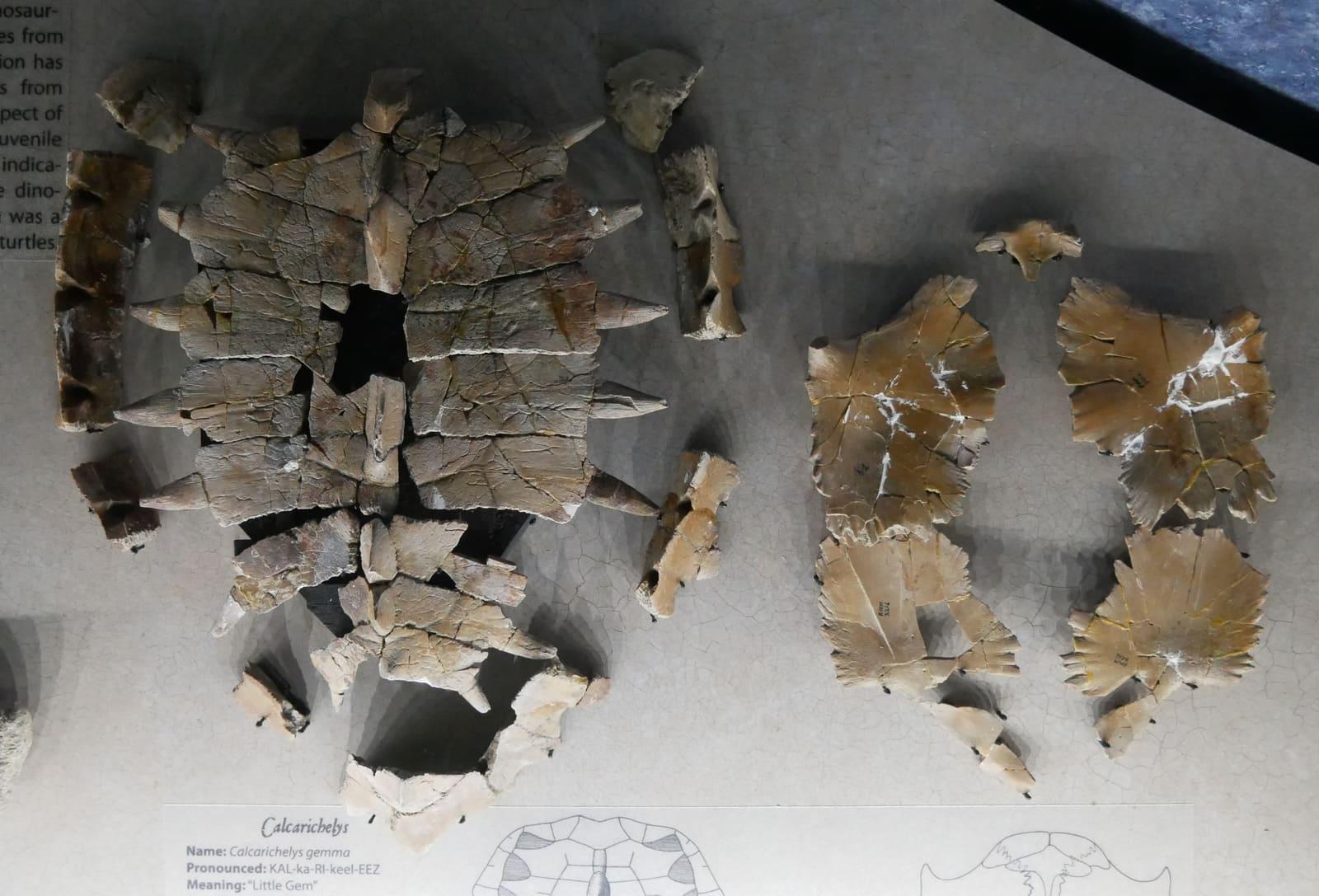
Mooreville Chalk Fossil Guide
Image: Skye McDavid (CC BY 4.0)
The Mooreville Chalk of Alabama's Black Belt, exposed in white gullies across Hale and Greene counties, is one of the world's great sources of Late Cretaceous marine fossils, including mosasaurs, sharks, fish, sea turtles, and shells from a sea that covered the South about 82 million years ago. Outcrops are mostly private land, so collecting requires landowner permission.
By Edward Chen · Published 22 June 2026
Introduction
The Mooreville Chalk is the pale, soft rock that underlies much of Alabama's Black Belt, a band of dark prairie soil and white gullies stretching across the center of the state. Where streams and erosion cut through the overlying soil, the chalk is exposed in bright gullies and creek banks, and these exposures are famous for their Late Cretaceous marine fossils. The chalk records a warm, shallow sea that covered the Deep South around 82 million years ago, and its fauna is so rich that the Alabama Black Belt is ranked among the world's top places to find ancient marine reptiles.
In Hale and Greene counties, the same chalk that makes the classic Harrell Station site farther east (in Dallas County) is exposed in gullies and stream cuts. Collectors and university classes have pulled mosasaurs, sharks, bony fish, sea turtles, ammonites, and shells from this rock for generations. Because nearly all of these outcrops sit on private farmland, the essential first step is getting the landowner's permission.
Location and Directions
The Mooreville Chalk crops out across the Black Belt, including Hale and Greene counties around Greensboro and Eutaw in west-central Alabama, near 32.75°N, 87.75°W. The productive spots are eroded gullies, road cuts, and creek banks where the white chalk and marl are exposed, scattered through farmland and pasture. There is no public fossil park here. Access depends entirely on the landowner.
Identify and contact the property owner before visiting any outcrop, and never enter posted or fenced land without permission. The best collecting follows rain, which washes fresh fossils, especially shark teeth, out of the soft chalk. Bring a screen, hand tools, sturdy bags, and plenty of water, and avoid the gullies in wet weather when the chalk turns to deep, sticky mud. Joining an Alabama paleontological society field trip is the easiest way to reach productive, permitted sites and learn the rock.
What Fossils You'll Find
The Mooreville Chalk preserves a wide range of marine fossils. Shark teeth are the most commonly found fossils, representing many species, and bony fish remains, including teeth, vertebrae, and bones, are abundant. The chalk is especially renowned for marine reptiles: several kinds of mosasaur, the great sea lizards of the Cretaceous, as well as sea turtles, are well known from these beds, and even rare remains of dinosaurs, a pterosaur, and a Cretaceous bird have been reported from the unit.
Invertebrates include ammonites, oysters and other bivalves such as Exogyra, and bryozoans, along with a microscopic fauna of ostracods and foraminifera that geologists use to date the rock. Most large vertebrate finds are scattered, isolated bones and teeth weathered loose in the gullies, while shark teeth and shells can be picked from the surface or screened from the chalk.
Geologic History
The Mooreville Chalk belongs to the Selma Group and was deposited in the Late Cretaceous, in the Santonian to early Campanian, roughly 84 to 80 million years ago. At that time a warm, shallow arm of the sea covered what is now central Alabama, part of the broad shelf rimming the Gulf and the great inland seaway. Fine calcareous mud, made largely of the skeletons of microscopic plankton, settled to the sea floor and slowly built up into chalk and marl, burying the shells, teeth, and bones of the creatures living in and above it.
Over time the chalk was buried, gently lifted, and then exposed as the Gulf Coastal Plain eroded. The soft, lime-rich rock weathers into the distinctive dark prairie soils of the Black Belt, and where that soil is stripped away, the white chalk forms gullies that continually erode and expose fresh fossils. This ongoing erosion is why the Black Belt remains such a productive collecting region.
Collecting Rules and Regulations
Because the Mooreville Chalk outcrops are overwhelmingly on private land, permission is the first and most important rule: identify the landowner and obtain explicit consent before entering or collecting, since trespassing is illegal. Surface collecting of common fossils such as shark teeth, shells, and fish material for personal, non-commercial use is generally acceptable where you have permission. Take a reasonable amount, fill any holes, and leave the land as you found it. Mosasaurs, turtles, and other vertebrate skeletons are scientifically valuable, and a partial skeleton is far more useful left in place and reported than dug out. If you find articulated bone, photograph it, mark the spot, and contact the Alabama Museum of Natural History or the Geological Survey of Alabama. On public land, vertebrate fossils are protected and may not be collected. Never sell material collected as a landowner's courtesy without their agreement.
Safety
The Black Belt gullies are made of soft chalk and marl that become extremely slick and sticky when wet, so collect when the ground is dry and wear boots with good grip. The gully walls can be steep and prone to slumping, so keep clear of overhangs and unstable banks. Summers are hot and humid. Carry plenty of water and sun protection and watch for heat illness. Be alert for venomous snakes such as cottonmouths and copperheads, plus ticks, chiggers, and fire ants in the brush and grass. Avoid the gullies during and right after storms, and always get landowner permission before heading out.
Sources
https://collections.museums.ua.edu/harrellstation/ https://www.alabamapaleosoc.org/post/cretaceous-fossils-from-the-white-gullies-of-alabama https://collections.museums.ua.edu/2021/12/09/alabama-black-belt-among-worlds-top-sites-to-find-ancient-sea-monsters/ https://en.wikipedia.org/wiki/Paleontology_in_Alabama