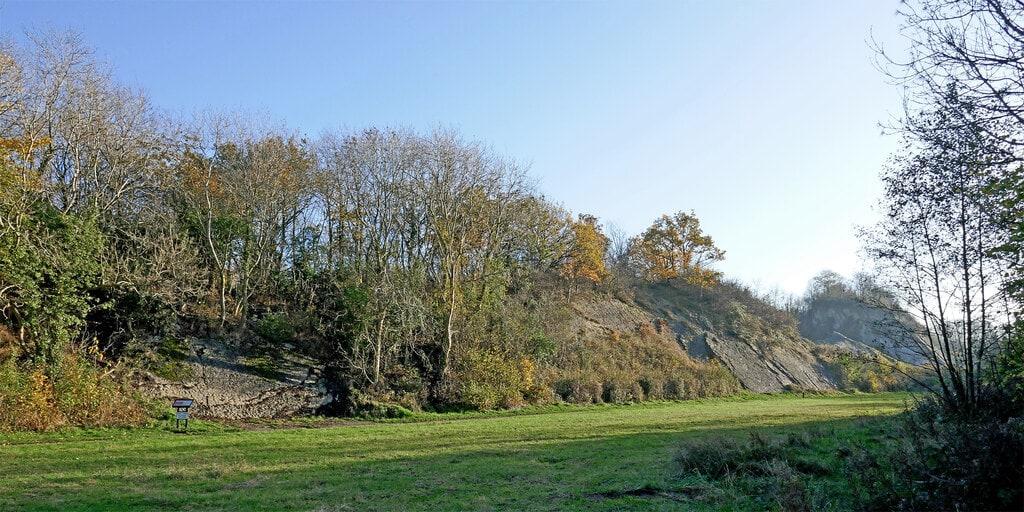
Wren's Nest National Nature Reserve Fossil Guide
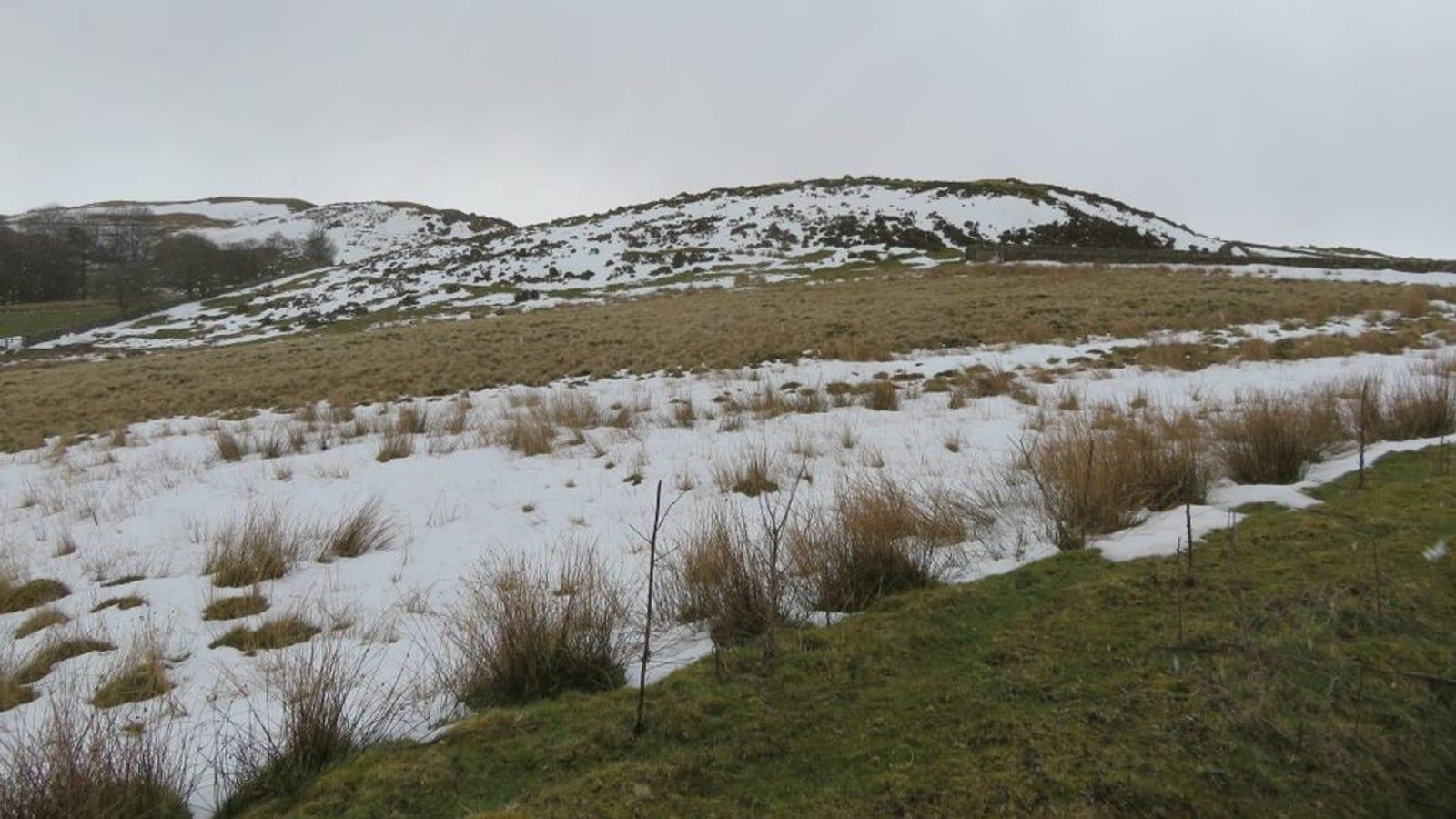
Image: Roger D Kidd / Geograph (CC BY-SA 2.0)
Wren's Nest in Dudley, West Midlands, England, is the UK's first ever geological National Nature Reserve and one of the world's best-known Silurian fossil sites. Over 700 species have been described from its 420-million-year-old Wenlock Limestone, 86 of them found nowhere else on Earth, including the iconic "Dudley Bug" trilobite Calymene blumenbachii. Free public access. Collecting from loose scree only.
By Edward Chen · Updated 31 July 2026
Introduction
Wren's Nest is a 33-hectare National Nature Reserve on the northwestern edge of Dudley in the West Midlands, central England. Declared a NNR in 1956, it is the United Kingdom's first reserve designated specifically for geological and paleontological significance, and one of the best-known Silurian fossil localities on Earth. The Much Wenlock Limestone Formation here records a tropical reef community from about 425 million years ago, over 700 species have been described from the formation, of which 186 were first described at Wren's Nest and 86 are known nowhere else.
The site is most famous for the small trilobite Calymene blumenbachii, so abundant in 19th-century limestone quarrying that workers called it the "Dudley Locust" or "Dudley Bug." The species was incorporated into Dudley's town coat of arms as a symbol of the local limestone industry.
Wren's Nest is managed by Dudley Council with English Nature. Despite heavy visitor traffic, the constantly eroding rock faces and accumulating scree allow productive surface collecting on an ongoing basis. The reserve is free and open year-round. Standard UK fossil-collecting etiquette and reserve rules apply.
Location and Directions
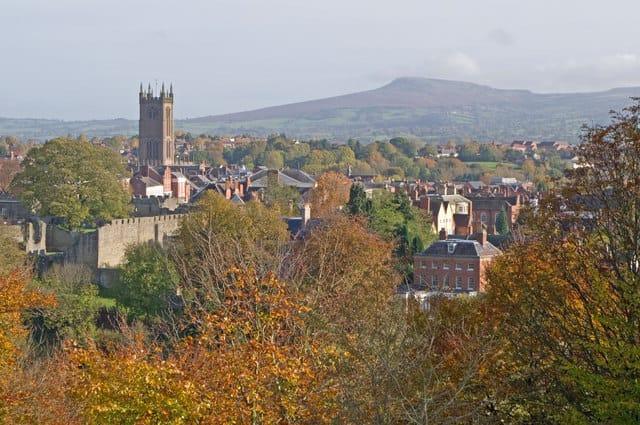
Wren's Nest sits on the northwestern outskirts of Dudley in the West Midlands, about 13 miles west of Birmingham.
Directions to Wren's Nest
By car: from the M5 motorway, take Junction 2 onto the A4123 east toward Birmingham, then the A459 south to Dudley. Signs to Wren's Nest and the Dudley Museum & Art Gallery direct you to Mons Hill / Wren's Nest Road. Roadside parking is available near the reserve entrance on Mons Hill.
By rail: Sandwell & Dudley station (West Midlands Trains) is about 3 miles from the reserve. Bus connections run from Sandwell & Dudley and from Dudley town centre.
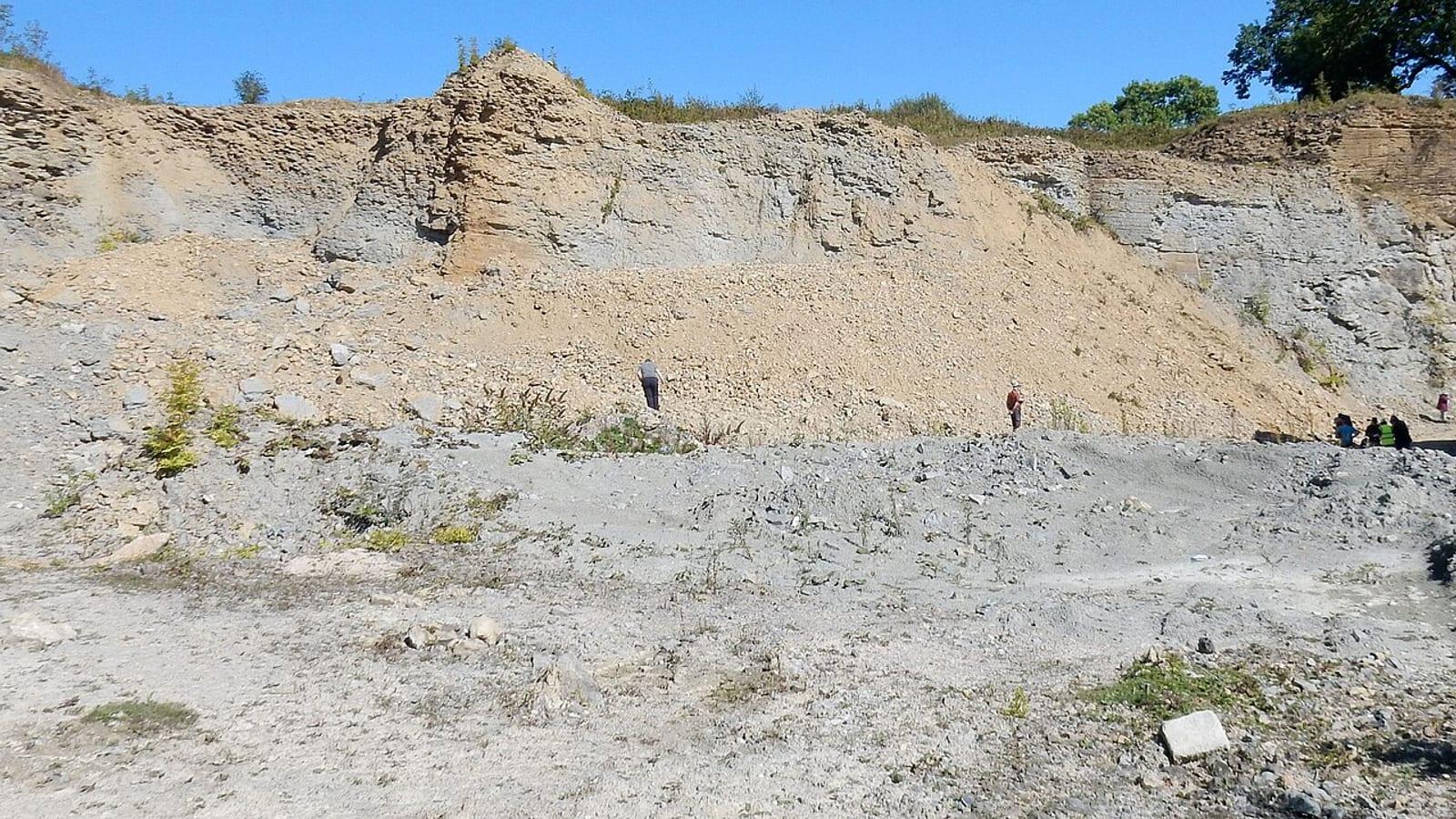
The reserve is open year-round. Best collecting is from the well-worn paths and weathered scree along the Seven Sisters limestone caverns (closed for safety) and on the bare scree slopes between the trail and the protected cliff faces. Pick from the surface scree only, hammering, chiselling, or any extraction from the rock face is strictly prohibited. Bring a small bag, hand lens, a soft brush, sturdy walking shoes, and a hard hat is recommended near the scree slopes.
The Dudley Museum & Art Gallery (a 10-minute walk in the town centre) has an excellent reference collection of Wren's Nest fossils and is the best place to learn what you're picking up.
 Photo: Roger D Kidd, CC BY-SA 2.0 via Wikimedia Commons
What Fossils You'll Find
The Much Wenlock Limestone records a tropical reef on the southern margin of the Laurussian Old Red Continent during the late Wenlock Epoch of the Silurian, about 425 million years ago. The reef supported a dense and varied community of corals, crinoids, brachiopods, sponges, and trilobites preserved in notable detail by the fine carbonate mud that built up around and within the reef framework.
The most prized find for visitors is the small enrolled trilobite Calymene blumenbachii, the "Dudley Bug" or "Dudley Locust", typically 2 to 5 centimetres in length when fully grown. Quarry workers in the 18th and 19th centuries collected so many Calymene from the Wren's Nest limestone that the species was incorporated into Dudley's town coat of arms as a symbol of the local limestone-and-ironworks economy. Whole enrolled specimens with the cephalon (head shield), thorax, and pygidium (tail shield) all preserved are the iconic Wren's Nest find, and turn up in the surface scree often enough that patient visitors regularly take one home. Other trilobites recovered include the large-eyed phacopid Dalmanites caudatus (frequently as isolated head shields with their distinctive holochroal compound eyes preserved), the long-bodied Trimerus delphinocephalus, the smaller Encrinurus variolaris (recognisable by its spinose cephalon), and the rare and prized Cheirurus bimucronatus.
Brachiopods are abundant across the reserve and dominate the surface scree by sheer numbers. The strongly ribbed atrypid Atrypa reticularis is the most common, followed by the smooth Leptaena rhomboidalis, the broad-shelled Strophonella euglypha, the smaller Resserella canalis, the pentamerid Pentamerus oblongus, and the strophomenid Coolinia applanata. Crinoid columnals, small star-shaped or hollow-disc ossicles, are everywhere, and complete crowns of the striking Crotalocrinites rugosus (with its perforated radial plates) and Periechocrinites costatus turn up occasionally. Stem fragments often retain attached holdfasts and articulated columnal sections.
The reef-building corals are some of the best-preserved Silurian examples anywhere in the world. The honeycomb coral Favosites gothlandicus forms tabular and hemispherical colonies several centimetres across. The chain coral Halysites catenularius, with its characteristic linked tube-cluster cross-section, is a textbook Silurian fossil and abundant at Wren's Nest. Heliolites interstinctus forms small encrusting colonies. And the solitary rugose coral Goniophyllum pyramidale (with its distinctive four-sided pyramid shape and operculum) is a Wren's Nest specialty. Sponges of multiple growth forms, fenestrate and ramose bryozoans, gastropods (including the iconic large coiled Poleumita discors), straight-shelled cephalopod (orthocone) fragments, the cystoid echinoderm Lepocrinites quadrifasciatus, the rare blastoid Troosticrinus reinwardti, and bivalves of several genera round out the assemblage. Eurypterid fragments, including the striking sea-scorpion Eurypterus, are rare but documented from select horizons.
The Wenlock Limestone fauna is considered one of the best-preserved Silurian reef communities in the world. The total fossil diversity at Wren's Nest exceeds 700 species, of which 186 were first described from the site and 86 occur nowhere else.
"Over 700 different types of fossil can be found here. 186 fossil species of which were first discovered and described here and 86 are found nowhere else on earth." Dudley Council
 Photo: James St. John, CC BY 2.0 via Wikimedia Commons
Geologic History
During the late Silurian Wenlock Epoch (Homerian Stage, about 425 million years ago), what is now Dudley lay on the tropical southern margin of the Laurussian continent (the assembled supercontinent that combined Laurentia, Baltica, and Avalonia after the Caledonian collision), at roughly 25 degrees south latitude, the modern climatic equivalent of the southern Great Barrier Reef. A warm, clear, shallow continental shelf supported a thriving reef community of corals, crinoids, brachiopods, sponges, and trilobites that built up substantial bioherms (reef mounds) several metres tall and tens of metres across.
Carbonate mud, skeletal sand, and reef debris accumulated as the Wenlock Limestone Formation now exposed at Wren's Nest. The depositional setting included reef-core facies (dominated by colonial corals and stromatoporoid sponges), reef-flank facies (with abundant brachiopods, crinoids, and bryozoans), inter-reef lagoonal facies (with finer-grained limestone and abundant gastropods, trilobites, and ostracods), and back-reef shoal facies (with crinoidal skeletal sand). All four facies are exposed within the Wren's Nest reserve, making it an unusually complete reef-system reference section.
Later Carboniferous burial under the Black Country Coal Measures, Triassic burial under the Mercia Mudstone, and Mesozoic uplift during the Cimmerian and Alpine orogenies tilted, folded, and partially eroded the Silurian section. The Wren's Nest anticline, a north-east-trending fold structure that brings the Wenlock Limestone close to the surface in the centre of Dudley, was the principal structural feature that exposed the limestone to surface weathering and to industrial-scale quarrying. Quaternary glacial scour during the Anglian and Devensian glaciations stripped overlying Triassic cover from the Black Country and left the limestone exposed in dramatic anticline structures, the Seven Sisters limestone caverns being the most famous (now closed to the public for structural safety).
Industrial-scale limestone quarrying in the 18th and 19th centuries supplied lime mortar for masonry and fluxing limestone for the Black Country iron and steel works. Tunnelling under Wren's Nest carved the famous Seven Sisters caverns, where workers split out vast quantities of Wenlock Limestone and inadvertently exposed many of the fossils that built the early Victorian British paleontological community. Sir Roderick Murchison, the great Victorian geologist who established the Silurian System in 1839, used Dudley fossils as some of his foundational reference specimens. Quarrying continued at industrial scales until the early 20th century. The cessation of large-scale extraction left the modern exposures and the accumulated quarry-spoil scree slopes that are accessible today.
How Wren's Nest Came to Be Protected
The site was declared the United Kingdom's first geological National Nature Reserve in 1956, the inaugural reserve under the geological-conservation provisions of the 1949 National Parks and Access to the Countryside Act. The Seven Sisters caverns were closed to the public in the 1980s for structural safety after several roof collapses. The surrounding open reserve remains freely accessible. Wren's Nest is also designated a Site of Special Scientific Interest (SSSI) and is co-managed by Dudley Metropolitan Borough Council and Natural England.
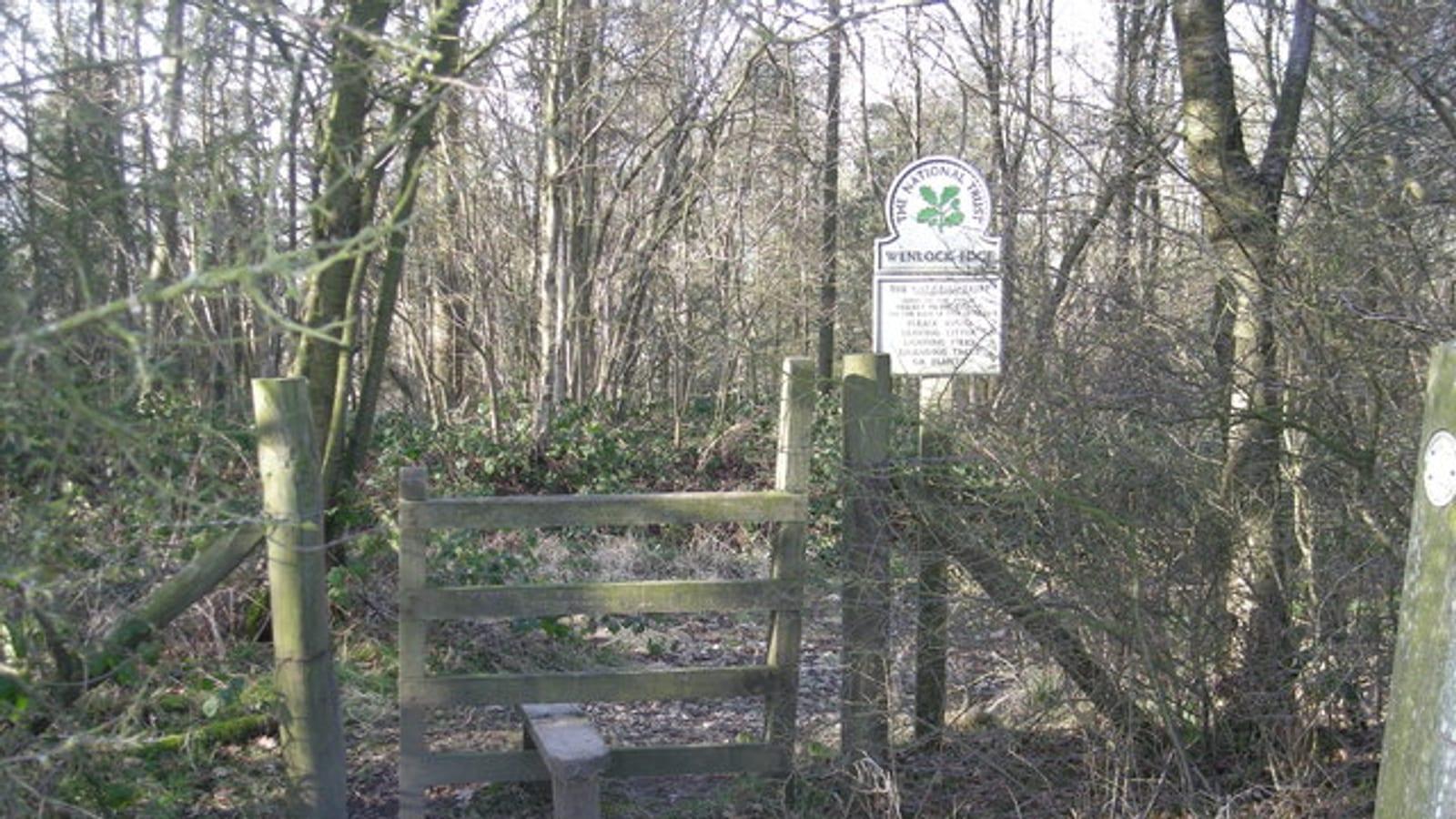
 Photo: DeFacto, CC BY-SA 4.0 via Wikimedia Commons
Collecting Rules and Regulations
Is Fossil Collecting Allowed?
Yes, surface collecting from loose scree only. Hammering, chiselling, and any extraction from the rock face are strictly prohibited.
Key Points:
- Free public access year-round
- Surface scree collection only. No hammering or extraction
- No collection on the protected cliff faces or in the closed caverns
- Notable scientific finds should be reported to Dudley Museum
- Wear sturdy shoes and consider a hard hat near scree slopes
- Keep dogs on leads. Stay on marked paths
Safety
Wren's Nest is an urban nature reserve built on centuries of limestone mining, and the ground beneath and around it is not solid in the way a normal park is.
Stay out of the caverns, shafts, and fenced areas. The hill is honeycombed with old workings, some of which have collapsed, and the fenced-off zones are fenced for that reason rather than for tidiness. Do not enter any underground opening, do not climb over barriers, and treat any unexpected hole as genuinely dangerous. Guided visits are the only way into the underground sections.
Do not hammer the exposures. This is a National Nature Reserve and an SSSI, the first in Britain designated for geology, and hammering the faces is both damaging and prohibited. Loose scree at the base of the quarries is where collecting is appropriate where it is permitted at all, and the faces above it are unstable and shed rock, so keep back from them.
The reserve is steep in places with uneven, slippery limestone paths, and the old quarry floors hold water. Wear boots with grip, particularly in wet weather.
This is an urban site with residential streets around it, so park considerately and be aware that some approaches are isolated. Visiting with someone else is sensible. Check the reserve's current access arrangements before travelling, as parts have been closed for stabilisation work at various times.

_(Much_Wenlock_Limestone,_Middle_Silurian;_Wrens_Nest,_Dudley,_England)_6.jpg)
