Canada Fossil Hunting Guide
8 Best Fossil Hunting Sites in Canada
Canada holds five UNESCO World Heritage fossil sites, and the eight places in this guide run from 565-million-year-old Ediacaran fronds on a Newfoundland sea cliff to Late Cretaceous marine reptile bone in a Vancouver Island riverbed. Collecting law here is provincial rather than federal, so the rule changes at every border: Alberta vests fossils in the Crown and permits no removal at all, Nova Scotia requires a museum research permit, Ontario's Rock Glen allows one souvenir per visitor, and British Columbia makes a recreational collector the caretaker of a find rather than its owner. Seven provinces are represented, from Hylonomus lyelli at Joggins to Traskasaura sandrae on the Puntledge.
8 fossil sites
Updated 14 September 2026
What makes Canada productive
No other country in this catalogue covers as much of the history of animal life. The sequence starts at Mistaken Point, where late Ediacaran organisms lived in a deep basin on the Avalonian microcontinent and ash falls from offshore island-arc eruptions entombed them between 574 and 560 million years ago. It continues at the Burgess Shale, 508 million years old, where mud slurries slid down the face of the Cathedral Escarpment and sealed soft-bodied animals in dysoxic mud fast enough to preserve gills, eyes and gut contents. The uppermost Ordovician Stonewall Formation at Stonewall, 445 to 443 million years old, formed on a warm carbonate shelf just before the Hirnantian glaciation and its mass extinction. Two Devonian sites follow and could hardly be less alike: the Escuminac Formation at Miguasha records a brackish estuary where seasonal salinity swings killed whole fish communities at once, while the Hungry Hollow Member at Rock Glen records a shallow tropical shelf in the Michigan Basin where storms swept shells into dense coquina beds.
The younger half of the list sits on coal, badlands and forearc mud. At Joggins, the Cumberland Basin subsided fast enough to keep pace with sediment supply, stacking more than 1,400 meters of Coal Measures in about five million years and preserving nearly every part of an equatorial coastal floodplain in continuous section. The Dinosaur Park Formation in Alberta preserves a Campanian coastal plain beside the Western Interior Seaway, where point-bar sand buried partial skeletons and floodplain mass-death events concentrated whole herds. The Nanaimo Group at Courtenay accumulated in a forearc basin off the Pacific margin, with carbonate concretions forming around decaying animals soon after burial, which is why whole crabs survive there. Erosion is the common thread: Fundy tides cut the Joggins section back about 50 centimeters a year, meltwater carved the Alberta badlands in a few thousand years after the ice retreated, and Bay of Chaleur storm waves retreat the Miguasha cliffs by a few centimeters annually. Fresh fossils appear every season, and at the protected sites permitted researchers collect them before the sea does.
- 1
Joggins Fossil Cliffs Fossil Hunting Guide
Nova Scotia, Canada
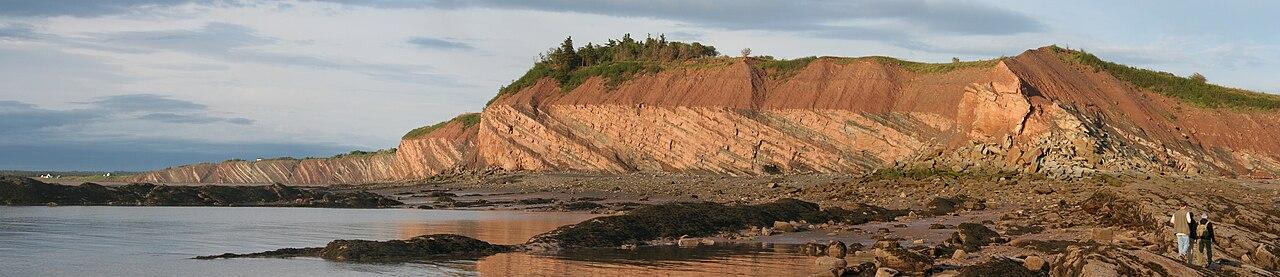
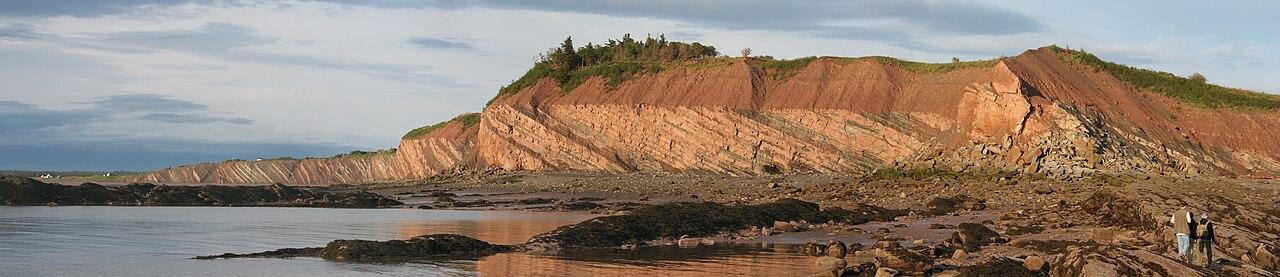
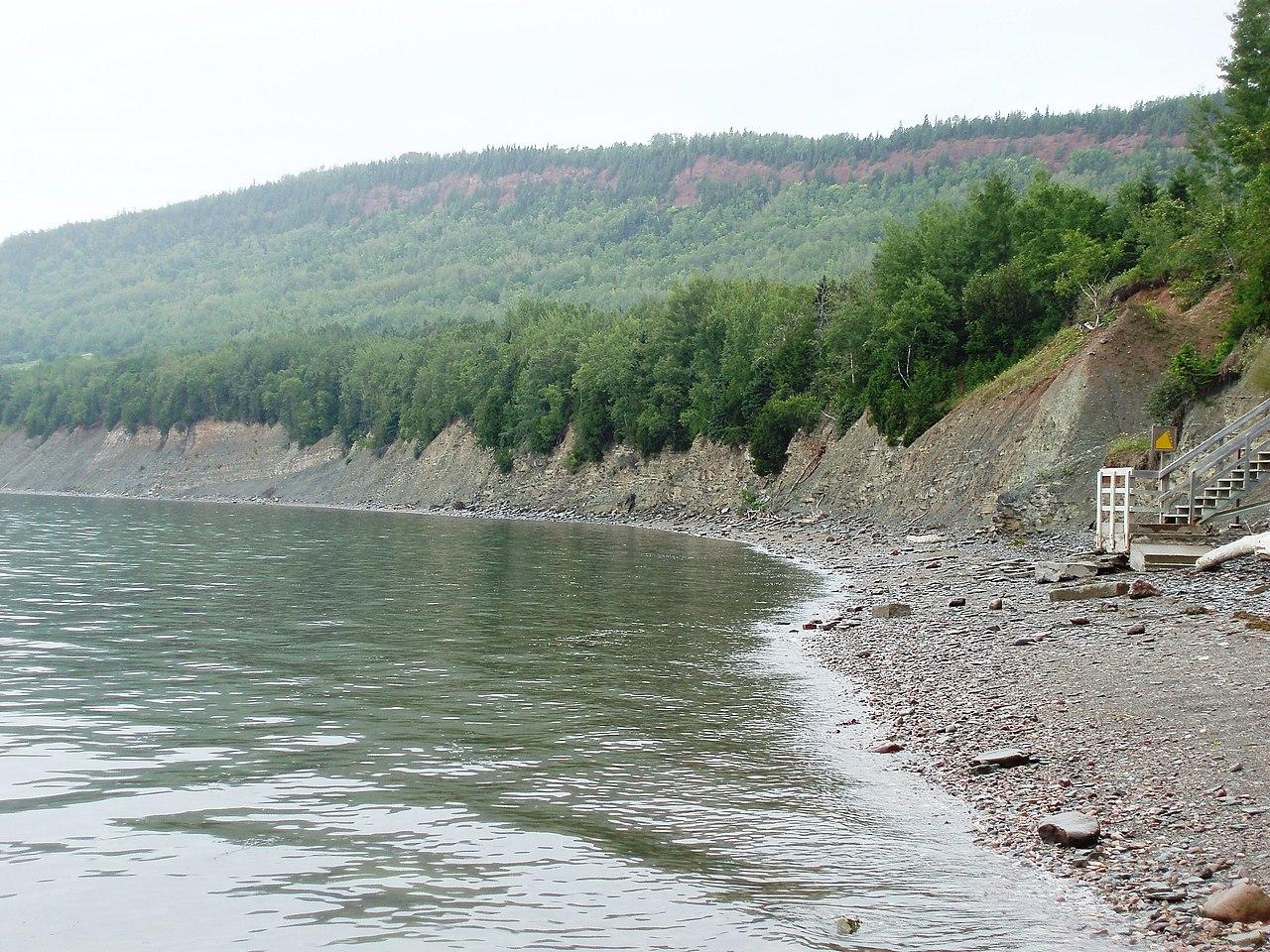
Free collectingLycopsid treesPlant fossilsTetrapod trackwaysJoggins holds the most complete record of Coal Age land life anywhere on Earth, and the beach below the cliffs is free to walk. Nearly 30 meters of Carboniferous strata, 318 to 313 million years old, expose lycopsid trees up to 6 meters tall standing in growth position, and in 1852 Charles Lyell and William Dawson split one hollow trunk and recovered Hylonomus lyelli, the oldest known reptile. Fresh beach slabs carry the diamond-patterned bark of Lepidodendron, Calamites stems up to 30 cm across, seed-fern fronds, and the long parallel rails left by the giant millipede Arthropleura. Collecting any fossil requires a Heritage Research Permit from the Nova Scotia Museum, so photograph your finds and report notable ones at the Joggins Fossil Centre. The Bay of Fundy has the highest tides in the world and there is no route up the cliff, so leave the beach at least two hours before high tide.
Read the full guide → - 2
Burgess Shale Fossil Hike Guide
British Columbia, Canada
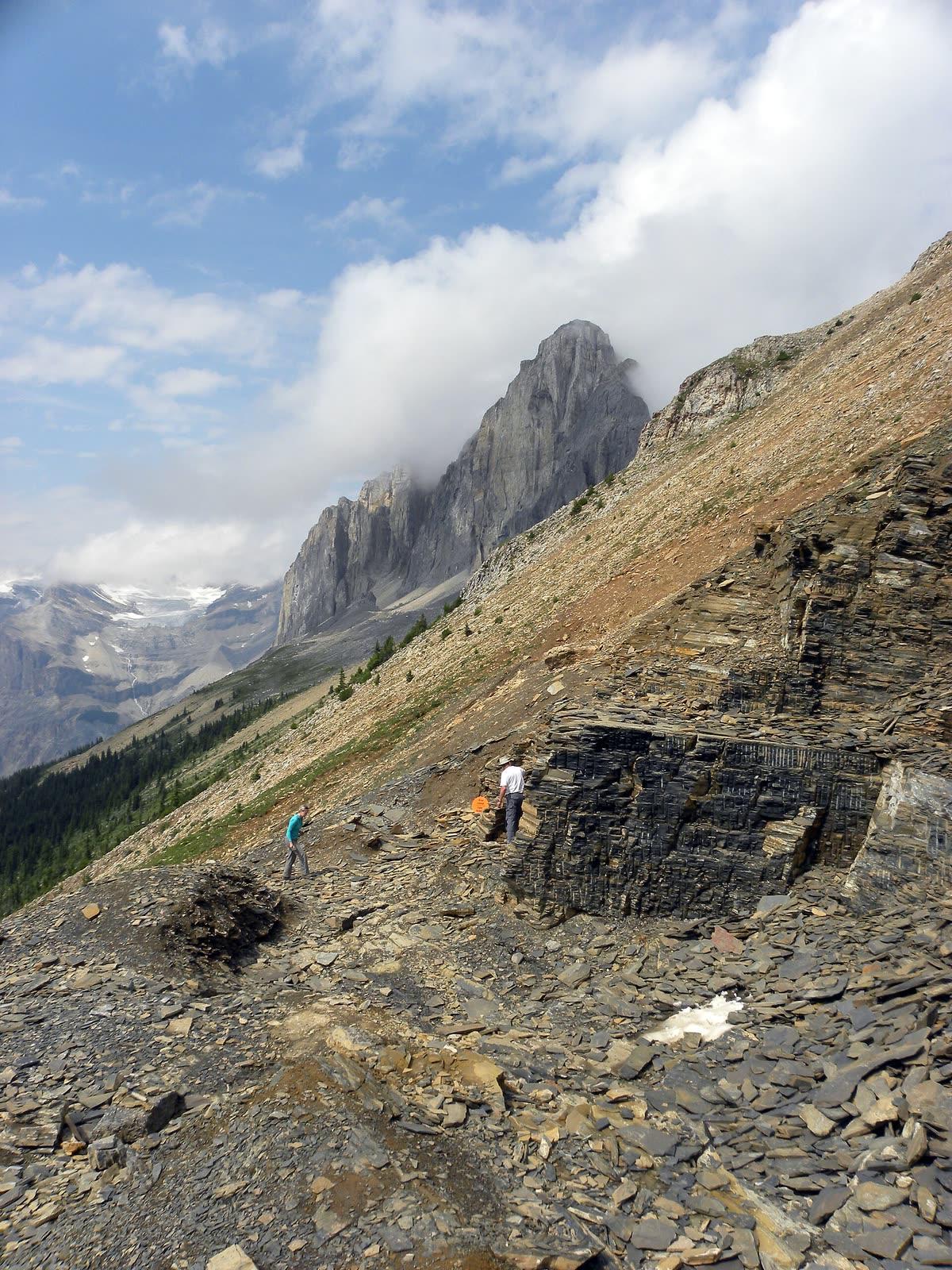
Guided toursTrilobitesAnomalocarisMarrellaThe Burgess Shale is the Cambrian site every other Cambrian site is measured against, 508 million years old with more than 200 species described from it. The Walcott Quarry hike reaches the quarry walls Charles Walcott opened in 1909, with fossils still weathering from the talus: the trilobite Olenoides serratus, the lace crab Marrella splendens, frontal grasping appendages of the predator Anomalocaris canadensis, and Pikaia gracilens, the earliest accepted member of our own phylum. Access is guided only under the Canada National Parks Act, and independent hiking to the Walcott Quarry or the Mount Stephen trilobite beds is not permitted. Nothing may be collected, lifted or hammered, though touching fossils in place is allowed, and every participant needs a Parks Canada pass bought the day before because the gates are closed when hikes depart. The Walcott route is roughly 22 km round trip with 825 m of climb and takes about 11 hours, so this is for fit adults: children under 8 are not permitted.
Read the full guide → - 3
Dinosaur Provincial Park Fossil Hunting Guide
Alberta, Canada
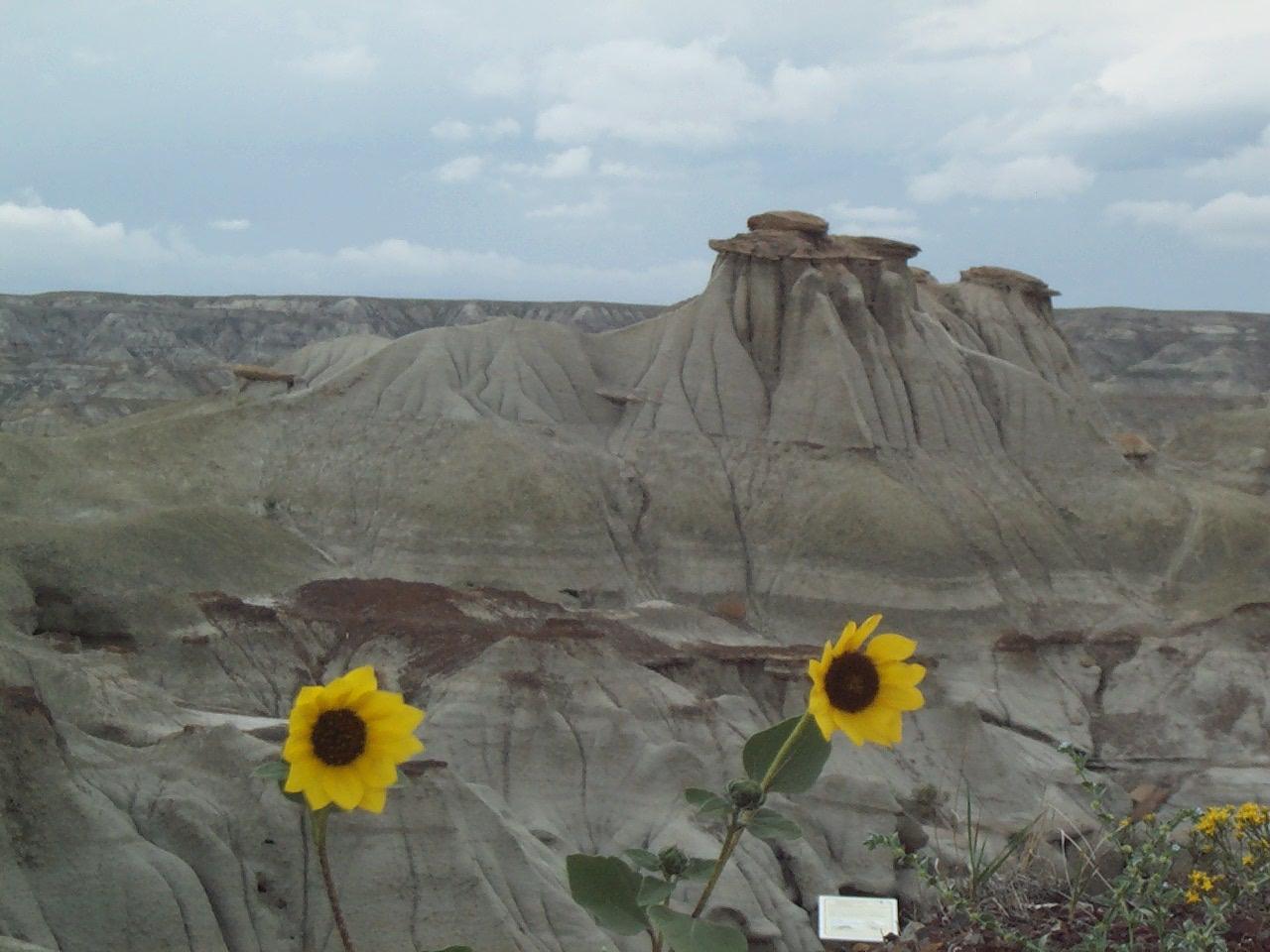
Viewing onlyHadrosaursCeratopsiansTyrannosaursDinosaur Provincial Park is one of the most productive Late Cretaceous localities on Earth, with more than 50 dinosaur species and 500 skeletons recovered from the Dinosaur Park Formation, 76 to 74 million years old. Most of the park is a closed Natural Preserve, and the way into it is a guided programme: Fossil Safari, the Fossil Finders Hike, the Centrosaurus Bonebed Hike or the Guided Excavation. The Centrosaurus Bonebed preserves several hundred individuals of a single ceratopsian species, almost certainly a herd drowned by a flood on the coastal floodplain. No fossil may be removed anywhere in the park under the Alberta Historic Resources Act, including on the self-guided trails, where finds must be left in place and reported to staff. Bookings for the season open in mid-February and sell out quickly, and wet bentonite clay turns the badlands dangerous enough to close trails outright, so build weather into the plan.
Read the full guide → - 4
Miguasha National Park Fossil Guide
Quebec, Canada
Viewing onlySarcopterygian fishPlacodermsAcanthodiansMiguasha is the only Devonian site on the UNESCO World Heritage list, and its subject is the transition from fish to four-limbed animals. The Escuminac Formation cliffs on the Bay of Chaleur, 380 to 370 million years old, have produced more than 18,000 specimens, among them Eusthenopteron foordi and Elpistostege watsoni, currently the closest known fish relative of tetrapods. The armoured placoderm Bothriolepis canadensis is so abundant that complete specimens come out every few weeks through the summer collecting season, alongside acanthodians preserved whole with scales and fin spines articulated. Nothing may be collected in the park or on the beach below the cliffs, and SÉPAQ park paleontologists recover newly exposed material each year before the bay takes it. A park entry fee covers the on-site museum and a ranger-led walk to the cliff base, timed around the tide, and the season runs from early June to mid-October.
Read the full guide → - 5
Rock Glen Conservation Area Fossil Guide
Ontario, Canada
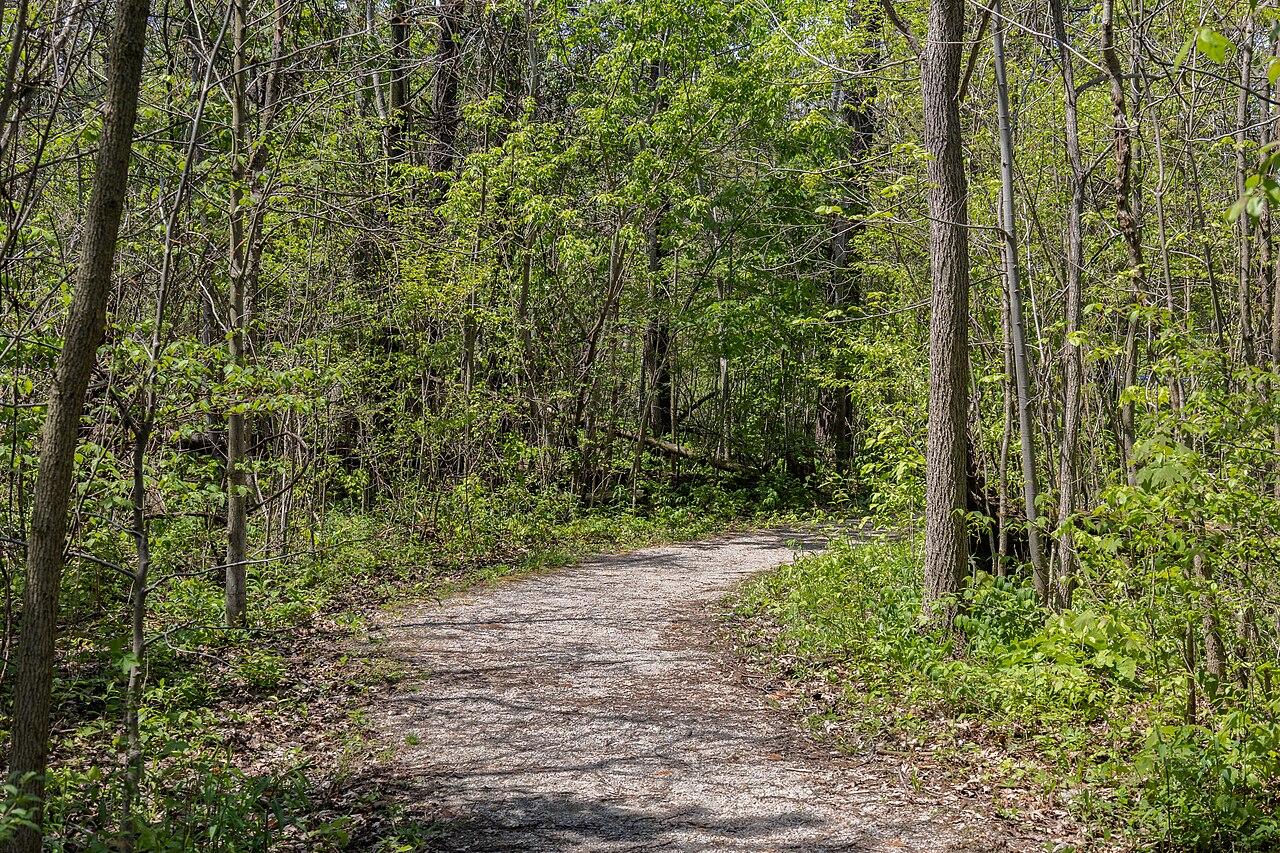
Pay to digBrachiopodsHorn coralsCrinoidsRock Glen is the most accessible Devonian collecting site in eastern North America, and each visitor may take one fossil home. Rock Glen Falls cuts a small wooded canyon into the Hungry Hollow Member of the Widder Formation, about 388 million years old, and the soft shale weathers brachiopods, horn corals, crinoid columnals and bryozoans straight onto the riverbank and the canyon talus. The find most visitors want is Mucrospirifer mucronatus, a small spiriferid brachiopod whose long lateral spines give it a winged outline, or a Phacops rana trilobite, usually as an isolated head or tail shield rather than a whole animal. The Ausable Bayfield Conservation Authority charges a modest day-use fee and limits each visitor to one hand-picked surface souvenir, with no hammers, chisels, picks or digging of any kind. Best for families: the trail is maintained, the Arkona Lions Museum on site shows what to look for, and heavier collecting at the nearby Hungry Hollow quarries runs only through CCFMS member-club field trips.
Read the full guide → - 6
Mistaken Point Ecological Reserve Fossil Hunting Guide
Newfoundland and Labrador, Canada
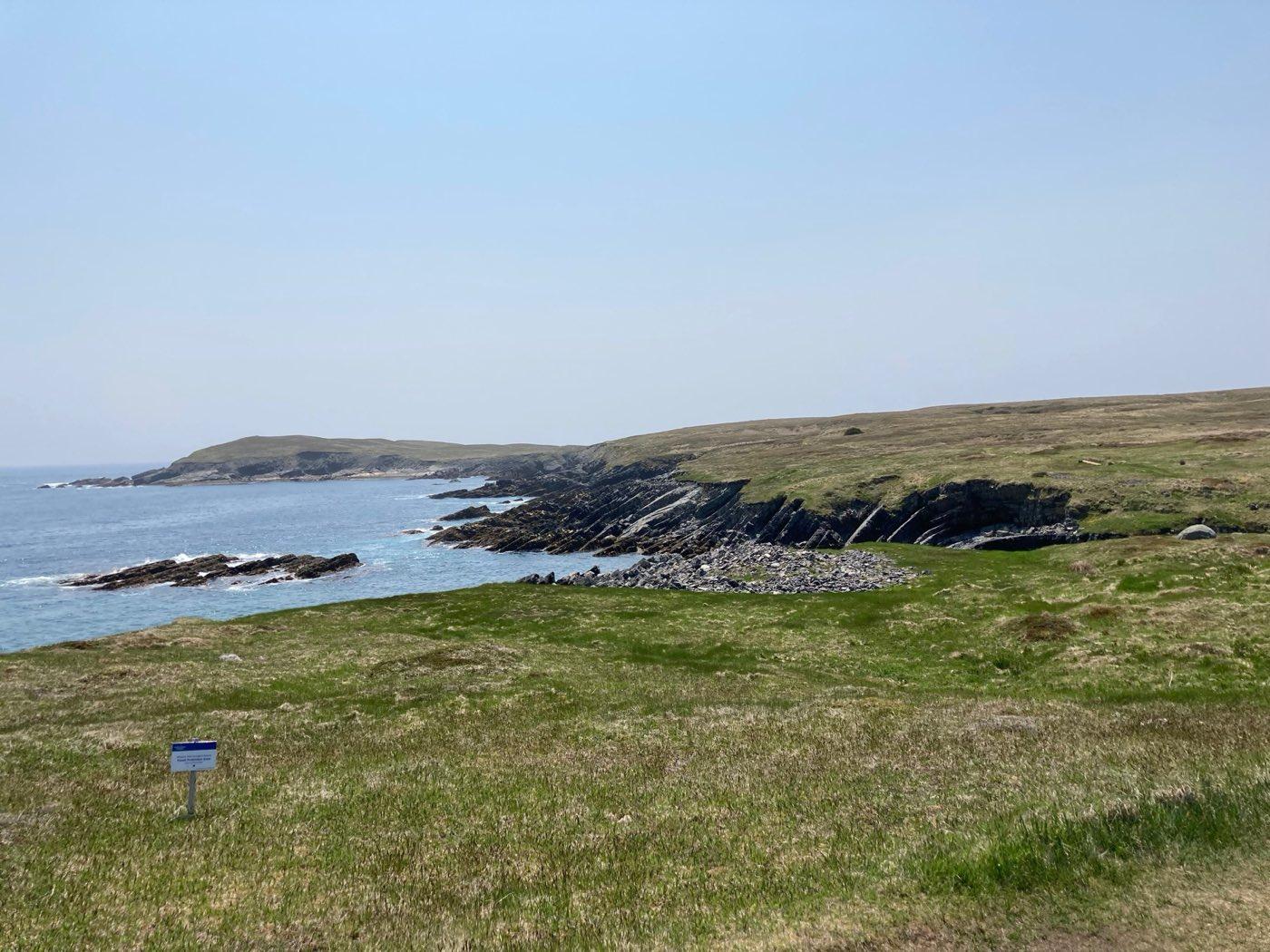
Viewing onlyFractofususCharniaCharniodiscusMistaken Point holds the oldest known assemblage of large, complex multicellular life, with more than 10,000 catalogued body fossils cast beneath volcanic ash around 565 million years ago. The main bedding plane, known as the E surface, carries more than 4,000 specimens, and the tour walks you onto it to look down at Fractofusus, Charnia masoni, Charniodiscus fronds up to 50 cm tall, Bradgatia, Thectardis and Pectinifrons. These organisms lived at estimated depths between 750 meters and 2 kilometers, below any light, and appear to have absorbed dissolved organic matter through their finely subdivided surfaces. The reserve is a strict-protection area under the Newfoundland Wilderness and Ecological Reserves Act, collecting is an offence, and visitors step onto the fossil surface with bare clean feet after the interpreter removes the rope barrier. Tours run daily from mid-May to mid-October, cap at about 15 people, must be booked in advance, and involve a 3.5 km walk each way over uneven coastal ground.
Read the full guide → - 7
Stonewall Quarry Park Manitoba Fossil Hunting Guide
Manitoba, Canada
Viewing onlyCephalopodsBrachiopodsTrilobitesStonewall Quarry Park sits inside the worked-out lime quarry that gave the town its name, 25 km north of Winnipeg in Manitoba's Interlake country. The walls of the Red Pit, a failed 1960s test pit abandoned when iron-stained rock made the face uneconomic, expose a fresh section of the Stonewall Formation from the very end of the Ordovician, 445 to 443 million years old. The Town's own park guide lists cephalopods, brachiopods, trilobites, crinoids, corals, gastropods and worm tunnels there, and because dolomite replaced the original calcite, most of what you see are hollow molds rather than shell, which show up when you wet a broken surface. The park publishes no written collecting policy, so we treat Stonewall as a viewing site: photograph fossils in place, use no tools, and phone the Interpretive Centre on +1 (204) 467-7980 before any planned collection. Start at the Interpretive Centre's Ordovician Sea gallery, which reconstructs the same fauna and is open daily with admission by donation.
Read the full guide → - 8
Puntledge River, Courtenay Fossil Hunting Guide
British Columbia, Canada
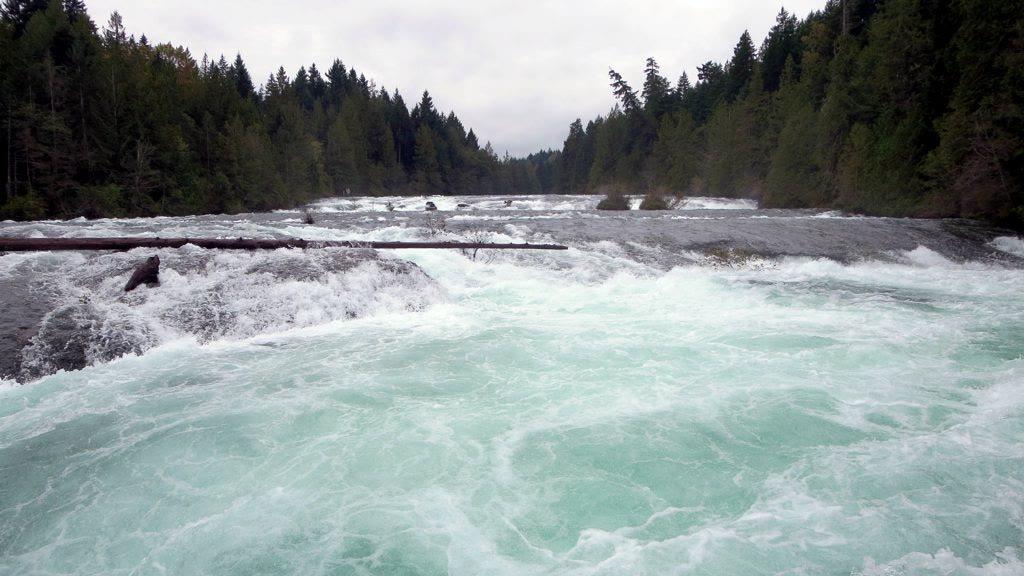
Free collectingMarine reptilesElasmosaursTraskasauraThe Puntledge River is where Mike and Heather Trask found an elasmosaur in 1988, now British Columbia's official fossil emblem and, since 2025, the named species Traskasaura sandrae. Nanaimo Group shale in and beside the channel, 85 to 80 million years old, yields ammonites as flattened coils, bivalves, inoceramid shells, and crabs preserved whole inside concretions that split cleanly. Marine reptile bone is the rare prize, and the small razor-toothed mosasaur Kourisodon puntledgensis takes its species name from this river. The Courtenay and District Museum runs the tours, which take participants into the river to split shale, and you keep what you find, though the museum may ask you to donate a scientifically valuable species with your name recorded as the finder. British Columbia's Fossil Management Policy allows recreational surface collecting of common fossils on Crown land with hand tools, but a collector is the caretaker rather than the owner and vertebrate material stays in provincial custody. Ask the museum before working the river independently, because this page could not establish whether the productive reaches are Crown land, park or private ground.
Read the full guide →
Planning your visit
When to visit
Most of these sites run a short summer season, and two of them are governed by the tide inside it. Miguasha opens from early June to mid-October, and Mistaken Point runs daily tours from mid-May to mid-October with morning and afternoon departures in peak summer. The Burgess Shale season is shorter and sits near treeline, where snow is possible in any month and trips are cancelled for weather, so book on 20 January 2026 when reservations open. Joggins beach is publicly accessible from May through November, and the controlling factor there is leaving at least two hours before high tide. Dinosaur Provincial Park opens bookings in mid-February, but rain can close the badlands trails at any point in the season. Rock Glen is open year-round in daylight and is most productive in spring after snowmelt and after summer thunderstorms, when fresh shale slumps from the canyon walls. The Puntledge tours run Tuesday to Saturday and need low water in the channel.
What to bring
Boots with a firm sole and real grip are the one constant, because wet shale is as slippery as ice at Joggins, Rock Glen, Miguasha and the Puntledge. Add rubber boots or river shoes for the Rock Glen creek bed and for wading the Puntledge, and safety glasses for splitting shale on the river tour, which the tour normally provides. Carry a tide table for the Bay of Fundy and another for the Bay of Chaleur. The Burgess Shale hike needs waterproof and windproof layers, a warm mid-layer, hat and gloves, sun protection against ultraviolet reflected off snow, and all your own water, because there is none on the route. Dinosaur Provincial Park has no water on its trails either and almost no shade. Newfoundland needs rain gear and warm layers in any month. Pack insect repellent for Miguasha blackflies and the mosquitoes along the Rock Glen ravine, and a printed booking confirmation for Mistaken Point, where cell coverage is intermittent. Leave hammers and chisels at home for Rock Glen, where no tools are permitted at all.
Rules and access
Canadian fossil law is provincial, not federal, so there is no single rule to learn. Nova Scotia protects Joggins under the Special Places Protection Act and a Heritage Research Permit system administered by the Nova Scotia Museum, which means the beach is free but collecting, hammering and digging are not permitted without a permit. The Burgess Shale is the federal exception: the quarries sit inside Yoho National Park and are protected under the Canada National Parks Act, with access only by guided hike or research permit. Alberta vests fossils in the Crown under the Historic Resources Act, and at Dinosaur Provincial Park no fossil may be cut, defaced or removed anywhere in the park, with most of its area closed as a Natural Preserve. Quebec's Miguasha prohibits collection throughout the SÉPAQ park and along the beach below the cliffs. Newfoundland and Labrador manages Mistaken Point as a strict-protection reserve under the Wilderness and Ecological Reserves Act. Ontario's Rock Glen is the most permissive, at one hand-picked souvenir per visitor and no tools. Manitoba's Stonewall Quarry Park is a municipal heritage site that publishes no written collecting policy, so phone the Interpretive Centre before planning any collection. British Columbia's Fossil Management Policy allows recreational surface collecting of common fossils on Crown land with hand tools, while keeping the province the custodian of every fossil found there.
Getting there
These eight sites span the country, so plan them regionally. In the Maritimes, Joggins is about 45 km southwest of Amherst, Nova Scotia, reached from Highway 104 via Highway 302 and Highway 242. Miguasha is at 231 Route Miguasha O, Nouvelle, on the south shore of the Gaspé Peninsula, about 50 km west of Carleton-sur-Mer and most easily approached along Route 132. Mistaken Point books through the Edge of Avalon Interpretation Centre at Portugal Cove South, about two and a half hours south of St John's on Highway 10. In central Canada, Rock Glen is at 8680 Rock Glen Road near Arkona, roughly 75 km west of London, Ontario, off Highway 402 and Highway 21, and Stonewall is 25 km north of Winnipeg on Provincial Trunk Highway 7 then Highway 67. In the west, Dinosaur Provincial Park is about 48 km northeast of Brooks, Alberta, off the Trans-Canada Highway. The Burgess Shale trailheads are in and near Field, British Columbia, about 200 km west of Calgary on the Trans-Canada. The Puntledge River is at Courtenay in the Comox Valley on Vancouver Island, about an hour and a half north of Nanaimo, and the museum tour requires your own vehicle for the ten minute drive to the river.
This guide is a curated selection. Browse the complete index of Canadian fossil sites for every location we document, including the ones beyond this list.
Frequently asked questions
- Can you collect fossils in Canada?
- Sometimes, and the answer is set province by province rather than nationally. Two of the eight sites here allow a visitor to keep material. Rock Glen in Ontario permits one hand-picked surface souvenir per visitor under the Ausable Bayfield Conservation Authority's rules, with no tools of any kind. On the Puntledge River in British Columbia, the Courtenay and District Museum's tour lets you keep what you find, and the provincial Fossil Management Policy allows recreational surface collecting of common fossils on Crown land with hand tools. Everything else is closed. Joggins needs a Heritage Research Permit from the Nova Scotia Museum even though the beach itself is free. The Burgess Shale is protected under the federal Canada National Parks Act, Dinosaur Provincial Park under the Alberta Historic Resources Act, Miguasha throughout the SÉPAQ park and the beach below it, and Mistaken Point as a strict-protection ecological reserve.
- Which Canadian fossil sites hold UNESCO World Heritage listing?
- Five of the eight in this guide, which is the highest concentration of World Heritage fossil sites in any country we cover. Dinosaur Provincial Park was inscribed in 1979 as Site 71. The Walcott Quarry in the Burgess Shale was inscribed in 1980 and folded into the broader Canadian Rocky Mountain Parks World Heritage Site in 1984. Miguasha followed in 1999 as Site 686, under criterion (viii), and remains the only Devonian site on the list. Joggins Fossil Cliffs was inscribed in 2008 as Site 1285, which UNESCO describes as the iconic site of the world's Coal Age. Mistaken Point was inscribed most recently, in July 2016, as Site 1497. In practice the listing predicts the rules: the stronger the protection, the more certain it is that nothing leaves the ground.
- How do you visit the Burgess Shale?
- On a guided hike booked well in advance, because independent access is not permitted. Parks Canada and the licensed Burgess Shale Geoscience Foundation run the programme, and reservations for the 2026 season open on 20 January 2026 at 8:00 am MST and fill quickly. The Walcott Quarry hike starts from the Takakkaw Falls parking area in the Yoho Valley and runs roughly 22 km round trip with 825 m of elevation gain, taking about 11 hours. The Mount Stephen Trilobite Beds hike leaves from the south side of Field and is shorter at about 8 km, but steeper. Every participant needs a valid Parks Canada pass, bought the day before, because gates and visitor centers are closed when hikes depart. Children under 8 are not permitted on the Walcott hike, and those aged 9 to 16 must be accompanied by an adult.
- Which Canadian fossil site is best with children?
- Rock Glen Conservation Area in Arkona, Ontario. The park is a managed 33-hectare conservation area with stairs, marked trails and staff on site, the fossils weather out of soft shale onto the riverbank where no tools are needed, and every visitor is allowed one souvenir to take home. The Arkona Lions Museum inside the park displays the regional Devonian fauna and is the right first stop for working out what to look for. Bring rubber boots or river shoes, because the creek bed is wet and slippery. Stonewall Quarry Park in Manitoba is a reasonable second choice, with even trail surfaces and an interpretive center, though we treat it as viewing only. The Burgess Shale is the opposite end of the scale: under-8s are not permitted on the Walcott hike at all.
- When is the Canadian fossil season?
- Short at most of these sites, and governed by snow at one end and tides at the other. Miguasha opens from early June to mid-October, and Mistaken Point runs tours daily from mid-May to mid-October. The Burgess Shale season is shorter still and sits at alpine elevations where snow is possible in any month, and trips are cancelled for weather. Joggins beach is publicly accessible from May through November. Dinosaur Provincial Park takes bookings from mid-February for the coming season, but wet bentonite clay makes the badlands unsafe after rain in any month. Rock Glen is open year-round in daylight and is most productive in spring after snowmelt and after summer thunderstorms, when fresh shale slumps into the riverbed. The Puntledge tours run Tuesday to Saturday, are weather dependent in early spring and late autumn, and need low water.
- What is the oldest fossil site in Canada you can visit?
- Mistaken Point, on the southeast tip of the Avalon Peninsula in Newfoundland. The fossiliferous surfaces in the Mistaken Point Formation of the Conception Group are constrained by radiometric ages on the volcanic ash beds within the section to between 574 and 560 million years ago, and the famous E surface dates to about 565 million years. That puts it well before the Cambrian Explosion recorded at the Burgess Shale, which is 508 million years old. S.B. Misra, a graduate student from Memorial University of Newfoundland, identified the first frond fossils on a coastal traverse in 1967 and described them in a 1969 Nature paper. The reserve was declared in 1996 and protects 5.7 kilometers of coast.
Recommended resources
- Joggins Fossil Cliffs: visitor code of conduct · The operator's own rules for the beach, including the permit position on collecting and the tide guidance. Read it before you walk down the staircase rather than after.
- Parks Canada: Burgess Shale guided hikes · Booking, route and eligibility details for the only legal access to the Walcott Quarry and the Mount Stephen trilobite beds, run with the Burgess Shale Geoscience Foundation.
- Alberta Parks: Dinosaur Provincial Park rules · The land manager's statement of what is prohibited inside the park, including the closed Natural Preserve and the rule against removing any fossil material.
- Courtenay and District Museum: the fossil tour · Tour times, fees and booking for the Puntledge River, plus the museum's own policy on what finders keep and what it asks to be donated.