Dinosaur Provincial Park Fossil Hunting Guide
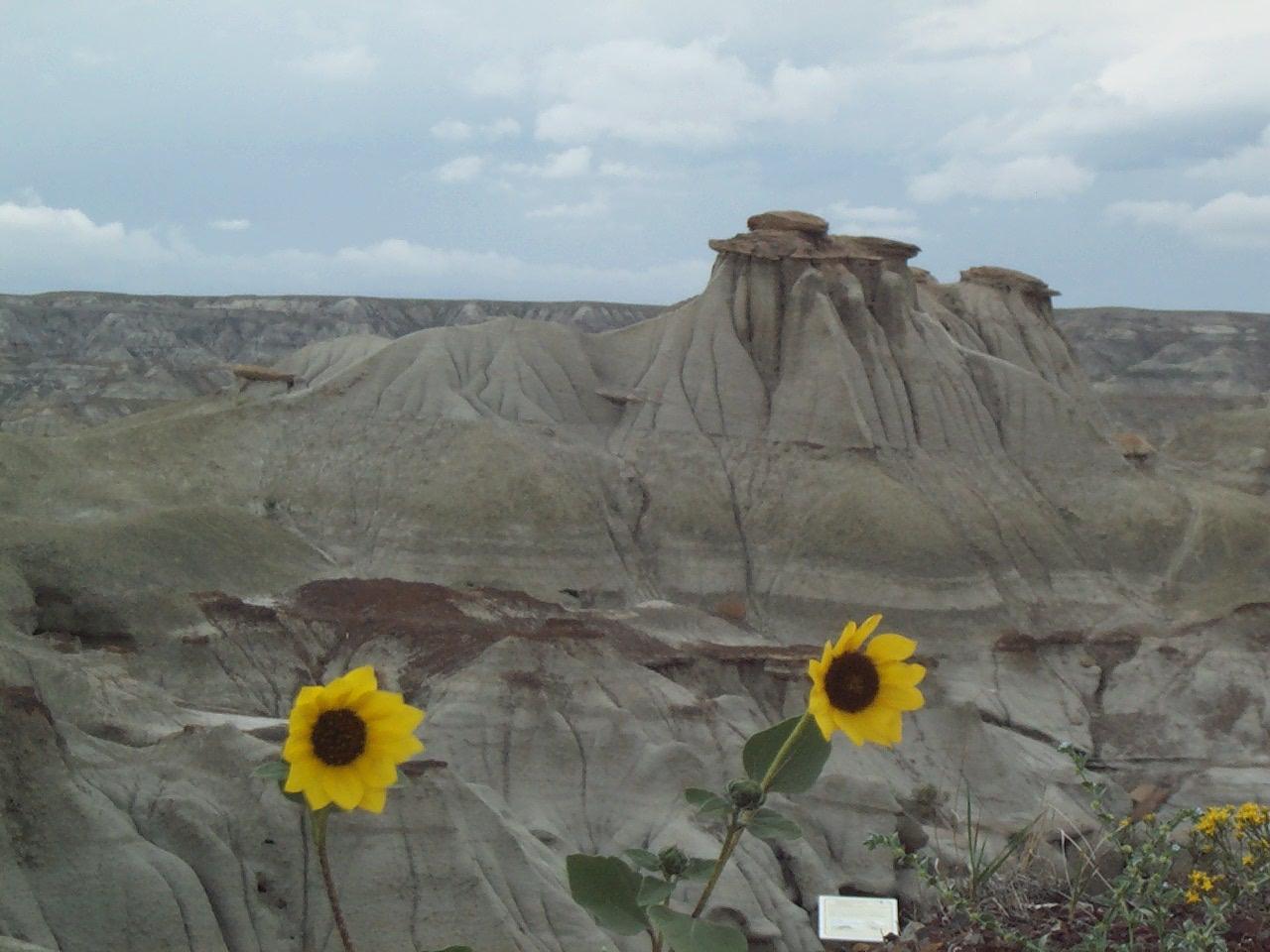
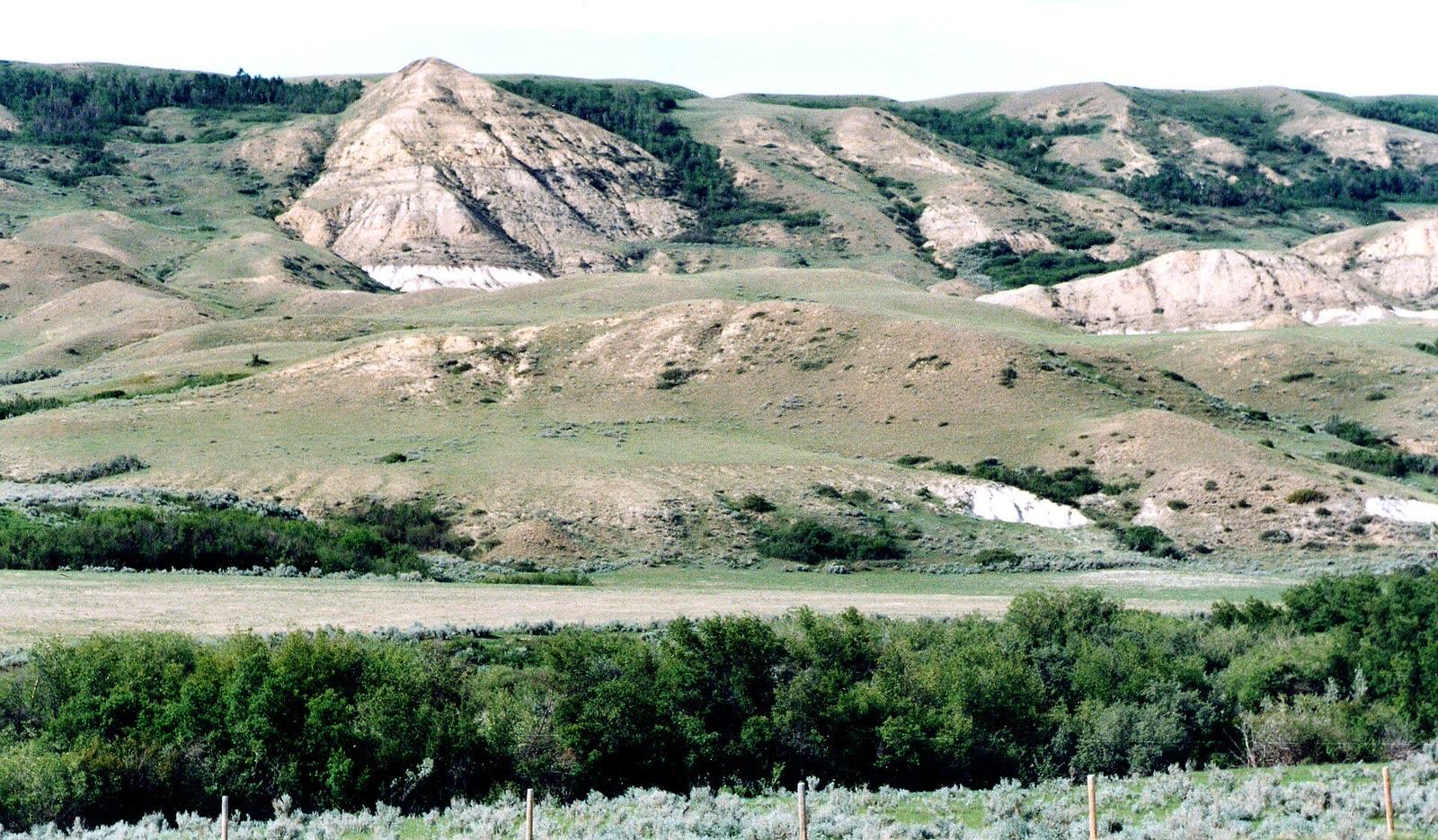
Image: Joanne Merriam (CC BY-SA 3.0)
Dinosaur Provincial Park in the Alberta badlands is one of the most productive Late Cretaceous dinosaur localities on Earth, with more than 50 species recovered from the Dinosaur Park Formation. Fossil collecting is prohibited. Visitors must join guided programs to see and handle real fossils in situ.
By Edward Chen · Updated 31 July 2026
Introduction
Dinosaur Provincial Park is a UNESCO World Heritage Site in the Red Deer River badlands of southeastern Alberta, recognized as one of the most productive dinosaur fossil regions in the world. More than 50 dinosaur species and 500 skeletons have been collected from the park since the early 20th century, including type specimens of Centrosaurus, Corythosaurus, and Daspletosaurus.
Most of the park is a designated Natural Preserve closed to public entry. Fossils may not be cut, defaced, or removed anywhere in the park under the Historic Resources Act. To see and handle real fossils in the field, visitors must join one of several guided programs run by park interpreters and the Royal Tyrrell Museum.
This guide covers what fossils you'll encounter, how to reach the park, and the strict rules that protect this Late Cretaceous bonebed complex.
Location and Directions
Dinosaur Provincial Park lies about 48 km northeast of Brooks, Alberta, in the badlands carved by the Red Deer River.
Directions to Dinosaur Provincial Park
From the Trans-Canada Highway (Hwy 1) at Brooks, take Highway 873 north, then Highway 544 east, and follow signs north on a local road into the park. The visitor centre and campground sit on the canyon floor. A few self-guided trails (the Badlands Trail, Cottonwood Flats Trail, Coulee Viewpoint Trail, Trail of the Fossil Hunters) are open year-round and pass interpretive fossil displays, but most of the park is restricted.
To enter the Natural Preserve, book one of the guided programs: Fossil Safari, Fossil Finders Hike, Centrosaurus Bonebed Hike, or the Guided Excavation. Bookings for the 2026 season open in mid-February and sell out quickly. Children under 14 must be accompanied by a paying adult on most programs.
 Photo: Eric Van Lochem, CC BY-SA 4.0, via Wikimedia Commons

What Fossils You'll Find
The Dinosaur Park Formation preserves a coastal floodplain ecosystem from the late Campanian Stage, deposited about 76 to 74 million years ago along the western edge of the disappearing Western Interior Seaway.
Visitors on the Fossil Safari programme see fossils exposed by recent erosion as they walk through the active Natural Preserve. Most common are weathered bone fragments scattered across the surface, partial hadrosaur and ceratopsian limb elements that have tumbled down from higher in the section, and the small black teeth of theropod dinosaurs glinting against the buff-coloured mudstone. The Centrosaurus Bonebed at the heart of the Fossil Finders Hike is a monodominant mass-death site preserving the remains of several hundred individuals of a single ceratopsian species, almost certainly the result of a herd drowning during a flood event on the floodplain.
Plant fossils are common in the same sediments, silicified wood from Metasequoia and Sequoia relatives, palm fragments, water-lily seeds, and amber inclusions of insects and leaves. Trace fossils include hadrosaur footprints, tyrannosaur claw marks on bone, and exquisitely preserved coprolites.
"Public access to the most sensitive areas of the site is strictly controlled, and research, collection and removal of fossil material are tightly regulated." Alberta Parks
Geologic History
The Dinosaur Park Formation is the upper part of the larger Belly River Group, and was deposited during the late Campanian along the western shore of the Western Interior Seaway. The setting was a low-lying coastal plain crossed by slow-moving meandering rivers, dotted with seasonally flooded ponds and forested with bald cypress, magnolia, and the dawn redwood Metasequoia. The climate was subtropical and humid, with strong seasonality driven by monsoonal moisture from the Western Interior Seaway. The formation grades upward from fluvial channel sandstones and overbank mudstones at its base into shoreline-influenced marine sandstones near the contact with the overlying Bearpaw Formation, recording the final Campanian transgression of the seaway.
Bone accumulations in the formation owe their preservation to two main processes. Channel-margin death assemblages were buried rapidly by lateral accretion of point-bar sand, preserving partial articulated skeletons. Floodplain mass-death assemblages, like the Centrosaurus Bonebed, record catastrophic flood events that drowned entire herds and concentrated their remains in low-energy overbank settings. After burial, the bones were preserved in fine sandstone and mudstone for some 74 million years until Holocene processes brought them back to the surface.
The badlands themselves are a young feature. As the last continental ice sheet retreated about 13,000 years ago, enormous volumes of meltwater funnelled through the South Saskatchewan and Red Deer drainages, carving deep canyons into the soft Cretaceous sediment in only a few thousand years. The poorly cemented mudstones continue to erode rapidly under modern semi-arid conditions, and each spring exposes a fresh population of bones at the surface, which is why active patrol and survey by Royal Tyrrell Museum staff is a permanent feature of the park's management.
Joseph Burr Tyrrell, a young geologist with the Geological Survey of Canada, discovered the first Albertosaurus sarcophagus skull at Drumheller in 1884 and put Alberta's dinosaur badlands on the international scientific map. The American Museum of Natural History's Barnum Brown ran the famous Red Deer River boat expeditions from 1910 to 1915, recovering many of the holotype specimens still on display in New York. Charles M. Sternberg of the Canadian Geological Survey continued large-scale collecting through the 1920s and 1930s. More than 50 dinosaur species and 500 skeletons have been collected from the park since.
How Dinosaur Provincial Park Became Protected
The Red Deer River badlands were designated as Steveville Dinosaur Provincial Park in 1955 to halt unregulated commercial collection by international expeditions. Boundaries were expanded and the park was renamed Dinosaur Provincial Park in 1962. UNESCO inscribed it as a World Heritage Site in 1979 (Site #71). The Royal Tyrrell Museum of Palaeontology in nearby Drumheller, opened in 1985, is the primary research and curation institution for the park's fossils and one of the world's premier dinosaur museums. Many visitors pair a Dinosaur Provincial Park tour with a day at the Tyrrell.
 Photo: Kscott.dav, CC BY-SA 4.0, via Wikimedia Commons

Collecting Rules and Regulations
Is Fossil Collecting Allowed?
No. Removing any fossil is prohibited and enforced. Even on the self-guided trails, fossils must be left in place and reported to staff.
Key Points:
- No fossil collection or removal anywhere in the park
- Most of the park is a closed Natural Preserve
- Real fossils may only be touched in the field on a guided program
- Drones are not permitted
Safety
The badlands look benign from the road and are not. Most of the park is a restricted Natural Preserve reached only on a guided programme, and the areas open to the public still demand respect.
Heat and exposure. The badlands are a semi-arid landscape with almost no shade, and summer temperatures in the coulees run considerably hotter than the prairie above, since the bare rock radiates heat. Carry substantially more water than you expect to drink, wear a hat and sun protection, and avoid the middle of the day in high summer. There is no water on the trails.
Rattlesnakes live in the park and shelter in the shade of ledges, shrubs, and rock piles. Look before placing hands and feet, stay on the marked trails, and keep children close. Prickly pear cactus grows across the badland floor and the spines penetrate boots and clothing readily.
The terrain is treacherous. Bentonite clay, the grey material that makes up much of the badlands, turns to slick, sticky grease when wet and becomes almost impossible to walk on. After rain, trails are genuinely dangerous and are often closed. The slopes are steep and loose, and hoodoos and overhangs collapse.
Flash floods run through the coulees during storms. Get to high ground if weather builds.
Navigation is deceptive, since the badland topography repeats and landmarks vanish once you drop into a coulee. Stay on the trails, which also keeps you away from fossils that must be left in place.
Sources
Nearby sites
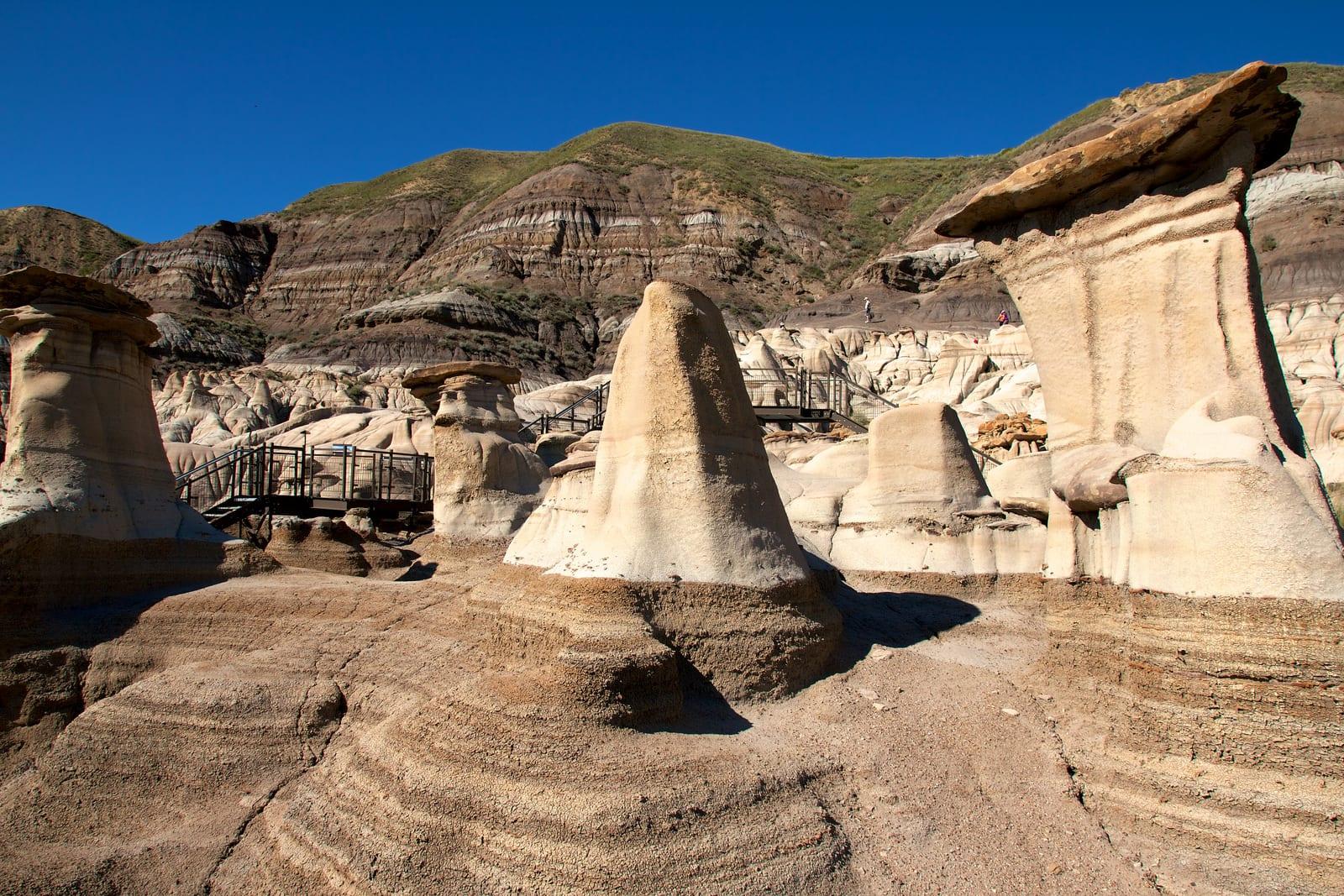 Drumheller Hoodoos Fossil Hunting GuideHadrosaur bone, Dinosaur tooth fragments
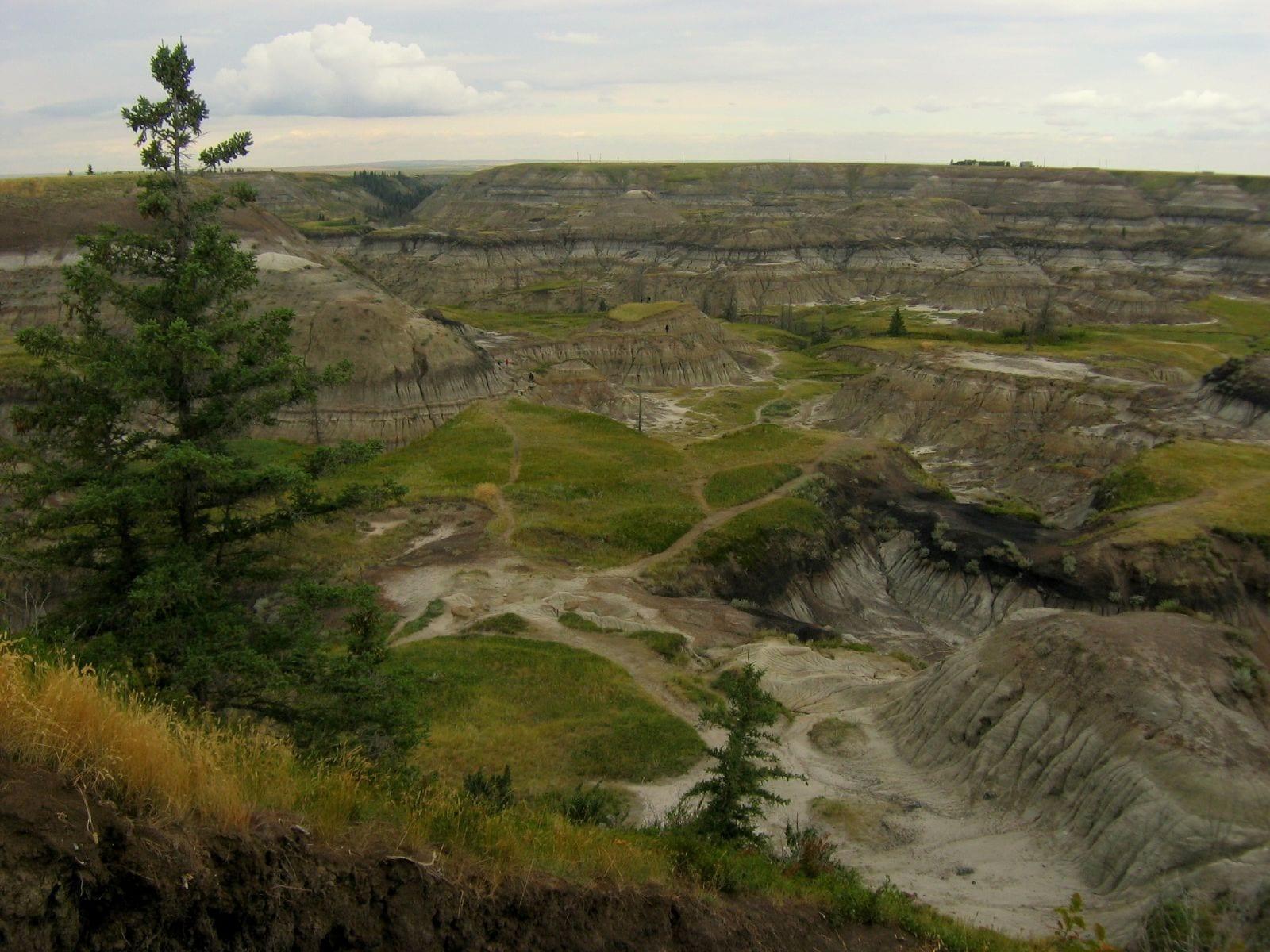 Horseshoe Canyon (Drumheller) Fossil Hunting GuideHadrosaur bone, Theropod material
 Devil's Coulee Dinosaur Heritage Museum Fossil Hunting GuideDinosaur eggs, Eggshell
 T.rex Discovery Centre, Eastend Fossil Hunting GuideDinosaurs, Tyrannosaurs