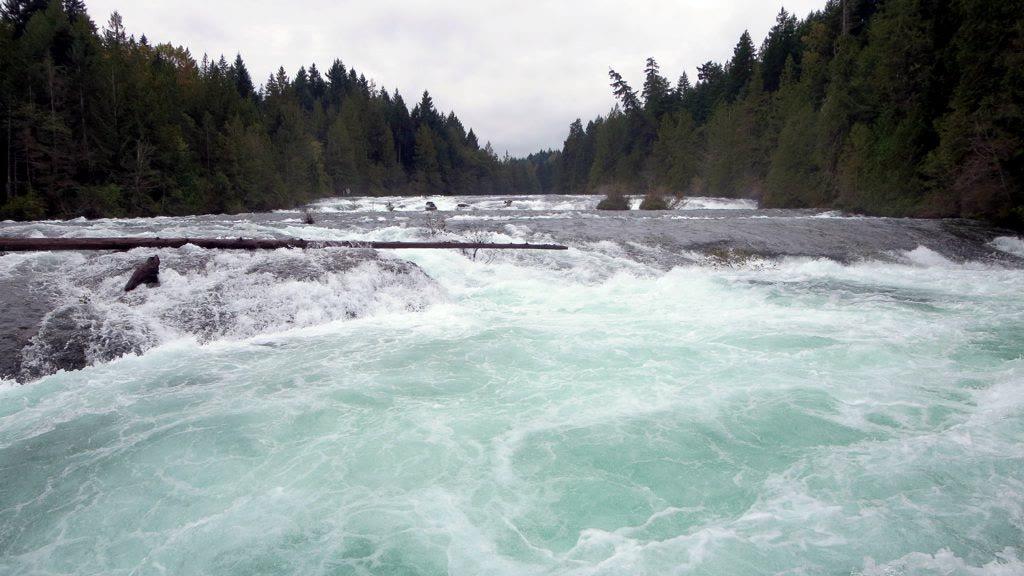
Puntledge River, Courtenay Fossil Hunting Guide
Image: David Stanley (CC BY 2.0)
The Vancouver Island river where a father and daughter found an elasmosaur in 1988, now British Columbia's official fossil emblem. Late Cretaceous Nanaimo Group shales in the riverbed yield ammonites, crabs and marine reptile bone, and the Courtenay museum runs tours to them.
By Edward Chen · Published 14 September 2026
Introduction
In November 1988 Mike Trask and his daughter Heather walked the Puntledge River near Courtenay. They noticed bone that weathered out of the shale. What they had found was an elasmosaur, a long-necked marine reptile roughly 12 metres from nose to tail.
The specimen became the best known fossil in British Columbia. In 2023 the province named the Courtenay elasmosaur its official fossil emblem, the result of a campaign that ran for years.
In 2025 it finally got a scientific name. Traskasaura sandrae honours Michael and Heather Trask, who found the holotype. It is the first elasmosaurid both discovered in and named from British Columbia.
The Puntledge River cuts through Nanaimo Group rocks laid down in a Late Cretaceous sea, and it has produced a great deal more than one reptile. Ammonites, crabs, bivalves and mosasaur material all come from the same beds.
The Courtenay and District Museum runs the fossil tours, and they are the practical way onto the productive stretches of the river. This page could not establish whether the productive reaches are Crown land, park or private ground, so ask the museum before you work them alone.
The elasmosaur took years to recover and prepare. It is now the centrepiece of the museum's palaeontology gallery. An amateur find became a provincial emblem, and that story is a large part of why the programme exists.
 Photo: D. Gordon E. Robertson, CC BY-SA 3.0, via Wikimedia Commons
.jpg)
Location and Directions
The Puntledge River runs through Courtenay in the Comox Valley on eastern Vancouver Island, about 220 kilometres north-west of Victoria.
GPS: 49.6958°N, 124.9947°W.
The Courtenay and District Museum and Palaeontology Centre in downtown Courtenay is the starting point for tours. Tours run Tuesday to Saturday. The morning tour starts at the museum at 9:00 and finishes at the river at 12:00, and the afternoon tour runs from 13:00 to 16:00.
The museum requires you to book in advance and to pay in full when you book. You need your own vehicle, because the museum does not carry you to the river. The drive is about ten minutes, followed by an easy five-minute walk through woodland.
The 2026 fee is 47.25 Canadian dollars for adults and 36.75 for children aged 4 to 16. Children under 4 go free. A family of two adults and up to three children costs 173.25, and a private group of up to 15 adults costs 341.25. Museum members get 15 percent off.
River level still controls what you can work. The fossil-bearing shale is in and beside the channel, and low water exposes most of it. The museum calls tours in early spring and late autumn weather dependent.
Vancouver Island is reached by ferry from the mainland, and the drive north from Nanaimo takes around an hour and a half.
 Photo: Jo Hund, CC BY-SA 3.0, via Wikimedia Commons

What Fossils You'll Find
Tours take participants into the river to split shale, and finds are common enough that most people come away having seen something.
Ammonites are the signature fossil. Several species occur, including large specimens, and they weather out of the shale as flattened coils.
Crabs are a Comox Valley speciality, preserved in concretions that split to reveal a whole animal. Bivalves, gastropods and inoceramid shells are abundant.
Marine reptile material is the rare prize. Elasmosaur and mosasaur bones have both come from this stretch, along with turtle and fish remains.
The mosasaur Kourisodon puntledgensis takes its species name from this river. It was a small, razor-toothed animal. Ask the museum what it currently has on display.
The museum's own rule is generous: you keep any fossils you find on the tour. If a find turns out to be a species of scientific value, the museum may ask you to donate it. Your name goes on the record as the finder.
Concretions are worth learning to recognise. They are rounded, harder than the surrounding shale, and they ring differently under a hammer, which is the practical way guides pick them out.
 Photo: Roland Tanglao from Vancouver, Canada, CC BY 2.0, via Wikimedia Commons

Geologic History
The Nanaimo Group accumulated between roughly 90 and 65 million years ago in a forearc basin off the west coast of North America. That basin held water between the open Pacific and the continental margin.
The Courtenay exposures date to around 85 to 80 million years ago. Traskasaura came from the Haslam Formation, one of the lower units of the group, in the Santonian stage.
The environment was a shelf sea, deep enough for quiet mud deposition, with submarine fans delivering coarser material from land.
Ammonites and marine reptiles lived in the water column above. Carcasses sank into oxygen-poor mud, which is why articulated material survives here.
Concretions formed around decaying organisms soon after burial, sealing crabs and other delicate fossils in a hard carbonate shell that has protected them ever since.
Glaciation and then post-glacial river incision cut down through the sequence and exposed it.
The same Nanaimo Group rocks run the length of eastern Vancouver Island and across the Gulf Islands. Coal seams in the group were mined around Nanaimo for a century, which is how the sequence came to be mapped in such detail.
Collecting Rules and Regulations
British Columbia's Fossil Management Policy allows recreational collecting on Crown land, within limits. It covers surface collection of common, globally abundant fossils, for non-commercial purposes, with hand tools only.
The province words the ownership point carefully. A recreational collector becomes the caretaker of a fossil rather than its owner, because the province is the custodian of every fossil found in British Columbia. You may hold non-significant, locally abundant material, provided you do not sell it, damage it, or export it out of the province without permission.
So the tour is the recommended route rather than a legal requirement. It gets you to exposures that are hard to find alone, and the guides know which concretions are worth splitting. On the tour you keep what you find, and the museum asks for scientifically valuable species as donations.
Significant fossils, which includes vertebrate material, stay in provincial custody wherever they are found.
Do not dig into the riverbank or use heavy tools in the channel. This is a fish-bearing river with salmon runs, and disturbing the bed carries its own set of regulations.
Ask the museum before you do anything independently.
Safety
Rivers are more dangerous than they look. Current, cold water and slick bedrock combine badly, and the Puntledge can rise quickly if water is released upstream.
Follow the guide's instructions about where to stand and when to get out.
Wet shale and algae-covered rock are extremely slippery. Wear boots with good grip and expect to get wet.
Splitting rock sends chips flying. Safety glasses are essential, and the tour will normally provide them.
The canyon section has steep sides. Use the access routes the guide uses.
Sources
https://courtenaymuseum.ca/ https://en.wikipedia.org/wiki/Courtenay_elasmosaur https://www.courtenaymuseum.ca/programmes-exhibits/our-programmes/the-fossil-tour/ https://news.gov.bc.ca/releases/2023TACS0049-001661 https://www2.gov.bc.ca/gov/content/industry/natural-resource-use/fossil-management
Nearby sites
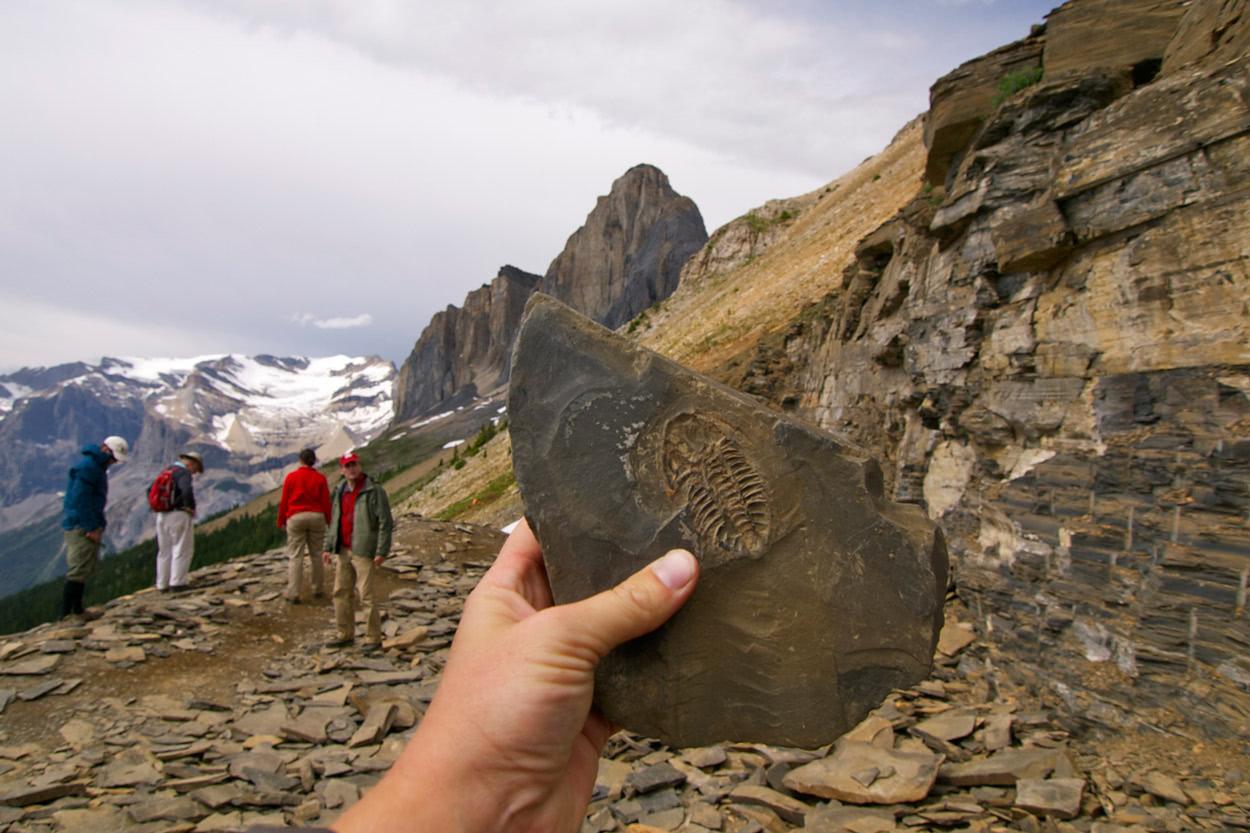 Burgess Shale Fossil Hike GuideTrilobites, Anomalocaris
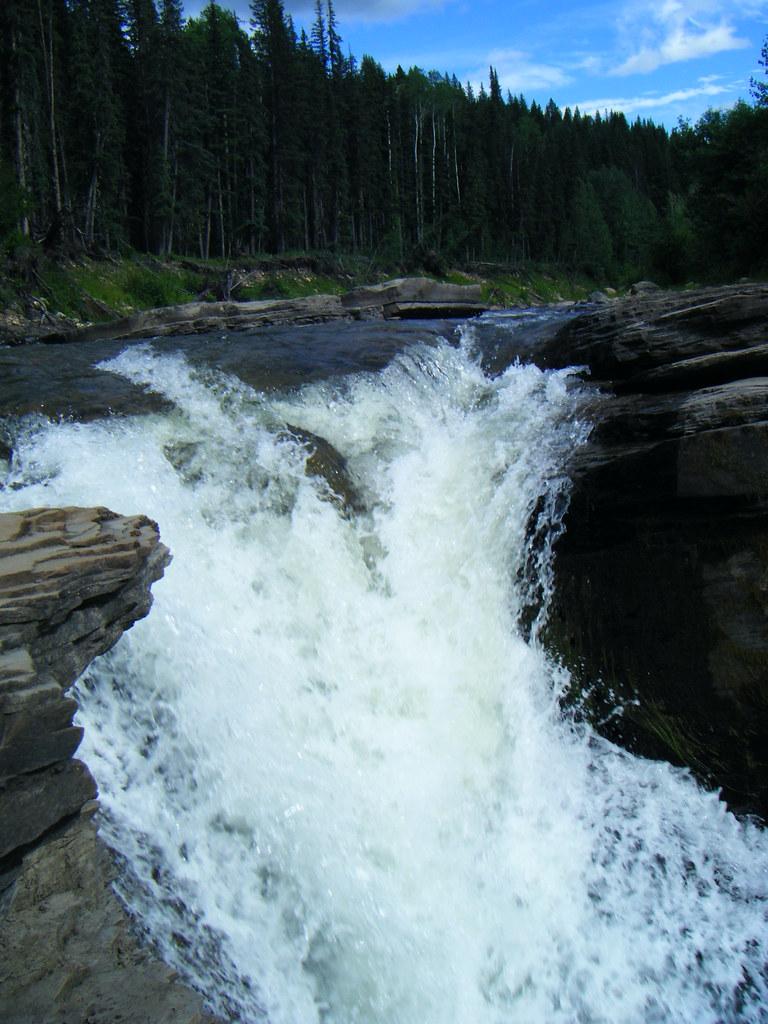 Tumbler Ridge UNESCO Global Geopark Fossil Hunting GuideTyrannosaurid trackways, Ankylosaur footprints
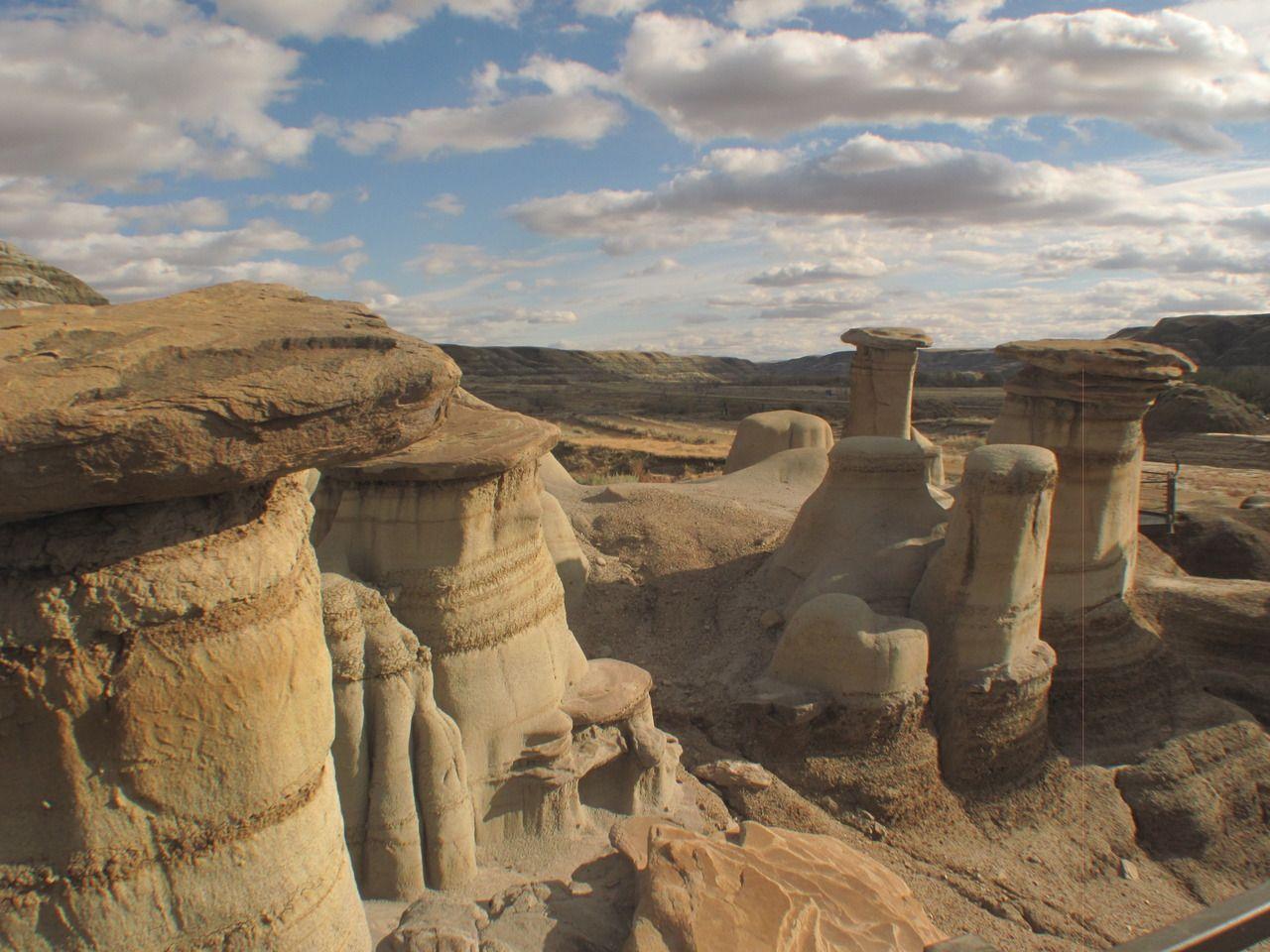 Horseshoe Canyon (Drumheller) Fossil Hunting GuideHadrosaur bone, Theropod material
 Drumheller Hoodoos Fossil Hunting GuideHadrosaur bone, Dinosaur tooth fragments