Valdecevillo and the Enciso Dinosaur Tracks Fossil Hunting Guide
Image: tunguska from Logroño, Spain (CC BY 2.0)
Enciso in La Rioja, Spain, has about 1,400 recorded dinosaur tracks in the Early Cretaceous Enciso Group. Barranco de Valdecevillo shows theropod, ornithopod and sauropod trackways, and a 7 km trail links it to La Senoba and La Virgen del Campo. Entry to the sites is free.
By Edward Chen · Published 1 October 2026
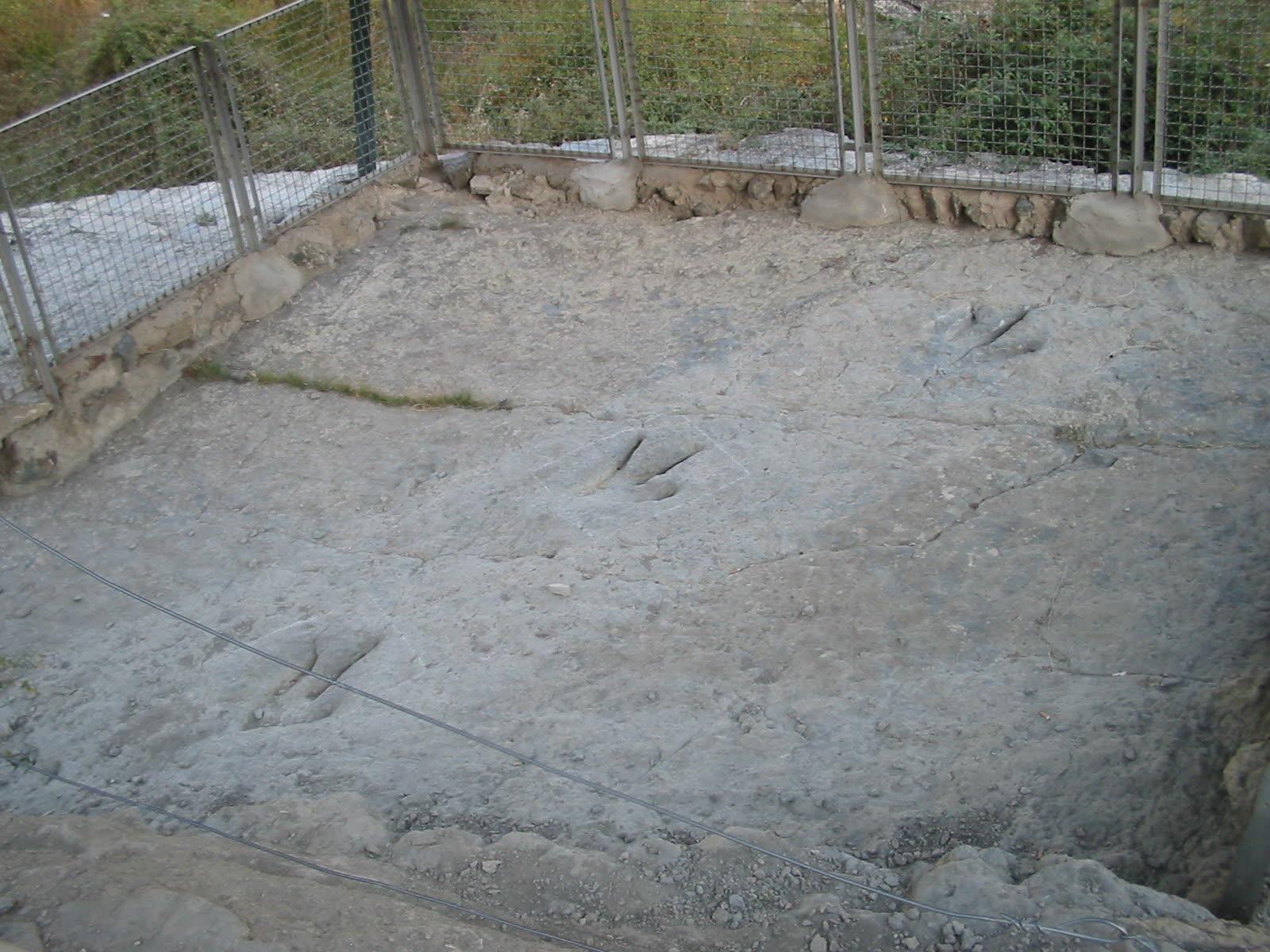
 Photo: Jynus, CC BY-SA 4.0, via Wikimedia Commons

Introduction
Enciso, in the Upper Cidacos valley of La Rioja, has about 1,400 recorded dinosaur tracks. They lie in the Early Cretaceous Enciso Group of the Cameros Basin. The Barranco de Valdecevillo tracksite is the best place to start. A trail climbs past theropod, ornithopod and sauropod trackways and life-size models of the animals that made them.
The sites are in the open air and you can visit them free of charge. Some have fences and roofs. A boardwalk crosses La Virgen del Campo. The Centro Paleontológico de Enciso explains the tracks and runs guided visits. You may not collect or damage anything.
Valdecevillo is one of the first tracksites studied in La Rioja. Casanovas and Santafé studied it in 1974. Photogrammetry and drone video now record its current state.
Location and Directions
Enciso is about 72 km from Logroño, near the border with Soria province. To reach the sites, enter Enciso and cross the bridge over the river Cidacos. Signs mark the routes from the bridge. A paved road links Enciso and Cornago.
Valdecevillo is 2 km from the bridge, on the Enciso to Cornago road. It has a car park at the start of the trail. The GPS position is 42.137 degrees north and 2.256 degrees west.
The Senda de los Dinosaurios de Enciso is a circular walk of about 7 km. It has a low difficulty rating and takes about 1 hour 50 minutes. The stages are:
- Enciso to Valdecevillo: 1.8 km, about 30 minutes.
- Valdecevillo to La Senoba: 2.1 km, about 1 hour 10 minutes from the start.
- La Senoba to La Virgen del Campo: 2.6 km, about 1 hour 40 minutes from the start.
- La Virgen del Campo back to Enciso: 0.5 km.
The Centro Paleontológico de Enciso is at Calle Portillo 3. It opens Wednesday to Sunday from 11:00 to 15:00, with last entry at 14:00. Tickets cost 5 euros for adults and 2 euros for children aged 4 to 12. A reduced rate of 3 euros applies to some groups. Children under 3 and registered residents enter free.
Guided visits to Valdecevillo and La Virgen del Campo run on Saturdays and Sundays at 12:00. Book in advance on 941 396 093 or at centro_paleontologico@aytoenciso.larioja.org. Hours change at festivals, so check the centre's website.
What Fossils You'll Find
The fossils here are footprints. Dinosaurs walked on mud at the edge of a lagoon and left prints that later hardened.
Valdecevillo has four main groups of tracks. The route begins with four theropod tracks under a shed roof behind a fence. They belong to carnivorous dinosaurs 7 to 10 m long. The animals walked pigeon-toed and had strong claws.
Higher up, three parallel ornithopod trackways show an iguanodont family. The outer trackways have larger prints than the middle one. Researchers read this as two adults with a juvenile between them. Near the top, a four-legged sauropod left 59 tracks, with both hand and foot prints. More tracks above are still under study. Published totals for Valdecevillo differ, and Spanish Wikipedia gives 168 prints.
La Virgen del Campo has 506 tracks. The surface also shows skin marks, tail drag marks, ripple marks and scratches that researchers read as swimming dinosaurs. Mollusc shells are visible. La Senoba has 130 tracks, including 10 theropod tracks and 2 ornithopod tracks.
Other sites include Icnitas 3 (21 theropod tracks), Navalsaz (138 tracks, mostly ornithopod) and La Cuesta de Andorra (21 large ornithopod tracks). El Villar-Poyales gave the ichnospecies Theroplantigrada encisensis. It is a trackway of 20 prints from a three-toed biped that walked on the whole sole and had webbing between its toes.
At the nearby Umbría de Cubillo site, researchers attribute two ornithopod trackways with metatarsal marks to Caririchnium. Body fossils from the Enciso Group include the spinosaurid Riojavenatrix lacustris and the turtle Camerochelys vilanovai.
Geologic History
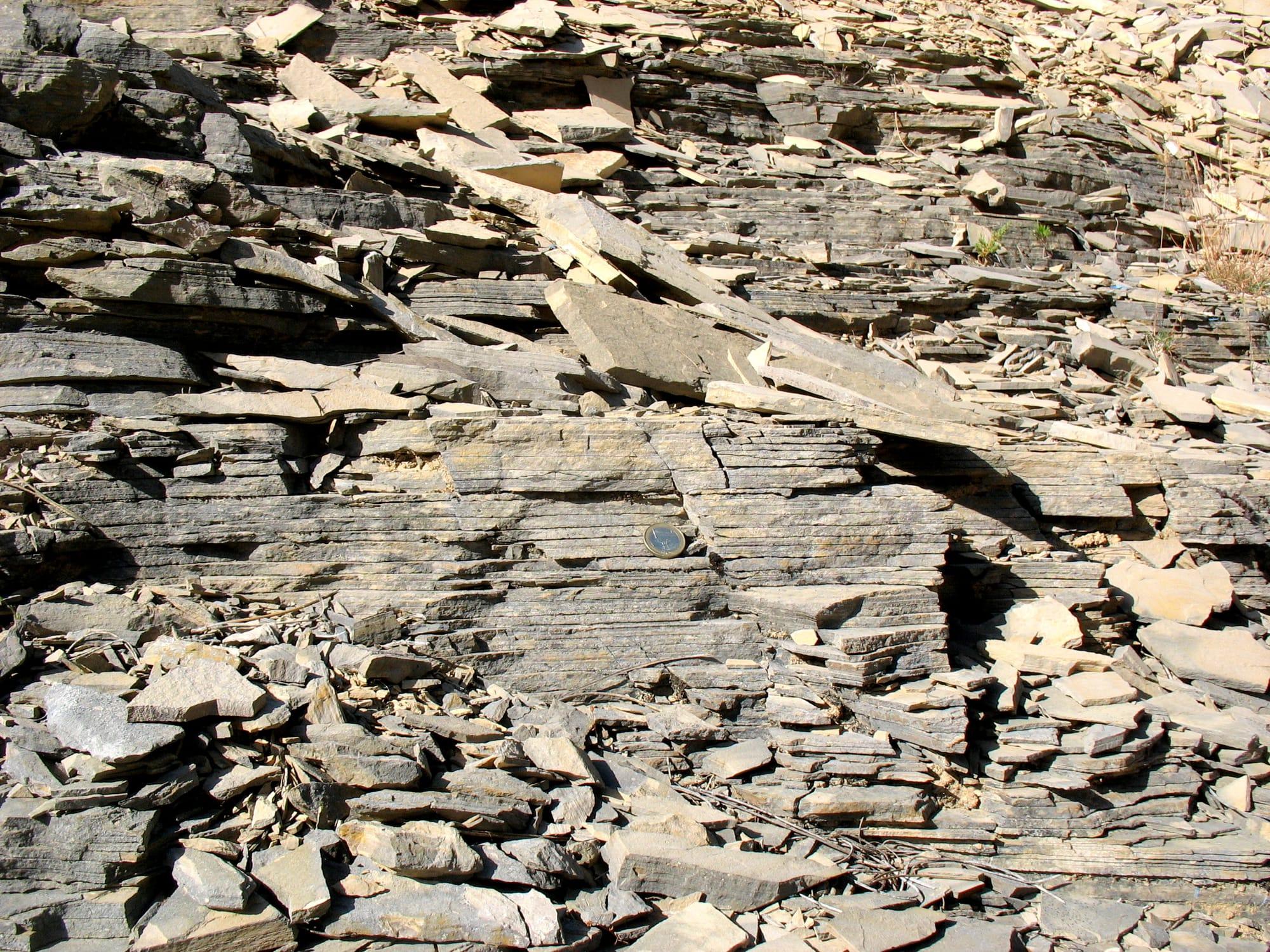
The tracks lie in the Enciso Group of the Cameros Basin, a rift basin that filled with lake and delta sediment. The group runs from the Hauterivian to the early Aptian, about 135 to 118 million years ago. It consists of sandstone, limestone and marl.
Valdecevillo lies in the upper part of unit U3, a siliciclastic unit in the lower Enciso Group. La Virgen del Campo and La Senoba lie in the top of unit U1, which holds bivalve fossils. Authors disagree on the age of these lower beds. They give the Hauterivian, the Barremian, or both.
The area was a lagoon that dried out from time to time. Dinosaurs stepped in wet mud. The mud hardened in the sun, and later layers of sand and silt buried the prints. Erosion has uncovered the surfaces. At La Virgen del Campo, true prints sit beside rounded casts of prints on the layer below.
Collecting Rules and Regulations
You may not collect or damage anything. The tracks are part of the rock surface. There is nothing to collect, and you must leave every surface as you find it.
Spain protects the sites as Bienes de Interés Cultural. Decree 34/2000 gave this status to 15 Enciso sites. La Rioja Law 7/2004 places paleontological remains found through unauthorized acts in the public domain. This guide found no published penalty figure.
Keep to the boardwalk and the paths. Do not walk on the track surfaces and do not mark, cast or scratch them.
Safety
The first 1.8 km from Enciso follows the Enciso to Cornago road. Watch for traffic and walk on the verge.
The path above Valdecevillo is steep. Wear hiking shoes. Bring water and sun protection, especially in summer. This guide found no information on water supply at the sites.
Allow time for each site. The recreation areas along the route have places to rest and eat.
Sources
https://lariojaturismo.com/en/lugar-de-interes/yacimientos-de-icnitas-de-enciso/edb85792-b5e4-4fdf-8400-dadd15730638 https://centropaleontologicodeenciso.org/ https://centropaleontologicodeenciso.org/agenda/ https://doi.org/10.55407/geogaceta117019 https://doi.org/10.5209/rev_JIGE.2014.v40.n1.44091 https://doi.org/10.26879/918 https://www.senditur.com/es/ruta/senda-de-los-dinosaurios-de-enciso/ https://en.wikipedia.org/wiki/Enciso_Group https://es.wikipedia.org/wiki/Enciso_(La_Rioja)
Nearby sites
 Salas de los Infantes Dinosaur Sites Fossil Hunting GuideDemandasaurus darwini (sauropod), Europatitan eastwoodi
 Atapuerca Archaeological Site Fossil GuideHominin remains, Homo antecessor
 Galve Dinosaur Trail Fossil Hunting GuideSauropod trackways, Theropod footprints
 Las Hoyas Lagerstätte Fossil Hunting GuideConcavenator corcovatus (carcharodontosaurid), Iberomesornis romerali (early bird)