Chengjiang Fossil Site, Maotianshan Fossil Hunting Guide
Image: Zhangmoon618 (CC BY-SA 3.0)
A UNESCO World Heritage Site in Yunnan preserving the Chengjiang biota, one of the three great Cambrian soft-bodied faunas alongside the Burgess Shale. The Maotianshan Shale is about 520 million years old and records the Cambrian explosion in exceptional detail.
By Edward Chen · Published 12 September 2026
Introduction
Three places in the world preserve the Cambrian explosion in soft tissue. The Burgess Shale in Canada is the famous one. Sirius Passet in Greenland is the remote one. Chengjiang in Yunnan is the oldest, and in many respects the richest.
The Chengjiang biota dates to about 520 million years ago, which puts it roughly 10 million years before the Burgess Shale. That gap matters, because it places Chengjiang closer to the origin of the major animal groups rather than to their aftermath.
What makes the deposit exceptional is that it preserves animals without hard parts. Ordinary fossilisation records shells, bone and teeth. Here, guts, gills, eyes, limbs and nervous tissue survive as films in the mudstone. That is the only way to know what most Cambrian animals actually looked like.
UNESCO inscribed the site as World Heritage in 2012. It is a research locality and a protected area, not a collecting ground.
Location and Directions
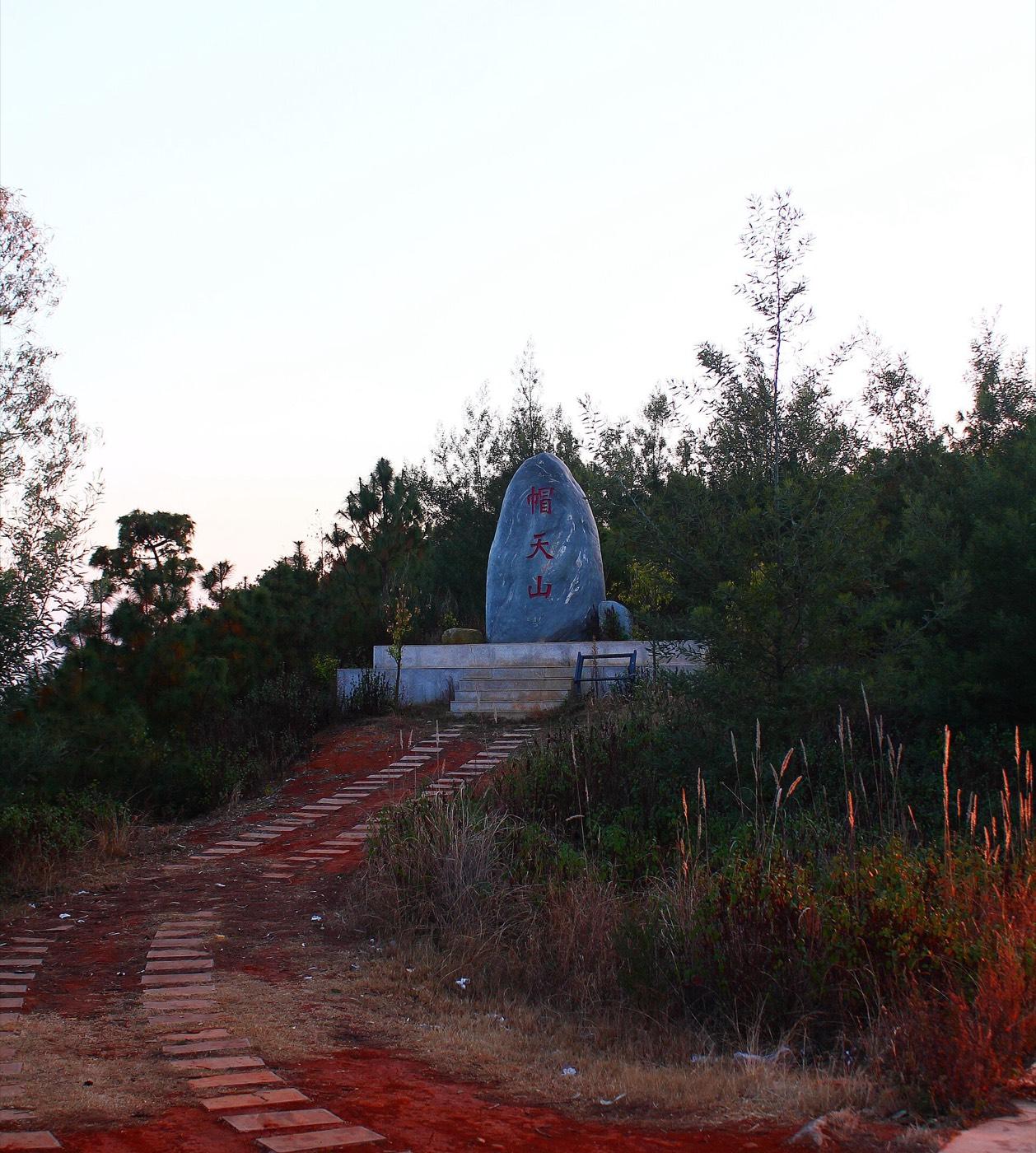
The site is at Maotianshan, near Chengjiang in Yuxi prefecture, Yunnan province, in south-west China.
GPS: 24.6689°N, 102.9772°E.
Kunming is the nearest major city and airport, about 60 kilometres away, with road connections to Chengjiang. The area sits near Fuxian Lake, which is a domestic tourist destination in its own right.
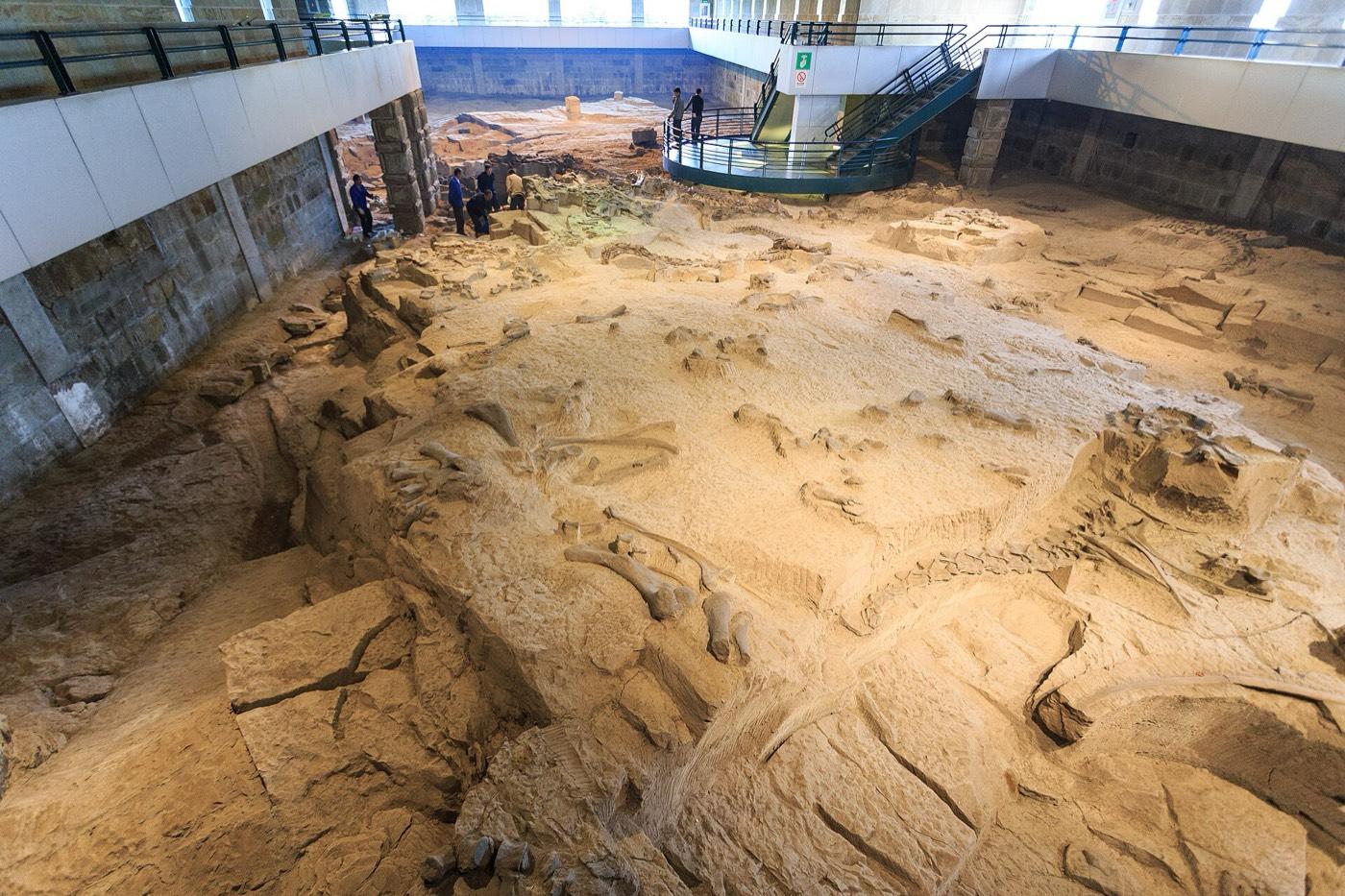
The Chengjiang Fossil Site Natural History Museum is the single visitor facility, purpose-built on the fossil site itself. It holds the main displays.
Admission is free. Confirm opening before you travel, because hours shift seasonally and around Chinese public holidays.
What Fossils You'll Find
Nothing is collectable. The fossil beds are protected and excavation is restricted to researchers.
Close to 200 species have been described. The fauna includes Anomalocaris, a large predator with grasping appendages. Haikouichthys, one of the earliest known chordates and therefore one of the earliest relatives of vertebrates.
Priapulid worms dominate ecologically. That is an unexpected result, and it is one reason the biota is studied for community structure rather than for individual oddities. Trilobites, sponges, brachiopods, lobopodians and a wide range of arthropods occur throughout.
The museum displays are where you see this material. The specimens are small, flat and dark, and they need good lighting and interpretation to read, which the museum provides.
 Photo: 瑞丽江的河水, CC BY-SA 4.0, via Wikimedia Commons
Geologic History
The fossils occur in the Yu'anshan Member of the Chiungchussu Formation, which is also written Heilinpu. Maotianshan Shale is the informal name for the fossil-bearing beds rather than a formal unit. It is early Cambrian, Series 2 and Stage 3 in current terms, around 520 to 515 million years ago.
The setting was a shallow marine shelf on the Yangtze Platform. Storm events swept animals into deeper, oxygen-poor water and buried them rapidly in fine mud. Low oxygen stopped decay and scavenging, and the mud was fine enough to record soft tissue as a film.
That combination of rapid burial and anoxia is what all three great Cambrian Lagerstätten share. It is rare, which is why the record of soft-bodied Cambrian life rests on so few localities.
Comparison with the Burgess Shale is the usual frame, and the differences matter. Chengjiang is older, its fossils are preserved as flattened films rather than in the Burgess style. Its fauna includes forms that do not appear in Canada. Together the two sites carry most of what is known about early animal body plans.
 Photo: Woudloper, CC BY-SA 4.0, via Wikimedia Commons
Collecting Rules and Regulations
Collecting is prohibited. This is a UNESCO World Heritage Site and Chinese law treats fossils of scientific value as state property.
Do not buy Chengjiang specimens. The locality has a long history of illegal collecting and the market carries both stolen material and forgeries, and exporting either is a criminal matter.
Photograph the displays and leave the ground alone.
Anomalocaris is the animal most visitors will recognise. It was reconstructed wrongly for decades, on Burgess Shale material rather than Chinese. Whiteaves described the frontal appendage as a shrimp's body in 1892. Walcott then named the mouth as a jellyfish and the body as a sea cucumber in 1911. Briggs and Whittington reassembled the animal in the 1980s, and Chengjiang material has since helped settle what it looked like.
 Photo: Woudloper, CC BY-SA 4.0, via Wikimedia Commons
Safety
The museum is a managed visitor facility and presents no unusual hazards.
Yunnan sits at altitude. Chengjiang is around 1,700 metres, which is enough to affect visitors arriving from sea level, and the sun is strong.
The rainy season runs roughly June to September and can make unsurfaced approaches difficult.
Yunnan is seismically active.
The Cambrian explosion is a compressed event by geological standards but not an instant one. Most animal body plans appear in the record across roughly 20 million years, and Chengjiang sits early in that window. What it shows is not the beginning of the process but a rich cross-section partway through.
Haikouichthys is the specimen with the widest implications. A small, soft-bodied animal a few centimetres long, it shows a notochord, segmented muscle blocks and what appear to be gill structures. That places it near the base of the vertebrate lineage.
 Photo: Woudloper, CC BY-SA 4.0, via Wikimedia Commons
 Photo: Woudloper, CC BY-SA 4.0, via Wikimedia Commons
 Photo: Woudloper, CC BY-SA 4.0, via Wikimedia Commons
Sources
https://whc.unesco.org/en/list/1388/ https://en.wikipedia.org/wiki/Maotianshan_Shales https://www.sciencedirect.com/science/article/abs/pii/S0031018212002878 https://www.sciencedirect.com/science/article/abs/pii/S0031018207004555