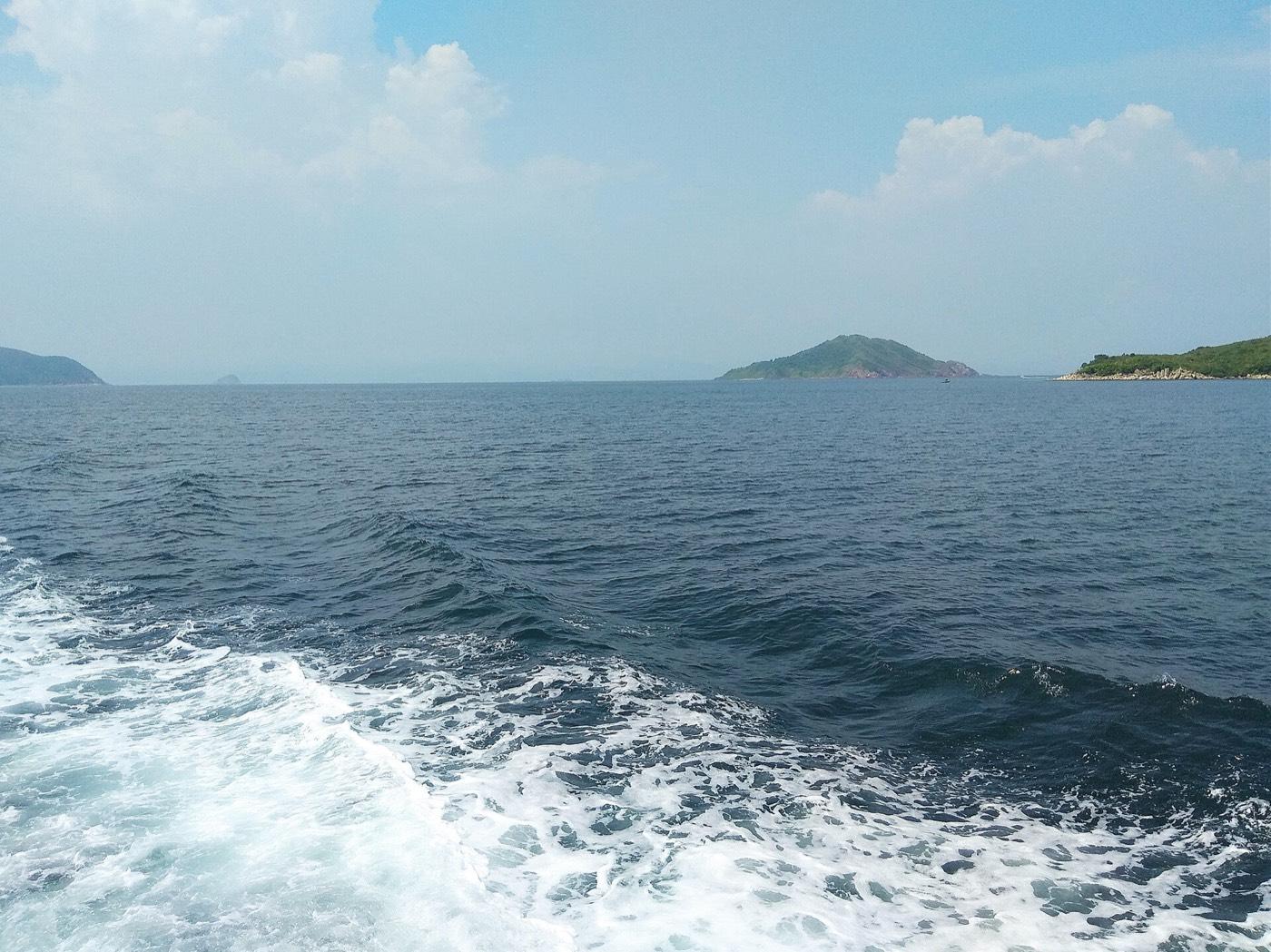
Port Island (Chek Chau), Hong Kong Fossil Hunting Guide
Image: Underwaterbuffalo (CC BY-SA 4.0)
The uninhabited island in Hong Kong's UNESCO Global Geopark where the territory's first dinosaur fossils were found in October 2024. The island closed for excavation and reopened that December. Access is by boat and the government advises a guided tour.
By Edward Chen · Published 12 September 2026
Introduction
Hong Kong is one of the most intensively surveyed pieces of land on Earth, and until October 2024 it had never produced a dinosaur. Then a survey team working on Port Island found bone in the red sedimentary rocks of an uninhabited island in the north-east New Territories.
The announcement on 23 October 2024 was the territory's first dinosaur discovery. Around 30 fossil-bearing rocks were recovered over the following weeks.
The government closed the whole island immediately so that specialists could excavate. It reopened to the public on 12 December 2024.
Port Island is called Chek Chau in Cantonese, meaning red island, after the colour of its rocks. That colour is the same iron-stained Cretaceous sediment that held the bone.
Location and Directions
Port Island lies in Plover Cove (Extension) Country Park in the north-east New Territories, within the Hong Kong UNESCO Global Geopark.
GPS: 22.5011°N, 114.3590°E.
The island is uninhabited and has no facilities. There is no pier service in the ordinary sense and no shop, no water and no shelter. Access is by boat, usually from Ma Liu Shui or Wong Shek.
The government advises visitors to join a guided tour rather than going alone. That advice is about the absence of facilities and the difficulty of the terrain rather than about permission.
The fossils themselves are not on the island. Specimens are displayed at the Hong Kong Heritage Discovery Centre in Kowloon Park, which is the practical destination if you want to see the bone.
What Fossils You'll Find
Nothing is collectable, and in practice nothing is visible. The recovered material has gone for study and display.
The preliminary assessment identified the remains as belonging to a large, aged dinosaur, with the group not determined at the time of announcement. The specimens are Cretaceous, between roughly 145 and 66 million years old.
What the island itself offers is the geology. The red beds catch the eye, the coastal rock formations are the reason the area is in the geopark. The sea arch and sea stacks are the usual photographic draw.
Treat this as a geology excursion with a discovery story attached, not as a place where you will see a dinosaur.
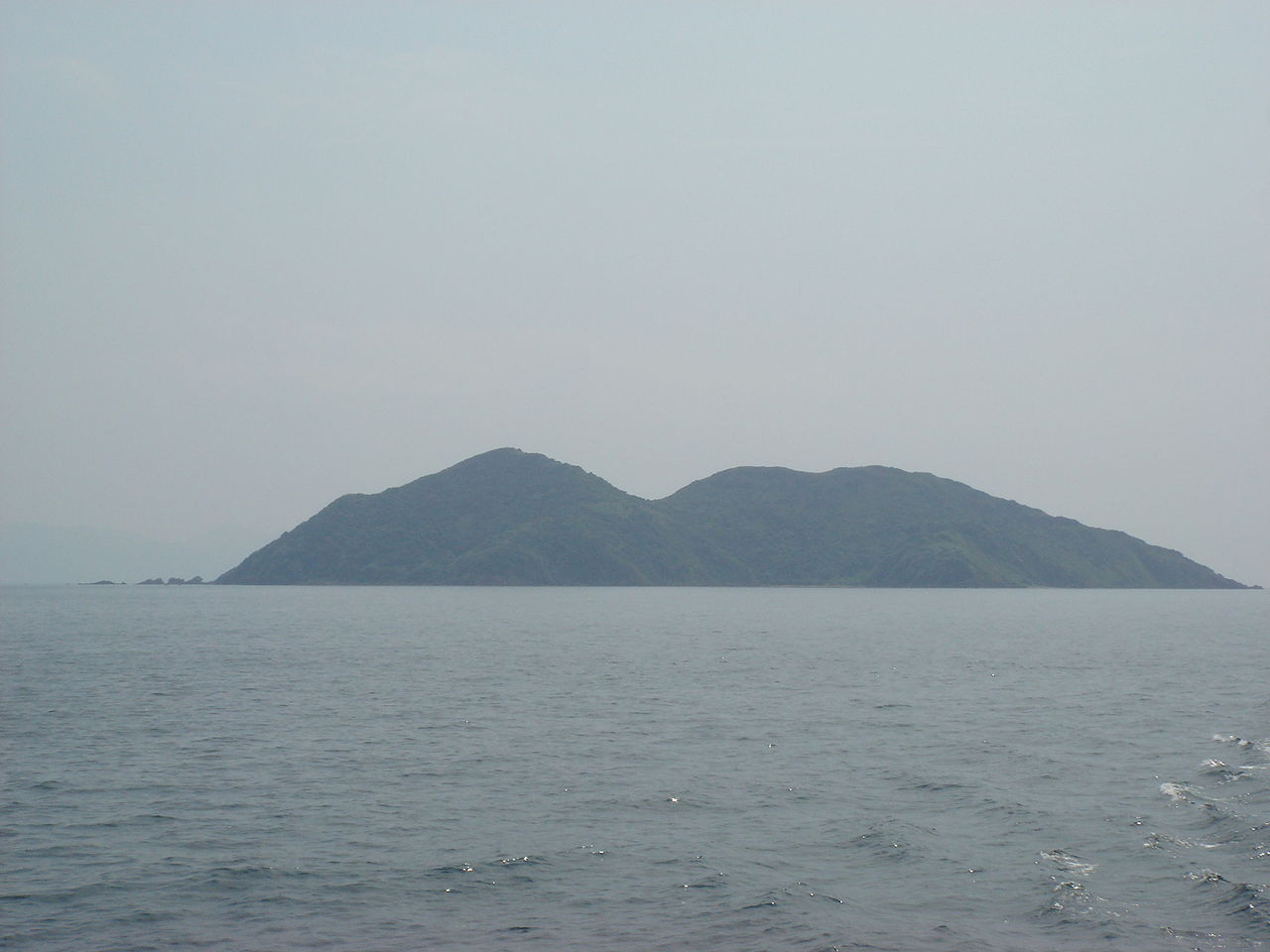 Photo: Underwaterbuffalo, CC BY-SA 3.0, via Wikimedia Commons

Geologic History
The rocks are Cretaceous continental red beds, laid down in a hot, seasonally dry environment where iron oxidised in the sediment and stained it red.
Hong Kong's geology is dominated by volcanic and granitic rocks of Jurassic and Cretaceous age, products of an active continental margin. Sedimentary basins formed between and after those volcanic episodes, and Port Island preserves one of them.
The bone appears to have been buried, exhumed by later processes and reburied before final preservation. That is one reason it took so long to find. Hong Kong's sedimentary record is small in area compared with its igneous rocks.
The discovery raises an obvious question: why did it take until 2024. The answer is exposure. Hong Kong's land surface is overwhelmingly volcanic and granitic. The sedimentary basins that could hold dinosaur bone are small, scattered and mostly offshore or built over.
 Photo: Underwaterbuffalo, CC BY-SA 4.0, via Wikimedia Commons

Collecting Rules and Regulations
Collecting is prohibited. The island is inside a country park and a UNESCO Global Geopark, and Hong Kong country park legislation protects rocks, minerals and fossils.
Removing geological material from a country park is an offence.
If you find something that looks like bone, photograph it, record the position and report it to the Agriculture, Fisheries and Conservation Department rather than moving it.
The Hong Kong UNESCO Global Geopark divides into two regions, the sedimentary rock region in the north-east that contains Port Island. The volcanic rock region to the south-east with its hexagonal columns. Port Island belongs to the former, and the red beds that yielded the bone are among the youngest sedimentary rocks in the territory.
Safety
The island is uninhabited with no facilities of any kind. Carry all your water, and do not count on shade.
The coast is rocky and uneven, and the rock is slippery when wet.
Boat access depends on weather and sea state. Tropical cyclone season runs roughly May to November, and services stop in bad weather.
Hong Kong summers are extremely hot and humid, and heat exhaustion on an exposed island is the realistic risk.
For anyone planning a trip, the honest advice is to treat the Heritage Discovery Centre in Kowloon Park as the main destination and the island as an optional extra. The centre is free, central, air-conditioned and holds the actual specimens. The island is a long boat trip to see the rock they came out of.
Plover Cove Country Park takes in the island and is one of Hong Kong's larger protected areas. It covers a coastline of red sedimentary rock unlike anything else in the territory. The colour comes from iron oxide formed under hot, seasonally dry conditions.
Sources
https://www.geopark.gov.hk/en/about_us/news/20241023A-HK-first-discovery https://news.rthk.hk/rthk/en/component/k2/1783053-20241211.htm https://www.scmp.com/news/hong-kong/health-environment/article/3290373/hong-kong-finds-30-more-dinosaur-fossils-port-island-area-reopen-public https://www.smithsonianmag.com/smart-news/paleontologists-discover-dinosaur-fossils-in-hong-kong-for-the-first-time-180985352/
Nearby sites
 Chengjiang Fossil Site, Maotianshan Fossil Hunting GuideTrilobites, Arthropods
 Zigong Dinosaur Museum, Dashanpu Fossil Hunting GuideDinosaurs, Sauropods
 Lufeng World Dinosaur Valley Fossil Hunting GuideLufengosaurus huenei, Yunnanosaurus huangi
- Sihetun Fossil Dig Site GuideFeathered dinosaurs, Early birds