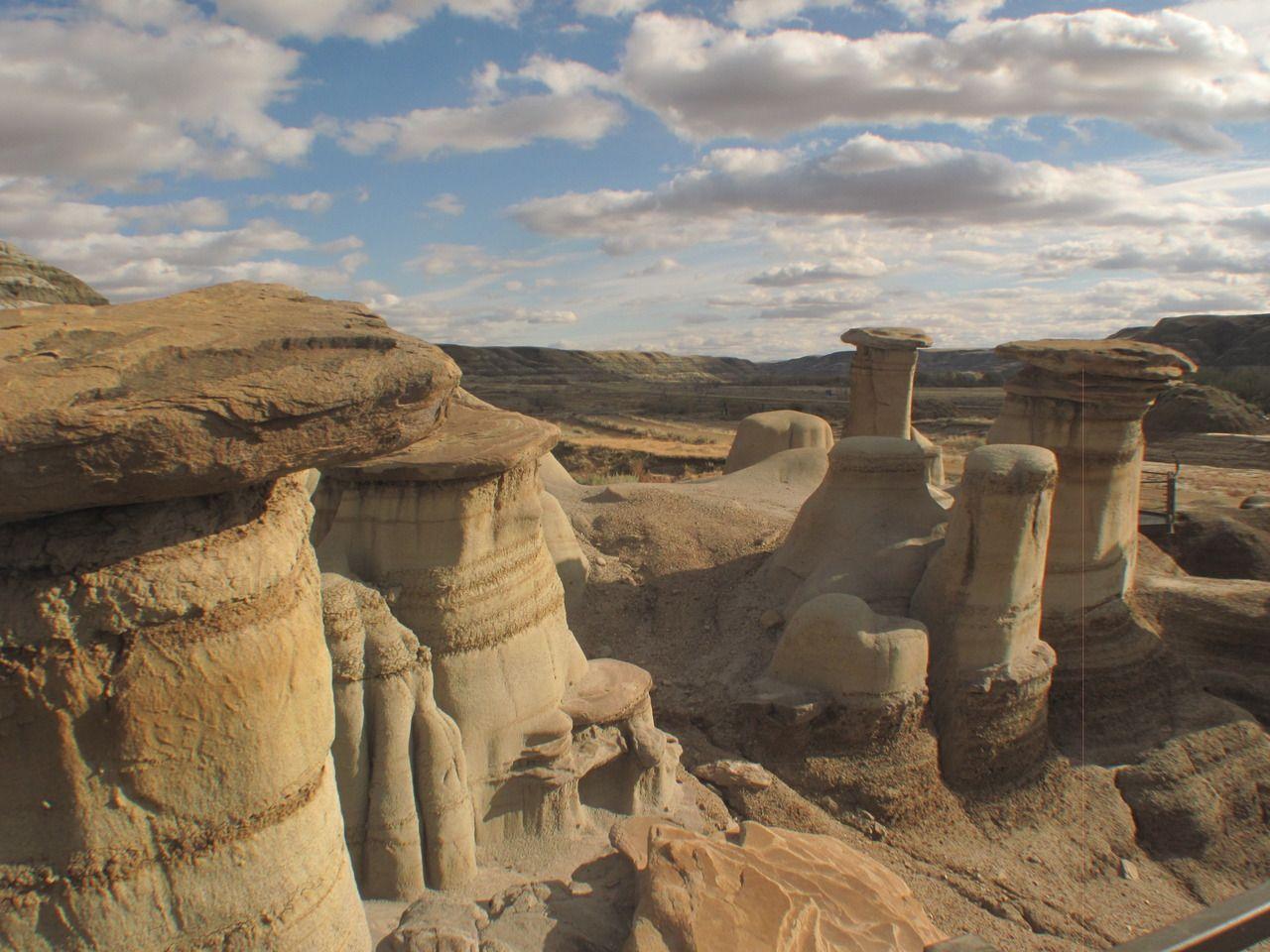
Horseshoe Canyon (Drumheller) Fossil Hunting Guide
Image: John Johnston (CC BY 2.0)
Horseshoe Canyon, about 17 kilometres west of Drumheller, is a U-shaped badland canyon eroded into the Late Cretaceous Horseshoe Canyon Formation. The canyon was long considered fossil-poor until a 2020 hadrosaur discovery on Nature Conservancy of Canada land opened a new chapter in Alberta paleontology. Hiking access is free; vertebrate fossil collecting is regulated under the Alberta Historic Resources Act and digging requires a permit from the Royal Tyrrell Museum.
By Edward Chen · Published 15 June 2026
Introduction
Horseshoe Canyon is a U-shaped badland canyon on Alberta Highway 9 about 17 kilometres west of Drumheller. It is one of the most photographed stops on the Canadian Badlands tourism circuit, with a paved viewpoint, interpretive signage, washrooms, and a network of unmarked hiking trails that descend from the rim into the canyon floor. Geologically the canyon is cut into the Late Cretaceous Horseshoe Canyon Formation (the same coal-bearing terrestrial-and-coastal-plain succession that crops out as the famous hoodoos and dinosaur bonebeds across the broader Drumheller region) and locally exposes the underlying Bearpaw Formation marine shales at the very bottom of the canyon.
For most of the 20th century Horseshoe Canyon itself was considered fossil-poor compared with the bonebeds at Dinosaur Provincial Park and within the Drumheller Valley. That changed in 2020 when 12-year-old Nathan Hrushkin and his father discovered a nearly complete juvenile hadrosaur skeleton on a Nature Conservancy of Canada (NCC) property in Horseshoe Canyon, and subsequent Royal Tyrrell Museum excavations have continued to recover significant material from the formation in the canyon, including additional hadrosaurs, a small theropod, and an adult duck-billed dinosaur skeleton recovered in 2023.
Hiking the canyon is free and open to the public. Vertebrate fossil collecting is regulated under the Alberta Historic Resources Act: surface collection of common invertebrates on Crown land is permitted in reasonable amounts, vertebrate fossils may not be excavated, and any dig requires a permit from the Royal Tyrrell Museum.
This guide covers the visitor experience, the recent discoveries, and the rules.
 Photo: R. Sieben, CC BY 3.0, via Wikimedia Commons

Location and Directions
The Horseshoe Canyon viewpoint is on Alberta Highway 9 about 17 kilometres west of Drumheller and roughly an hour east of Calgary by car. There is a large paved parking lot on the south side of the highway, with interpretive signage at the canyon rim. The reference coordinates above place a visitor at the viewpoint and trailhead. The site is administered by Kneehill County in partnership with the Government of Alberta. Access is free.
Visit experience
From the viewpoint a short paved path leads to overlook platforms with sweeping views into the canyon. A network of unmarked but well-trodden hiking trails descends from the rim into the canyon floor, some routes are steep and require scrambling, others are gentler. The full descent and return loop takes about 1 to 2 hours. The canyon floor is dry most of the year but can flash-flood after summer storms. Avoid the canyon during or immediately after heavy rain. There is no shade, no water, and limited cellular reception once below the rim. The Nature Conservancy of Canada's nearby Nodwell property (where the 2020 discovery was made) is closed to public access.
What Fossils You'll Find
The canyon walls and floor expose the upper part of the Horseshoe Canyon Formation, a Late Cretaceous terrestrial succession deposited between about 73 and 67 million years ago as the Western Interior Seaway retreated to the southeast. The formation is a complex stack of sandstones, mudstones, and coal beds reflecting a low-relief coastal plain with rivers, swamps, lagoons, and floodplains.
Hadrosaur (duck-billed dinosaur) bones are the headline vertebrate find. The 2020 discovery by Nathan Hrushkin on the NCC's Nodwell property was a near-complete juvenile hadrosaur preserved in a single articulated block. Subsequent Royal Tyrrell Museum work has recovered an additional adult hadrosaur skeleton and an assortment of bones from a small theropod, potentially a juvenile tyrannosaur. The dominant late-Campanian to early-Maastrichtian Alberta dinosaur fauna, Edmontosaurus, Hypacrosaurus, Saurolophus, ceratopsians, ankylosaurs, the small dromaeosaur Saurornitholestes, and the regional large theropod Albertosaurus, is known from the Horseshoe Canyon Formation broadly, and elements of it occur in the canyon. Smaller vertebrate microsites preserve mammal teeth, gar scales, crocodile and champsosaur material, and turtle shell fragments.
Coal seams in the canyon preserve abundant fossil plants, leaves, wood, cones, and pollen, recording a warm-temperate to subtropical coastal-plain flora dominated by conifers, ginkgophytes, ferns, and early angiosperms. At the very base of the canyon, where the Bearpaw Formation marine shale crops out, marine invertebrate fossils (ammonites, Baculites, Inoceramus, sharks teeth) occasionally appear.
"A 12-year-old Alberta boy and his father stumbled upon what's now being called a 'significant' dinosaur discovery near Drumheller. Royal Tyrrell Museum scientists confirmed an articulated juvenile hadrosaur skeleton, the first significant find from Horseshoe Canyon itself." CBC News
Geologic History
During the Late Cretaceous the modern Alberta region lay just inland from the western shore of the Western Interior Seaway. The Horseshoe Canyon Formation records the final regression of the seaway and the establishment of broad coastal-plain swamps and rivers across central Alberta between about 73 and 67 million years ago. The lower part of the formation is more marine-influenced (and lies directly above the Bearpaw marine shale). The upper part is more terrestrial, with thick coal seams and large channel sandstones. This is the depositional environment that supported the famous late-Campanian and early-Maastrichtian dinosaur faunas of central Alberta.
The modern badland landscape is much younger and is glacial in origin. Continental ice sheets retreated from the region in the most recent Pleistocene and meltwater from the rapidly retreating ice cut down through the soft Cretaceous sediments, producing the network of canyons and badlands centred on the Red Deer River and its tributaries. Horseshoe Canyon itself is one of the larger side-valley features in the broader system, and ongoing erosion continues to expose new fossiliferous surfaces, which is why fossils that were not visible to early-20th-century geologists are turning up today.
How Horseshoe Canyon became a fossil destination
For decades after the founding of the Royal Tyrrell Museum (1985) the canyon was largely overlooked by professional paleontology, with most field effort focused on the bonebeds at Dinosaur Provincial Park, the Tyrrell's home badlands at Drumheller, and quarry sites along the Red Deer River. The 2020 Hrushkin discovery shifted attention to the canyon and to the surrounding NCC and Crown lands. The Tyrrell has since established an active field program in the canyon and continues to recover material. The canyon is no longer a quiet stop on the Dinosaur Trail.
Collecting Rules & Regulations
Is Fossil Collecting Allowed?
Hiking the canyon is free and unregulated. Vertebrate fossil collecting is regulated. Any digging requires a permit from the Royal Tyrrell Museum.
Key Points:
- Stay on established footpaths where present. The canyon floor and slopes are unstable in places.
- Vertebrate fossils are property of the Crown under the Alberta Historic Resources Act. Do not excavate. Photograph, GPS-tag, and report finds to the Royal Tyrrell Museum.
- Surface collection of common invertebrate fossils on Crown land is allowed within reasonable limits.
- Commercial sale or export of Alberta vertebrate fossils is prohibited.
- The adjacent NCC Nodwell property is closed to public access.
Safety
Horseshoe Canyon is a roadside viewpoint with a car park, a viewing platform, and a staircase down into the canyon, and the risk rises sharply the moment people leave the built path.
Stay on the stairs and the marked trails. The badland slopes are unconsolidated sand and clay that give way underfoot, and the drop from the rim is substantial. Most incidents here involve people scrambling off-trail for a photograph. Keep back from the rim edge, which is undercut in places.
Bentonite clay turns to grease when wet. After rain the informal paths become genuinely treacherous, and what was an easy walk down becomes a slide. Postpone the descent in wet weather.
No shade, and the canyon holds heat. Bare rock radiates it, so summer in the canyon floor is hotter than the prairie above. Carry water, wear a hat, and use sun protection. There is no water on site.
Rattlesnakes live in the Drumheller badlands and shelter under ledges and in scrub. Watch where you put hands and feet, and keep children on the paths. Prickly pear grows across the canyon floor and the spines go through footwear.
The site is on Highway 9 with fast traffic, so take care in the car park and when crossing.
Fossils here are protected under Alberta legislation and may not be collected or removed, and that applies to surface material as much as anything in place.
Sources
Nearby sites
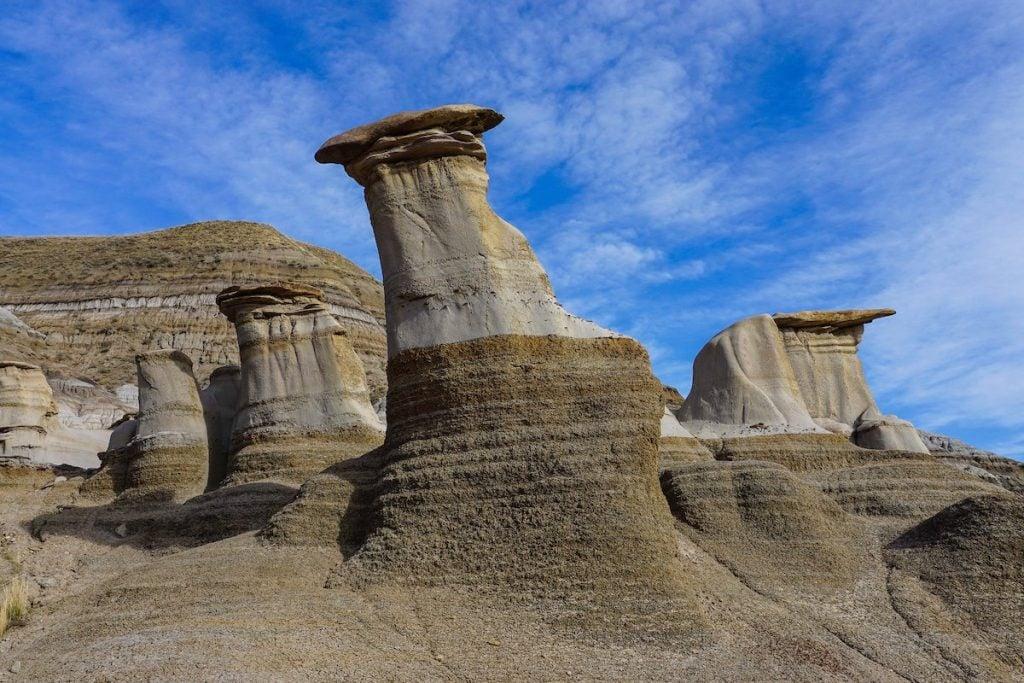 Drumheller Hoodoos Fossil Hunting GuideHadrosaur bone, Dinosaur tooth fragments
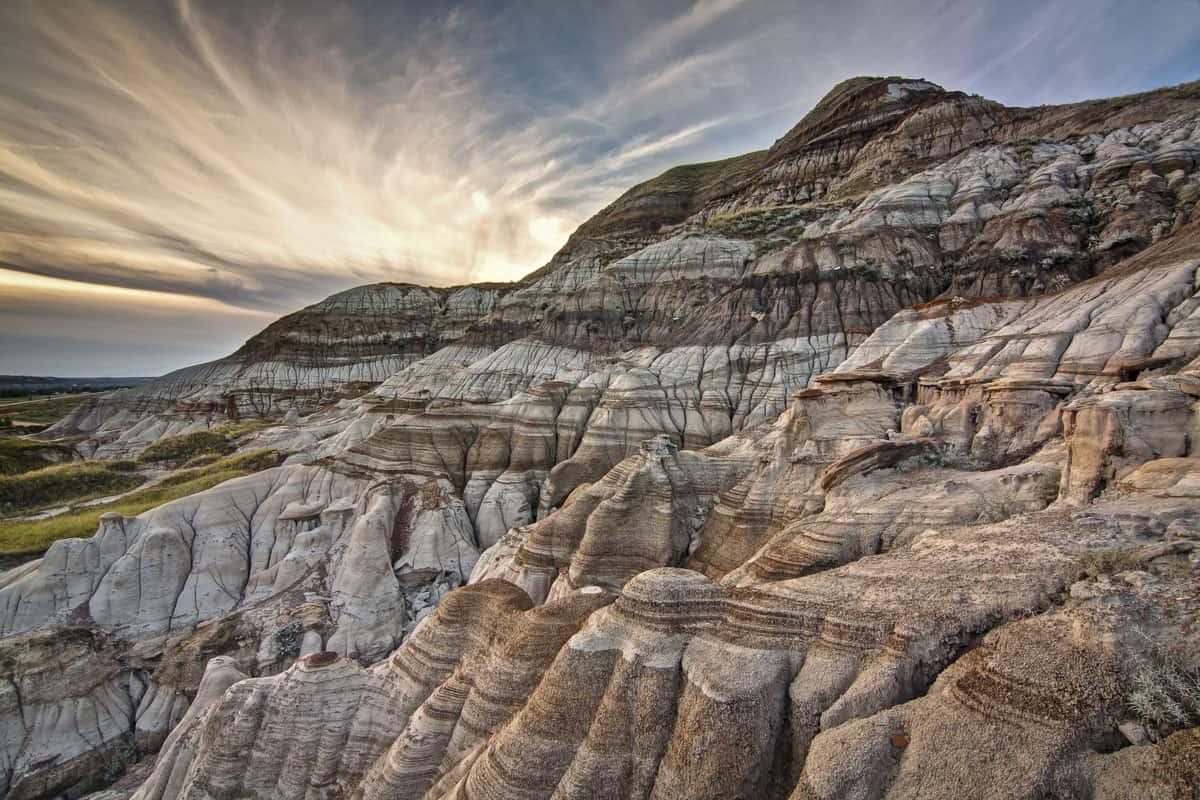 Dinosaur Provincial Park Fossil Hunting GuideHadrosaurs, Ceratopsians
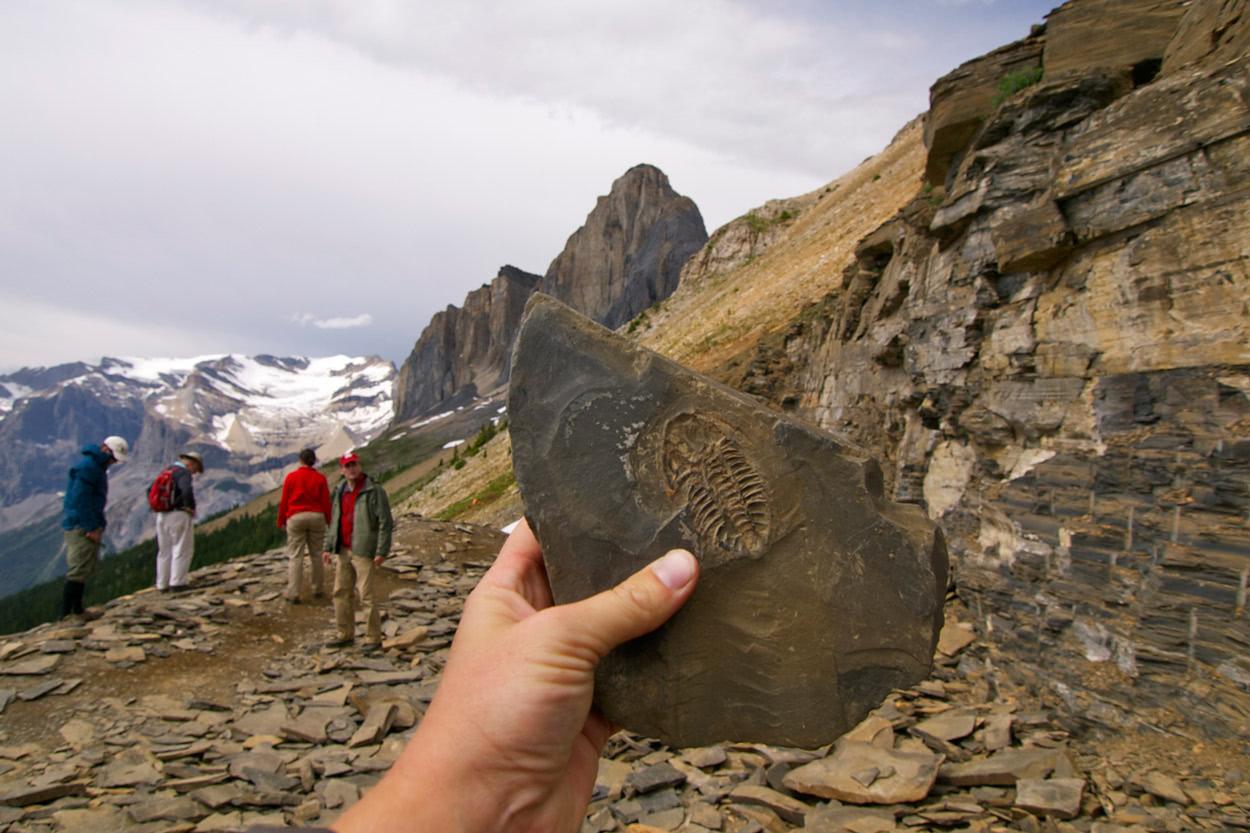 Burgess Shale Fossil Hike GuideTrilobites, Anomalocaris
 Tumbler Ridge UNESCO Global Geopark Fossil Hunting GuideTyrannosaurid trackways, Ankylosaur footprints