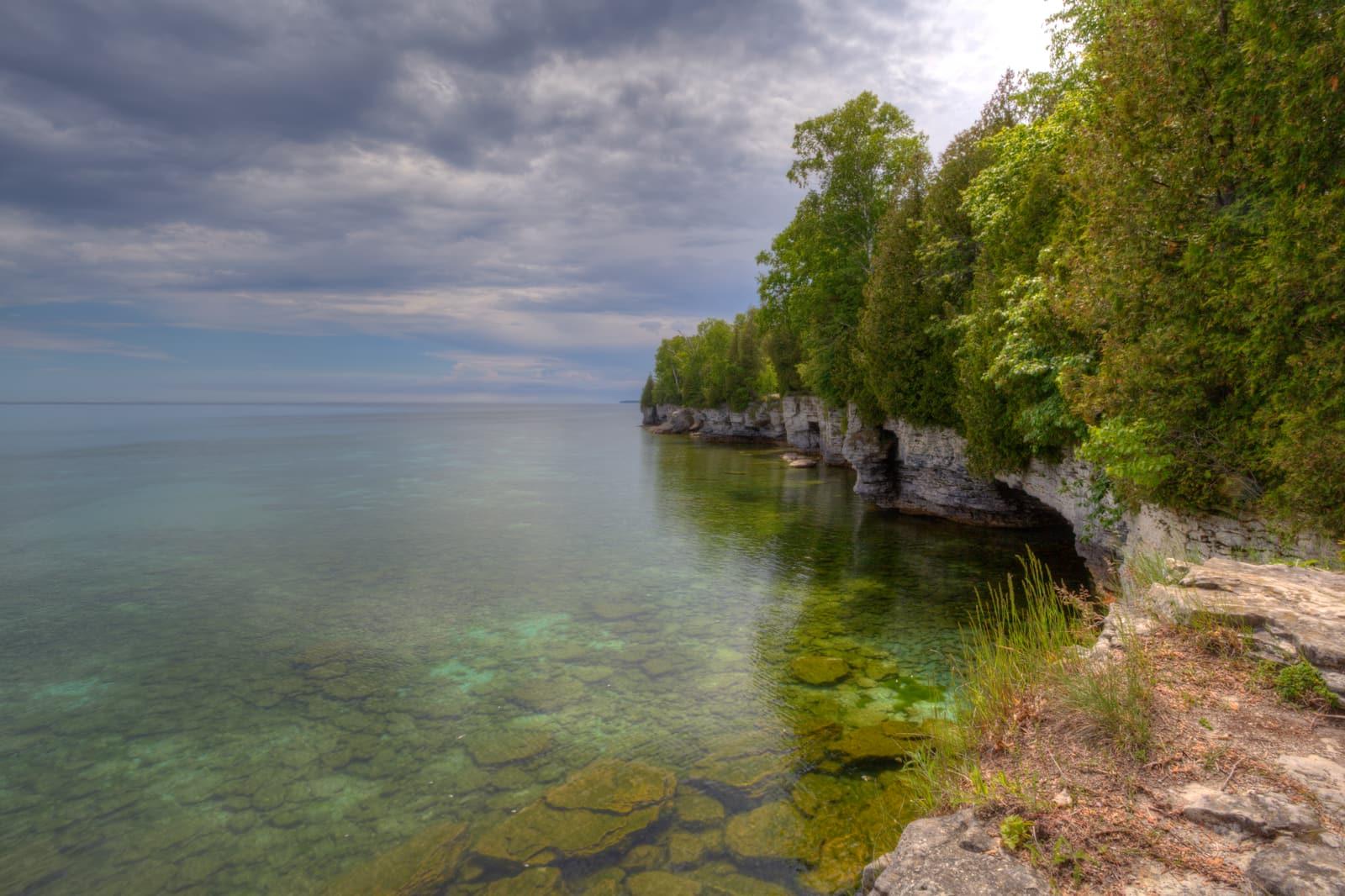
Door County Niagaran Reef Fossil Guide
Image: John Kees (CC BY-SA 3.0)
The Door Peninsula of Wisconsin is built from Silurian Niagaran dolostone, the hardened remains of ancient tropical reefs now exposed in the cliffs and rocky Lake Michigan and Green Bay shorelines. Corals, brachiopods, gastropods, cephalopods, and stromatoporoids weather out of the rock, with beach cobbles offering the easiest hand collecting outside the no-collect state parks.
By Edward Chen · Updated 1 August 2026
Introduction
The Door Peninsula, the slim arm of land separating Green Bay from Lake Michigan in northeastern Wisconsin, is built almost entirely from Silurian dolostone, the lithified remains of ancient tropical reefs. These rocks belong to the great band of Niagaran-age carbonate that forms the Niagara Escarpment, the same rock ridge that holds up Niagara Falls far to the east. In Door County the dolostone makes the dramatic cliffs and rocky shorelines that draw visitors, and it is full of fossils.
The Silurian reefs preserved here are part of one of the most studied reef systems in North America. Corals, brachiopods, gastropods, cephalopods, bryozoans, crinoids, and the massive reef-building stromatoporoids all turn up in the rock. Because Door County's headland parks protect the most scenic exposures, the most practical hand collecting is from loose cobbles on public beaches and from private quarry sites where permission has been granted.
Location and Directions
Cave Point County Park, near 44.93°N, 87.19°W on the Lake Michigan side of the peninsula near Sturgeon Bay, is the best-known place to see the Silurian dolostone, where waves have carved the cliffs into caves and a rocky shelf extends along the lake at water level. Reach it from Schauer Road off Clark Lake Road in the town of Sevastopol.
Cave Point is a county park where the cliffs themselves are best treated as viewing-only, but the surrounding Lake Michigan and Green Bay shorelines have many rocky beaches where fossil-bearing cobbles wash up and can be examined and, on appropriate public land, collected by hand. Bring sturdy shoes for slippery rock, a hand lens, and small bags. Check tide-free lake levels and weather, since the rock shelves can be wet and waves unpredictable. The Mathey Road quarry near Sturgeon Bay has been used by collectors, but quarries are private land and require the owner's permission.
 Photo: Richie Diesterheft, CC BY-SA 2.0, via Wikimedia Commons
What Fossils You'll Find
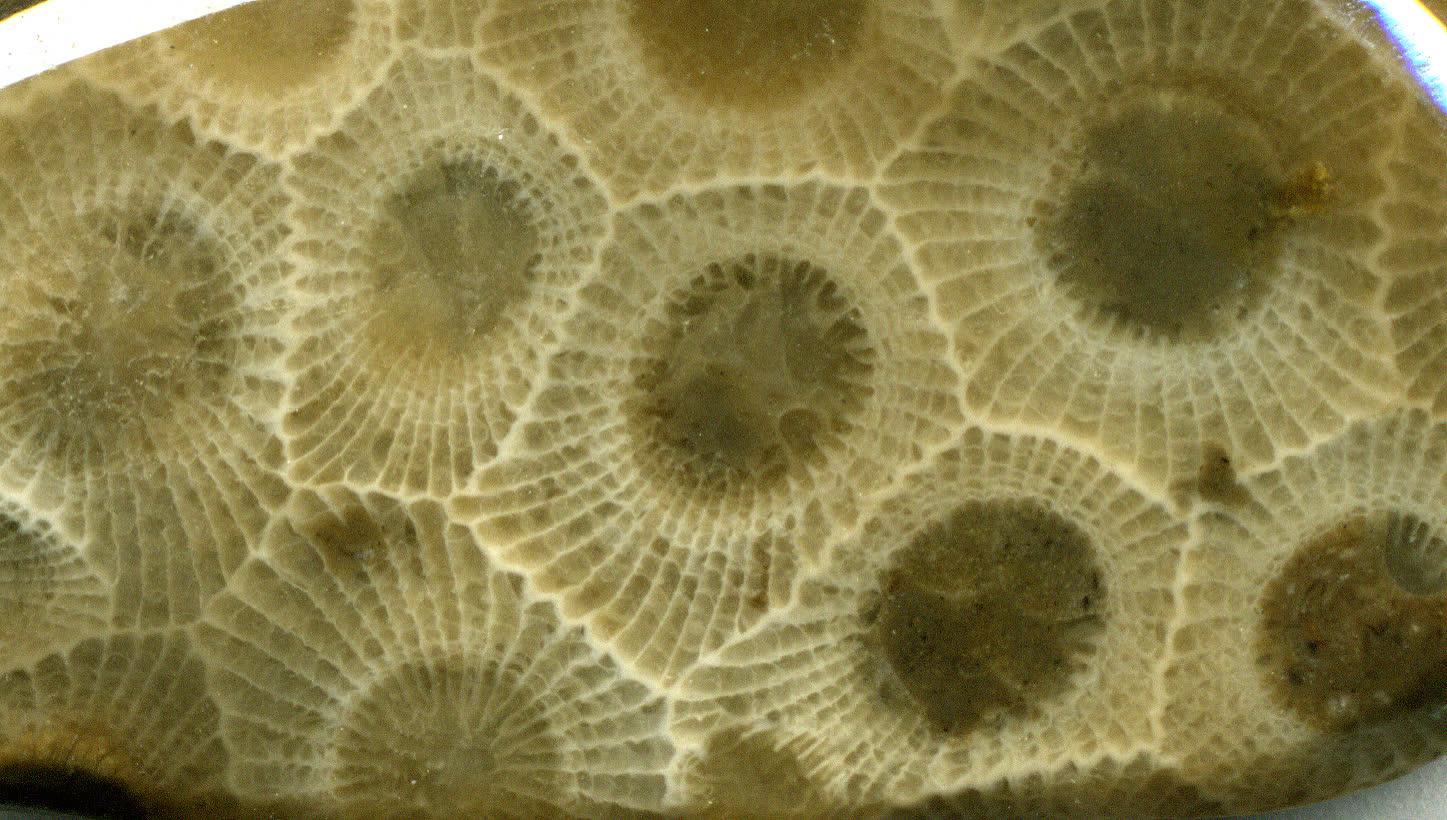
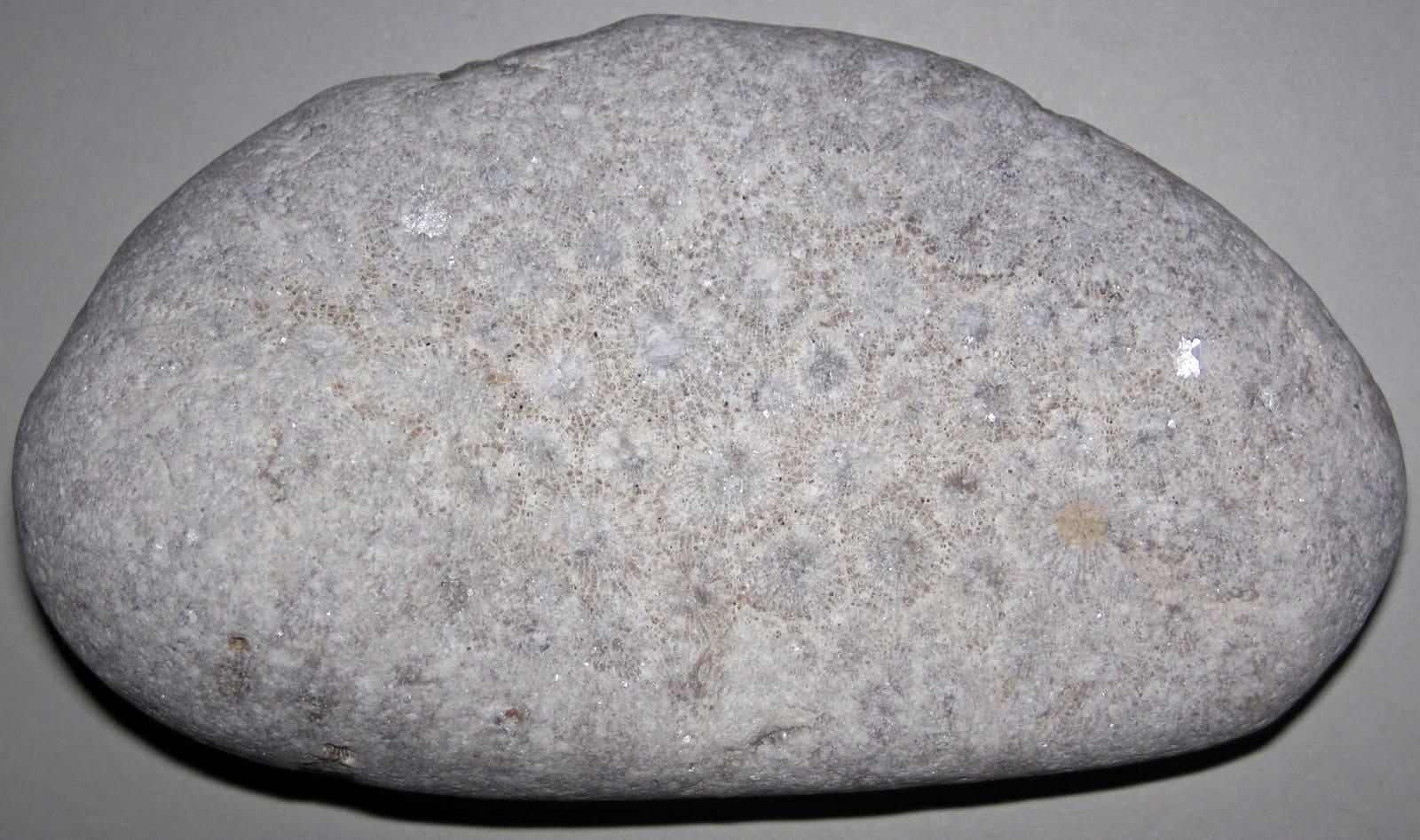
Door County's Silurian dolostone preserves a classic reef and inter-reef fauna. Corals are the headline fossils, including chain corals (Halysites), honeycomb-like tabulate corals (Favosites), and horn-shaped solitary rugose corals. Stromatoporoids, the layered, dome-shaped sponges that built much of the reef framework, appear as rounded masses in the rock. Brachiopods are common, including the large pentamerid types, along with gastropod (snail) shells, straight-shelled and coiled cephalopods, bryozoan colonies, crinoid stem segments, and occasional trilobites.
Because the rock is dolostone rather than soft limestone, fossils are often preserved as molds and casts, and some are silicified, standing out where the surrounding rock has weathered away. The best specimens are frequently found loose in beach gravel and broken cobbles rather than chiseled from the hard cliffs.
Geologic History
During the Silurian Period, roughly 430 to 425 million years ago, the region that is now Wisconsin lay in warm tropical latitudes beneath a shallow, clear sea. Stromatoporoids and large tabulate corals built dome-shaped reefs, some of them hundreds to thousands of meters across and tens of meters high, surrounded by inter-reef sediments rich in shells. These carbonate sediments and reefs were later chemically altered to dolostone, a magnesium-rich carbonate rock harder and more resistant than ordinary limestone.
Over the following hundreds of millions of years the dolostone was buried, uplifted, and gently tilted, forming the long cuesta of the Niagara Escarpment. Glaciers during the Ice Age scoured and shaped the peninsula, and the modern Great Lakes were carved along the softer rock on either side, leaving the resistant Silurian dolostone standing as the backbone of the Door Peninsula. Wave action along Lake Michigan and Green Bay continues to expose fresh rock and free fossils onto the beaches.
Collecting Rules and Regulations
Where you collect determines what is allowed. On Wisconsin DNR property, Wisconsin Administrative Code NR 45.04 allows noncommercial collection of rocks, minerals, and fossils by hand or with a hand-held rock hammer, but only in accordance with written permission issued by the manager of the property. The code caps collection at five pounds per day and fifty pounds per year, and the manager's permission may set tighter limits. Collecting is prohibited outright on state trails, in Havenwoods State Forest, and at any site the department designates as a no-collection area. State natural areas require a separate scientific collector permit. Whitefish Dunes State Park and similar protected sites are off-limits for collecting, and county parks such as Cave Point should be treated as viewing-only unless posted otherwise. Quarries and gravel pits are almost always private land and require the owner's permission. Confirm the rules for the specific parcel before taking anything, collect only loose material by hand, take a small number of representative specimens, and leave the cliffs and reefs intact.
Safety
The shoreline rock shelves at Cave Point and along the lake are slippery when wet and can be struck by sudden large waves, so stay well back from the water's edge, never turn your back on the lake, and avoid the rocks in rough weather. The cliffs are undercut and unstable in places, so do not climb them or stand directly beneath overhangs. Lake Michigan water is cold year-round and currents can be strong, so do not wade or swim near the rocky points. Wear shoes with good grip, bring sun and wind protection, and watch your footing on uneven, ankle-twisting cobble beaches.
Sources
https://silurian-reef.fieldmuseum.org/narrative/505 https://dnr.wisconsin.gov/topic/parks/whitefish/geology https://home.wgnhs.wisc.edu/wisconsin-geology/fossils/finding-wisconsin-fossils/ https://doorcountypulse.com/roy-lukes-fossil-hunting/ https://www.co.door.wi.gov/554/Cave-Point-County-Park