Fossil Park Sylvania Fossil Hunting Guide
Fossil Park in Sylvania, Ohio is a free public dig site where Middle Devonian shale from the neighbouring quarry is delivered for visitors to split by hand. Trilobites, brachiopods, corals, and crinoids come out of soft rock that needs no tools. Open seasonally, free admission and parking.
By Edward Chen · Updated 4 August 2026
Introduction
Fossil Park sits on Centennial Road in Sylvania, in Lucas County on the western edge of Toledo. It is an unusual arrangement and a generous one. The working quarry next door strips fossil-bearing shale to reach the limestone it sells, and rather than discard that shale, the operator delivers it to a five-acre public dig area where anyone can turn up, sit down, and split it open.
The rock is the Middle Devonian Silica Formation, and it is one of the most productive fossil units in North America. Around 200 species have been recorded from the formation here, and the shale is soft enough that it comes apart in your fingers. That is why tools are banned. You do not need them, and the park would rather you did not bring them.
Photo: Smithsonian National Museum of Natural History, CC0, via Smithsonian Open Access
Location and Directions
Fossil Park is at 5705 Centennial Road, Sylvania, near 41.713 degrees north, 83.745 degrees west. Sylvania is a north-western suburb of Toledo, easily reached from US-23 or Interstate 475, and the park is signposted locally.
Admission and parking are both free. The site is laid out for visitors rather than for experts: there are covered work areas with benches, water stations, and restrooms, and the dig area itself is graded to be accessible rather than left as a rough quarry floor. Staff and volunteers are usually on hand and will identify what you have found, which makes this one of the better sites in the country for a first fossil trip with children.
The park is seasonal. It generally opens from mid-April through October, on weekends and selected weekdays, so check the Olander Park System's current calendar before driving out. Sylvania town has food, fuel, and supplies a few minutes away.
 Photo: James St. John, CC BY 2.0, via Wikimedia Commons
What Fossils You'll Find
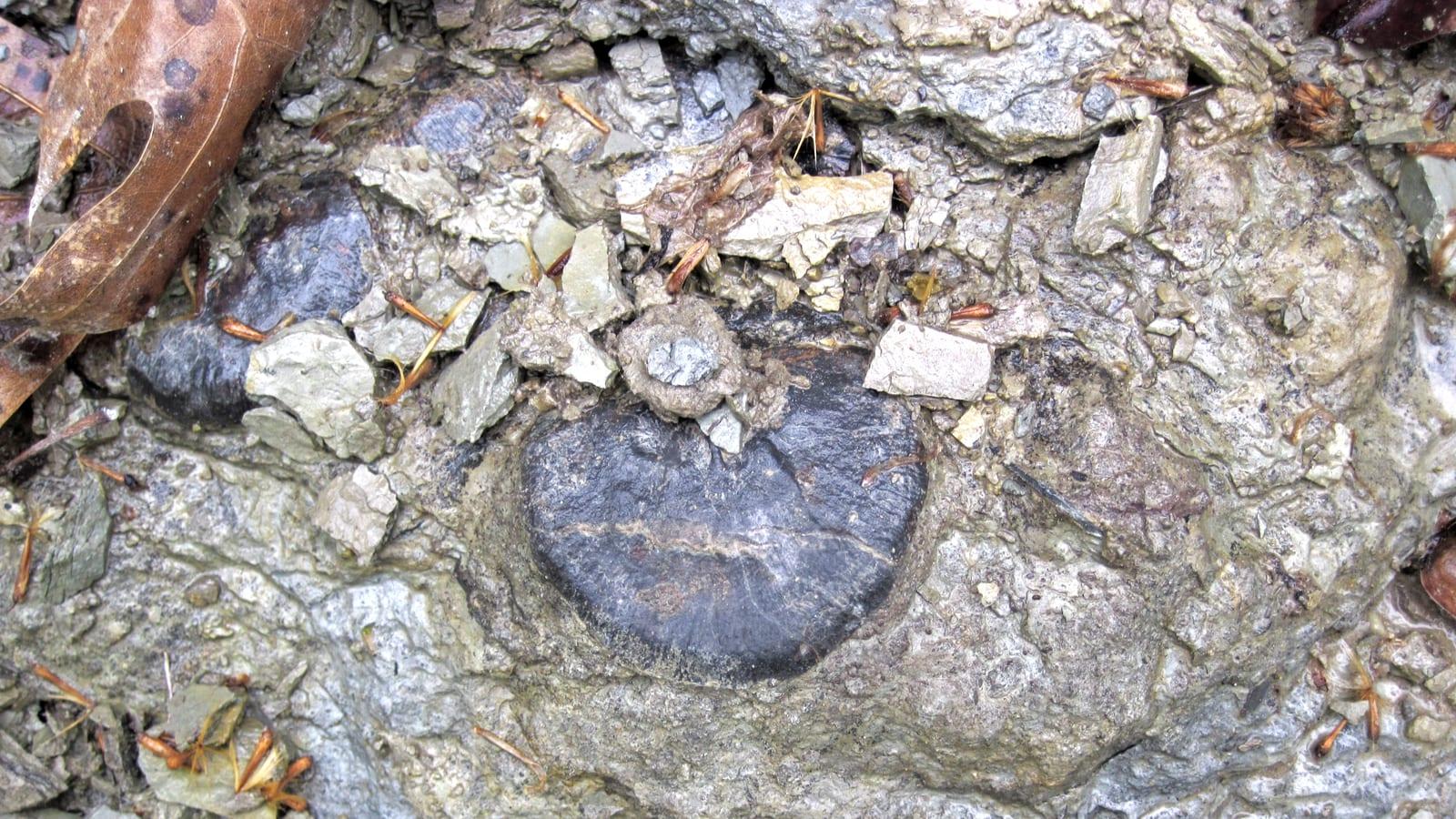
The Silica Formation records a warm, shallow Devonian sea floor, and the shale is packed with the animals that lived on it.
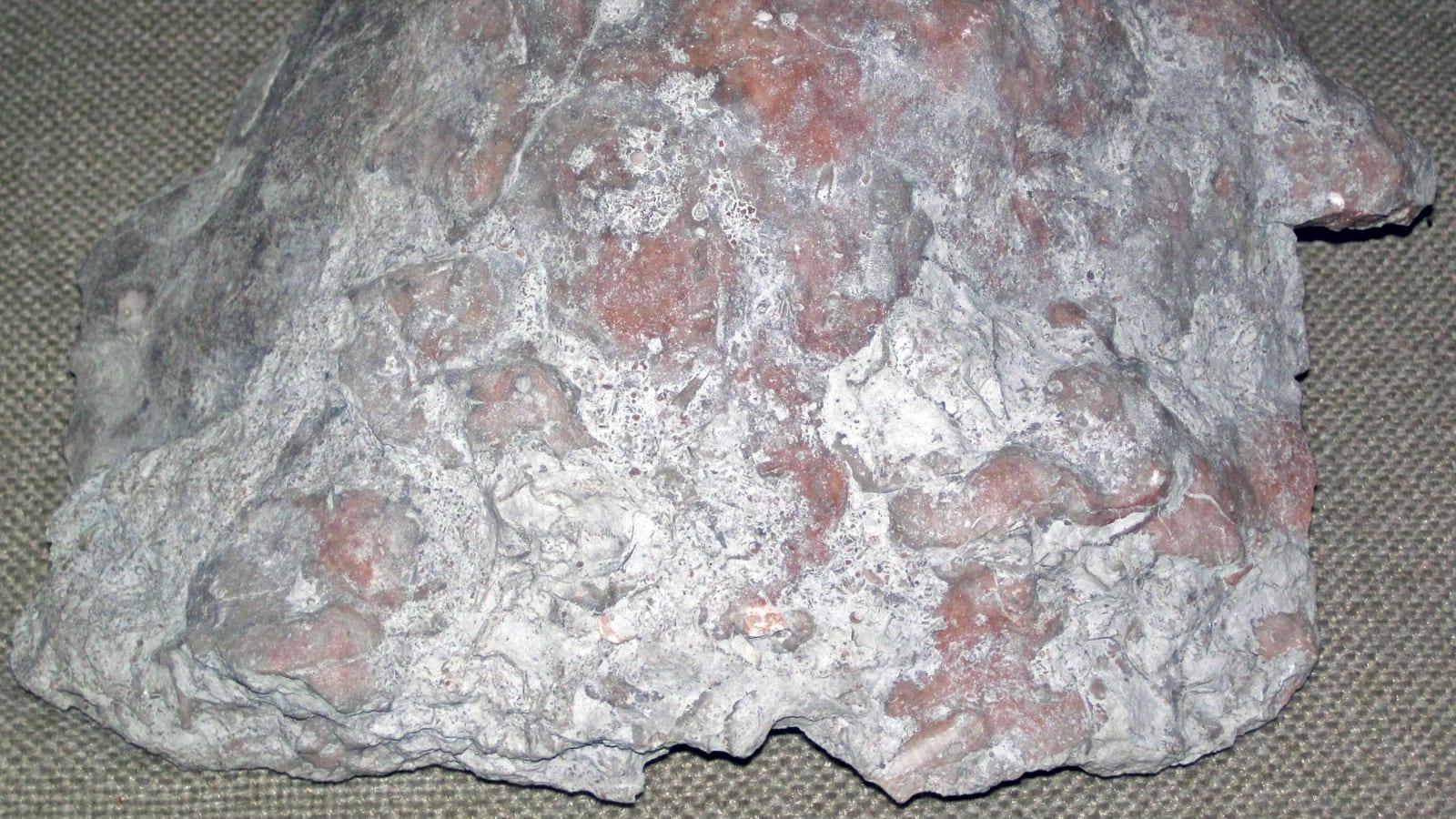
Corals occur as solitary horn corals and as colonial masses. Crinoid remains are usually disarticulated into stem sections and columnals, though calyx plates are found. Bryozoans are common as delicate branching and encrusting fragments. Remains of early fish are also recorded from the formation, though they are a rare find.
The method is simple. Pick up a slab, look at the bedding planes, and split it along the layers with your hands or by tapping it against another rock. Fossils lie on the parting surfaces. Because fresh shale is delivered from the quarry through the season, the material is genuinely unpicked, which is not true of most public sites.
Geologic History
The Silica Formation was deposited during the Middle Devonian, roughly 385 to 375 million years ago, when this part of Ohio lay near the equator under a shallow tropical sea. Fine mud settled slowly on a quiet sea floor, burying shells and skeletons gently and completely, which is why the preservation here is so good and why complete trilobites survive rather than only fragments.
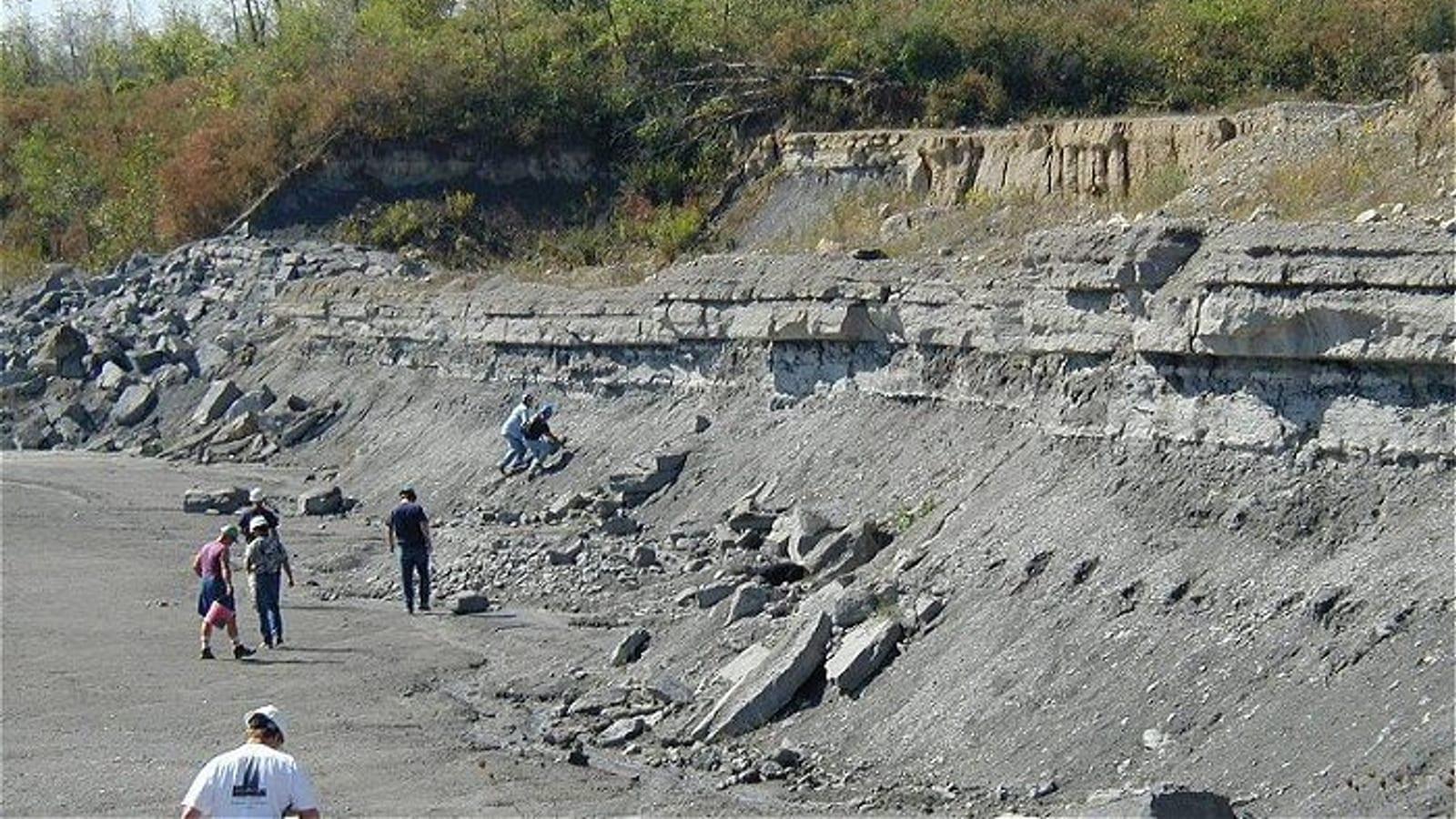
The park's rock is not the only Devonian unit in the quarry. The exposures worked in this area take in the Dundee Limestone below and the Ten Mile Creek Dolomite above, with the Silica Formation as the soft, fossil-bearing shale between them. It is that softness that makes the formation both commercially inconvenient and paleontologically productive.
The site itself has an industrial history. The ground was quarried for cement over many decades, latterly by the Medusa Portland Cement Company, and the property passed to Hanson Aggregates in 1995. In 1999 the Olander Park System, Hanson, and Sylvania Township worked out a proposal to turn part of it into a public fossil park, and the park opened in 2001. It has since received state and national awards for land reclamation.
 Photo: James St. John, CC BY 2.0, via Wikimedia Commons
Collecting Rules and Regulations
Collecting is allowed and free, and visitors keep what they find. The rules are few.
No tools. This is the rule that surprises people. Hammers, chisels, and picks are prohibited. The shale splits by hand, and hand-splitting produces the same fossils that come out of the working quarry next door.
Collect from the delivered shale. The dig area is stocked with material brought in from the quarry. That is what you are there to work, and it is replenished.
Stay within the dig area. The neighbouring quarry is an active industrial site and is not open to the public under any circumstances.
Group and school visits run as organised educational programmes, so contact the park in advance rather than arriving with a large party unannounced.
Photo: Smithsonian National Museum of Natural History, CC0, via Smithsonian Open Access
Safety
This is one of the gentler fossil sites, and the park is built with families in mind, but a few things still apply. The shale breaks with sharp edges, so gloves are sensible and hands get cut without them. Splitting rock sends small chips flying even without tools, so keep your face back from what you are breaking and consider eye protection for children.
The dig area is loose broken rock underfoot. Wear closed shoes with a firm sole rather than sandals, and watch your footing on the piles. The site is open with limited shade beyond the covered work areas, so bring water and sun protection on hot days, though water stations are provided.
Supervise children, mainly because the temptation is to run on the rubble. There are no cliffs, no deep water, and no unstable faces inside the public area, so the genuine hazards are cut hands, flying chips, and sunburn.
Sources
https://www.olanderpark.com/fossil-park https://ohiodnr.gov/discover-and-learn/safety-conservation/about-odnr/geologic-survey/rocks-fossils-identification/fossil-collecting-in-ohio https://www.fossilguy.com/sites/hanson/index.htm https://www.mindat.org/loc-294601.html
Frequently asked questions
- Is Fossil Park in Sylvania free?
- Yes. Admission and parking are both free. The park is run by the Olander Park System and is open seasonally, roughly mid-April through October.
- Can you use tools at Sylvania Fossil Park?
- No, and you do not need them. Tools are prohibited because the Silica Formation shale is soft enough to split apart in your hands.
- What fossils are found at Fossil Park in Sylvania?
- Middle Devonian brachiopods are the most common find, along with trilobites such as Eldredgeops, horn and colonial corals, crinoid fragments, and bryozoans.
_1_(48367295547).jpg)
_(Silica_Formation,_Middle_Devonian;_quarry_at_Sylvania,_Ohio,_USA)_1_(36697604723).jpg)