Folkestone Warren and Copt Point Fossil Hunting Guide
Image: N Chadwick (CC BY-SA 2.0)
Folkestone Warren and Copt Point in Kent expose the Gault Formation, a Cretaceous marine clay approximately 110 million years old, yielding beautifully preserved ammonites, crabs, shark teeth, and bivalves from the foreshore and cliff base. Access is free year-round.
By Edward Chen · Updated 1 August 2026
Introduction
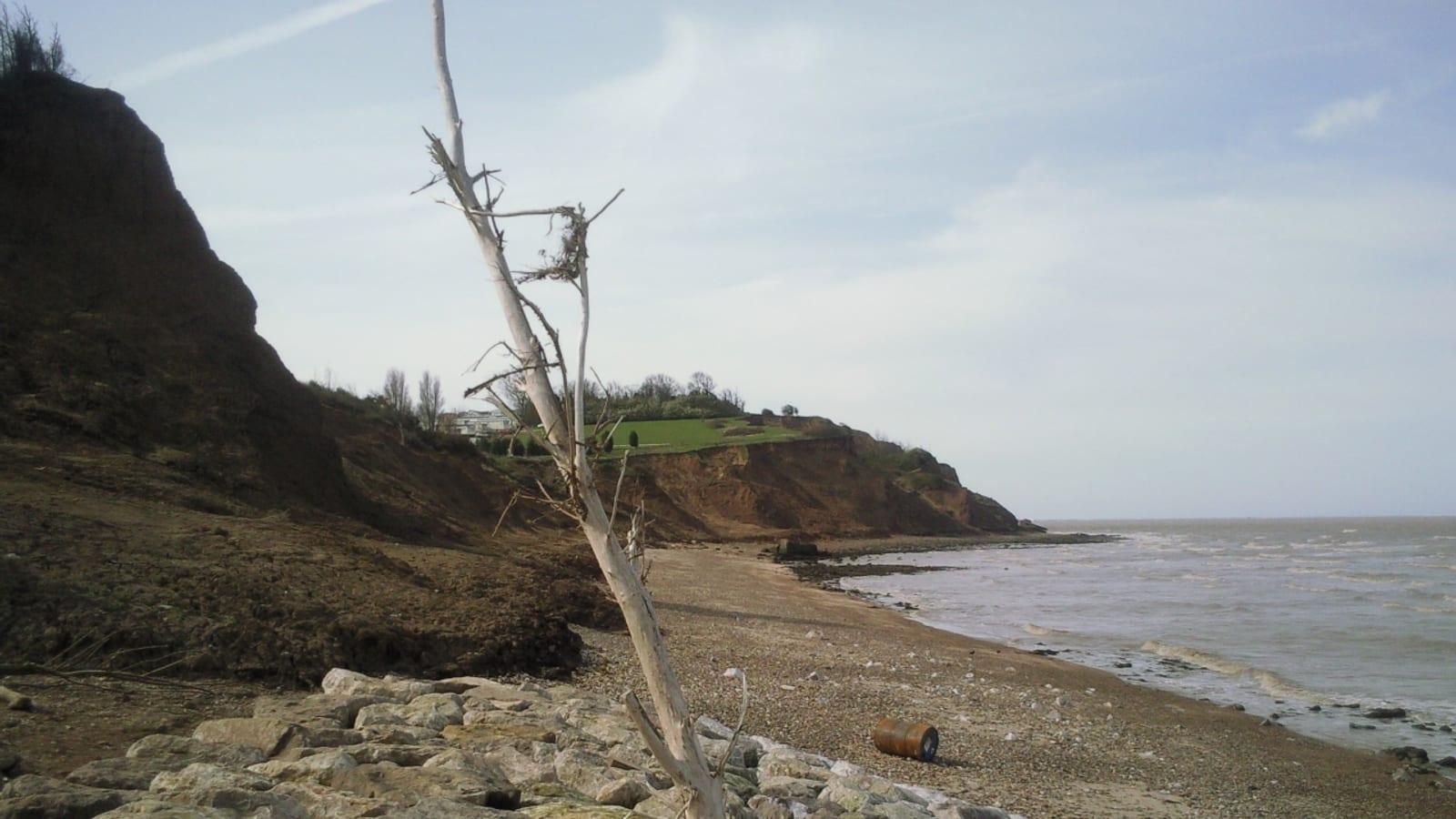
Folkestone Warren is a stretch of eroding coastline on the eastern edge of Folkestone in Kent, running from the harbour at The Stade around the headland known as Copt Point to East Wear Bay. The cliffs expose the Gault Formation, a dark grey to blue-grey marine clay deposited in a warm, shallow sea during the Albian stage of the Early Cretaceous, roughly 110 to 105 million years ago. The site is one of the most productive Cretaceous fossil localities in Britain, known particularly for exquisitely preserved ammonites that retain iridescent mother-of-pearl shell material, and for a diverse fauna of crabs, fish, and sharks documented by palaeontologists since the nineteenth century.
The foreshore at Copt Point and East Wear Bay receives a constant supply of fresh fossils as the clay cliff erodes. Many specimens emerge already loose from the matrix, ready to collect without tools. Stormy weather and sustained wave action are the most productive conditions, scouring clay from the foreshore and exposing fossils that have been buried for over a hundred million years.
This is a free public site with no permit required and no fee. It is designated a Site of Special Scientific Interest (SSSI), which means visitors should not dig directly into the cliff face or foreshore but may freely collect loose material.
Location and Directions
Folkestone is reached by train from London St Pancras International in under an hour (Southeastern Highspeed service). From Folkestone Central station, the foreshore at The Stade is a ten-minute walk downhill following signs for the harbour.
By car from the M20, take junction 13 and follow the A259 towards Folkestone town centre and then to the harbour. Parking is available along The Stade, the narrow road running along the top of the harbour. Additional parking can be found in the Harbour Car Park on Harbour Approach Road. The access road to Folkestone Warren near the former golf club also has informal roadside parking closer to the cliff section.
From the harbour end, walk east along the promenade under the arched Victorian viaduct. Copt Point and the fossil-bearing Gault cliff section begin roughly 500 metres east of the harbour. East Wear Bay, which also yields Gault fossils among the shingle, is a further kilometre along the same foreshore. The route is flat and accessible on foot from the harbour.
Food and drink are available at several pubs and cafes near The Stade.
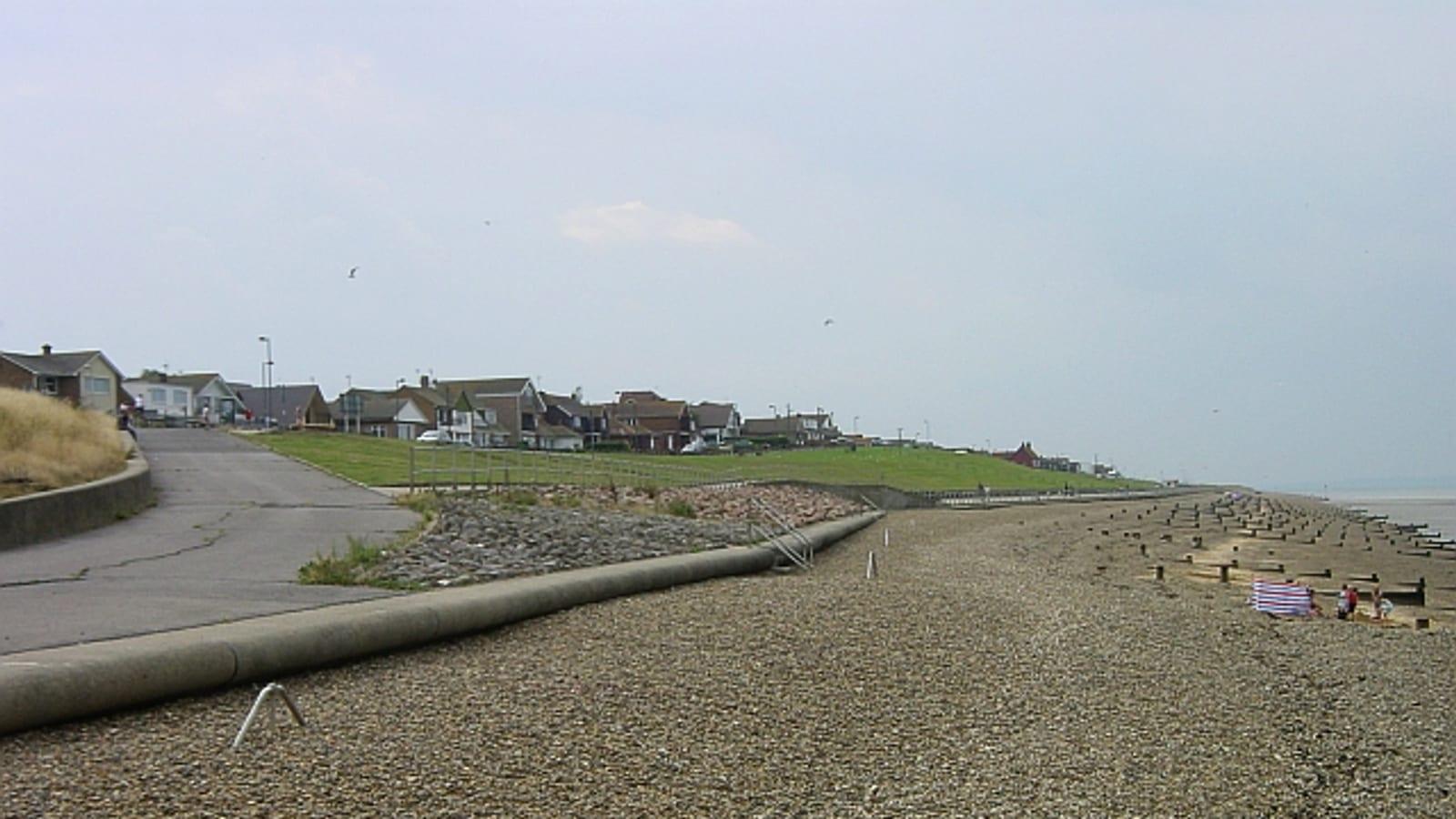
 Photo: Grassy seafront near the East Cliff Pavilion by David Martin, CC BY-SA 2.0, via Wikimedia Commons
What Fossils You'll Find
The Gault Formation at Folkestone is best known for its ammonites. According to the UKGE field guide to the site, multiple species occur here, many with their original aragonite shell preserved and showing iridescent colour. Common genera include Euhoplites, Hoplites, Anahoplites, and Hamites. The uncoiled heteromorph Hamites is a distinctive find, appearing as a hooked or loosely spiral shell fragment very different from the tightly coiled forms. Ammonites from the Gault are often fragile and should be wrapped carefully in tissue before travelling home.
Crabs are regularly found in phosphatised nodules within the clay. The UKGE field guide identifies Notopocorystes stokesii and Necrocarcinus labeschii as the common species, typically preserved as flattened carapaces in pale grey phosphate. These are among the best-preserved Cretaceous crab fossils in England and are a characteristic Folkestone find.
Fish remains are common. Shark teeth, including examples identified as Dwardius by the Discovering Fossils site, turn up loose on the foreshore. Fish vertebrae and jaw fragments appear regularly among the beach pebbles, as do goose barnacle valves (Cretiscalpellum unguis), belemnite guards (Neohibolites), bivalves including Pectinucula pectinata and Birostrina concentrica, and occasional gastropods such as Gyrodes gentii.
The Lower Greensand below the Gault is less productive but does yield thick-shelled bivalves and echinoids from the sandy cliffs at the western edge of Copt Point.
Geologic History
During the Early Cretaceous, the land that forms southeast England lay at roughly 40 degrees north latitude, the approximate position of the modern Mediterranean Sea. A warm, relatively shallow sea extended across the region during the Albian stage, between approximately 113 and 100 million years ago. This sea, sometimes called the Gault Sea, received fine silt from the surrounding landmasses and deposited the dark grey calcareous clay now known as the Gault Formation.
The sea floor conditions were relatively calm and oxygen-limited near the base, creating good preservation conditions for soft-bodied and lightly mineralised organisms. The Gault at Folkestone is divided into thirteen beds, as documented by the British Geological Survey, with phosphatic nodule beds occurring at several horizons. These phosphate-rich layers are where crabs and other organisms with some organic content tend to be best preserved.
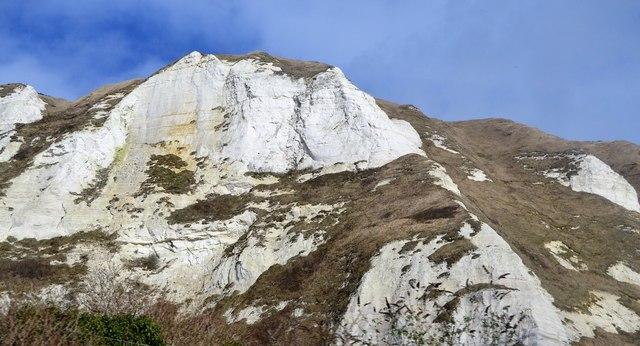
Beneath the Gault, the Lower Greensand represents the earlier, nearshore phase of the Cretaceous transgression, when sands were deposited while the land was still present nearby. The Chalk above, visible in the white cliffs east of Copt Point, represents the later flooding of the region to the point where the only sediment settling to the sea floor was the skeletal material of planktonic organisms.
The Gault at Folkestone has been studied since at least the 1840s and provided specimens for museum collections across Europe. The Folkestone fauna is particularly well represented in the Natural History Museum in London.
Collecting Rules and Regulations
The site is an SSSI. Collecting loose fossils from the foreshore, beach shingle, and material that has naturally fallen from the cliff is permitted without a licence. The restriction is on actively digging into the cliff or bedrock. Visitors should not use hammers or chisels on the cliff face or the in-situ foreshore exposures.
The Gault clay is soft enough that many fossils emerge naturally after rain and wave action. The most productive approach is to walk the foreshore at low tide after stormy weather and search among the loose clay boulders and beach pebbles. Fossils in situ in the cliff slump at the cliff base can be extracted by hand from the loose clay without tools.
Safety
Check tide times before visiting. The foreshore at Copt Point covers completely at high tide and access becomes restricted. The best collecting is in the hour or two either side of low water.
The cliffs at Folkestone Warren are subject to ongoing landslip. The BGS has studied this site as a landslide case study, and the risk of cliff falls is real and well documented. Stay well clear of the cliff base during or after heavy rain. The large boulders of Lower Greensand on the foreshore can be slippery when covered in seaweed or wet algae.
The walk from the harbour to East Wear Bay is flat but the terrain becomes rough over boulders past Copt Point. Sturdy shoes with grip are recommended. Families with young children will find the harbour end and the Copt Point area the most accessible.
Sources
https://ukfossils.co.uk/wp-content/uploads/2025/03/Folkestone.pdf http://www.discoveringfossils.co.uk/folkestone-kent/ https://www.bgs.ac.uk/case-studies/folkestone-warren-kent-landslide-case-study/ https://www.geoconservationkent.org.uk/index.php?option=com_content&view=article&id=90