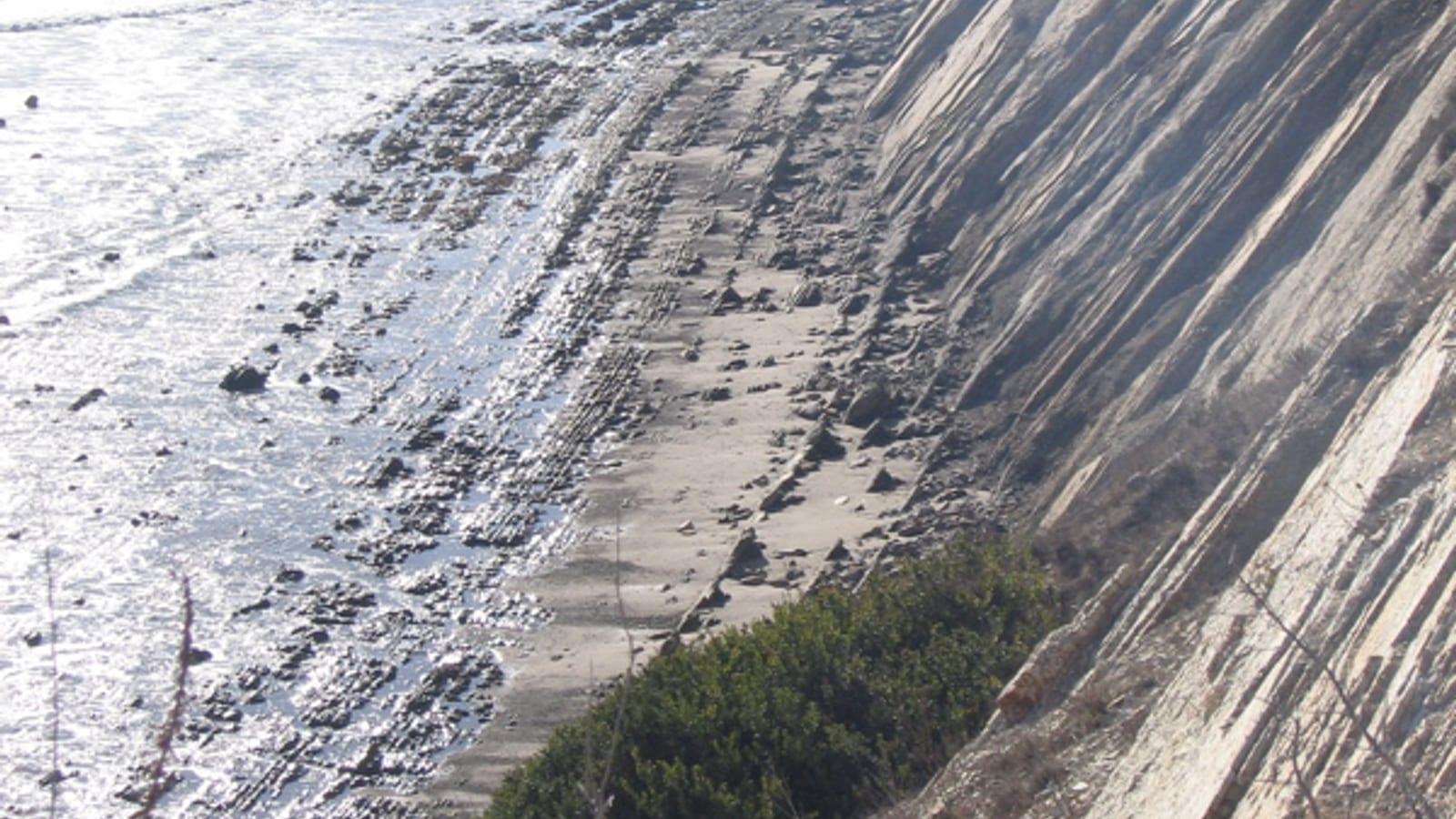
Gaviota State Beach Fossil Hunting Guide
Image: Panoramedia (CC BY 3.0)
Gaviota State Beach, on the Santa Barbara County coast, cuts into the Miocene Monterey Formation, the diatomite rock that yields fish impressions, marine mammal bone, and shells along this stretch of coast. The beach is a state park, so it is a place to view and photograph fossils rather than collect them.
By Edward Chen · Updated 31 July 2026
Introduction
Gaviota State Beach sits at the mouth of Gaviota Canyon on the Santa Barbara County coast, where the sea cliffs are cut into the Miocene Monterey Formation. This is the fine, siliceous rock that forms much of the central and southern California coastline, and it preserves fish, marine mammal bone, and shells from the productive sea that covered the area between roughly 16 and 7 million years ago.
The coast here is folded and faulted, part of the same structure that traps oil offshore, and natural hydrocarbon seeps occur along this shelf. For visitors, the draw is the layered pale cliffs and the fossils that weather from them. Gaviota is a state park, so it is best treated as a place to look and photograph rather than to dig.
Location and Directions
Gaviota State Park lies along U.S. Highway 101 about 33 miles west of Santa Barbara, near 34.47°N, 120.23°W, where the highway meets the coast just south of the Gaviota Tunnel. The park entrance leads to a day-use parking area, a beach, and a fishing pier beneath the tall railroad trestle.
There is a day-use fee, and the park has restrooms and seasonal facilities. El Capitan and Refugio State Beaches, which expose the same coastal geology, are a short drive east along the highway.
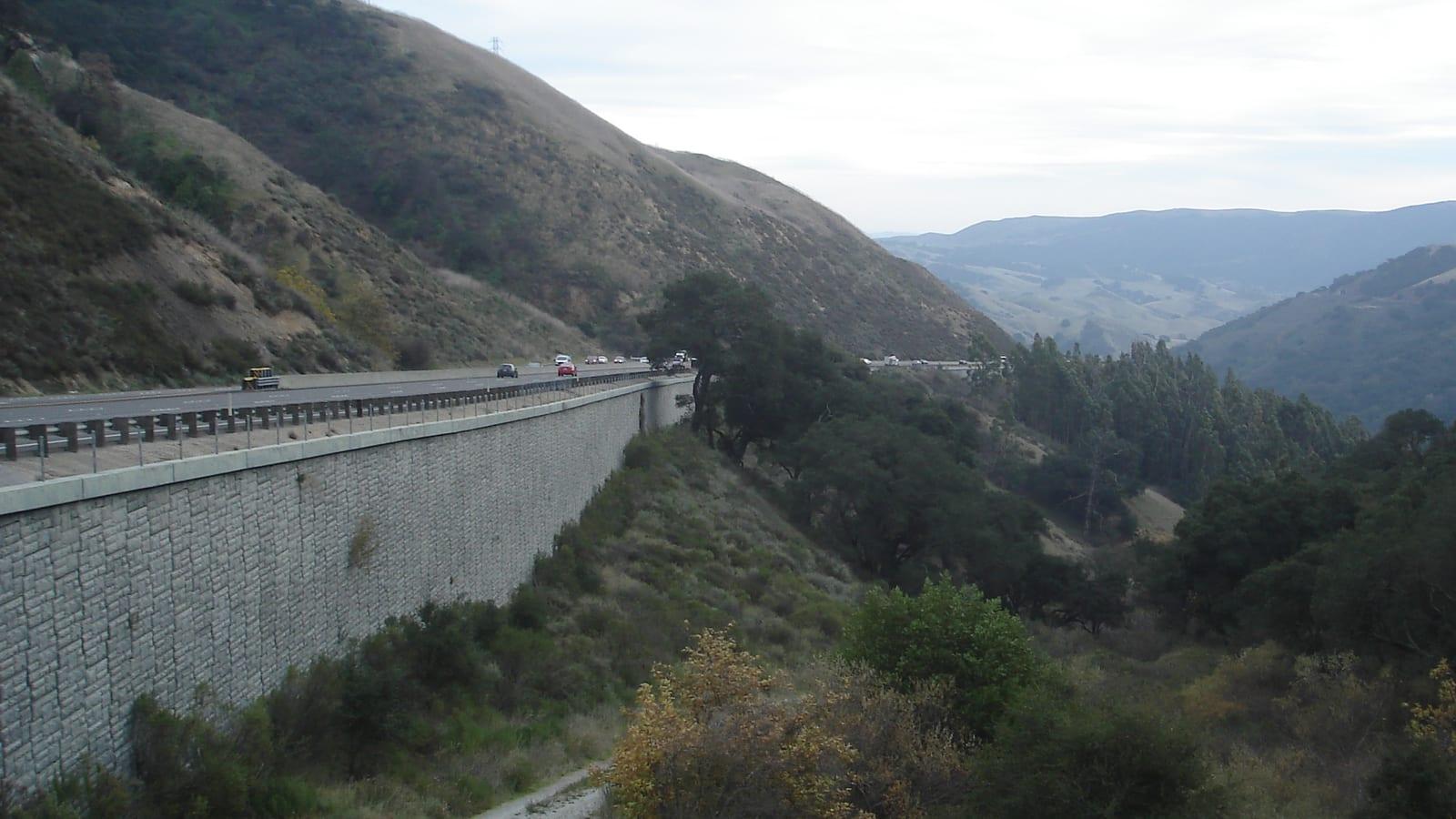
 Photo: Damian Gadal, CC BY 2.0, via Wikimedia Commons
What Fossils You'll Find
The Monterey Formation here is dominated by the microscopic remains of diatoms, the single-celled algae whose silica shells make up much of the rock. Those are not something you collect by hand, but the same beds preserve larger fossils.
Fish appear as impressions and scattered bone in the finer, papery shale layers. The Monterey Formation is one of the most important sources of fossil fish in the world, and its herring-like fish, anchovies, and lanternfish are known from beds of this age along the California coast. What you are likely to see at Gaviota is a scatter of scales, vertebrae, or a partial impression rather than a complete fish, but the material is unmistakable once you recognise it.
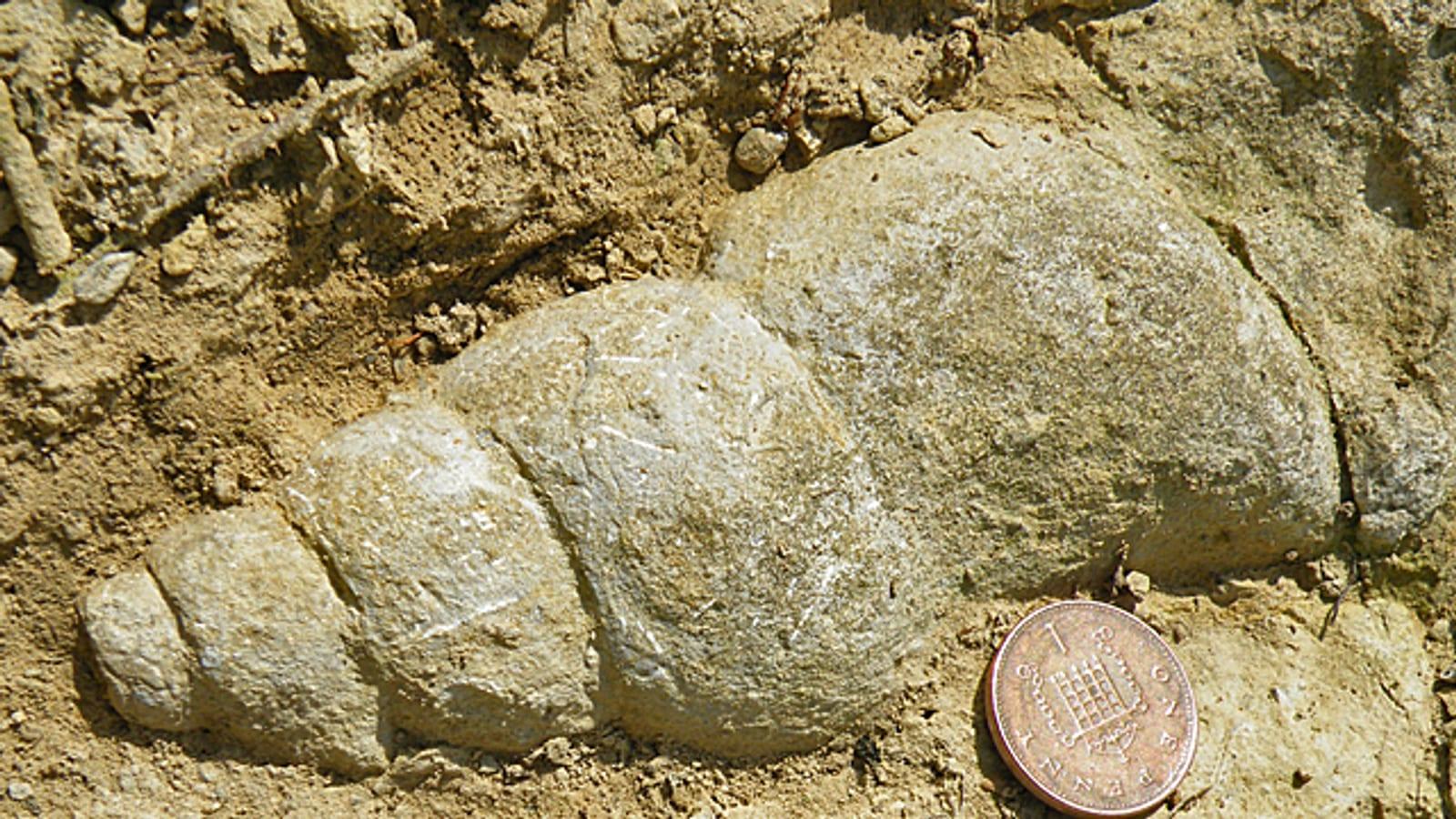
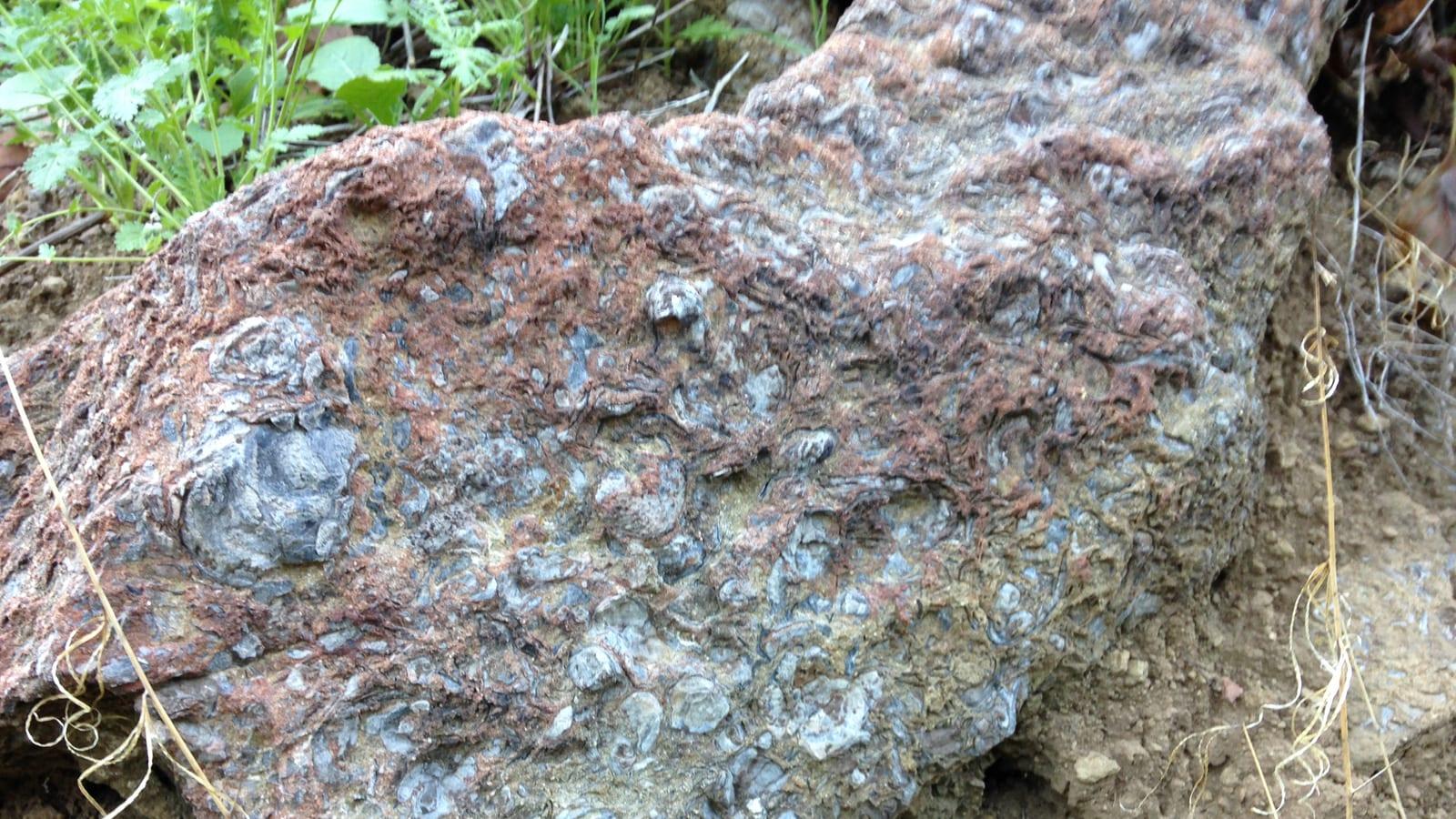
Marine mammal bone, from whales and dolphins that lived in the Miocene sea, weathers out of the harder beds. Bivalves and other shells occur in the sandier layers, and diatomite, the pale chalky rock itself, is worth examining closely, since it is a fossil in bulk rather than a rock containing fossils.
Look along freshly eroded cliff faces and in the loose material at their base, where the sea concentrates the harder pieces, and check after winter storms when new rock is exposed. Low tide gives you more beach and better access to the material at the cliff foot, so time a visit around it.
Geologic History
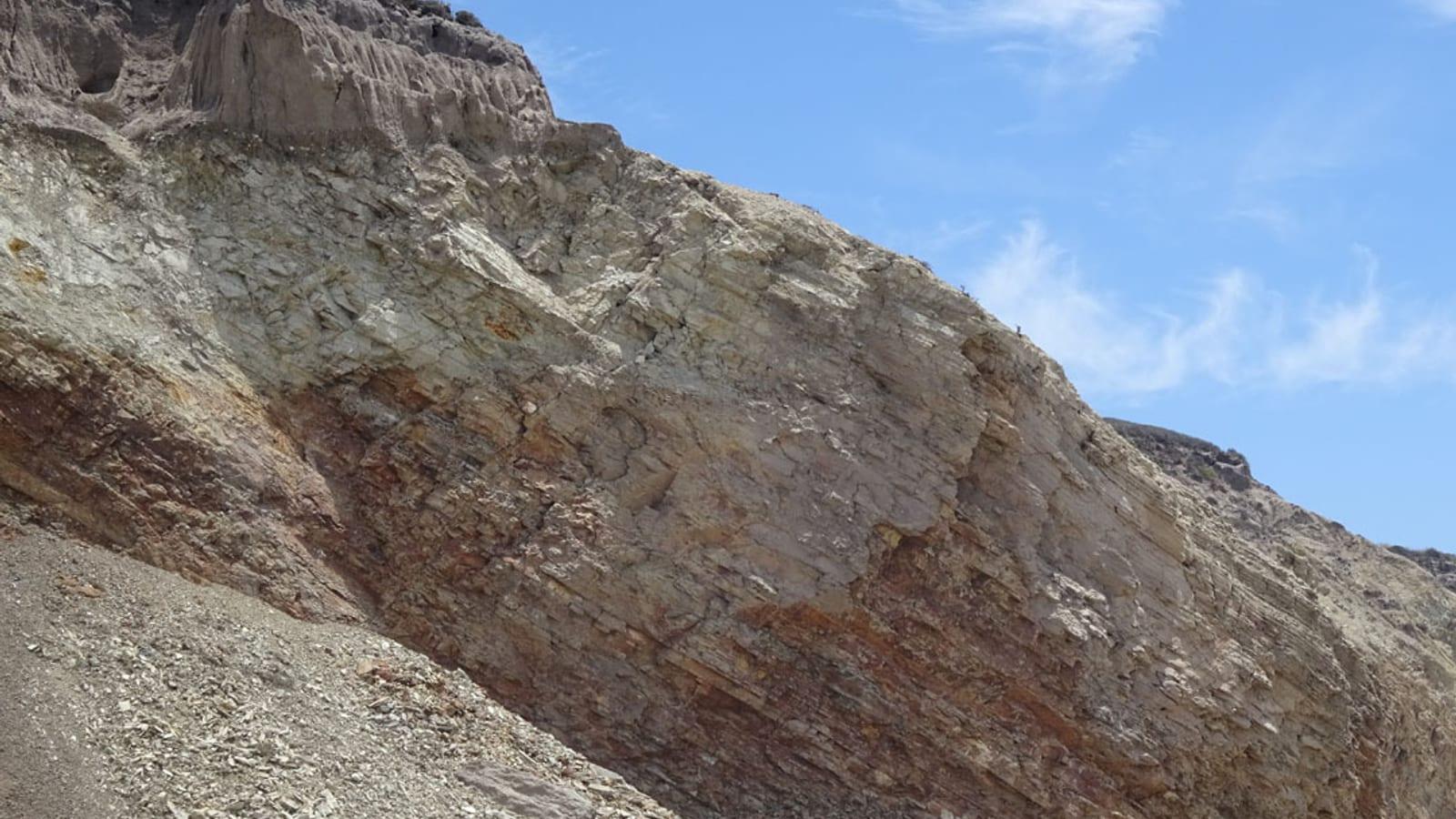
The Monterey Formation formed during the Miocene, when upwelling along the California coast brought cold, nutrient-laden water to the surface and fed enormous blooms of plankton. Their silica shells rained onto the seafloor and built up thick beds of diatomaceous mud, which hardened into the pale, brittle rock seen in the cliffs.
The scale of that accumulation is worth grasping. The rock in these cliffs is built substantially from the skeletons of single-celled organisms, deposited over millions of years at rates measured in fractions of a millimetre per year. Diatomite is light, pale, and brittle precisely because it is mostly microscopic silica shells with a great deal of empty space between them.
The Monterey Formation also matters commercially, which is why it is among the most intensively studied rock units in the world. Its organic-bearing beds are the source rock for most of California's oil, and the hydrocarbons that did not migrate into offshore traps seep naturally along this coast. Tar on the beach here is a geological feature rather than pollution, and it is a direct consequence of the same plankton blooms that produced the fossils.
Later, the folding and faulting of the Coast Ranges lifted and tilted these beds. Along the Gaviota coast they now stand in steep cliffs, and the same deformation created the offshore folds and oil traps that make this a well-studied stretch of coast.
Collecting Rules and Regulations
Gaviota State Beach is a unit of the California state park system. Collecting fossils, rocks, plants, or any other natural feature is prohibited in California state parks, so this is a viewing and photography site. Enjoy the fossils in the cliffs and on the beach where they lie, and do not hammer or remove material.
The same rule applies at neighboring El Capitan and Refugio State Beaches. Vertebrate fossils are protected everywhere, and if you find articulated bone, photograph it, note the spot, and report it to park staff rather than disturbing it.
Safety
The cliffs at Gaviota are steep and shed rock, so stay well back from both the top and the base, especially after rain. Monterey Formation rock is brittle and fractures readily, which is why the talus at the cliff foot exists at all, and it is a poor idea to shelter under an overhang or work directly against a face.
Watch the tide, since the beach narrows at high water and the rocks are slick. Some stretches below the cliffs can be cut off on a rising tide, which leaves the unattractive choice between wading and standing under an unstable slope, so check a tide table and keep track of it while you are down there.
The highway and railroad run close to the shore here, so keep off the tracks and away from traffic. The rail line is active and trains are quieter than people expect.
Expect tar on the beach and on the rocks, from the natural seeps offshore. It sticks to skin, footwear, and clothing and does not come off with water. Wear shoes you do not mind marking, and carry a little cooking oil or a proprietary tar remover if you would rather not take it home with you.
Bring sun protection and water. This is an exposed coast with little shade, and the wind through Gaviota Pass can be strong enough to make a warm day feel cold, so a windproof layer is worth having even in summer.
Sources
https://ucmp.berkeley.edu/tertiary/mio/monterey.html https://www.parks.ca.gov/?page_id=606 https://en.wikipedia.org/wiki/Monterey_Formation
.jpg)