Gruhalde Clay Pit, Frick Fossil Hunting Guide
Image: Oettl, Andrea (CC BY-SA 3.0)
The last Plateosaurus site anyone can still visit, in a working Swiss clay pit. A public hammering area beside it is open at any hour with no booking, though what you find there is marine Jurassic rather than dinosaur bone.
By Edward Chen · Published 17 September 2026
Introduction
Plateosaurus was one of the first large dinosaurs, a long-necked plant eater of the Late Triassic that reached about eight metres.
Three places produced it in quantity. Two of them, Trossingen and Halberstadt in Germany, closed long ago.
Frick is the third, and it is the only one of them still excavated. Since 1961 the Gruhalde clay pit has given up partial and complete skeletons, and the count keeps rising.
The pit belongs to Tonwerke Keller AG and it digs clay for bricks. Palaeontology happens alongside the industry rather than instead of it.
What makes Frick unusual for a visitor is the Klopfplatz. A public hammering area sits beside the pit, free, unbooked and open whenever you arrive.
Be clear about what that area gives you. The dinosaur beds are inside the working pit. The heap you may hammer is marine Jurassic, and it yields shells rather than bones.
 Photo: Ghedoghedo, CC BY-SA 3.0, via Wikimedia Commons

Location and Directions
Frick is in the Fricktal, in the canton of Aargau, between Basel and Zurich.
The village has a railway station on the Basel to Zurich line, and trains are frequent. The Klopfplatz lies a short walk east of the station.
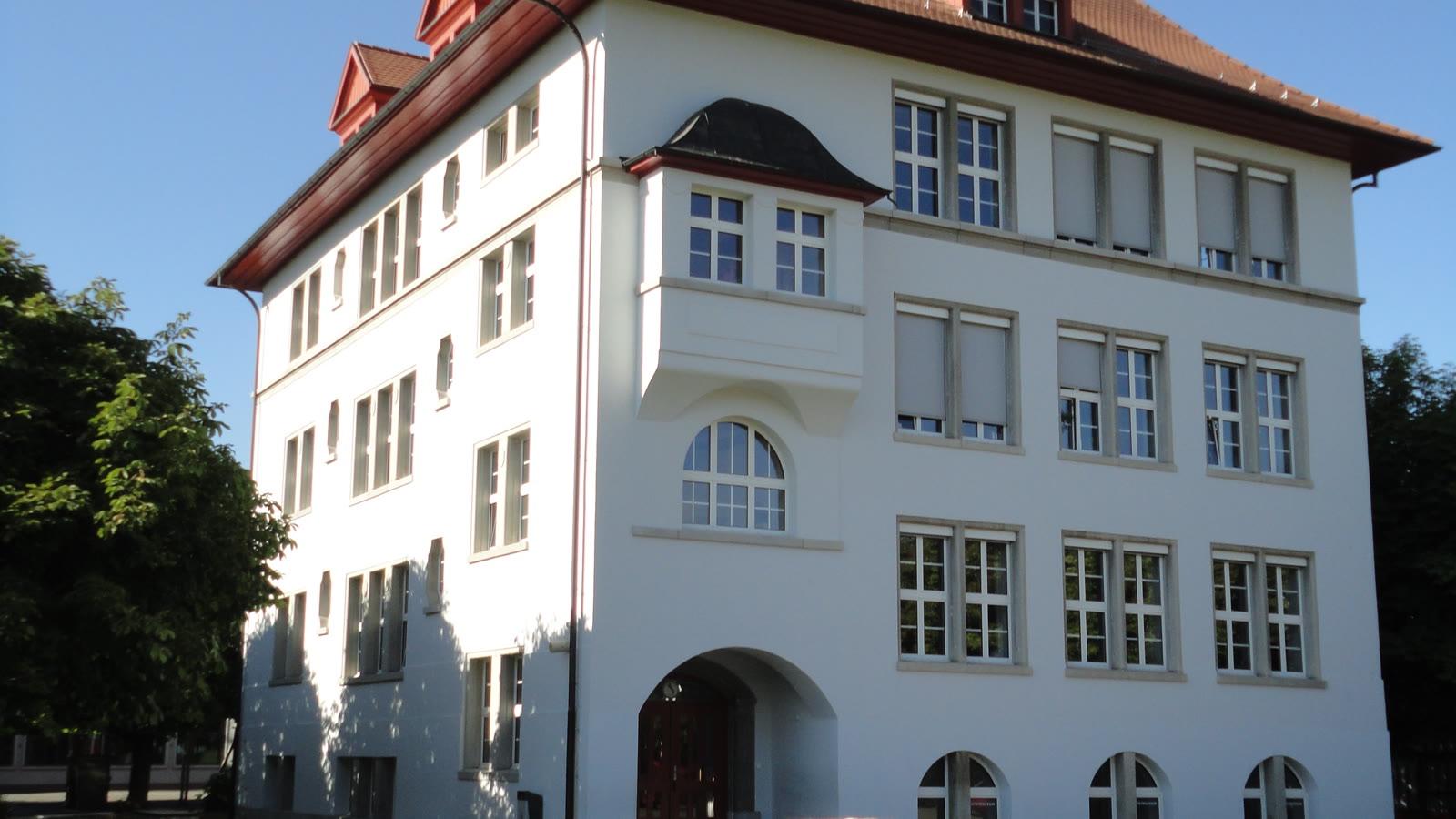
The Sauriermuseum Frick occupies the basement of the 1912 primary school building at Schulstrasse 22. The entrance is at the back of the building.
A dinosaur nature trail, the Dinosaurier-Lehrpfad, runs between the museum and the Wälchligarten on the Tonwerke Keller site near the pit.
Museum opening is limited. It opens on Sundays from 13:00 to 17:00.
The Klopfplatz keeps no hours at all. You may search there at any time, and no registration is needed.
What Fossils You'll Find
At the Klopfplatz you find marine Jurassic invertebrates. Ammonites, belemnites and bivalves come out of the material laid out there.
Bring your own hand tools. A hammer and a chisel are the minimum, and safety glasses matter more than either.
Power tools are prohibited. The site rules exclude demolition hammers and similar equipment for fossil searching.
Four Erlebnissonntage run through the summer, on the second Sunday of the month from June to September. In 2026 they fall on 14 June, 12 July, 9 August and 13 September, from 10:00 to 16:00.
Those days need no booking either. Volunteer collectors simply stand beside you and identify what comes out.
Plateosaurus material comes from the pit itself, not from the public heap. Skeletons, skulls and hands from the excavations are on display in the museum.
Other Triassic animals turn up in the pit as well. A turtle, Proganochelys quenstedtii, was reported from the Frick bonebeds in 2022, and Notatesseraeraptor frickensis, a small theropod, was described from the pit in 2019.
 Photo: Ghedoghedo, CC BY-SA 3.0, via Wikimedia Commons

Geologic History
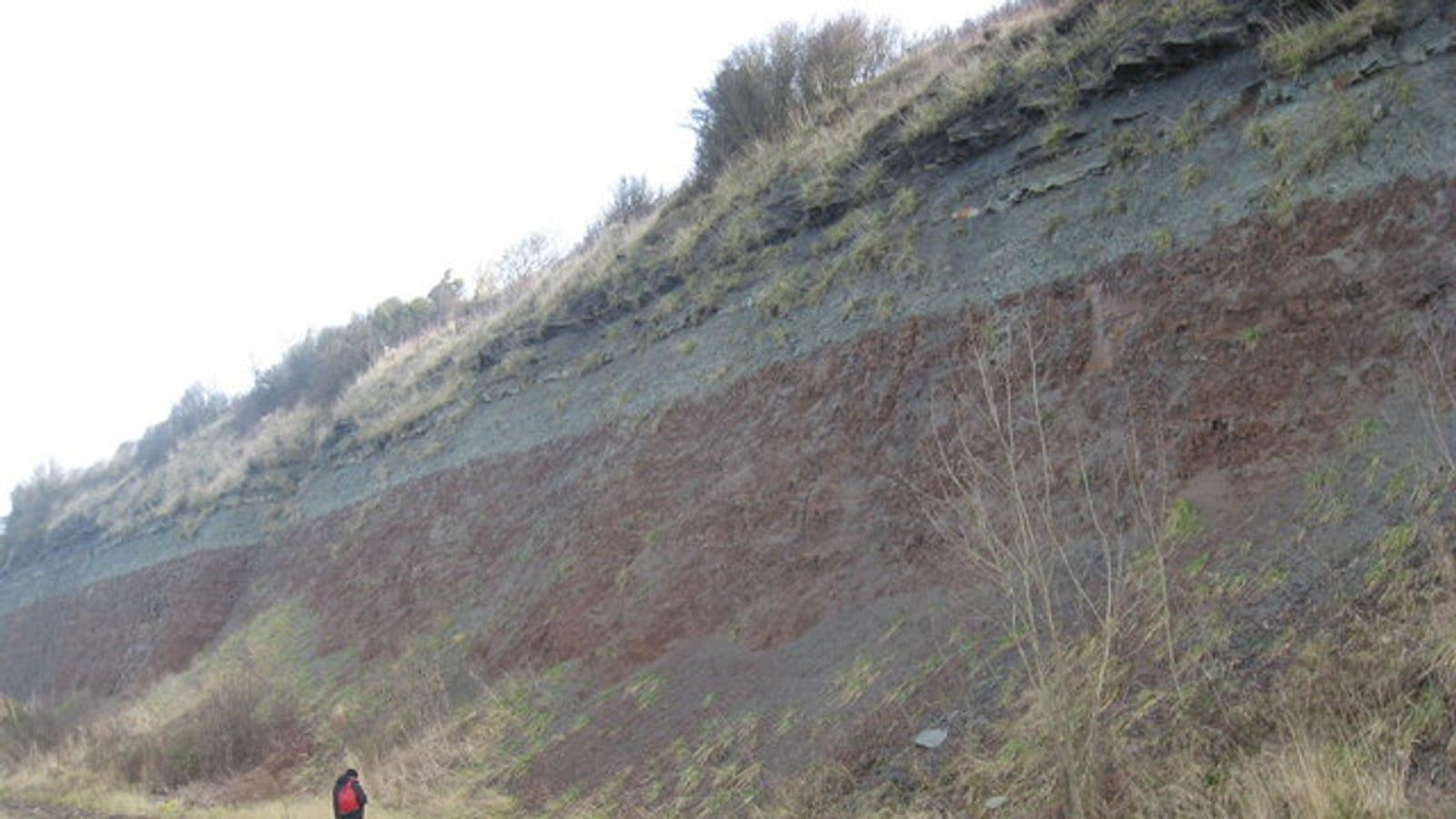
The Gruhalde pit cuts a section that runs from the Middle Keuper of the Late Triassic up into the Early Jurassic.
The dinosaur-bearing layers belong to the Norian, and three separate bone horizons occur through them. Plateosaurus runs through all of them.
The animals died on a floodplain. Debate continues about whether they became trapped in mud, and the repeated horizons suggest the trap worked more than once.
Above the Triassic the section passes into Jurassic marine rock and reaches the Sinemurian Obtusus clays. The sea had returned by then.
That upper marine part is the source of the ammonites and belemnites on the public heap.
One pit therefore spans a shift from land to sea, and a visitor can hold a piece of the later half of it.
 Photo: Ghedoghedo, CC BY-SA 3.0, via Wikimedia Commons

Collecting Rules and Regulations
The Klopfplatz exists so that the public can collect, and it is freely accessible at any hour.
Most of what you find there is yours to keep. Swiss law reserves the rest: under the Civil Code and the Aargau decree on natural objects, material of scientific value belongs to the canton. Show anything unusual to the museum.
The working pit is a different matter. The site rules state plainly that entering the clay pit is strictly forbidden to unauthorised persons.
Do not attempt to reach the faces of the pit. Excavation there runs under scientific supervision with the agreement of the operator.
If you find something at the Klopfplatz that looks like bone rather than shell, show it to the museum. Vertebrate material from Frick has research value.
The nature trail and the Klopfplatz are both free. The museum charges a modest entry fee during its Sunday opening.
Safety
Hammering breaks rock, and rock chips travel. Wear eye protection and keep other people out of your line.
The Klopfplatz surface is uneven and loose. Sturdy shoes are better than sandals.
Do not climb the spoil heaps or approach the edge of the working pit.
Children enjoy the site and many families visit. Keep them in sight and give them their own safety glasses.
There is no shelter at the hammering area. Check the forecast before a long session.
Sources
Nearby sites
 Monte San Giorgio (Besano-Meride) Fossil Hunting GuideBesanosaurus leptorhynchus, Ceresiosaurus calcagnii
 Winterswijk Quarry, Gelderland Fossil Hunting GuideMarine reptile bones, Reptile footprints
 JuraPark Krasiejów Fossil Hunting GuideAmphibians, Reptiles
 Fossils of Aust Cliff Fossil Hunting GuideShark teeth, Fish scales and teeth