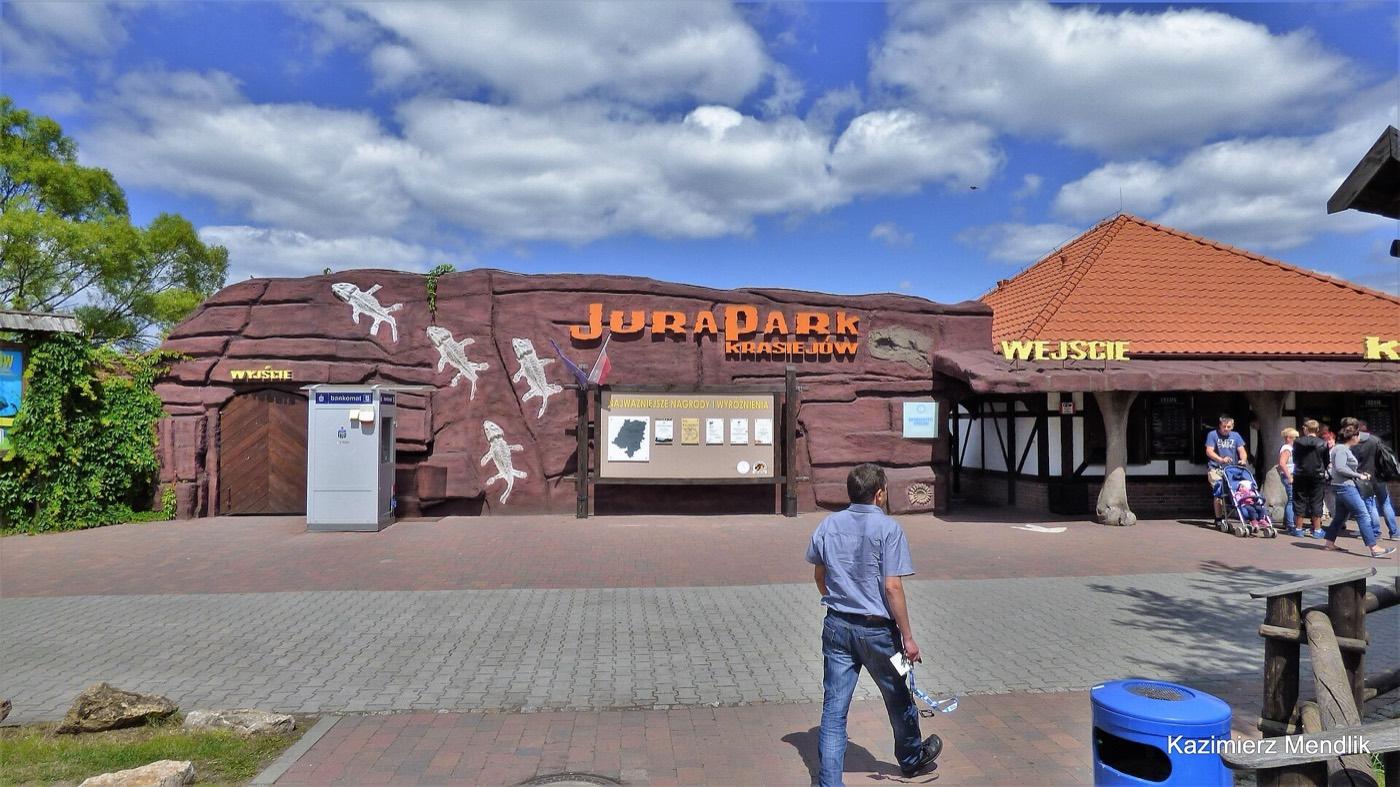
JuraPark Krasiejów Fossil Hunting Guide
Image: Kazimierz Mendlik (CC BY-SA 3.0)
A Late Triassic bonebed near Opole preserved in place under a pavilion, viewed through a glass floor. The clay pit produced Silesaurus opolensis, a close relative of the earliest dinosaurs, and the large amphibian Metoposaurus. The deposit is one of the richest of its age in Europe.
By Edward Chen · Published 11 September 2026
Introduction
At Krasiejów the fossils were not taken away to a museum. A building was put over them instead, and you walk across a glass floor above bone still lying in the clay.
The deposit is a Late Triassic tetrapod bonebed in a former cement-works clay pit near Opole in south-west Poland. The Institute of Paleobiology of the Polish Academy of Sciences began excavating in the 1990s, and the site rapidly became one of the most important of its age in Europe.
Its best known animal is Silesaurus opolensis, described from here. Silesaurus sits very close to the origin of dinosaurs, on the branch leading toward them without quite being one. That position makes it central to the argument about how dinosaurs arose.
The pavilion covering the excavation opened to the public on 26 August 2006. The surrounding theme park followed in 2010.
Location and Directions
Krasiejów is a village in the Ozimek commune, Opole Voivodeship, roughly 20 kilometres east of Opole city.
GPS: 50.6640°N, 18.2712°E.
The park's address is 1 Maja 10, 46-040 Krasiejów. Admission is charged. The 2026 rate is about 109 złoty full and 99 reduced for JuraPark alone. A combined ticket costs more, so check the current cennik before you go.
Published hours differ between sources and shift with the season, so treat any figure you read as provisional and confirm on juraparkkrasiejow.pl before you travel. Expect roughly 10:00 to 16:00 out of season and longer hours in summer and at weekends.
Aim at the palaeontological pavilion, not the wider park. The complex around the excavation includes reconstructions, models and family attractions. The pavilion over the bonebed is the part with real fossils in place. It is described as the only museum in the world built on an active palaeontological site.
The ticket covers a wide complex. Alongside the palaeontological pavilion, a dinosaur model park runs along a 1.5 kilometre educational path. It holds around 200 reconstructions of reptiles and amphibians and is billed as the largest dinosaur park in Europe. The pavilion over the bonebed is the part with fossils in place.
What Fossils You'll Find
Nothing is collectable. What you see is a bone bed in section.
Metoposaurus is the most abundant animal. It was a large, flat-headed temnospondyl amphibian with a broad skull and small limbs, and it lived in and around water. Krasiejów holds one of the largest accumulations of Metoposaurus known.
Silesaurus opolensis is the scientifically important one, a slender, long-limbed, plant-eating dinosauriform about 2 metres long.
The site has also produced a rauisuchian archosaur, phytosaurs, freshwater bivalves in large numbers, and plant material.
Silesaurus matters because of where it sits on the family tree. It belongs to the silesaurids, a group positioned either just outside Dinosauria or at its very base, depending on the analysis. Either way the animal shows what the immediate relatives of the first dinosaurs looked like. It was a modest, quadrupedal plant-eater rather than anything imposing.
 Photo: Shalom, CC BY 3.0, via Wikimedia Commons

Geologic History
The beds are Late Triassic and late Carnian or early Norian, which remains contested in print, roughly 237 to 227 million years ago. Krasiejów is the type locality for a Late Triassic vertebrate assemblage, and the bonebed sits in the Patoka Member of the Grabowa Formation.
The setting was a freshwater lake or floodplain, not a sea. The claystones accumulated in still water, and the dense populations of freshwater bivalves in the sequence support that reading.
Periodic drying or flooding events concentrated carcasses. That is the usual explanation for a bonebed of this density, and it is why so many individuals of Metoposaurus occur together.
The Carnian is an interesting moment to have a view of. It brackets the Carnian Pluvial Episode, a period of unusually wet climate, and the interval in which dinosaurs began to diversify.
The clay pit was worked for a cement plant, and the fossils came to light through that industry rather than through prospecting. That is the same story as Holzmaden, Solnhofen and Canelas: commercial extraction opens the rock, and palaeontology follows.
 Photo: Shalom, CC BY 3.0, via Wikimedia Commons

Collecting Rules and Regulations
Collecting is prohibited. Krasiejów is a protected scientific excavation, and material stays in place for research or goes into institutional collections.
The pavilion is a viewing facility. Do not touch exposed bone, and keep to the visitor route across the glass floor.
Poland protects palaeontological heritage, and removing material from a research excavation is not permitted.
Poland has a second major Triassic vertebrate locality at Lisowice, and the Gagaty Sołtykowskie reserve preserves Early Jurassic dinosaur trackways. Neither has the visitor infrastructure of Krasiejów, but both are worth knowing about if the Triassic of Poland interests you.
 Photo: Shalom, CC BY 3.0, via Wikimedia Commons

Safety
The pavilion is an indoor, managed visitor environment and presents no unusual hazards.
Keep to marked routes. The excavation surface below the walkway is not a public area.
The wider complex includes outdoor paths that become slippery in wet weather and can be icy in winter.
The site is popular with school groups. Expect crowds in term time and during Polish school holidays.
Opole makes the obvious base. The city is about twenty kilometres west, has rail connections across southern Poland. Holds enough accommodation to make Krasiejów a straightforward half-day trip rather than a special expedition.
Sources
https://www.paleo.pan.pl/research-department/excavations/krasiejow-poland.html https://visitopolskie.pl/en/strona/discover/560-science-and-amusement-park-jurapark-krasiejow https://www.app.pan.pl/archive/published/app47/app47-535.pdf https://juraparkbaltow.pl/
Nearby sites
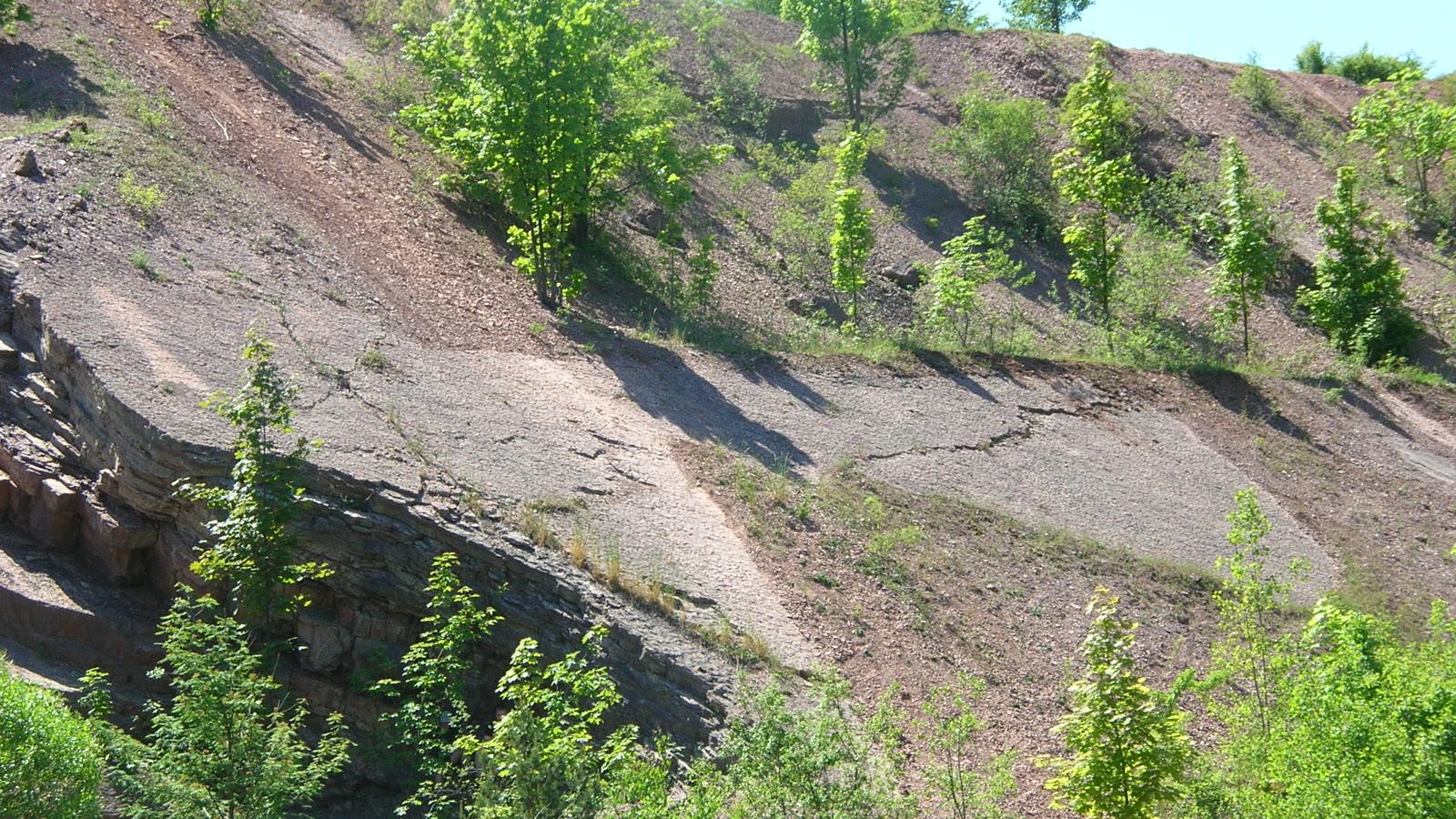 Zachełmie Quarry, Zagnańsk Fossil Hunting GuideTetrapod trackways, Stromatolites
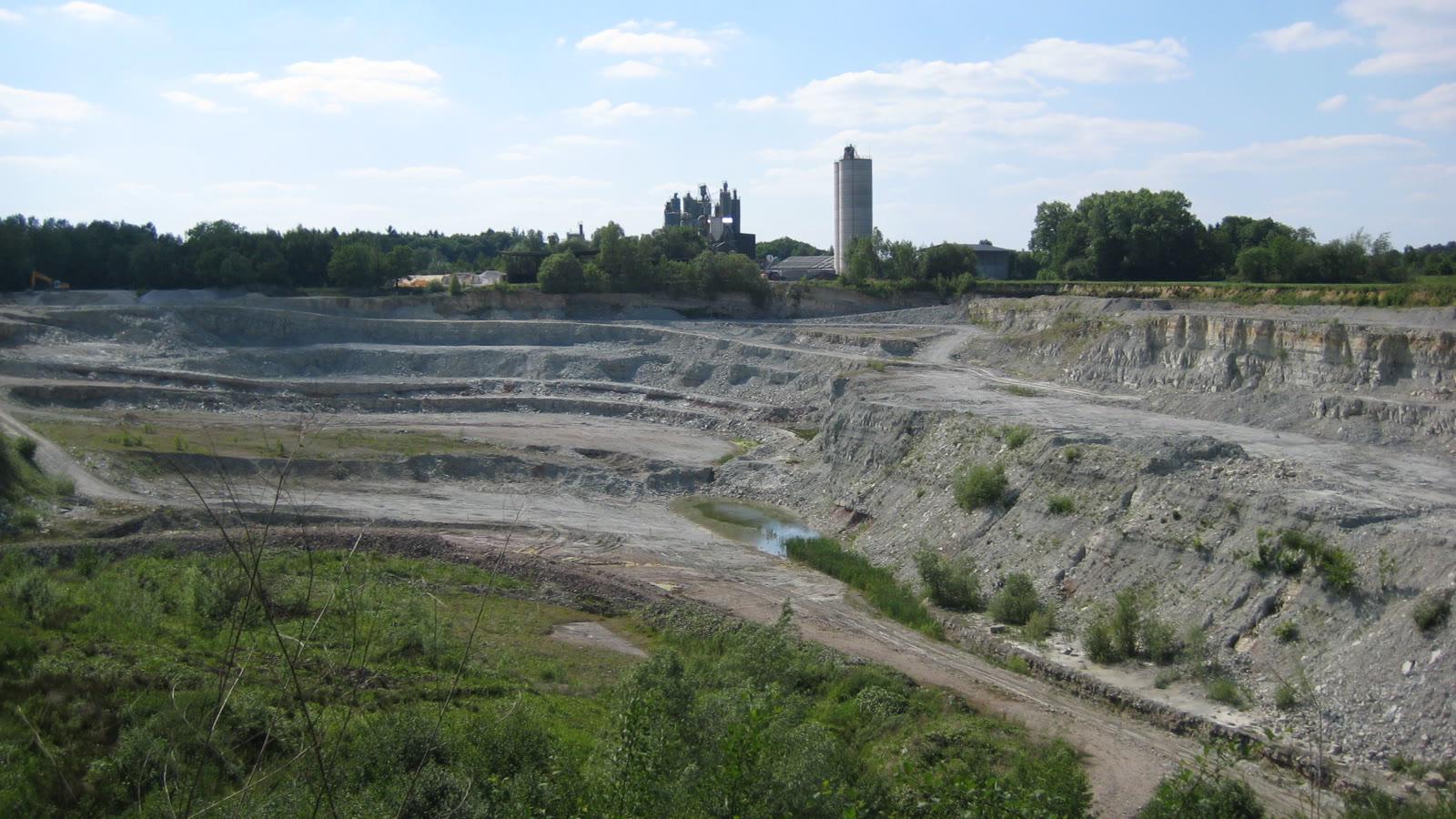 Winterswijk Quarry, Gelderland Fossil Hunting GuideMarine reptile bones, Reptile footprints
 Gruhalde Clay Pit, Frick Fossil Hunting GuideDinosaur bones, Ammonites
 Monte San Giorgio (Besano-Meride) Fossil Hunting GuideBesanosaurus leptorhynchus, Ceresiosaurus calcagnii