Winterswijk Quarry, Gelderland Fossil Hunting Guide
Image: Ciell (CC BY 3.0)
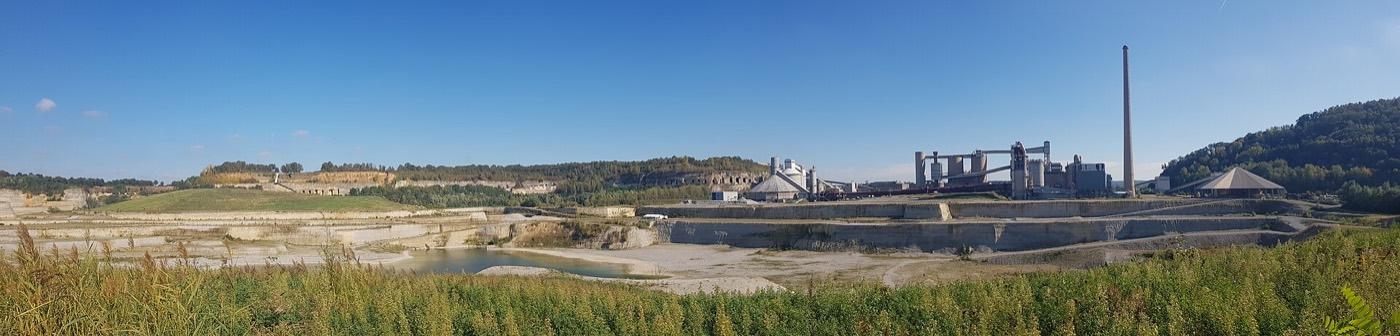
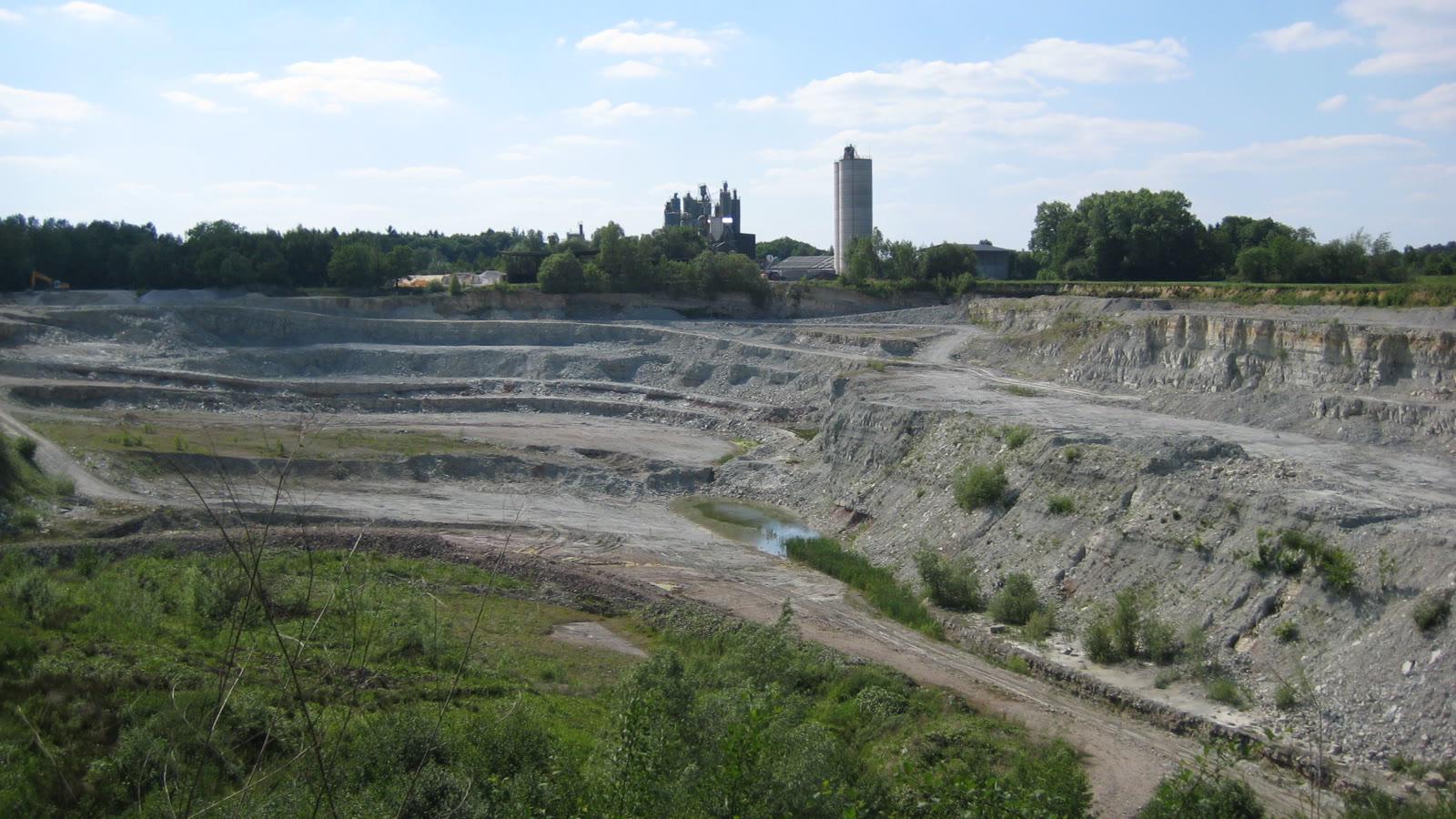
A working quarry in the east of the Netherlands, and the country's richest Triassic site. Marine reptile bones and footprints come out of the Muschelkalk here. Entry is on organised search days only.
By Edward Chen · Published 17 September 2026
Introduction
The Netherlands is not a country with much rock at the surface. Sand, clay and peat cover almost all of it, and hard stone is something the Dutch have historically imported.
Winterswijk is the exception. A quiet fold in the crust pushed Middle Triassic limestone within reach of a digger, and a quarry has worked it since 1932.
What came out changed Dutch palaeontology. The Lower Muschelkalk here holds marine reptile bones and footprints in numbers that few European sites match.
Nothosaurus is the animal most associated with the quarry. Its bones occur alongside the tracks of reptiles that walked the tidal flats above the water line.
Preservation is unusually good. The beds are thin and fine, and they recorded soft sediment surfaces as well as skeletons.
The quarry still works, so you cannot simply turn up. Access runs through organised search days and guided tours.
Location and Directions
The quarry is at Vosseveld, on the eastern side of Winterswijk in the Achterhoek region of Gelderland, close to the German border.
Winterswijk has a railway station with direct services from Arnhem and Zutphen. The quarry is a short drive or cycle from the town centre.
From the town follow signs for the Steengroeve. A viewpoint and a walking route run around the rim, and both are open without any arrangement.
The rim walk gives you the scale of the place and costs nothing. It does not give you access to the working faces or to any fossils.
For that you need a place on a search day. Those fill quickly.
What Fossils You'll Find
Marine reptile material is the draw. Bones of Nothosaurus, a long-necked Triassic swimmer, come out of the thin limestone beds along with other sauropterygian remains.
Footprints are the other speciality. The bedding surfaces preserve tracks of reptiles that crossed exposed carbonate flats, and these are often clearer than the bones.
Bivalves occur throughout. The Muschelkalk takes its German name from the shells that fill it.
Fish remains, including teeth and scales, turn up in the same beds.
Minerals interest many visitors as much as the fossils do. Celestine and calcite crystals occur in the quarry, and collectors value the celestine in particular.
Be realistic about a single visit. Most search days produce shell material and fragments rather than a reptile bone.
Geologic History
The rock is Lower Muschelkalk, the lower division of the German Triassic sequence, and it dates to the Anisian stage of the Middle Triassic.
At that time a shallow sea reached into central Europe from the Tethys to the south-east. The connection was narrow and the basin was often restricted.
Water depth over Winterswijk stayed low. The beds record lagoons, tidal flats and periods when the surface dried out entirely.
Those conditions explain the footprints. Animals walked across firm carbonate mud that then hardened before the next tide covered it.
The whole sequence is thin. A few tens of metres of rock here stand for several million years of a quiet, shallow sea.
Later earth movements lifted the block and erosion stripped the cover. That is why Triassic rock reaches the surface in one small part of the Netherlands.
Collecting Rules and Regulations
This is an active industrial site owned and run by Sibelco. Independent searching is no longer permitted.
The Werkgroep Muschelkalk Winterswijk, part of the Geologische Vereniging Oost Nederland, organises search days several times a year. Those days are the normal route in for a collector.
They are for members. Search-day places go to people who hold GVON or NGV membership, so join first and book second.
Guided tours of about 90 minutes also run, and they take visitors down into the quarry. A tour is a look rather than a collecting opportunity.
Places on search days are limited and demand is high. Book as far ahead as you can.
Scientifically important finds are expected to go to researchers rather than into a private drawer. Ask the organisers about the arrangement before you attend.
Check the current position with Winterswijk tourist information or with the Werkgroep before you travel. Access arrangements at a working quarry change.
Safety
You will be inside a working quarry with steep faces and loose blocks. Follow the instructions of the day's organisers without exception.
Expect to be told what protective equipment to bring. Sturdy boots are the minimum at any quarry.
The quarry floor holds water and the limestone is slippery when wet.
Do not approach the base of a face, and do not climb the benches.
Children are welcome on many of the organised days, but keep them close. This is not a beach.