Grutas del Palacio Geopark Fossil Hunting Guide
Image: Griselsan (CC BY-SA 3.0)
Uruguay's only UNESCO Global Geopark, in Flores department, built around a sandstone cave whose roof rests on more than 200 natural columns. Dinosaur eggs, fossil bee nests and beetle traces date the surrounding rocks.
By Edward Chen · Published 12 September 2026
Introduction
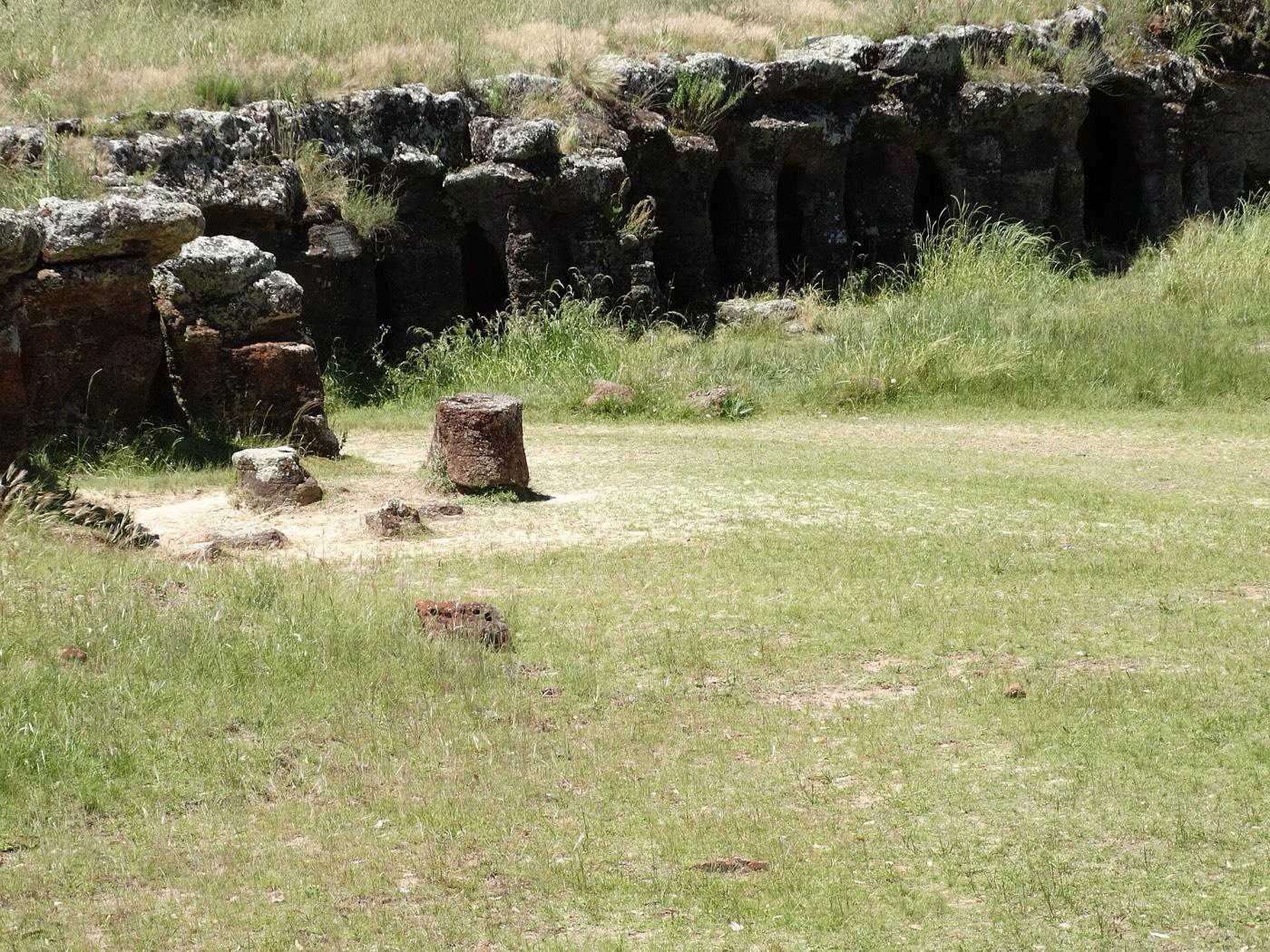
Uruguay has one UNESCO Global Geopark, and it is named after a cave that looks built rather than eroded. The Grutas del Palacio is a low sandstone chamber whose roof, about 70 centimetres thick, rests on dozens of natural columns roughly two metres high. Water erosion produced it, and the regularity of the columns is what gives it the name, the palace caves.
The geopark became the first in Uruguay and the second in South America. It joined the Global Geoparks Network in 2013 and took the UNESCO label in 2015. It covers 3,641 square kilometres of Flores department and is a founding member of the Latin American and Caribbean geopark network.
The palaeontology is genuine but it is not what you go and look at. Dinosaur eggs, fossil bee nests and beetle traces are what dated the rocks. The sands were deposited around 70 million years ago and hardened around 55 million years ago. Most of that material is in the museum rather than in an exposure you can walk to.
Location and Directions
The geopark is in Flores department in south-central Uruguay, about 200 kilometres north of Montevideo.
GPS: 33.2761°S, 57.1333°W.
Trinidad is the departmental capital and the practical base, reached by road from Montevideo in roughly three hours.
Guided visits with specialist guides are the standard way to see the site. There is an interpretation centre, an audiovisual room, a cafeteria and a thematic museum.
The Fernando Gutiérrez Museum in Trinidad is a national heritage monument and holds permanent exhibitions on rocks, fossils and minerals, with a room dedicated to the geopark.
Only a small part of the cave labyrinth is open to the public.
What Fossils You'll Find
Nothing is collectable, and it is worth setting expectations clearly. This is a landscape and interpretation destination rather than a place where fossils are visible in the field.
The museum holds the material. Dinosaur eggs, fossil bee nests and beetle trace fossils are the elements that matter scientifically. Insect nests and egg clutches are made in soil, so they record ancient land surfaces directly. They also add the depth this page's fossil list does not convey on its own.
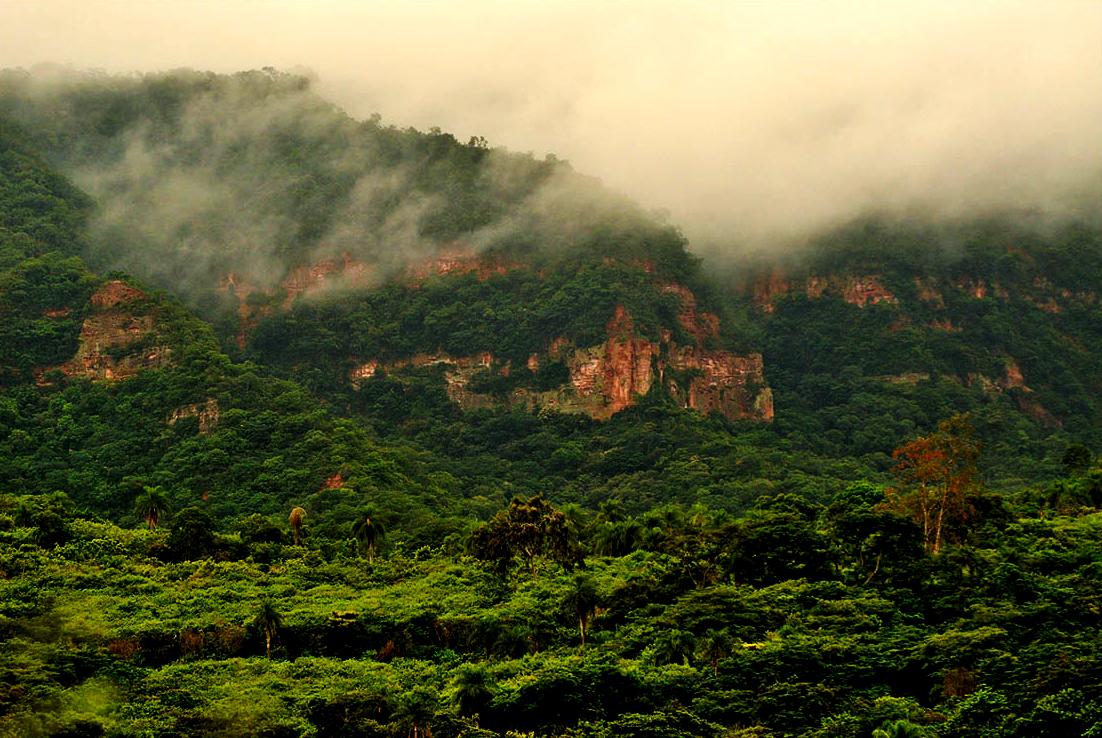
The cave itself is the visual draw. The columns, the flat roof and the iron-stained sandstone are what most visitors photograph.
Ask the guides about the geosites beyond the cave. The geopark spans every major eon from the Proterozoic to the Cenozoic, and its other stops cover far older rocks.
 Photo: Griselsan, CC BY-SA 3.0, via Wikimedia Commons
Geologic History
The rocks belong to the Asencio Formation, which crops out discontinuously across south-western Uruguay and is best displayed at Grutas del Palacio.
The formation divides into two members. The lower Yapeyú Member is pale pink to white fine-grained sandstone. The upper Palacio Member is ferruginous sandstone with iron-rich palaeosols and iron duricrusts, and it is the unit that forms the cave.
Those iron-rich palaeosols are ancient soil profiles. Soil forms on a stable land surface over long periods, which is why insect nests and egg clutches are preserved in it. Why the unit carries a terrestrial fossil record rather than a marine one.
Recent work interprets the wider Upper Cretaceous continental deposits of the area as recording an old flooded forest. That adds a further environmental layer to the picture.
Uruguay is a small country with a modest fossil record compared with Argentina or Brazil next door, and the geopark is its principal geological destination. That context is worth holding: this is not a rival to Ischigualasto, and it does not present itself as one.
 Photo: Griselsan, CC BY-SA 3.0, via Wikimedia Commons
Collecting Rules and Regulations
Collecting is prohibited. The geopark protects its geosites and Uruguay protects palaeontological heritage.
Do not remove sandstone, nodules or fossil material.
Visits to the cave are guided, and the accessible portion is deliberately limited to protect the structure.
Report anything you notice eroding out to the geopark staff.
Trace fossils carry a particular kind of information. A bee nest or a beetle burrow cannot be moved after death the way a shell can. So it records the environment at the exact spot where it is found. That is why insect traces in a palaeosol are such useful evidence for an ancient land surface.
 Photo: Griselsan, CC BY-SA 3.0, via Wikimedia Commons
Safety
The cave is low, and the roof is genuinely only around 70 centimetres thick in places. Follow the guides and keep to the route.
The floor is uneven and can be damp.
Flores is open country with limited shade. Uruguayan summers are hot, so carry water and sun protection.
The surrounding geopark is rural, with long distances between facilities and patchy mobile coverage.
Duricrusts are the reason the cave holds up. Iron-cemented layers form near the top of a weathering profile, and they are far harder than the sand beneath. Water removed the soft material and the resistant crust remained as a roof, supported by whatever columns of sandstone happened to survive.
 Photo: Lourdes Berretta, CC BY-SA 3.0, via Wikimedia Commons
Sources
https://www.unesco.org/en/iggp/grutas-del-palacio-unesco-global-geopark https://www.andeangeology.cl/index.php/revista1/article/view/V51n2-3688/html https://www.geoparque.uy/ https://www.lr21.com.uy/turismo/1413231-grutas-del-palacio-geoparque-donde-la-naturaleza-parece-magia


.JPG)