Cal Orck'o and Parque Cretácico Fossil Hunting Guide
Image: Murray Foubister (CC BY-SA 2.0)
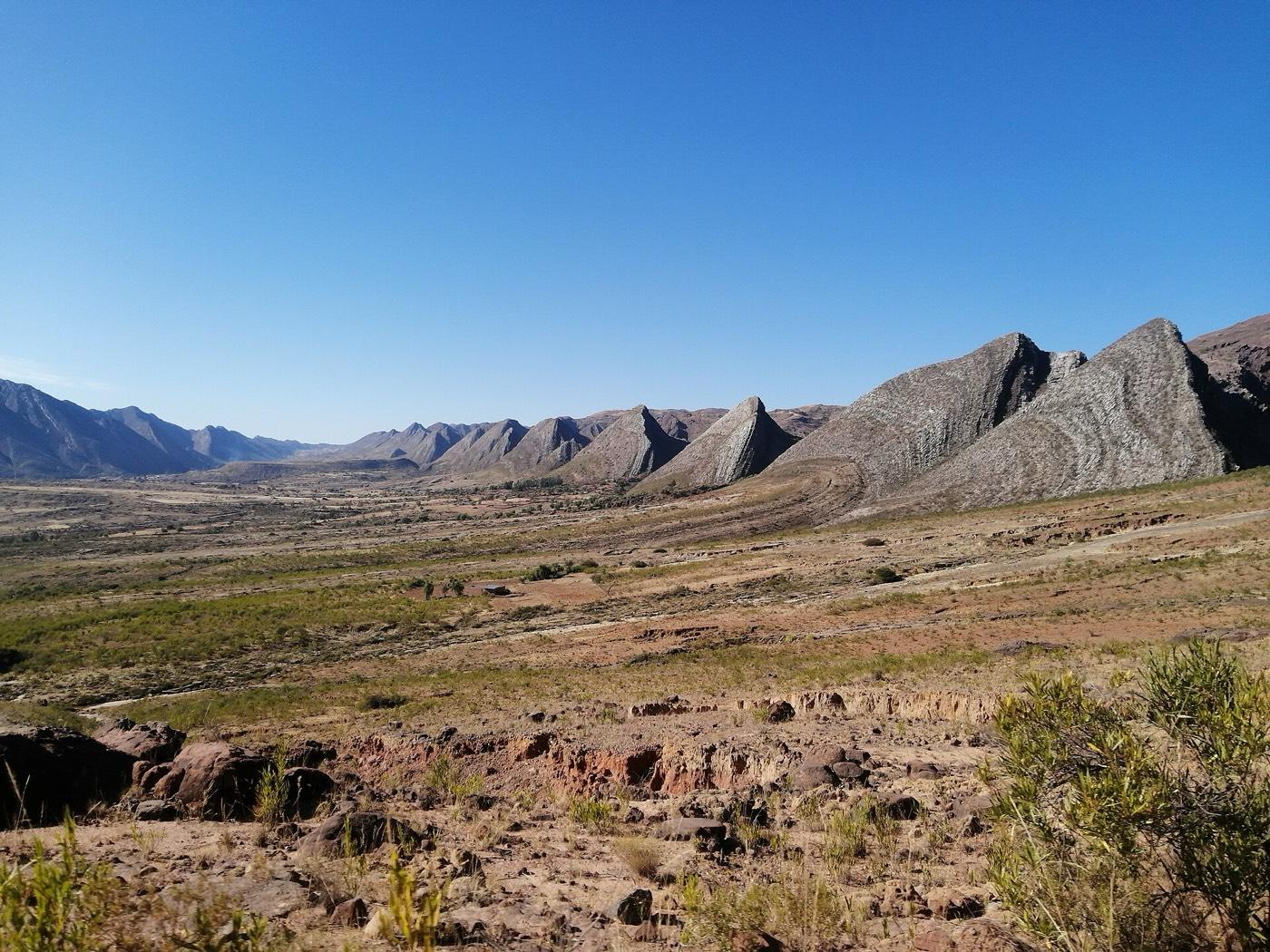
A near-vertical limestone wall in a cement quarry outside Sucre carrying thousands of Late Cretaceous dinosaur footprints across nine track levels. The surface was flat when the animals crossed it and Andean tectonics stood it on end.
By Edward Chen · Published 12 September 2026
Introduction
Cal Orck'o is the reason a cement works outside Sucre became a palaeontological landmark. Quarrying stripped the overburden from a bedding plane in the 1990s and exposed a track surface covered in dinosaur footprints.
The surface is close to vertical. That is the detail everyone notices first and the one that confuses most visitors, because footprints imply a horizontal ground. The bed was horizontal when the animals walked on it. Andean mountain building later tilted the whole sequence, and the track surface went up with it.
Counts vary between sources and the difference is worth explaining. Detailed mapping between 1998 and 2015 documented more than 12,000 individual prints across 465 trackways. Tourist material generally quotes a round figure of more than 5,000, which reflects what is visible on the main face rather than the full inventory. Nine distinct track morphotypes have been recognised on the wall.
Cal Orck'o was long described as the largest dinosaur tracksite in the world on the strength of that count. Esperante and colleagues published a study of Carreras Pampa in Torotoro National Park in PLOS ONE on 3 December 2025, reporting roughly 16,600 tracks, which now exceeds it.
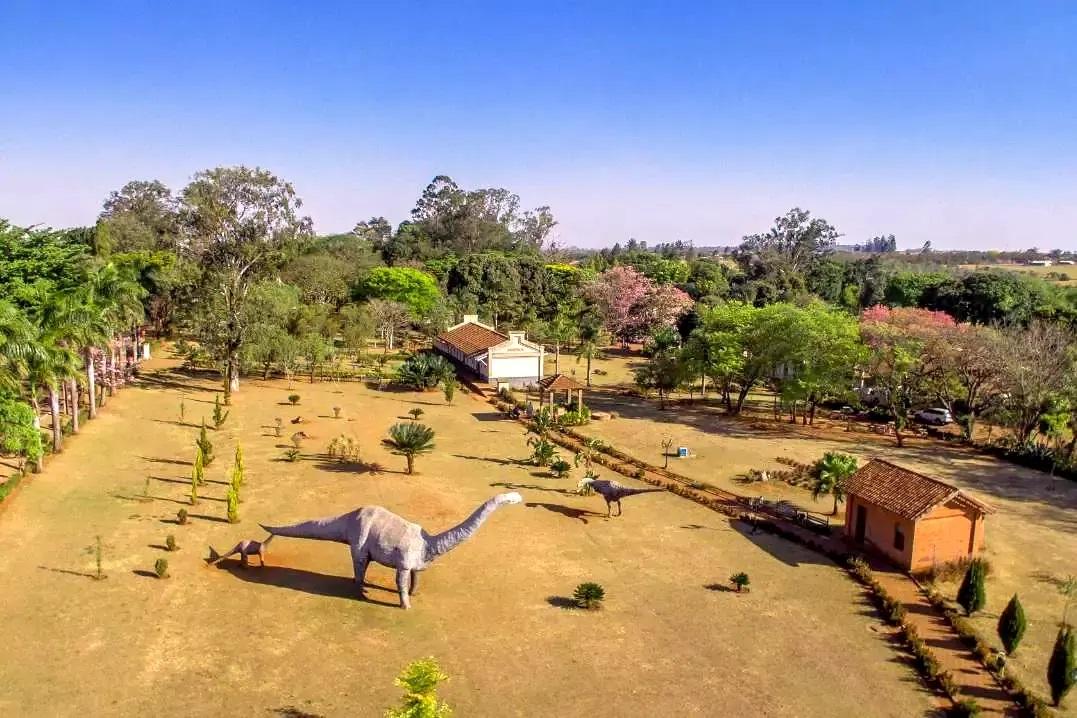
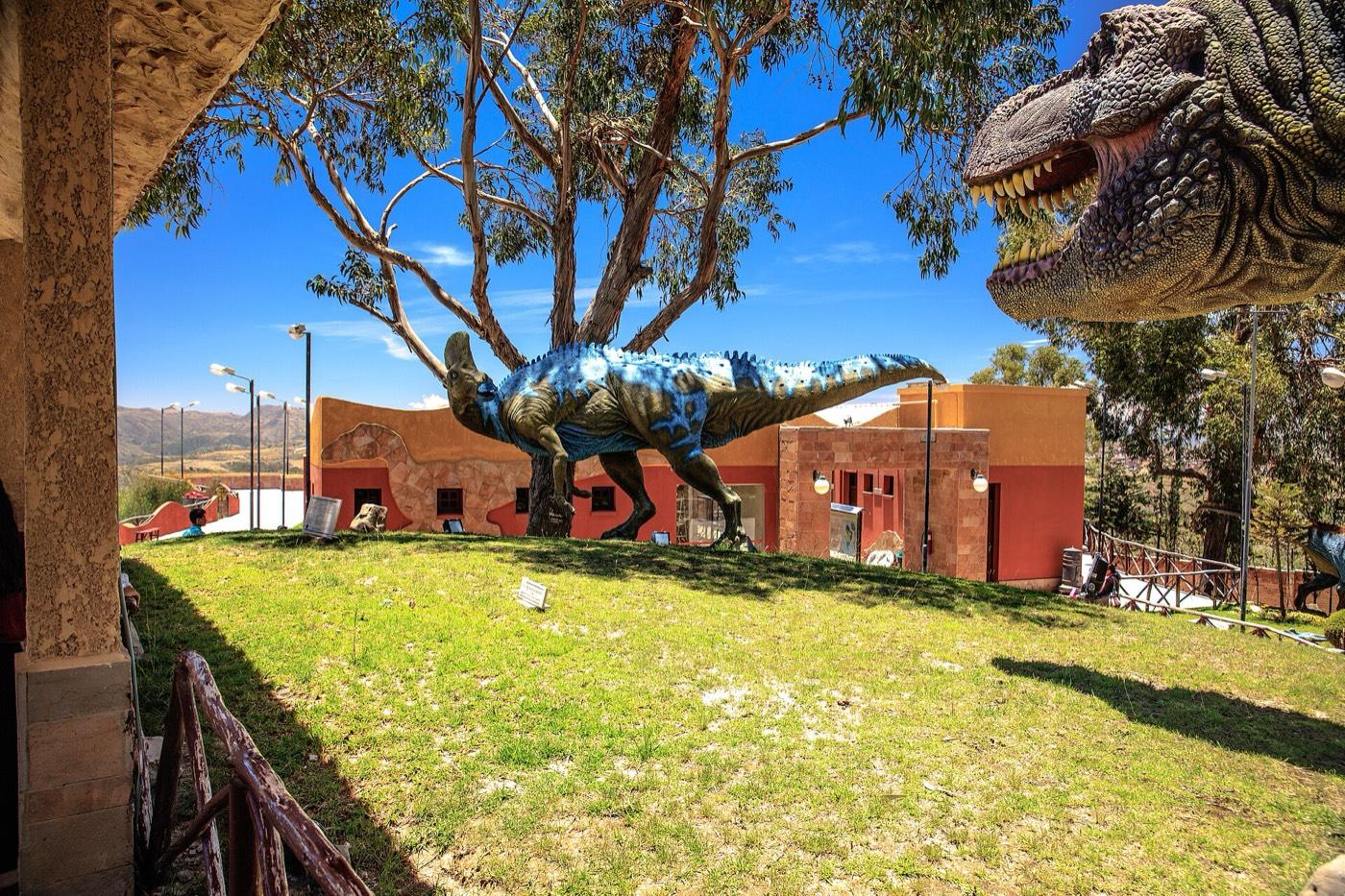
The Parque Cretácico beside the quarry provides the viewing platform, models and interpretation.
Location and Directions
Cal Orck'o is about 4.4 kilometres north-west of central Sucre, in Chuquisaca Department, in the Bolivian highlands.
GPS: 19.0028°S, 65.2372°W.
Sucre is Bolivia's constitutional capital, has an airport, and is a common stop on travel between La Paz and the south. A dinosaur-themed bus runs from the city centre to the park, and taxis are inexpensive.
Admission is charged at the Parque Cretácico.
Guided walks go down to the base of the wall at set times, and they are worth timing your visit around. From the viewing platform the prints read as a pattern. From the base they read as the tracks of individual animals.
What Fossils You'll Find
Nothing is collectable. This is a working quarry and a protected palaeontological site.
The trackways are the whole visit. Theropod and sauropod prints dominate, along with ornithopods, and individual trackways can be followed for tens of metres across the face.
One theropod trackway, nicknamed Johnny Walker, runs between 347 and 366 metres and is among the longest continuous dinosaur trackways recorded anywhere.
The rock itself is worth a look. The bed is an oolitic fossiliferous limestone associated with large freshwater stromatolites, which are layered structures built by microbial mats.
 Photo: Paleoninja, CC BY 4.0, via Wikimedia Commons
Geologic History
The tracks lie in the El Molino Formation, Middle Maastrichtian, about 68 million years ago, which places them within the last two million years of the Cretaceous.
The setting was the margin of a large, shallow, alkaline lake system. It covered much of the Bolivian altiplano region at the end of the Cretaceous. Stromatolites and oolitic limestone both point to warm, shallow, carbonate-saturated water.
Animals walked across the lake margin when it was exposed. The mud hardened, the next layer buried it, and the cycle repeated, which is why nine track levels occur rather than one.
Uplift of the Andes then rotated the beds. The wall now stands at close to 70 degrees, and continuing erosion both exposes new prints and destroys old ones.
The wall is also disappearing. Rockfall regularly removes sections of the track surface, and the same erosion that exposed the prints continues to destroy them. Conservation work has been intermittent, and what is visible on any given visit is not guaranteed to be there in a decade.
 Photo: Hay Kranen, CC BY 4.0, via Wikimedia Commons
Collecting Rules and Regulations
Collecting is prohibited. The site is protected and the quarry is private industrial land.
Do not attempt to approach the wall outside a guided visit. The quarry operates, and access is controlled for that reason as well as for conservation.
Bolivia protects palaeontological heritage, and removing material is an offence.
Stromatolites deserve a mention because they are easy to walk past. They are layered mounds built by microbial mats trapping sediment, they are among the oldest evidence of life on Earth. Finding them in a freshwater Cretaceous lake alongside dinosaur tracks is an unusual combination.
 Photo: Hay Kranen, CC BY 4.0, via Wikimedia Commons
Safety
The wall is an active quarry face and it sheds rock. Stay with your guide and wear the helmet provided on the walk to the base.
Sucre sits at about 2,750 metres. Altitude affects visitors arriving from sea level, so allow time to acclimatise and take the walk slowly.
The high-altitude sun is intense. Use sun protection even when the air is cool.
The rainy season runs roughly November to March and can close the guided descent.
Sucre itself is a UNESCO World Heritage city with a well-preserved colonial centre, and most visitors are there for that. The dinosaur wall is a half-day addition rather than the reason for the trip.
Miners at the Fancesa cement plant found the tracks in 1985, and quarry clearing exposed the full wall in 1994. FANCESA is a Sucre company, despite the word Nacional in its name, and the pit is still working. That dual identity is the central tension at Cal Orck'o. An industrial operation and a protected palaeontological site share the same ground, which is why access is controlled the way it is.
The Parque Cretácico opened in 2006 to manage the visitors who followed. Its models are conventional theme-park fare, and the reason to buy the ticket is the platform and the guided descent.
 Photo: Caleidoscopic, CC BY-SA 4.0, via Wikimedia Commons
 Photo: Caleidoscopic, CC BY-SA 4.0, via Wikimedia Commons
Sources
https://en.wikipedia.org/wiki/Cal_Orck%27o https://www.sciencedirect.com/science/article/pii/S0895981120305356 https://www.rutaverdebolivia.com/cal-orcko-bolivia-dinosaur-tracks/ https://www.gadventures.com/blog/cal-orcko-dinosaur-wall-bolivia/