Torotoro National Park Fossil Hunting Guide
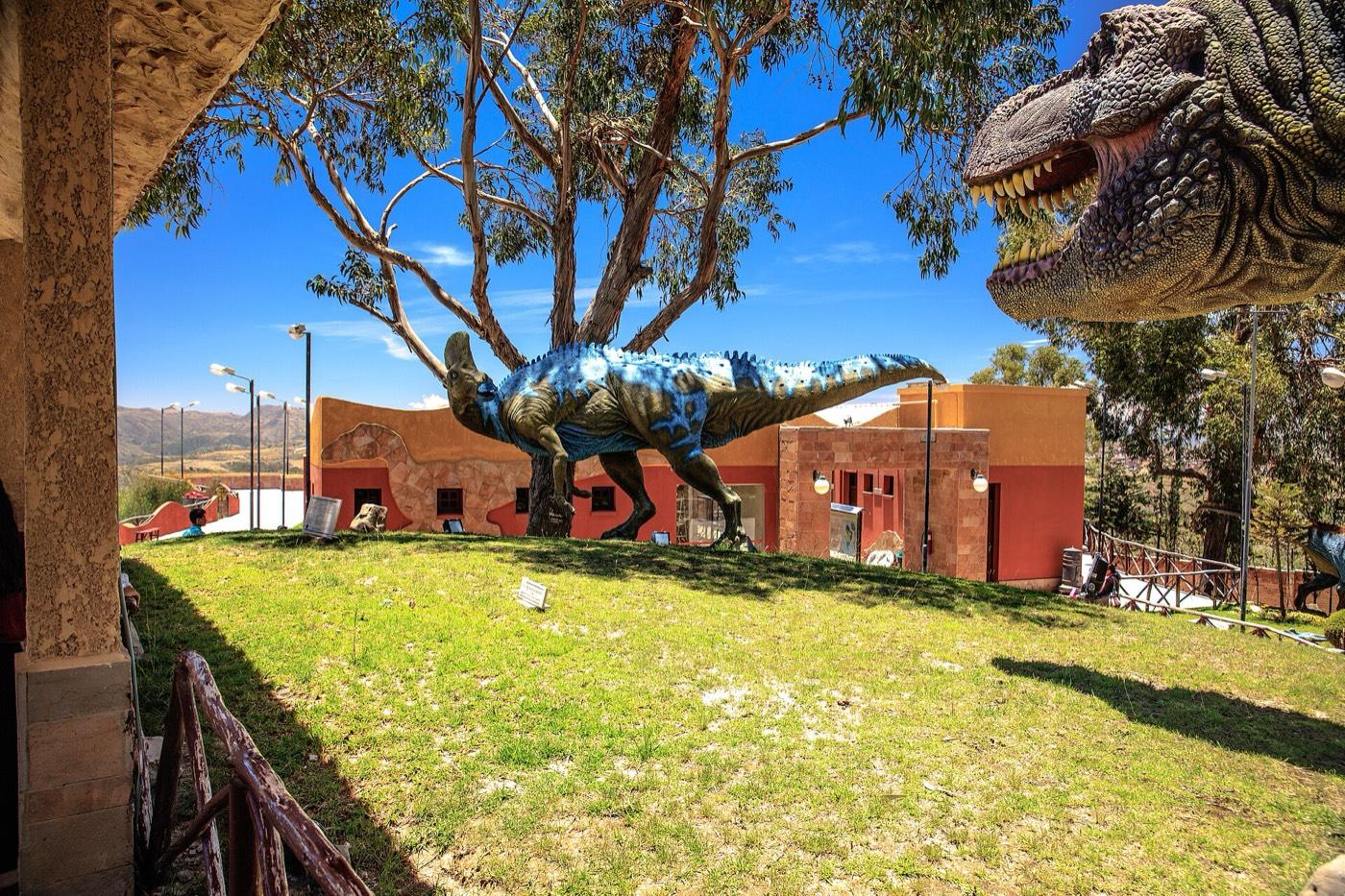
Image: Gabrarq77 (CC BY-SA 4.0)
A Bolivian national park holding Carreras Pampa, reported in 2026 as the largest dinosaur tracksite in the world with more than 16,600 footprints. Tracks lie on open rock surfaces across the park and local guides are compulsory.
By Edward Chen · Published 12 September 2026
Introduction
Torotoro has been known for dinosaur tracks for decades, with prints on open rock surfaces throughout the park that visitors walk straight up to. Recent work has changed its standing considerably.
A study published in PLOS ONE describes Carreras Pampa, within the park, as the largest dinosaur tracksite in the world. That title previously belonged to Cal Orck'o outside Sucre, where mapping recorded more than 12,000 prints. The count is large. There are 1,321 trackways and 289 solitary prints, totalling about 16,600 theropod tracks. A further 280 swim trackways contain 1,378 swim traces, and some trackways preserve tail drags.
Swim traces are the unusual element. They form when a swimming animal's claws scrape the bottom in water deep enough to take most of its weight. They record behaviour that body fossils cannot show.
Torotoro is a small town in a remote part of Potosí Department, and the park is run with compulsory local guides. That arrangement supports the community and is the reason the tracks have survived being walked on.
Location and Directions
Torotoro National Park lies around the town of Torotoro in Charcas Province, Potosí Department, in the Bolivian highlands.
GPS: 18.1000°S, 65.7667°W.
Cochabamba is the usual gateway, about 140 kilometres north, but the road is slow and mountainous and the journey takes several hours. Buses run, and the route has improved in recent years.
Park entry is charged and a local guide is compulsory for all excursions. Guides are organised through the association in town, and this is not optional or informal.
Accommodation in Torotoro is basic and limited. Book ahead in the high season.
What Fossils You'll Find
Nothing is collectable. The tracks are protected within a national park.
The footprints are the attraction and they are unusually approachable. Several trackway surfaces lie within walking distance of the town, and you stand on the rock beside prints rather than viewing them from a platform.
Theropod tracks dominate the counted assemblage at Carreras Pampa. Sauropod tracks occur elsewhere in the park. The combination of tracks, swim traces and tail drags is what gives the site its scientific weight.
The park also holds the Umajalanta cave system, a canyon with waterfalls, and rock art, so the geology is only part of what guides cover.
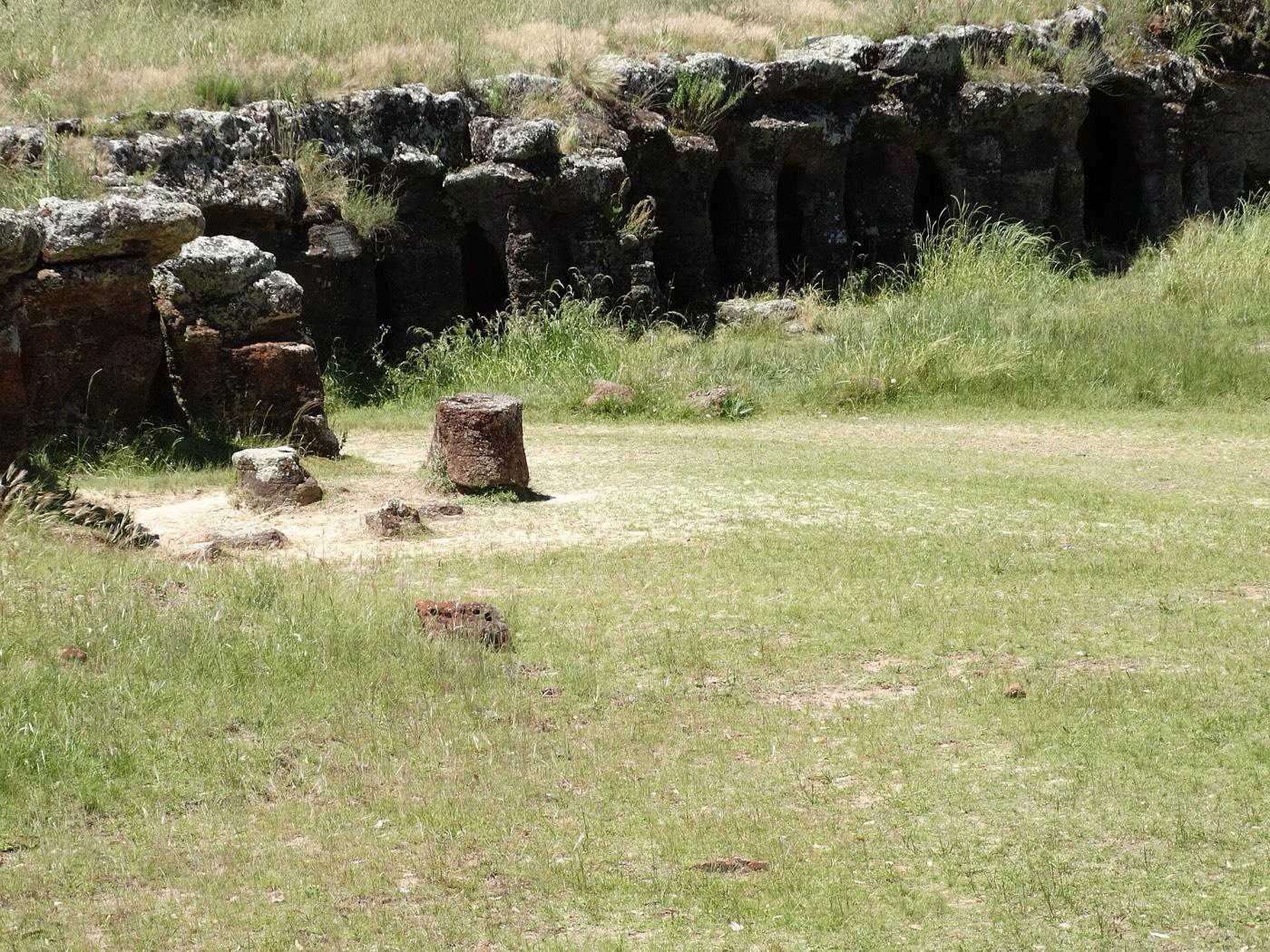
 Photo: Joseloop, CC BY-SA 4.0, via Wikimedia Commons
Geologic History
The tracks lie in the El Molino Formation, Late Cretaceous, broadly 70 to 66 million years ago, the same unit exposed at Cal Orck'o near Sucre.
The environment was a vast shallow lake and floodplain system across the region that is now the Bolivian altiplano. Carbonate muds and fine clastics accumulated in and around it.
Animals crossed exposed margins, and where water was deeper they swam and touched bottom. Both kinds of trace survive because the sediment dried, hardened and was buried before it was destroyed.
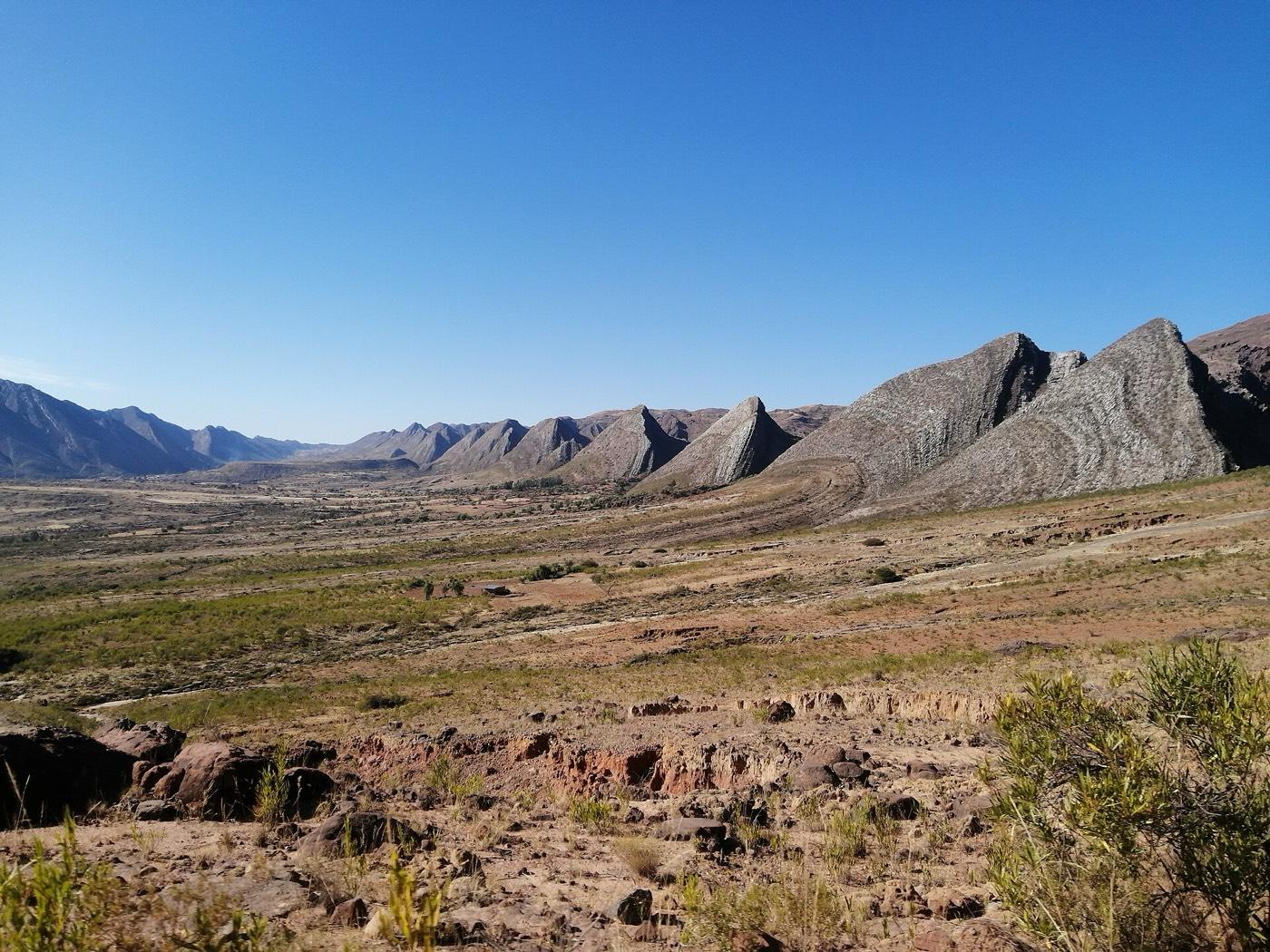
Andean uplift subsequently raised the whole sequence to its present altitude and tilted it, exposing bedding planes across the landscape. That tilting is what makes so many track surfaces accessible here.
The 2026 tracksite paper is recent enough that on-the-ground interpretation may not yet reflect it. Guides have long shown visitors the tracks near town, and the Carreras Pampa counts formalise what local knowledge already held.
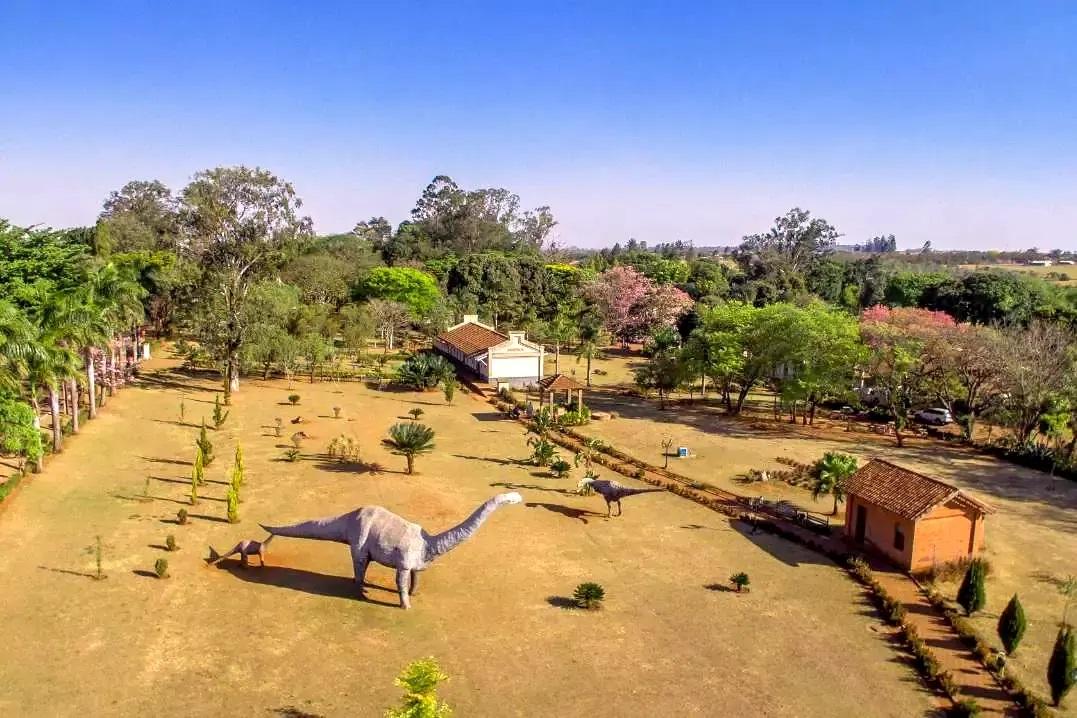
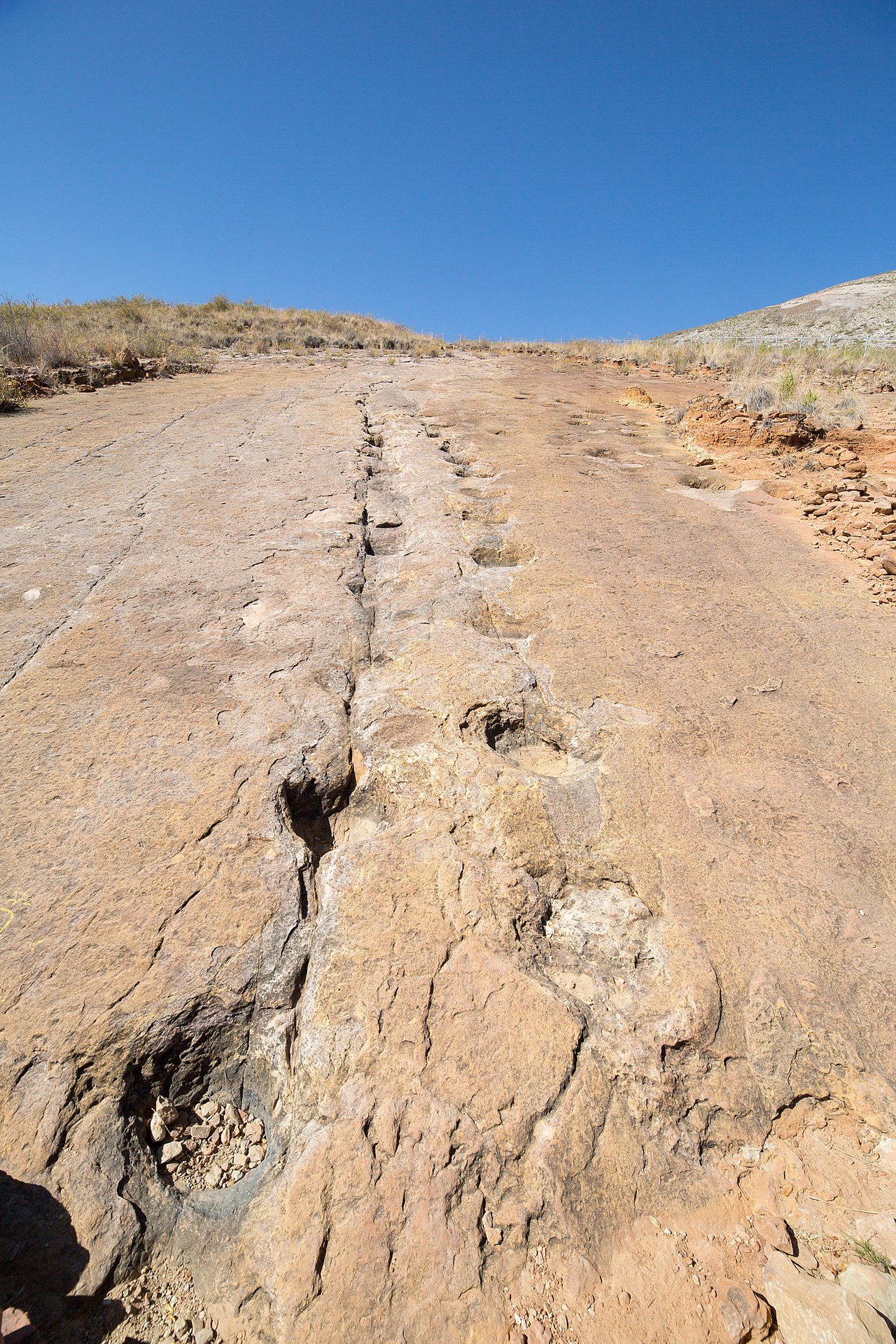 Photo: Havardtl, CC BY 4.0, via Wikimedia Commons
Collecting Rules and Regulations
Collecting is prohibited. Torotoro is a national park and Bolivian law protects palaeontological heritage.
Do not walk on marked track surfaces except where your guide indicates, and do not chalk, wet or trace prints.
Taking rock or fossil material from a Bolivian national park is an offence.
Hire the local guides. Beyond being compulsory, they are the reason the site is managed at all.
Umajalanta is the other reason people come. At about 4,600 metres long and 164 metres deep it is among the longest and deepest caves in Bolivia. It holds a stream, formations and blind cave fish, and the guided trip involves crawling and climbing. Visitors often book it alongside the tracksites, and it needs a head torch, old clothes and a reasonable level of fitness.
 Photo: Havardtl, CC BY 4.0, via Wikimedia Commons
Safety
Torotoro sits at roughly 2,600 metres and excursions climb higher. Altitude sickness is a real risk for visitors arriving quickly from lower ground.
The terrain is rough, with canyon descents, ladders and exposed rock. Some excursions are physically demanding.
The high-altitude sun is severe and shade is scarce. Carry water and sun protection.
The rainy season from roughly November to March brings flash floods in the canyons, and some routes close.
Medical facilities in Torotoro are minimal, and Cochabamba is hours away.
Community management is the model here and it is worth supporting properly. Guide fees, park entry and local accommodation are the mechanism by which the tracks generate income for Torotoro. That income is the reason the surfaces are protected rather than quarried or built over.
Swim traces are worth picturing properly. An animal floating in water deep enough to lift most of its weight pushes off the bottom with its claw tips. The result is parallel scratches rather than full footprints. A surface carrying both walking tracks and swim traces records changing water depth over time.
 Photo: Yulacha, CC BY-SA 4.0, via Wikimedia Commons
Sources
https://journals.plos.org/plosone/article?id=10.1371%2Fjournal.pone.0335973 https://www.sciencedirect.com/science/article/abs/pii/S0895981123002912 https://www.sci.news/paleontology/carreras-pampa-tracksite-14400.html https://www.smithsonianmag.com/smart-news/this-site-in-bolivia-holds-16600-exposed-dinosaur-footprints-the-most-ever-found-in-one-location-180987830/