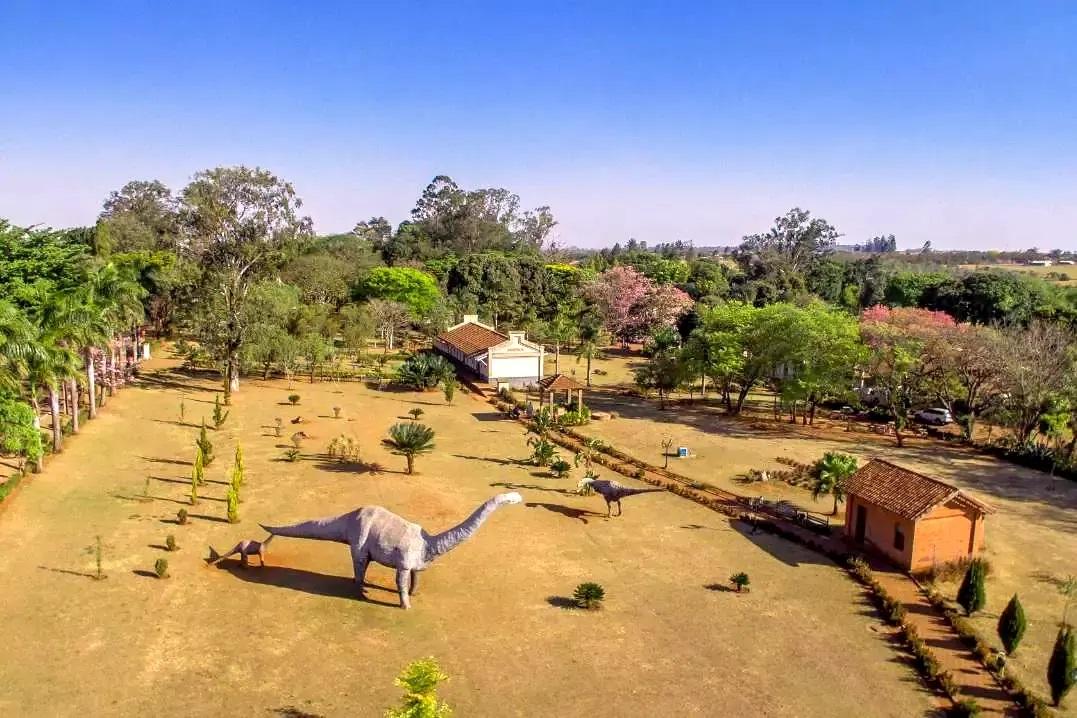
Peirópolis, Uberaba Fossil Hunting Guide
Image: Neto Talmeli (CC BY-SA 4.0)
A Minas Gerais village where quarrying for limestone uncovered one of South America's richest Late Cretaceous dinosaur beds. The Serra da Galga Formation has produced titanosaurs including Uberabatitan, and the Museu dos Dinossauros sits beside the original quarries.
By Edward Chen · Published 14 September 2026
Introduction
Peirópolis is a small district of Uberaba in the Triângulo Mineiro region of Minas Gerais. The first fossils came to light in 1945, when workers cutting a railway line north of the city ran into bone.
Llewellyn Ivor Price, a foundational figure in Brazilian palaeontology, began systematic excavation in 1946. He returned almost every year for decades, and the bone beds he opened have produced dinosaurs, crocodyliforms, turtles, fish and eggs in quantity.
The rocks belong to the Serra da Galga Formation, raised to formation rank in 2020, part of the Bauru Group filling the inland Bauru Basin. They date to the very end of the Cretaceous.
Uberabatitan ribeiroi, described in 2008 and named for the city, is among the last titanosaurs known from Brazil. Baurutitan britoi came from the same complex of sites.
Uberaba markets itself as the land of the dinosaurs, and the connection is not manufactured. The fossils were an accident of the cement industry, but the research built on them has run continuously for more than 80 years.
 Photo: Marta maga, CC BY-SA 4.0, via Wikimedia Commons

Location and Directions
Peirópolis lies about 20 kilometres east of the centre of Uberaba. Uberaba is roughly 480 kilometres west of Belo Horizonte and 400 kilometres north of São Paulo.
GPS: 19.7439°S, 47.7431°W.
The Museu dos Dinossauros, operated with the Universidade Federal do Triângulo Mineiro, is the visitor centre for the site. Local road signs direct visitors from Uberaba.
Uberaba has an airport with domestic connections, and long-distance buses serve the city. A car is the practical way to reach the village itself.
Check current opening hours before you travel. The museum and its associated research centre run on an institutional calendar that changes.
The old quarry sites near the museum are interpreted with signage and can be viewed, and guided access is available.
 Photo: SAPO YTB, CC BY-SA 4.0, via Wikimedia Commons

What Fossils You'll Find
This is a viewing site, not a collecting one. The interest is in what the excavations and the museum display rather than in what you can pick up.
Titanosaurs dominate the assemblage. These were long-necked sauropods, and the Bauru Basin was one of their strongholds in the last stages of the Cretaceous.
Crocodyliforms are abundant and varied, including forms with unusual teeth that suggest diets far removed from the modern crocodile. Notosuchians of several kinds occur.
Turtles, fish, and dinosaur eggs and eggshell are all present. Peirópolis has yielded egg clutches that record nesting in the area.
Theropod teeth and fragmentary theropod bone occur alongside the plant-eaters.
The museum displays mounted skeletons alongside the material as it came out of the rock. A bone bed in the wall of a quarry holds several animals jumbled together. That view explains more about how these deposits form than a mounted skeleton does.
Preparation work is part of the operation here. The associated research centre processes material from the surrounding region, not only from the village.
 Photo: Andre Borges Lopes, CC BY-SA 3.0, via Wikimedia Commons

Geologic History
The Bauru Basin formed in the interior of South America after the great outpouring of the Serra Geral basalts, which erupted as the South Atlantic opened and Africa separated.
The basin filled with river and floodplain sediments through the Late Cretaceous. The Marília Formation represents the upper part of that fill. The fossil-rich beds around Uberaba were long treated as its Serra da Galga Member and were raised to formation rank in 2020.
The climate was semi-arid with seasonal rainfall. Carbonate nodules formed in soils, and it is those carbonate-rich beds that were quarried for cement and lime.
Rivers carried carcasses into channels and buried them in sand and conglomerate, which is why the bone occurs in concentrated lenses rather than scattered evenly.
The sequence ends at the close of the Cretaceous, and the extinction closes the record.
The Bauru Basin is important because it samples inland South America at a time when most fossil-rich rocks elsewhere are coastal. Its fauna is distinctly Gondwanan, with titanosaurs and notosuchian crocodyliforms in place of the animals that dominated the northern continents.
 Photo: E. G. Nascimento and colleagues, CC BY 4.0, via Wikimedia Commons
.jpg)
Collecting Rules and Regulations
Brazilian law is unambiguous. Fossils are property of the Union under federal legislation dating to 1942, and private collecting is prohibited. Export needs authorisation and is controlled separately.
Enforcement is real. Brazil has pursued the international return of illegally exported fossils, and cases involving Brazilian specimens have been prosecuted.
Do not collect anything at Peirópolis. Do not remove rock from the quarry areas.
Access to active excavation sites is through the museum and its staff.
If you see fossil material exposed, photograph it and tell the museum where it is.
 Photo: Andre Borges Lopes, CC BY-SA 3.0, via Wikimedia Commons

Safety
The quarry faces are steep and in places unstable. Stay on the interpreted routes.
Minas Gerais summers are hot and the sites are open ground with little shade. Carry water and wear a hat.
The wet season runs roughly October to March and brings heavy afternoon rain. Tracks become muddy and slippery.
Snakes occur in the surrounding grassland. Watch where you step and wear closed boots.
Some material in this region is on private rural land. Do not enter it without permission.
Sources
https://en.wikipedia.org/wiki/Peir%C3%B3polis https://en.wikipedia.org/wiki/Uberabatitan https://en.wikipedia.org/wiki/Mar%C3%ADlia_Formation https://en.wikipedia.org/wiki/Baurutitan
Nearby sites
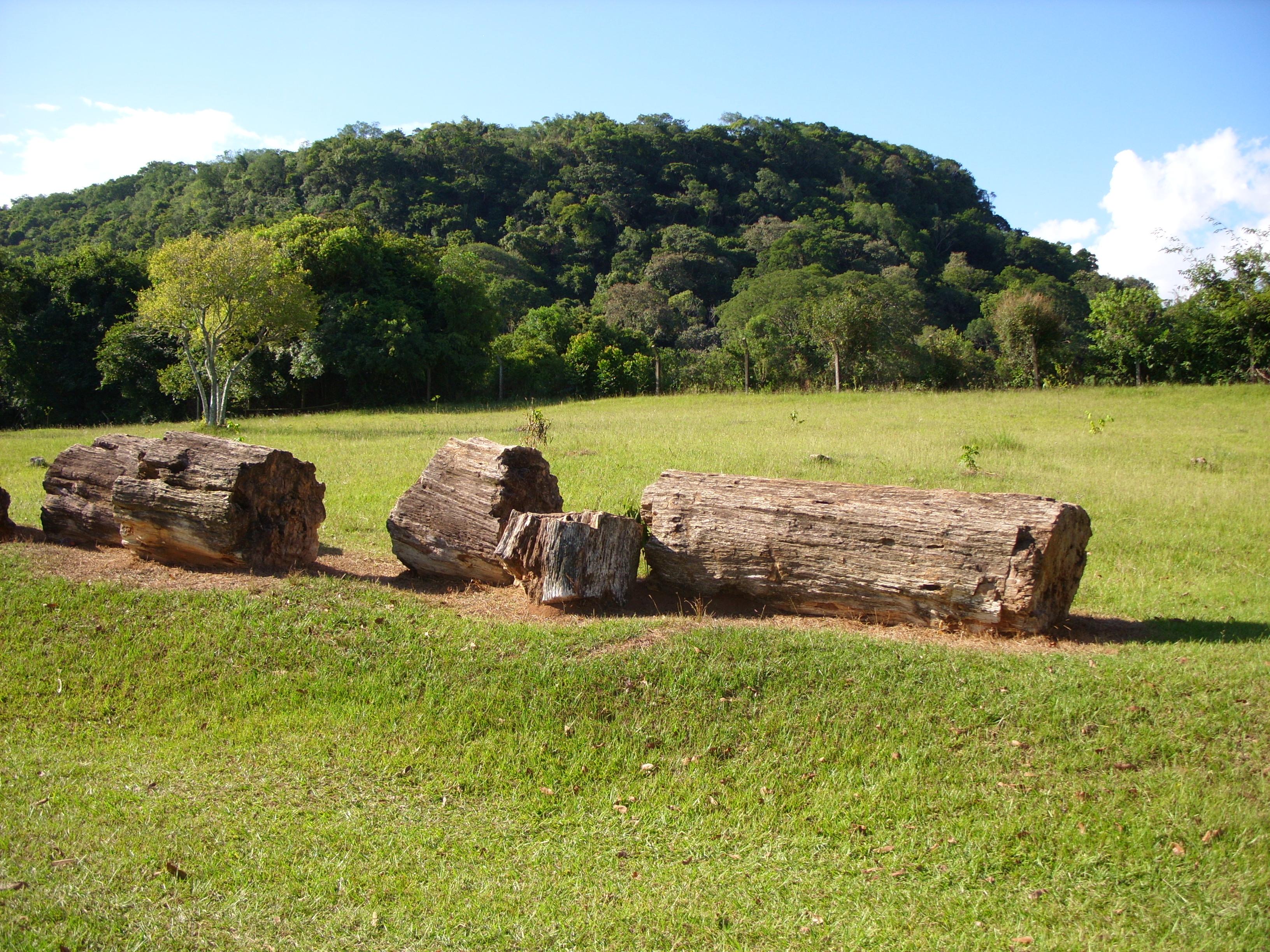 Paleorrota Geopark Fossil Hunting GuideStaurikosaurus pricei (early dinosaur), Hyperodapedon (rhynchosaur)
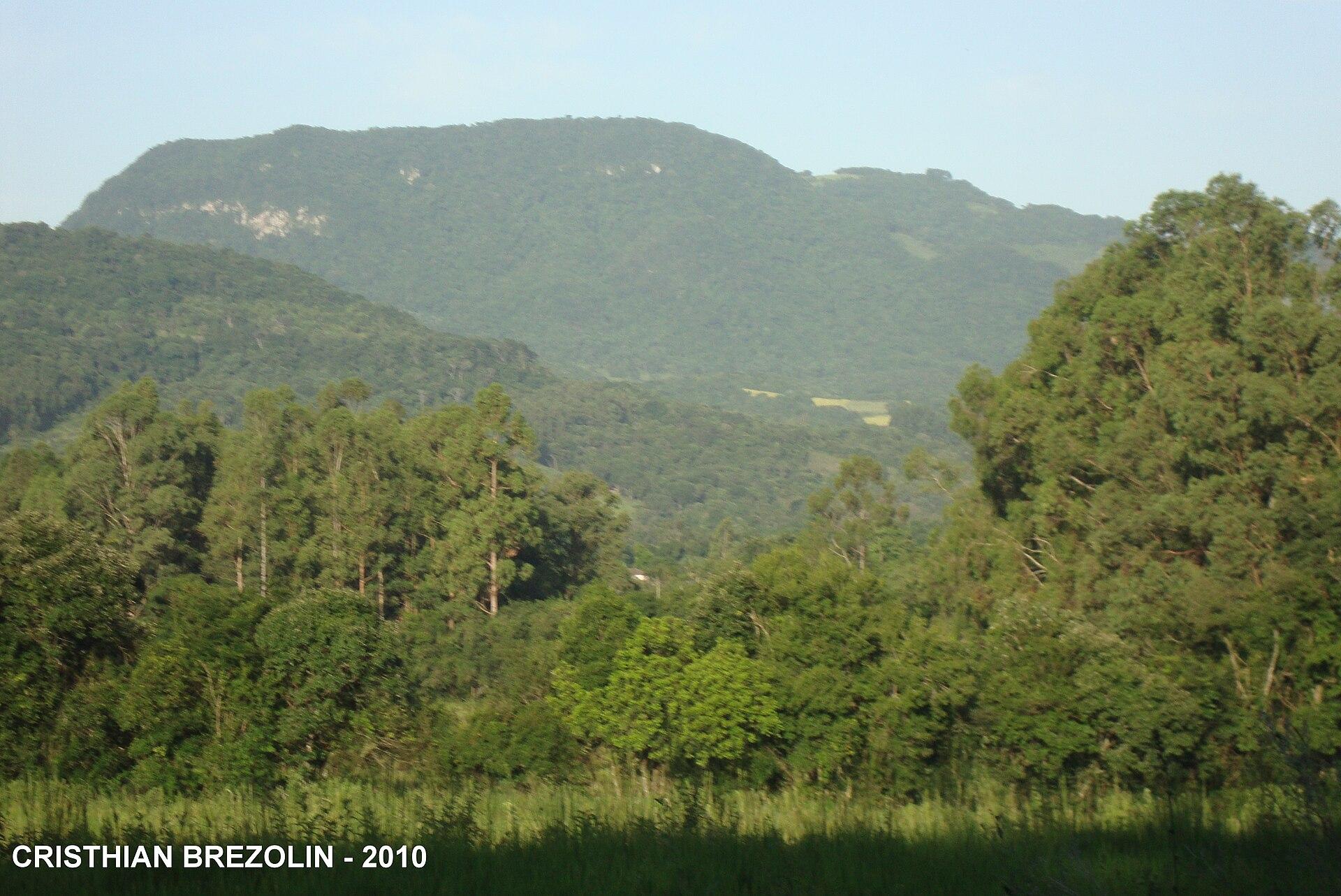 Quarta Colônia Geopark Fossil Hunting GuideEarly dinosaurs, Cynodonts
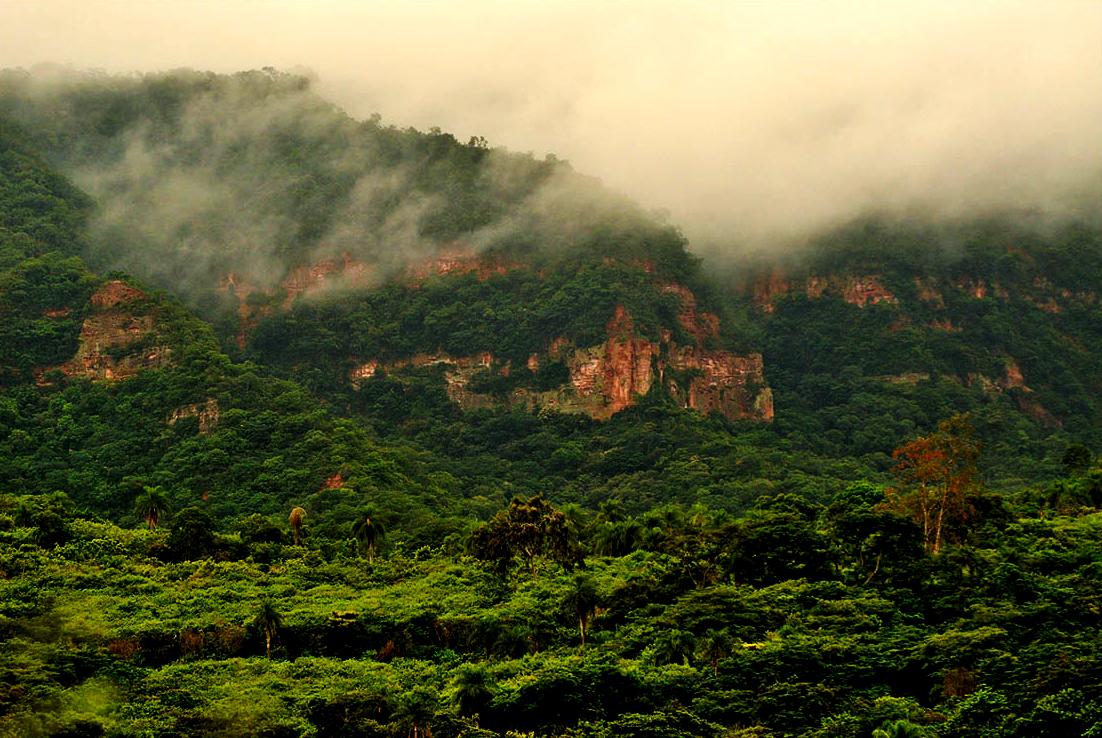 Araripe Geopark Fossil GuidePterosaurs, Fish
 Vale dos Dinossauros (Sousa Basin) Fossil Hunting GuideSauropod trackways, Theropod footprints