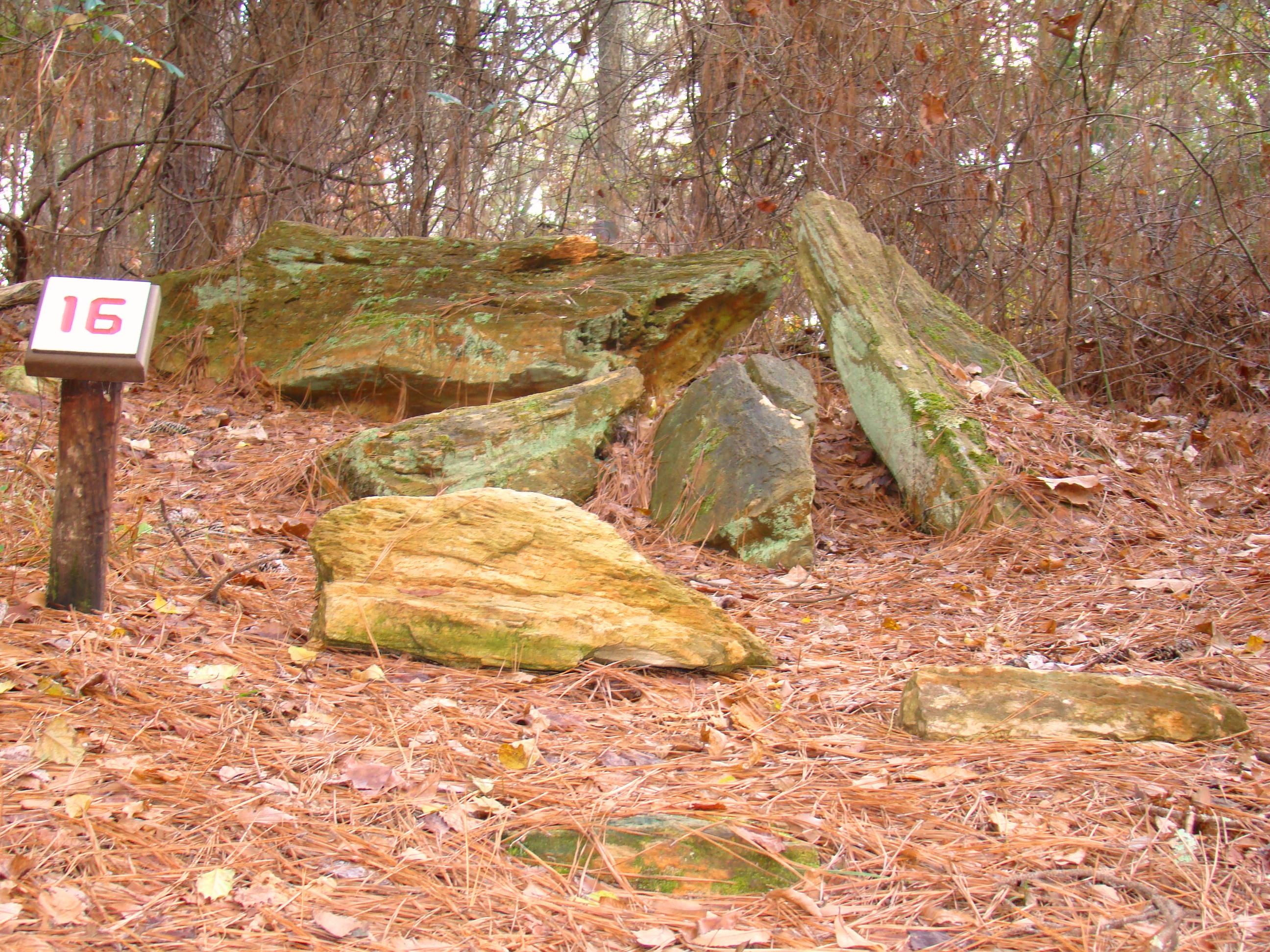
Mississippi Petrified Forest Fossil Hunting Guide
Image: Csarsene (CC BY-SA 3.0)
The Mississippi Petrified Forest near Flora is one of only two petrified forests in the eastern United States. Giant fossil logs washed into place by an ancient river about 36 million years ago lie along a half-mile nature trail. Viewing only, with a museum on site.
By Edward Chen · Published 23 July 2026
The Mississippi Petrified Forest sits on the edge of the town of Flora, in Madison County, about a half-hour north of Jackson. It is one of only two petrified forests in the eastern United States and is a registered National Natural Landmark. The site is a set of giant fossil logs, the mineralized trunks of trees that were swept into this spot by a river roughly 36 million years ago, buried in sand, and slowly turned to stone. A half-mile nature trail winds among the exposed logs, and a museum at the entrance holds petrified wood and other fossils from around the world.
Unlike a living forest, these trees did not grow where they lie. They were carried here as driftwood by an ancient river, stranded on a sandbar, and preserved. This guide covers how to reach the forest, what you will see along the trail, the geology that turned the logs to stone, the rules, and the practical details for a visit.
Location and Directions
The Mississippi Petrified Forest is at 124 Forest Park Road in Flora, near 32.556 degrees north, 90.309 degrees west, in Madison County. Flora is northwest of Jackson and is reached from Interstate 55 or US-49 and then local roads into town. The site is signed from the main roads through Flora.
There is parking at the entrance, alongside the museum, gift shop, and a campground. The half-mile nature trail begins near the entrance building. About half of the trail is paved and the rest is packed dirt and sand, and it is described as easy though uneven in places. The site is pet-friendly on leash.
The forest is open year-round except a few holidays, with longer summer hours and shorter winter hours, and the nature trail closes a little before the museum each day. Admission is charged, so check the current hours and fees before visiting. The petrified logs are viewed along the trail rather than collected.
What Fossils You'll Find
The main attraction is the petrified wood itself, in the form of large fossil logs lying along the trail. These are the trunks of ancient trees, their original wood replaced cell by cell with silica so that the shape, and sometimes the grain and growth rings, are preserved in stone. Several of the largest logs are named landmarks along the trail. The trees have been identified as ancient relatives of modern conifers and hardwoods, the kind of driftwood a large river would carry.
The site's museum extends what the trail shows, with cut and polished petrified wood that reveals the internal structure, along with petrified wood and other fossils collected from across the United States and other countries. Because collecting is not allowed on the trail, the museum and the gift shop are where visitors can see specimens up close and, in the shop, buy petrified wood sourced elsewhere. The fossils along the trail are best appreciated as an in-place record of how a river stranded and buried a raft of logs tens of millions of years ago.
Geologic History
The logs were preserved during the Oligocene, roughly 36 million years ago, when this part of Mississippi was crossed by a large river. The trees did not grow here. They grew somewhere upstream, fell into the river, and were carried down as driftwood until they lodged on a sandbar and were buried by the sand and clay of the river's deposits, the beds now called the Forest Hill Formation.
Buried in that sediment and cut off from oxygen, the wood did not rot. Groundwater rich in dissolved silica seeped through the sand, and over a long span of time the silica replaced the wood tissue and filled its pores, turning the logs to hard, stony fossils while preserving their original form. Much later, erosion stripped away the softer sand and clay around them and left the resistant petrified logs exposed at the surface, where they can be seen along the trail today.
Collecting Rules and Regulations
Fossil collecting is not allowed along the nature trail. The Mississippi Petrified Forest is a protected National Natural Landmark, and the logs are preserved in place for viewing. Visitors walk the trail, view and photograph the logs, and read the interpretive signs, but removing or damaging any petrified wood or other material from the trail is prohibited.
The site charges admission, and the fee supports the trail, the museum, and the upkeep of the landmark. Visitors who want to take home a piece of petrified wood can buy specimens in the gift shop, which are sourced from other localities rather than from the protected forest. Stay on the marked trail, keep pets leashed, and treat the logs as the museum pieces they are.
Safety
The nature trail is short and easy, but a few cautions apply. The unpaved sections are packed dirt and sand and can be uneven or bumpy, so wear closed shoes with good grip and take care on the natural surface. Mississippi summers are hot and humid, so carry water and sun protection, and be aware that biting insects are active in the warm months.
Watch for the usual southern-woodland wildlife, including snakes in warm weather, and keep to the trail. Supervise children around the larger logs and any uneven ground. There are no cliffs, water hazards, or unstable rock faces on the trail, so the main concerns are heat, insects, and footing on the natural-surface stretches.
Sources
https://www.mspetrifiedforest.com/nature-trail https://mississippiencyclopedia.org/entries/mississippi-petrified-forest/ https://en.wikipedia.org/wiki/Mississippi_Petrified_Forest