Coon Creek Science Center Fossil Dig Guide
Coon Creek Science Center in McNairy County, Tennessee, sits on one of North America's best-known Late Cretaceous marine fossil localities. The 232-acre site has produced 600+ species of crabs, bivalves, ammonites and gastropods, many preserved with original aragonite shell. UT Martin runs paid public dig programs ($20, 4 hours) by reservation.
By Edward Chen · Updated 3 August 2026
Introduction
The Coon Creek Science Center occupies a 232-acre property on Hardin Graveyard Road outside Adamsville, in McNairy County, southwest Tennessee. The site sits directly on the Coon Creek Formation, a Late Cretaceous (Maastrichtian) marine clay famous for the fine-scale preservation of its fossils, many bivalves, gastropods, and especially the small ghost-crab Avitelmessus grapsoideus are still found with original aragonite shell, sometimes even mother-of-pearl iridescence intact.
The site is owned and operated by the University of Tennessee at Martin and re-opened to the public in 2021 after a major renovation. Unlike most fossil sites of comparable scientific importance, Coon Creek is set up specifically as a citizen-science venue: visitors pay a small fee, get instruction, dig actual fossiliferous clay, and take their finds home. The most popular program is a four-hour group dig at $20 per person. Community-access dig days are held the third Saturday of each month.
This guide covers what comes out of the clay, how to book a visit, and the geological context that makes Coon Creek one of the best Cretaceous marine sites in the United States.
Location and Directions
Coon Creek Science Center is at 2985 Hardin Graveyard Road, Adamsville, Tennessee, about 10 miles northeast of Selmer and roughly 90 miles east of Memphis.
Directions to Coon Creek
From Memphis, take US-72 east to Corinth, MS, then US-45 north to Selmer. From Nashville, take Interstate 40 west to Jackson, then US-45 south to Adamsville. From Adamsville, local roads lead a short distance to the site. The Coon Creek property has on-site parking, a science centre / classroom building, restrooms, and instructional dig stations along the creek.
All programs are by reservation only via the University of Tennessee at Martin Selmer Center. Call (731) 646-1636 to book. Programs are scheduled around UT Martin classes, school groups, and Boy Scout / Girl Scout overnight trips, so weekends and Community Days fill weeks in advance. The standard public program is a four-hour guided dig at $20 per person, suitable for ages 7 and up. Half- and full-day teacher workshops, paleontology camps, and overnight programs are also offered seasonally.
Bring closed-toed shoes, work gloves, sun protection, water, a small bucket or zip-top bags for finds, and toothbrushes / dental picks for cleaning at home. The site provides hand trowels and screens.
What Fossils You'll Find
The Coon Creek Formation was deposited about 70 million years ago, during the Maastrichtian Stage of the latest Cretaceous, in a shallow, near-shore tropical sea on the eastern margin of the Mississippi Embayment, a broad arm of the Western Interior Seaway that extended northward into modern central Tennessee.
The Coon Creek "Tongue" exposed at the site has produced more than 600 species over more than a century of professional and amateur collecting. The most-coveted find, and the species most associated with the locality in the wider amateur fossil-hunting community, is the small ghost-crab Avitelmessus grapsoideus, typically preserved as complete dorsal carapaces still showing pigmentation patterns and fine surface ornament. Several complete specimens are commonly recovered on a single public dig, and the species' diagnostic small size, distinctive carapace shape, and frequent intact preservation make it one of the most rewarding decapod crustaceans available to amateur collectors anywhere in the world. The larger glypheid lobster Hoploparia tennesseensis is less common but also frequently recovered, particularly as articulated cephalothoraces.
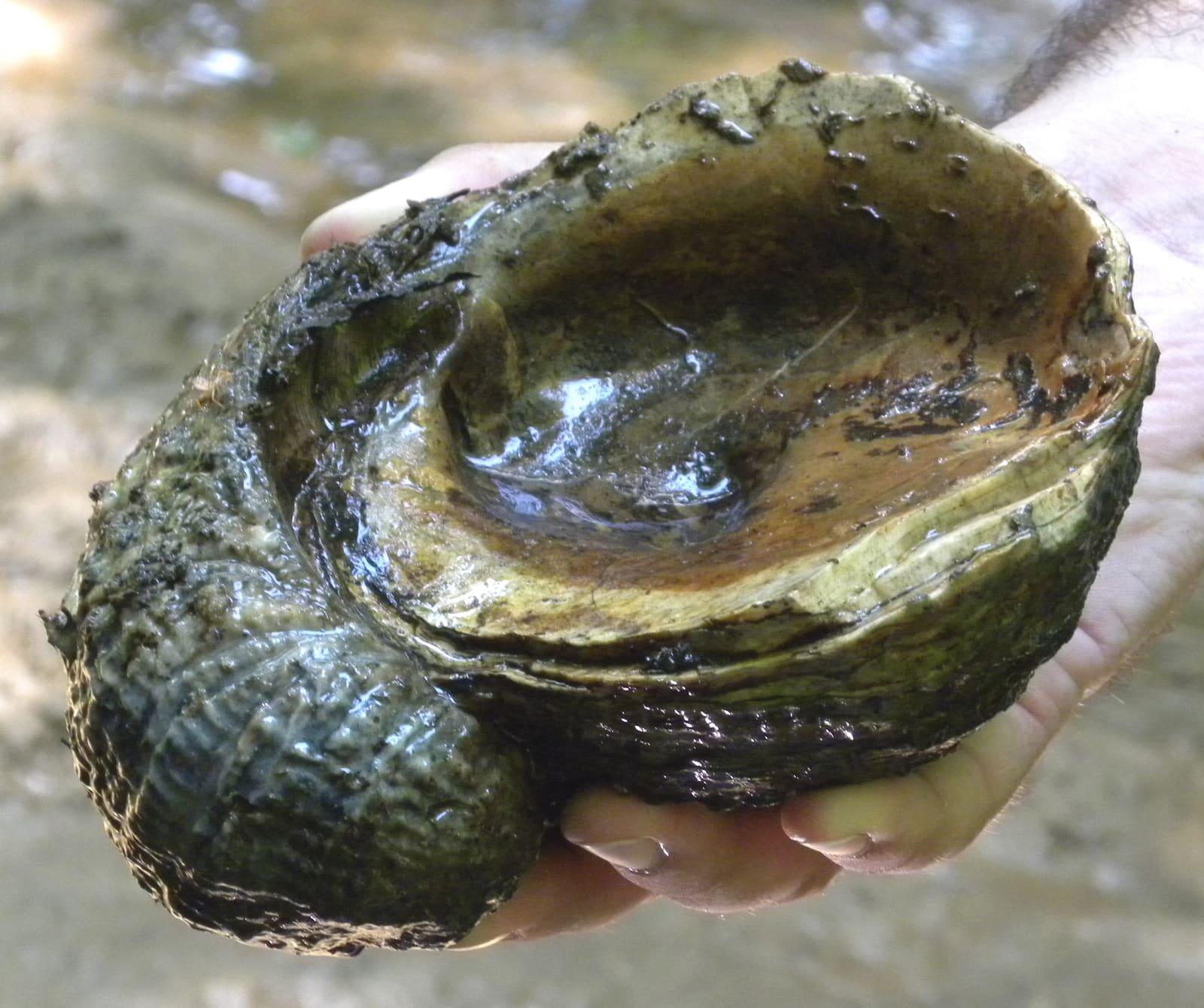
Bivalves dominate the assemblage by sheer numbers. The thick-shelled clam Cucullaea vulgaris is the most abundant species and is often preserved with original pearly aragonite nacre intact, a feature visually unlike most Cretaceous bivalves elsewhere in the world. The deeper-water clams Crassatella vadosa, Nucula percrassa, the iconic Late Cretaceous oysters Exogyra costata and Pycnodonte vesicularis, the small Trigonia thoracica, and the small inoceramid Inoceramus tippaensis round out the bivalve fauna. Gastropods include the high-spired turritellids (Turritella vertebroides), the carnivorous naticids (Polinices halli), the volutid Volutoderma, the helmet shell Pseudoliva, and the striking long-spined Anchura (with its single dramatically extended outer lip).
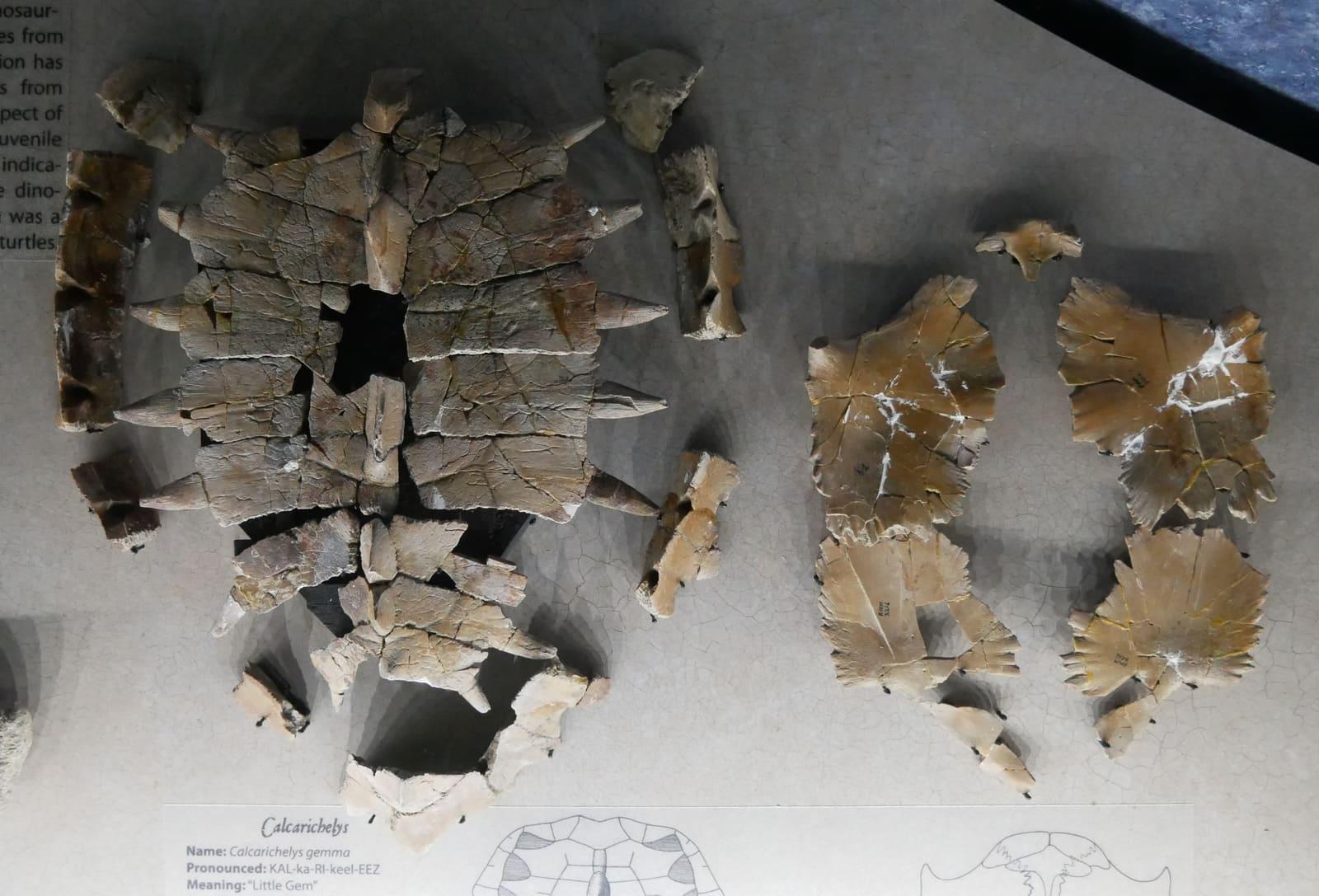
Cephalopods include the ammonites Discoscaphites iris (a key Maastrichtian biostratigraphic index fossil), Hoploscaphites, Sphenodiscus pleurisepta, Eutrephoceras dekayi, and rarely the heteromorph Baculites compressus. The chambered nautiloid Cymatoceras turns up occasionally. Scaphopods (tusk shells) and small annelid tubes are scattered through the matrix. Vertebrate material is less abundant but documented: shark teeth from Squalicorax kaupi, Cretolamna appendiculata, and Scapanorhynchus texanus. Fish vertebrae and the prized fangs of Enchodus petrosus. Rare mosasaur vertebrae (Mosasaurus, Halisaurus). And turtle shell fragments from Toxochelys.
The fine-scale aragonite preservation means many shells retain pearly nacre, original colour patterns, and three-dimensional shape, preservation modes typically associated with Cenozoic or Quaternary fossils rather than Cretaceous material. The combination of citizen-science access and internationally studied preservation makes Coon Creek nearly distinctive among major fossil sites worldwide.
"Unlike most sites of this prominence, it is also readily accessible to collectors and fossil enthusiasts as well as scientists, and visitors are encouraged to participate in the scientific research as part of citizen-science outreach efforts." Wikipedia, Coon Creek Science Center
 Photo: James St. John, CC BY 2.0, via Wikimedia Commons
Geologic History
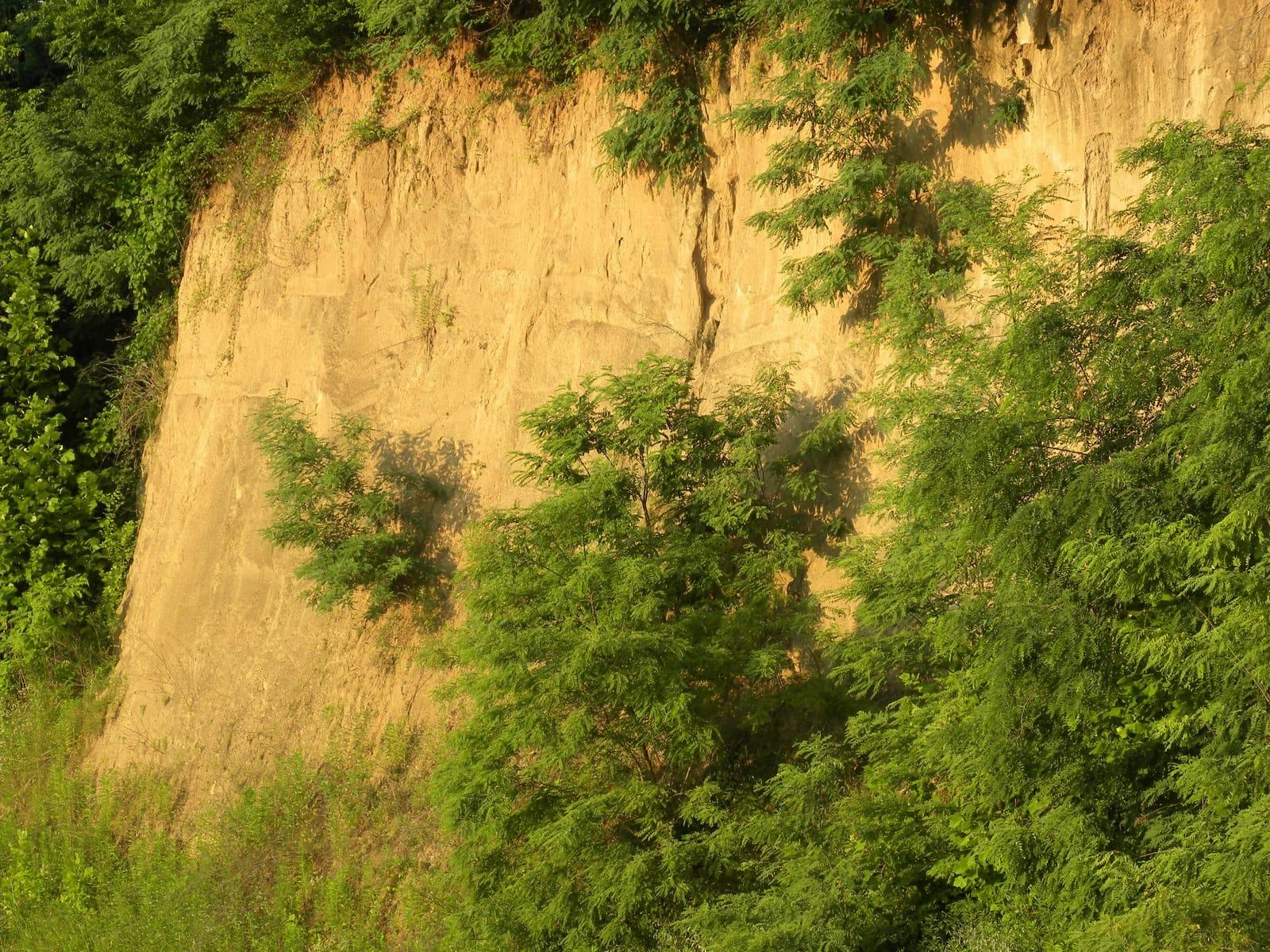
During the latest Cretaceous, the eastern margin of the Mississippi Embayment was a warm, shallow tropical sea, the southernmost extension of the Western Interior Seaway as it broadened toward its junction with the proto-Gulf of Mexico. Water depths across western Tennessee during Coon Creek deposition were probably 20 to 50 metres, with a broad, gently sloping seafloor on a stable continental shelf. The shoreline of the time lay to the east in modern eastern Tennessee and northern Mississippi, with rivers draining the early Appalachian Mountains and delivering fine clay-rich sediment to the embayment.
Fine, dark clays accumulated in low-energy conditions on the muddy seafloor, rapidly burying intact shells and exoskeletons before scavengers, currents, or chemical breakdown could destroy them. The combination of fine grain size, rapid burial, low oxygen at the sediment-water interface, and an early diagenetic seal of authigenic phosphate around shells preserved the original aragonite mineralogy of the molluscs, a preservation mode that is the global exception rather than the rule for fossils this old. Most Cretaceous bivalve and gastropod material elsewhere in North America is recovered as moulds, internal casts, or recrystallised calcite replacements. The Coon Creek specimens stand alone in retaining their pearly nacre and three-dimensional shells.
The Coon Creek Formation is locally the upper part of the broader Ripley Formation, and is biostratigraphically equivalent to the upper Navesink Formation of New Jersey, the Prairie Bluff Chalk of Mississippi and Alabama, and the upper part of the Owl Creek Formation of northeastern Mississippi. The Coon Creek Tongue itself is exposed across a relatively small area of southwestern Tennessee, northeastern Mississippi, and northeastern Arkansas, but the type locality at Coon Creek in McNairy County remains by far the most productive.
The formation was first described in detail by paleontologist Bruce Wade in 1926, in his U.S. Geological Survey Professional Paper 137 titled "The Fauna of the Ripley Formation on Coon Creek, Tennessee." Wade's monograph illustrated and described more than 350 species and established the Coon Creek fauna as a global reference for Maastrichtian molluscan biostratigraphy. Subsequent work by Norman F. Sohl of the USGS, Erle Kauffman of Indiana University, and many others through the 20th century refined and expanded Wade's framework, and the Coon Creek Tongue remains one of the most-cited Cretaceous reference faunas in eastern North American biostratigraphy.
Modern erosion of Coon Creek itself has cut through the formation across the science centre property and continuously exposes fresh fossiliferous clay in the streambanks, where the active dig faces are excavated each summer. The clay is so plastic that excavated material can be screen-washed easily without breaking the delicate aragonite shells, making the site unusually accessible to amateur and school-group participants.
How Coon Creek Came to Be a Science Center
The site was identified and developed as a field-trip and research station in the early 20th century by the Tennessee Geological Survey and the Pink Palace Museum of Memphis (now the Museum of Science & History). The Pink Palace operated the site for decades, hosting school groups and amateur fossil clubs as well as supporting professional research. In 2018 the property was transferred to the University of Tennessee at Martin, which undertook a substantial facility upgrade and re-opened the site to the public in April 2021 with new classroom, dig-faces, and accessibility features. The science centre is now administered by UT Martin's Selmer Center as a citizen-science research and outreach facility, with the explicit goal of combining productive scientific work with broad public engagement.
Collecting Rules and Regulations
Is Fossil Collecting Allowed?
Yes, within the paid dig program. All collection is supervised on-site. Participants take their finds home.
Key Points:
- Access by reservation only. Call UT Martin Selmer Center at (731) 646-1636
- Standard adult dig is $20 per person for four hours
- Community Days every third Saturday of the month
- No independent visits to the site outside scheduled programs
- Specimens of scientific interest may be requested for research collection
- Wear closed-toed shoes. The clay stains everything
Safety
Coon Creek is a managed education site where visits are booked and staffed, and the guides handle most of the risk. The work itself is digging soft Cretaceous marl in a creek valley.
The ground is wet clay and it is slippery. Expect mud, sloping banks, and uneven footing throughout. Wear boots you can ruin rather than trainers, dress for getting dirty, and bring a complete change of clothes and footwear for the journey home. This catches first-time visitors out more than anything else.
Digging tools and crouched work. You will be using hand tools in close company with other people, so keep an eye on where others are before swinging or prising, and take breaks, because hours of crouching over a bank is harder on the back and knees than it sounds. Gloves are worth having, and eye protection if you are striking anything.
Tennessee heat and insects. Summers are hot and humid with limited shade in the creek valley, so carry plenty of water and use sun protection. Ticks and chiggers are abundant in the vegetation here, and mosquitoes near the water, so long trousers, repellent, and a check afterwards are all sensible.
Watch for snakes on the banks and in leaf litter, including copperheads. Water levels in the creek rise after rain and the centre may close or relocate a dig accordingly. Book ahead rather than arriving unannounced, and tell staff about any mobility limitations, since the walk to the dig faces is over rough ground.
_1_(31971664065).jpg)